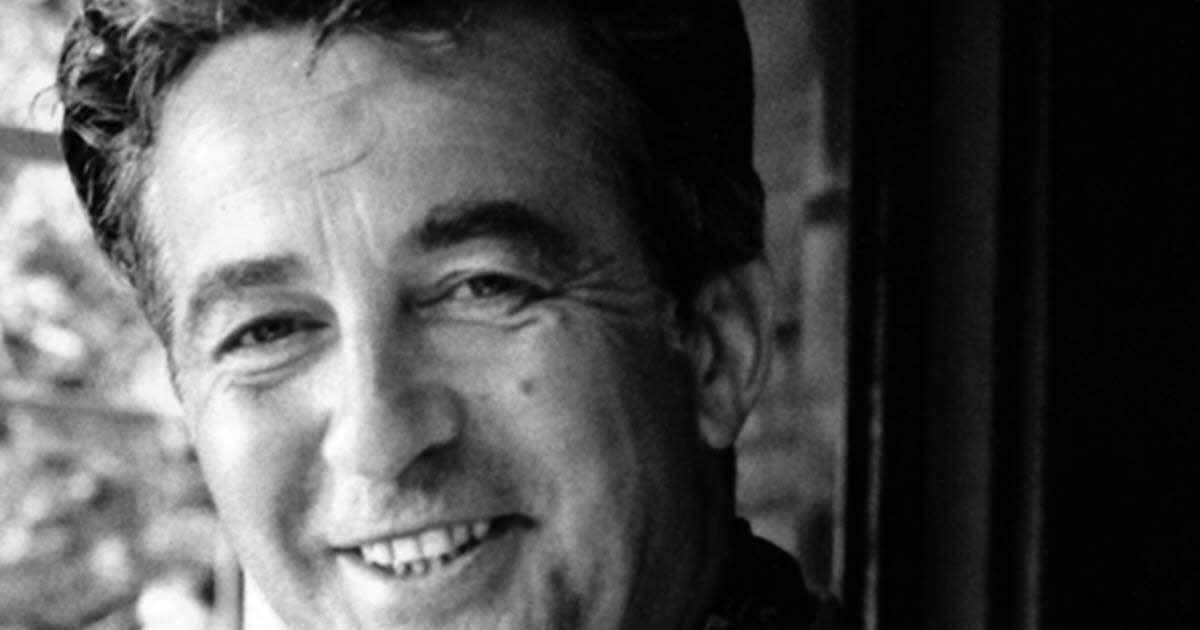
Gilbert Durand: Exploring the Anthropology of the Imaginary

by | Jul 22, 2024 | 0 comments

Gilbert Durand Philosopher of the Imaginary

Gilbert Durand: The Cartographer of the Human Imagination

In the landscape of 20th-century French thought, dominated by structuralists and existentialists who often viewed the imagination as “unreal” or “escapist,” Gilbert Durand (1921–2012) stood as a revolutionary defender of the dream. A philosopher, anthropologist, and sociologist, Durand argued that the Imaginary (l’imaginaire) is not a byproduct of reality, but the very foundation of it.

Durand’s work is the missing link between the psychology of Carl Jung, the poetics of Gaston Bachelard, and the mystical anthropology of Henry Corbin. He developed a “General Science of the Imaginary,” a rigorous system for mapping the symbols, myths, and archetypes that structure human consciousness. For therapists and students of depth psychology, Durand offers a “Periodic Table” of the soul—a way to understand the images that arise in dreams, art, and trauma not as random noise, but as coherent structural languages.

1. The Intellectual Lineage: Standing on the Shoulders of Giants

Durand did not work in a vacuum. He was the synthesis of three great streams of thought:

  • Gaston Bachelard: His teacher, who psychoanalyzed the elements (Fire, Water, Air, Earth) and proved that matter is “dreamed” before it is perceived.
  • Carl Jung: From whom he took the concept of the Archetype and the Collective Unconscious, grounding them in anthropology rather than just biology.
  • Henry Corbin: The scholar of Islamic mysticism who validated the “Mundus Imaginalis”—a real world of images that exists between the senses and the intellect.

Durand’s innovation was to take these psychological insights and apply them to Anthropology. He asked: Why do humans across all time and space produce the same images? His answer was that the imagination is our biological response to the terror of Time and Death.

2. The “Anthropological Structures of the Imaginary”

In his magnum opus, Les Structures anthropologiques de l’imaginaire (1960), Durand proposed that all human symbols are attempts to cope with the anxiety of passing time. We are the only animals who know we will die. To survive this knowledge, our imagination creates “defenses” or structures.

He classified all symbols into two opposing “Regimes.” Understanding these regimes allows a therapist to understand the “psychic posture” of a client instantly.

2.1. The Diurnal Regime (Schizomorphic Structure)

This is the regime of Day, light, and the Sun. It is defined by separation and combat.

Psychological Stance: “I will fight death.”

Key Symbols:
* **The Sword/Weapon:** Cutting, separating good from evil.
* **The Summit/Mountain:** Ascent, verticality, looking down from above.
* **The Hero:** The Solar figure who slays the dragon.
* **Light:** Clarity, logic, distinction.

In Therapy: A client in the Diurnal regime values control, clarity, and boundaries. They may fear contamination or chaos. Their trauma response is “Fight.”

2.2. The Nocturnal Regime (Mystical Structure)

This is the regime of Night, darkness, and the Moon. It is defined by connection and fusion. Instead of fighting Time, the Nocturnal regime seeks to slow it down or merge with it.

Psychological Stance: “I will embrace the cycle.”

Key Symbols:
* **The Cup/Container:** The womb, the house, the cave.
* **Water/The Ocean:** Dissolution, cleaning, merging.
* **The Spiral:** Cyclical time, return, rhythmic repetition.
* **Food/Swallowing:** Internalizing the world (the Eucharist).

In Therapy: A client in the Nocturnal regime values intimacy, comfort, and belonging. They may fear abandonment or isolation. Their trauma response is “Fawn” or “Freeze.”

2.3. The Synthetic Regime (Dissemination)

Durand later clarified a third structural movement that harmonizes the two: the rhythmic or progressive structure. This is the regime of history and music—where time is not fought (Day) or dissolved (Night), but woven into a narrative.

3. Durand’s Method: Mythanalysis

Durand invented a method called Mythanalysis (Mythanalyse). Unlike Psychoanalysis, which looks for the “cause” of a symptom in personal childhood trauma, Mythanalysis looks for the “direction” of the symptom in the collective imagination.

For Durand, a society is defined by which Regime it privileges.
* The West has historically been hyper-Diurnal: obsessed with light, progress, vertical growth, and conquering nature (the Hero myth).
* The Crisis of Modernity is that we have repressed the Nocturnal regime. We have no space for darkness, rest, death, or slow cyclical time. This imbalance leads to cultural neurosis.

In a clinical setting, Mythanalysis involves helping the client identify the “Myths” they are living out. Are they stuck in a Heroic battle that can never be won? Do they need to access the Nocturnal symbols of rest and gestation? By balancing the regimes, the psyche finds health.

4. The Rehabilitation of the Image

For centuries, Western philosophy (following Descartes) treated the “Image” as a low-grade form of thinking—a “confused idea.” Logic was the gold standard. Durand reversed this. He argued that Symbolic Thought is the primary operating system of the human brain. Logic is just a specialized app we run on top of it.

He called for a “Pedagogy of the Imagination.” He believed we must teach people (and patients) how to dream again. In an age of screens and pre-packaged fantasies, our active capacity to generate symbols has atrophied. Reclaiming this capacity is essential for mental health because the symbol is the only thing that can bridge the gap between our biological drives and our social reality.

5. Legacy and Relevance Today

Gilbert Durand’s work anticipates the current neuroscience of the brain. We now know the brain processes information through narrative and metaphor (right hemisphere) before logic (left hemisphere). His “Structures” align remarkably well with modern Polyvagal Theory—the Diurnal regime matching the Sympathetic (Mobilization) state, and the Nocturnal regime matching the Ventral Vagal (Social Engagement/Safety) state.

As we grapple with the challenges of an increasingly complex, globalized world, Durand’s insights into the enduring role of symbols remain vital. He invites us to cultivate a deeper appreciation for the “transcendental function” of the imagination—the ability to create meaning in the face of the absurd.


Explore the Anthropology of the Soul

Taproot Therapy Collective Podcast

The Roots of Durand’s Thought

Related Anthropological Thinkers

The Evolution of Consciousness


Bibliography

  • Durand, G. (1960). Les Structures anthropologiques de l’imaginaire. Allier.
  • Durand, G. (1964). L’imagination symbolique. P.U.F.
  • Durand, G. (1979). Figures mythiques et visages de l’oeuvre: de la mythocritique à la mythanalyse. Berg International.
  • Durand, G. (1992). The Anthropological Structures of the Imaginary. (Translation). Dunod.
  • Durand, G. (1996). Champs de l’imaginaire. Ellug.
  • Wunenburger, J.-J. (2013). “L’anthropologie de l’imaginaire selon Gilbert Durand.” Esprit Critique, 17, 1-11.
  • Xiberras, M. (2002). Pratique de l’imaginaire: lecture de Gilbert Durand. Presses de l’Université Laval.
Explore the Other Articles by Categories on Our Blog 

Hardy Micronutrition is clinically proven to IMPROVE FOCUS and reduce the effects of autism, anxiety, ADHD, and depression in adults and children without drugsWatch Interview With HardyVisit GetHardy.com and use offer code TAPROOT for 15% off

Fractal Fluency: Why Your Nervous System Hates Minimalism

Fractal Fluency: Why Your Nervous System Hates Minimalism

Discover fractal fluency—the neuroscience of why natural patterns calm the brain while minimalist architecture stresses it. Learn how to create a “visual diet” for trauma recovery by designing environments with the right fractal dimension (D=1.3-1.5) to passively regulate the nervous system.

David Bohm: The Physicist Who Saw Mind in Matter

David Bohm: The Physicist Who Saw Mind in Matter

The Heretic of Copenhagen David Bohm (1917-1992) committed what many physicists considered an unforgivable sin: he took quantum mechanics seriously as a description of reality, not just a calculation tool. While the Copenhagen interpretation (Bohr, Heisenberg)...

Insights into Therapy Through Quantum Neuroscience

Insights into Therapy Through Quantum Neuroscience

Something extraordinary is happening in consciousness research right now. After decades of incremental progress and philosophical stalemate, 2025—designated by the United Nations as the International Year of Quantum Science and Technology—has delivered a cascade of...

The Metamorphosis of the Sufferer: From Neurotic Soul to Digital User

The Metamorphosis of the Sufferer: From Neurotic Soul to Digital User

From “neurotic soul” to “digital user”: How insurance companies, Big Pharma, and Silicon Valley systematically dismantled the depth of psychotherapy—and why the BetterHelp scandal was just the beginning. A critical history for therapists who refuse to become technicians.

Who Is Gerald Edelman?

Who Is Gerald Edelman?

Discover Nobel Laureate Gerald Edelman’s Neural Darwinism, a revolutionary theory applying evolutionary principles to the brain’s development and consciousness.

Who Is Victor Lamme?

Who Is Victor Lamme?

The Neuroscientist Who Found Consciousness in the Feedback Loops of the Brain When you look at a face, what happens in your brain? The answer turns out to be surprisingly complex. First, visual information streams forward from your eyes through your visual cortex,...

Bill O’Hanlon: The Therapist Who Asked “How Do People Get Happy?”

Bill O’Hanlon: The Therapist Who Asked “How Do People Get Happy?”

Bill O’Hanlon, MS, LMFT, studied with Milton Erickson as his only work/study student (serving as Erickson’s gardener) before co-founding Solution-Oriented/Possibility Therapy in the 1980s. Author of nearly 40 books including the Oprah-featured “Do One Thing Different” and foundational “In Search of Solutions” with Michele Weiner-Davis, O’Hanlon delivered over 3,700 presentations worldwide teaching his collaborative, non-pathologizing approach asking “How do people get happy?” rather than “What’s wrong?” He retired from clinical practice in 2020 to pursue professional songwriting from Santa Fe, New Mexico.

Diane Poole Heller: From Trauma Survivor to Pioneer of Attachment Healing

Diane Poole Heller: From Trauma Survivor to Pioneer of Attachment Healing

Diane Poole Heller, PhD, transformed her own 1988 traumatic car accident into a pioneering career developing DARe (Dynamic Attachment Re-patterning experience), a somatic approach integrating attachment theory and trauma resolution now taught worldwide. After 25 years as Senior Faculty for Peter Levine’s Somatic Experiencing Institute, she created Trauma Solutions and authored The Power of Attachment, teaching that regardless of childhood history, people can develop Secure Attachment Skills through attuned relationships, body-based interventions, and recognizing we’re all biologically hardwired for connection and healing.

Laurence Heller: The Clinical Psychologist Who Mapped How Developmental Trauma Distorts Identity

Laurence Heller: The Clinical Psychologist Who Mapped How Developmental Trauma Distorts Identity

Laurence Heller, PhD, spent over 40 years in private practice recognizing that developmental trauma creates not just nervous system dysregulation but fundamental identity distortions—pervasive shame, self-judgment, and disconnection from authentic self. He developed the NeuroAffective Relational Model (NARM), now taught worldwide, mapping five adaptive survival styles arising from disrupted developmental needs (Connection, Attunement, Trust, Autonomy, Love-Sexuality) and providing framework for healing through disidentification from survival-based identities while working simultaneously with psychology and physiology within attuned therapeutic relationships.

Bruce Perry: From Branch Davidian Waco to “What Happened to You?” – Three Decades Translating Neuroscience into Healing for Maltreated Children

Bruce Perry: From Branch Davidian Waco to “What Happened to You?” – Three Decades Translating Neuroscience into Healing for Maltreated Children

Bruce Perry developed the Neurosequential Model after treating children who survived the 1993 Branch Davidian siege in Waco. His three decades translating neuroscience into practical trauma treatment culminated in the #1 bestseller What Happened to You? with Oprah Winfrey. Perry’s fundamental insight: childhood behavior reflects developmental adaptation to environment rather than defect requiring correction, revolutionizing how thousands of professionals understand trauma.

Judith Herman: The Psychiatrist Who Named Complex Trauma and Challenged a Field’s Convenient Amnesia

Judith Herman: The Psychiatrist Who Named Complex Trauma and Challenged a Field’s Convenient Amnesia

Judith Herman, Harvard psychiatrist, transformed trauma treatment by distinguishing complex PTSD from single-incident trauma and articulating the three-stage recovery model emphasizing safety, remembrance, and reconnection. Her 1992 Trauma and Recovery challenged psychiatry’s “convenient amnesia” about sexual violence, while 2023’s Truth and Repair reimagines justice as healing rather than punishment, asking what survivors actually need: acknowledgment, validation, and community witness rather than retribution.

Gabor Maté: From Budapest Ghetto to Voice of Compassion in Addiction’s Darkest Corners

Gabor Maté: From Budapest Ghetto to Voice of Compassion in Addiction’s Darkest Corners

Gabor Maté, Holocaust survivor turned physician, spent twelve years treating severe addictions in Vancouver’s poorest neighborhood, asking “why the pain?” rather than “why the addiction?” His revolutionary recognition that addiction serves to escape unbearable emotions rooted in childhood trauma, detailed in bestseller In the Realm of Hungry Ghosts, transformed understanding of substance abuse from moral failing to developmental injury.

David Grand: From EMDR Trainer to Brainspotting Pioneer Through a Champion Skater’s Frozen Gaze

David Grand: From EMDR Trainer to Brainspotting Pioneer Through a Champion Skater’s Frozen Gaze

David Grand discovered brainspotting in 2003 when a figure skater’s eye wobble revealed where trauma was stored in her brain. By maintaining fixed eye position on that “brainspot” rather than using bilateral movement, processing accelerated dramatically. His development of this approach, now used by 13,000+ therapists worldwide, demonstrates how careful clinical observation combined with willingness to deviate from protocol can produce genuine therapeutic innovation for treating trauma, the yips, and performance blocks.

Richard Schwartz: From Failed Bulimia Study to Discovering the Internal Family System

Richard Schwartz: From Failed Bulimia Study to Discovering the Internal Family System

Richard Schwartz discovered Internal Family Systems in 1982 when bulimic clients described distinct “parts” battling inside them, leading him to recognize the mind’s natural multiplicity. His development of IFS therapy, which helps Self lead an internal family of managers protecting against exiled pain and firefighters dousing emotional flames, has revolutionized how millions understand their inner conflicts. From failed outcome study to global therapeutic movement, Schwartz demonstrated that beneath protective parts, everyone possesses undamaged Self capable of healing.

Francine Shapiro: From Cancer Diagnosis to Revolutionary Trauma Treatment Through Eye Movements

Francine Shapiro: From Cancer Diagnosis to Revolutionary Trauma Treatment Through Eye Movements

Francine Shapiro discovered EMDR during a walk in 1987 when she noticed eye movements reduced disturbing thoughts. Her development of Eye Movement Desensitization and Reprocessing revolutionized trauma treatment, creating the first therapy to demonstrate rapid resolution of PTSD through bilateral stimulation activating the brain’s adaptive information processing system. Now recommended by WHO and DOD, EMDR has helped millions worldwide process traumatic memories that talking therapy couldn’t reach.

Janina Fisher: Revolutionizing Trauma Treatment Through Structural Dissociation and Parts Work

Janina Fisher: Revolutionizing Trauma Treatment Through Structural Dissociation and Parts Work

Janina Fisher revolutionized complex trauma treatment by integrating structural dissociation theory with parts work and somatic interventions. Discover her Trauma-Informed Stabilization Treatment (TIST) approach showing how recognizing fragmented selves as protective adaptations rather than pathology transforms healing for clients with treatment-resistant symptoms including self-harm, addiction, and chronic suicidality.

0 Comments

Submit a Comment

Your email address will not be published. Required fields are marked *