
Executive Summary: The Psychology of Medea
The Core Conflict: Euripides’ tragedy is not just about a scorned woman; it is the archetypal blueprint of Narcissistic Rage. It explores what happens when the “Golden Shadow” (Medea) is betrayed by the “False Self” (Jason).
Jungian Key Concepts:
- The Barbarian Anima: Medea represents the primal, magical, and dangerous aspect of the Soul that the rational Ego (Jason) tries to exploit and discard.
- Filicide as Self-Destruction: Killing the children is a symbolic act of killing the “Divine Child” (the future/potential) because the present is unbearable.
- The Chariot of the Sun: Medea’s escape signifies that the Unconscious is amoral. The “Gods” (Instincts) do not punish her because she is the force of nature.
Clinical Relevance: A definitive case study in Betrayal Trauma and Gaslighting. Jason’s defense (“I did it for you”) is the classic language of the narcissist.
What Happens in The Medea? A Jungian Analysis of Betrayal, Rage, and the Dark Mother
Euripides’ Medea (431 BC) is perhaps the most terrifying play ever written. It does not deal with fate or gods, but with the violence of the human heart when it is broken. It tells the story of a woman who sacrifices everything for a man, only to be discarded like garbage when he finds a better option. Her response—to burn his world to ash—resonates across millennia because it touches the raw nerve of Betrayal Trauma.
From the perspective of Carl Jung and modern clinical psychology, Medea is not a monster; she is the Shadow of the “Good Wife.” She is what happens when the Anima (Soul) is betrayed by the Ego (Jason). The play maps the disintegration of a personality under the pressure of gaslighting and abandonment.
Part I: The Anatomy of Betrayal (Plot Summary)
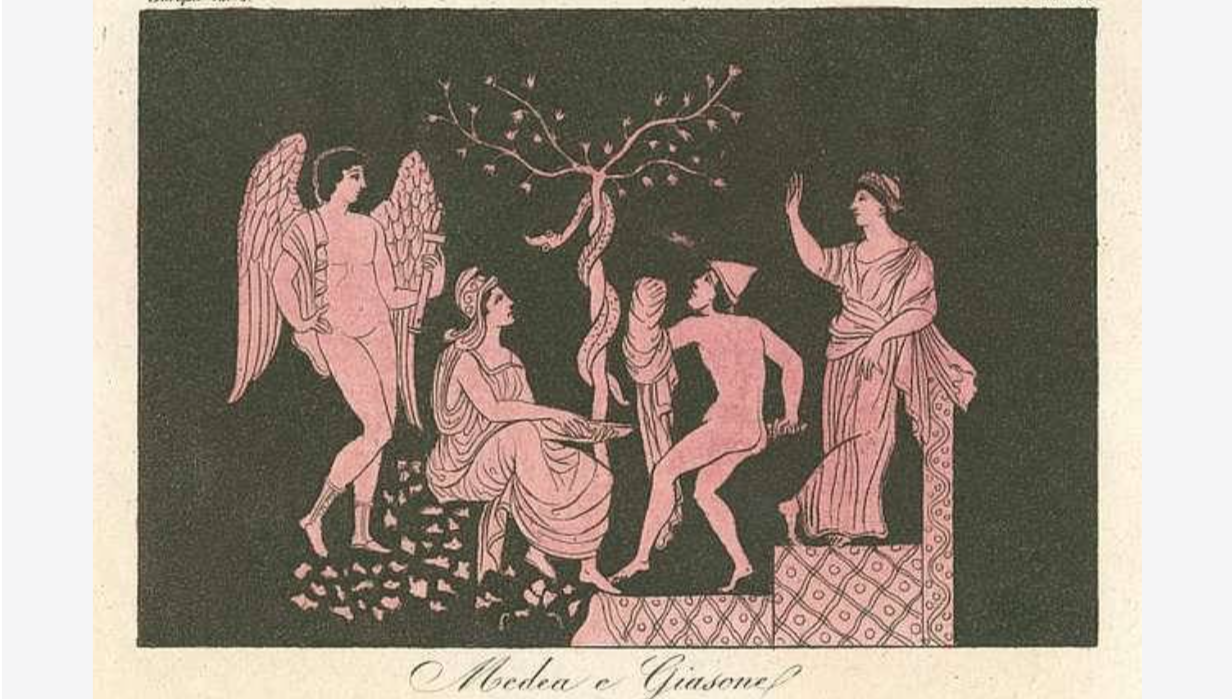
The backstory is essential: Medea was a princess of Colchis (a “Barbarian” land). She fell in love with Jason, the Greek hero. She used her magic to help him steal the Golden Fleece, betrayed her father, and murdered her own brother to save Jason. She gave up her home, her family, and her status for him.
- The Discard: The play opens in Corinth. Jason has abandoned Medea and their two sons to marry Glauce, the daughter of the King (Creon). He frames this as a “strategic move” to secure status for the family.
- The Gaslighting: When Medea confronts him, Jason tells her she should be grateful. He claims he “civilized” her by bringing her to Greece. He denies her pain and calls her hysterical. This is the Narcissistic Script.
- The Exile: King Creon, fearing Medea’s magic, banishes her. She negotiates one single day of delay. This is her fatal mistake—and her power.
- The Plan: Medea secures sanctuary in Athens (from King Aegeus) to ensure her future safety. Then, she turns to vengeance. She sends a poisoned robe to the new bride, Glauce.
- The Unthinkable Act: Glauce burns to death; Creon dies trying to save her. To complete her revenge, Medea kills her own children. She knows this will destroy Jason because he needs heirs to have a legacy.
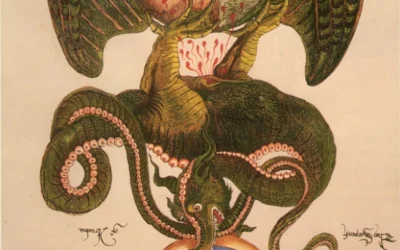
- The Escape: Jason arrives to kill her, but she rises above the house in a chariot drawn by dragons (sent by her grandfather, the Sun God Helios). She escapes, triumphant and ruined, leaving Jason in the dust.
Part II: Archetypal Figures
Medea: The Dark Anima and the Sorceress
Medea is the Sorceress archetype. In Jungian terms, she represents the Mana-Personality—a figure charged with supernatural power because she is connected to the deep unconscious.
She is also the “Barbarian.” To the Greek male mind, she represents the wild, emotional, dangerous “Other.” She is the Negative Anima that cannot be controlled by the Logos (Jason). When the Ego tries to exploit the Anima, the Anima turns into a demon.
Jason: The Narcissist and the False Hero
Jason is the ultimate deconstruction of the Hero archetype. He didn’t win the Golden Fleece; Medea won it for him. He is a Parasite.
He represents the Narcissistic Ego—obsessed with status, public image, and “rationality.” His arguments with Medea are textbooks examples of Gaslighting. He tells her that her anger is irrational, even though he has destroyed her life. He cannot feel empathy; he can only calculate advantage.
The Children: The Divine Child
The children represent the Potential or the “Third Thing” created by the union of opposites.
By killing them, Medea is killing the future. Psychologically, this represents the Regression of the psyche. When the trauma is too great, the psyche destroys its own potential for growth (the children) to prevent the abuser from having access to it. It is a “Scorched Earth” policy of the soul.
Part III: Clinical Deep Dive – The Narcissistic Abuse Cycle
Medea is often taught in literature classes, but it should be taught in therapy training. It perfectly illustrates the dynamic between the Empath/Borderline (Medea) and the Narcissist (Jason).
1. Idealization and Devaluation
Jason originally idealized Medea (“My Savior”). Once he got what he wanted (The Fleece/Safety), he devalued her (“Barbarian Witch”).
Medea is stuck in Cognitive Dissonance. She cannot reconcile the man who swore eternal love with the man who is now evicting her. This dissonance fuels her rage.
2. “I Did It For You” (Gaslighting)
Jason’s most chilling line is: “I married the princess for your sake, to give our sons royal brothers.”
This is the hallmark of the narcissist: reframing betrayal as benevolence. He denies Medea’s reality. If she accepts his version, she loses her mind. If she fights it, she is “crazy.” Medea chooses to be “crazy” (violent) rather than erased.
3. Reactive Abuse
Medea’s violence is Reactive Abuse. Jason is the primary aggressor (psychologically), but Medea is the one who commits the crime.
In high-conflict divorces, we often see the “Jason” figure remain calm and rational in court, while the “Medea” figure screams and rages. The court (society) punishes the reaction, ignoring the provocation. Euripides, however, forces the audience to see the provocation.
Part IV: The Meaning of the Chariot
The ending of the play is controversial. Why do the gods save a child-killer?
Medea flies away in the Chariot of Helios (The Sun).
Jungian Interpretation: The Sun represents the Self or the highest God-Image. The fact that the Sun saves Medea implies that Nature is Amoral. The Unconscious does not judge by human morality. Medea acted according to her nature (Fire/Passion). Jason acted against his nature (Oath-Breaker).
In the deep psyche, authenticity (even violent authenticity) is more powerful than artificial morality. Medea is a force of nature; forces of nature cannot be punished, only endured.
Part V: Conclusion
Medea is not a justification of murder; it is a revelation of the cost of oppression. It shows that when the Feminine (Feeling/Connection) is systematically devalued by the Patriarchy (Power/Status), it will eventually burn the house down.
For the modern reader, it asks: What parts of your own soul have you exiled to please a “Jason”? And what will happen when that exiled part returns to claim its debt?
Explore the Archetypes of Greek Drama
Taproot Therapy Collective Podcast
The Wounded Feminine
The Women of Trachis: Deianira’s Jealousy
Antigone: The Woman Who Said No
Helen: The Woman Blamed for War
Iphigenia in Aulis: The Sacrificial Daughter
The Narcissistic Hero
Hippolytus: The Puritanical Narcissist
The Unconscious & Madness
The Bacchae: The God of Madness
The Oresteia: The Furies of Guilt
Prometheus Bound: The Suffering God
The Suppliants: The Refugee Soul
Iphigenia in Tauris: The Healing of Trauma
Greek Tragedies Influence on Jung
The Psychology of the Peloponesian War
Bibliography
- Euripides. Medea. (Various Translations).
- Jung, C. G. (1959). Aion: Researches into the Phenomenology of the Self. Princeton University Press.
- Woodman, M. (1985). The Pregnant Virgin: A Process of Psychological Transformation. Inner City Books.
- Kerényi, K. (1978). Goddesses of Sun and Moon. Spring Publications.
- Herman, J. L. (1992). Trauma and Recovery. Basic Books.














0 Comments