
Chatbots can teach coping skills, and in short trials a few have reduced depression and anxiety symptoms more than a waitlist or self-help reading did. But psychotherapy changes people largely through a relationship with someone who can be affected by them. A chatbot can produce the words of that relationship without being in it. It is a tool, not a replacement.
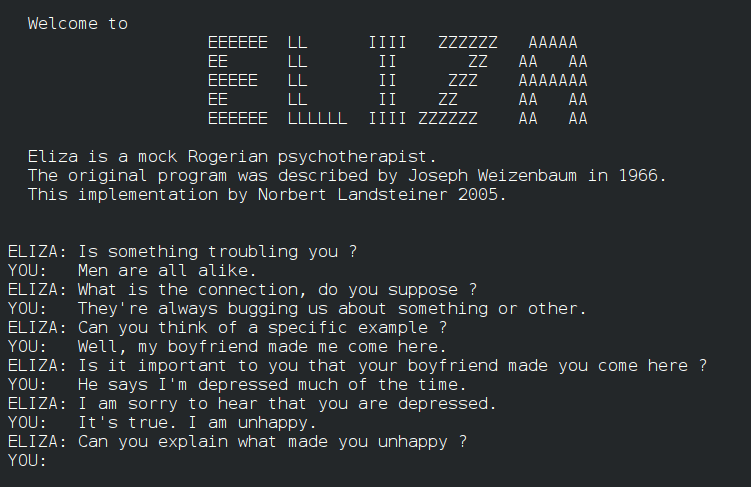
Joseph Weizenbaum saw this in the mid-1960s, when his program ELIZA, one of the first chatbots, persuaded people that it understood them. His warning has aged better than the hype on either side. The sturdiest findings in psychotherapy research, about the alliance, empathy, genuineness and the repair of ruptures, all describe something that happens between two people who can change each other. Language models now imitate the surface of that very well. What they cannot do is have something at stake in you. That gap, more than the quality of the sentences, is why a chatbot can be a useful tool and a poor substitute for a therapist.
What Weizenbaum saw in ELIZA
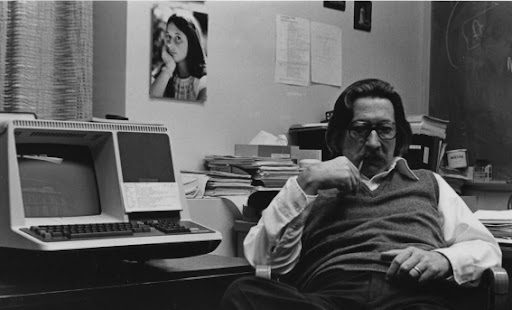
Weizenbaum was born in Berlin in 1923 to a Jewish family that left Germany in 1936 and settled in Detroit. He studied mathematics at Wayne University, went into psychoanalysis and into computing in the same unsettled stretch of his life, built machines for General Electric, and joined the MIT faculty in 1963.2 The psychoanalysis matters. Tarnoff argues that it shaped how Weizenbaum thought about minds: as having depth, opacity and history rather than as machinery.2 That is the view ELIZA ended up testing.
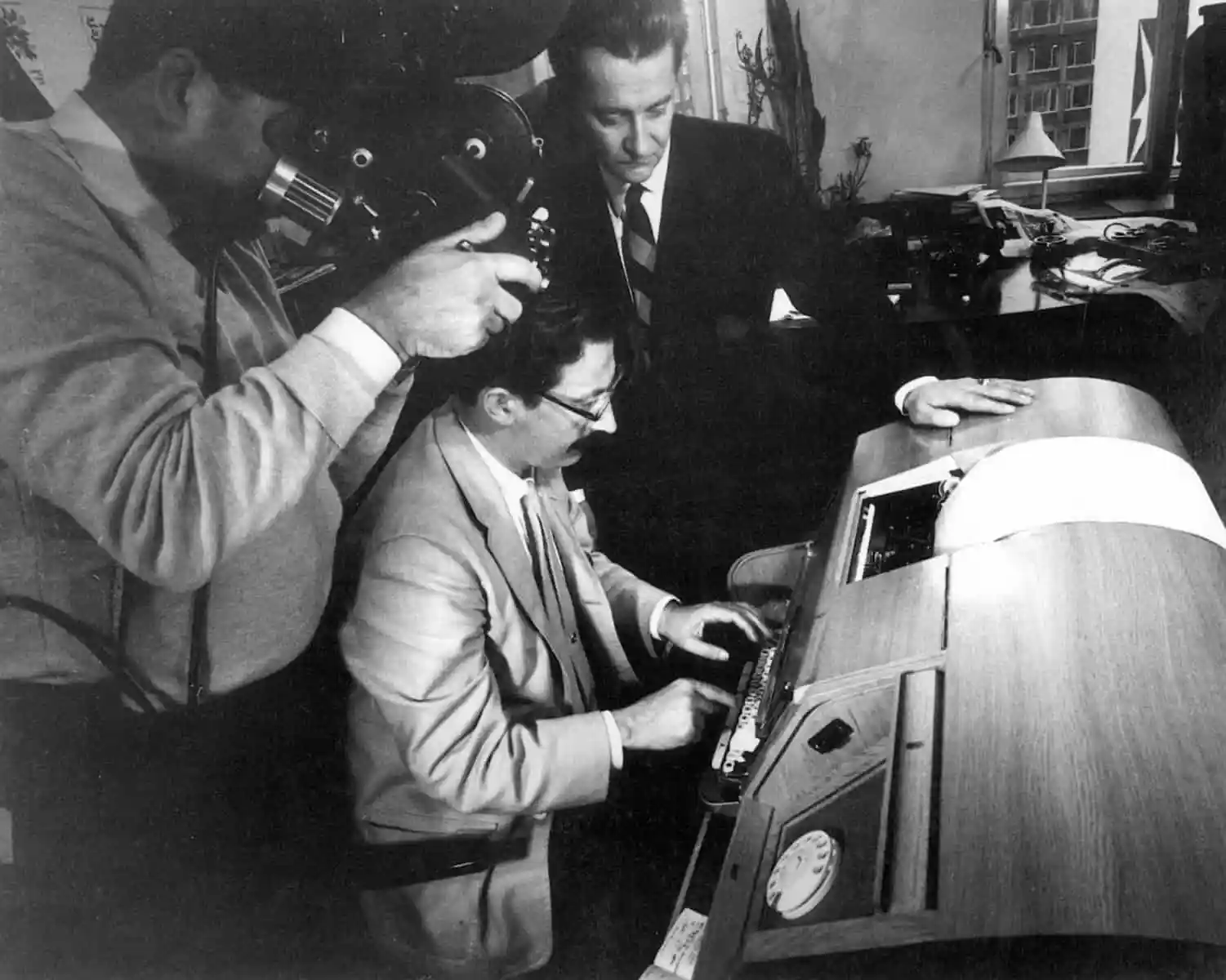
ELIZA, described in Communications of the ACM in January 1966, was a pattern-matcher. It scanned typed input for keywords, broke the sentence apart by rule, and reassembled the pieces into a reply. Its best-known script, DOCTOR, imitated a Rogerian therapist. Weizenbaum explained the choice plainly: the psychiatric interview “is one of the few examples of categorized dyadic natural language communication in which one of the participating pair is free to assume the pose of knowing almost nothing of the real world.”1 A therapist who answers “Tell me about boats” is assumed to have a purpose. ELIZA borrowed that assumption and had no purpose at all.
The people typing supplied the rest. “Some subjects have been very hard to convince that ELIZA (with its present script) is not human,” he wrote, and in the paper’s closing discussion he added a caution: ELIZA “shows, if nothing else, how easy it is to create and maintain the illusion of understanding.”1 In a follow-up article the next year he added the story that has followed the program ever since. His secretary, who knew it was only a program, asked for some time with it, and after a few moments asked him to leave the room.2 Retellings tend to dress the scene up with a date, a setting and a lifetime of haunting. His own account is shorter and more useful: he took the anecdote as evidence of how well the program “maintains the illusion of understanding.”
What alarmed him more were the experts. Some psychiatrists greeted ELIZA as a first step toward automated psychotherapy.2 In 1966 the Stanford psychiatrist Kenneth Colby and two colleagues published “A computer method of psychotherapy” in the Journal of Nervous and Mental Disease,3 and by the early 1970s Colby had built PARRY, a program that simulated a person with paranoid schizophrenia. Weizenbaum’s answer was his 1976 book Computer Power and Human Reason: From Judgment to Calculation.4 There he wrote that he had not realized that “extremely short exposures to a relatively simple computer program could induce powerful delusional thinking in quite normal people.” His larger argument was that whether a computer can do a task is a different question from whether it should. Calculation can be automated. Judgment comes from values formed in a human life, and a machine has not lived one.2
Ben Tarnoff, in a long 2023 profile of Weizenbaum, reads the ELIZA effect as a computerized version of transference: people attributed understanding and empathy to software, much as patients attribute old feelings to an analyst.2 That reading is the right starting point for a therapist. Transference is not a malfunction. It is raw material, and in therapy something useful happens to it because there is a real person on the other side who receives it, is moved by it, and does not simply hand it back.
What the AI therapy trials actually show
The honest answer to “does AI therapy work?” is “some of it, for some symptoms, over short periods, compared with weak controls.” That is not nothing.
The first widely cited trial tested Woebot, a cognitive behavioral chatbot. In 2017, 70 adults aged 18 to 28 were randomized to two weeks of Woebot or to a National Institute of Mental Health e-book on depression. The Woebot group’s depression scores (PHQ-9) fell while the e-book group’s did not; both groups improved on anxiety among completers.5 The trial was small, unblinded and short, and Woebot’s founder was a co-author. A later company-authored study of more than 36,000 users reported “bond” scores on a working-alliance questionnaire, taken within five days of starting, comparable to those published for outpatient CBT.6 Two details often get lost. Woebot’s replies were pre-scripted, not generated by a language model, and the company shut its app down in mid-2025, with its founder attributing the decision largely to the cost and difficulty of meeting FDA requirements for marketing authorization.7
The first randomized trial of a fully generative therapy chatbot was Dartmouth’s Therabot study, published in NEJM AI in 2025 and run by the team that built the app. Researchers randomized 210 adults with clinically significant symptoms of major depression, generalized anxiety or high risk for eating disorders to four weeks of Therabot or a waitlist. Therabot users improved more in all three groups, with depression scores falling about 6 points on average against about 2.6 for the waitlist, and participants rated their alliance with the bot as comparable to ratings of human therapists.8 Those are real results. The comparison, though, was with no treatment, not with a therapist, and follow-up ended at eight weeks. The study team also stood ready to step in if a participant raised an acute safety concern or the software responded badly. The first author, psychiatrist Michael Heinz, said that “no generative AI agent is ready to operate fully autonomously in mental health,” and the senior author, Nicholas Jacobson, said, “There is no replacement for in-person care, but there are nowhere near enough providers to go around.”9
Across studies, a 2023 meta-analysis of 15 randomized trials found that conversational agents reduced symptoms of depression (Hedges’ g 0.64) and distress (g 0.70), with wide confidence intervals, and produced no significant improvement in overall psychological well-being.10 The authors called for research on long-term effects, which remains thin. The fair summary is that a structured chatbot can deliver psychoeducation and skills practice, and that this helps some people in the short run. It says little about what happens over the months in which most therapy does its slower work.
Why the words can sound better than ours
The uncomfortable finding is that machine-written support often reads as warmer than what people write. In a 2023 study of 195 health questions from a Reddit forum, licensed health care professionals preferred ChatGPT’s answers to physicians’ answers in 78.6% of evaluations, and rated 45.1% of the chatbot’s responses empathetic or very empathetic against 4.6% of the physicians’. The chatbot’s answers were also about four times longer.11 In a 2025 study built on couples-therapy vignettes, 830 participants could rarely tell ChatGPT’s responses from therapists’, and generally rated ChatGPT’s higher on core therapy principles, though the authors noted that the vignettes had no real therapeutic context.12
Then comes the finding that matters most for the thesis. Across nine studies with 6,282 participants, Rubin and colleagues gave people AI-generated empathic replies to their own emotional situations and labeled some as written by a person and some as written by AI. Every reply was written by AI, yet replies labeled as human were rated as more empathic and supportive, and merely suspecting that AI had helped lowered the ratings. When people wanted emotional engagement, they consistently chose a human.13
So empathy is not only a property of sentences. Part of what makes being understood land is knowing that someone spent attention on you, could have looked away, and did not. Weizenbaum’s secretary felt understood, and the feeling was real. What was missing was the someone. Science fiction got there early; the replicants of Blade Runner are frightening because the performance of feeling is complete, a theme we take up in our essay on Blade Runner and the corporate manufacture of the human.
What a chatbot cannot do: be affected by you
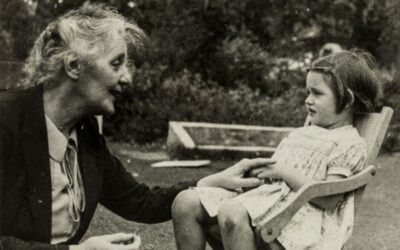
ELIZA copied the most visible part of Carl Rogers’s method, the reflection. Rogers’s own 1957 account of what produces change listed something ELIZA could not copy: the therapist must be “congruent,” a genuine and integrated person in the relationship whose awareness matches what they are actually experiencing.14 A program has nothing inside for its words to match or contradict. A 2018 meta-analysis of 21 studies found that congruence predicts improvement (r = .23).15 Therapist empathy predicts outcome about as strongly (r = .28 across 82 samples),16 and the alliance correlates with outcome at r = .28 across 295 studies and more than 30,000 patients.17 These are correlations, and they cannot settle causation on their own. But they are among the most consistent results the field has.
Two further findings get closer to the heart of the matter. Countertransference, the therapist’s own emotional reactions to the client, is modestly linked to worse outcomes when it simply happens (r = −.16), while the therapist’s capacity to notice and manage those reactions is linked to better ones (r = .39, though across only nine studies).18 And when the alliance breaks down, through a misunderstanding, a clumsy remark or a disagreement about goals, the repair of that rupture is associated with better outcomes (r = .29).19 Both findings describe a therapist who is moved, sometimes gets it wrong, and works it through with the client in the room. Being affected is not the therapeutic ingredient by itself. Being affected and staying in relationship is.
Peter Fonagy and Elizabeth Allison argue that the experience of being accurately understood by another mind helps rebuild epistemic trust, a person’s openness to learning from other people.20 The trust in question is trust in a person, someone whose understanding costs them something and could be withdrawn. A model trained to produce agreeable text cannot be wrong about you in a way that hurts it, cannot be surprised by you, and cannot be changed by knowing you. A 2025 research team that tested language models against clinical guidance reached the same conclusion from the engineering side: a therapeutic alliance, they wrote, “requires human characteristics (e.g., identity and stakes).”21 In depth-psychological terms, the transference needs someone real to land on. The psychology of video games shows how readily people attach to responsive virtual figures. Attachment is not the problem. The problem is that the figure cannot attach back.
A machine can beat a grandmaster without caring about the game, and the history of chess and the human mind is partly a history of learning that calculation and meaning are different things. Therapy is closer to meaning than to calculation.
Where AI therapy goes wrong
The failure modes are not hypothetical. In that 2025 study, current language models, including GPT-4o, expressed stigma toward people with mental health conditions and responded inappropriately to common and critical clinical situations, including encouraging delusional thinking, which the authors linked to the models’ sycophancy. Larger and newer models did not fix the problem.21 Sycophancy is the clinical issue in one word. A good therapist sometimes says the thing you do not want to hear. A system tuned to keep you engaged is pulled the other way.
In 2023 the National Eating Disorders Association took down its chatbot, Tessa, after an eating disorder consultant showed it giving calorie-deficit and weight-loss advice. The tool had been designed by eating disorder researchers with preprogrammed responses. The operating company later added generative AI, and the helpline staffed by people had already been shut down.22 In August 2025 the parents of a 16-year-old in California who died by suicide sued OpenAI, alleging that ChatGPT engaged with his suicidal thinking for months and discouraged him from telling his parents about it. OpenAI has denied responsibility, and the case is unresolved.23 The same month, Illinois enacted the Wellness and Oversight for Psychological Resources Act, which prohibits using AI to provide mental health care and therapeutic decision-making while allowing licensed professionals to use it for administrative and supplementary support.24
The older dream of detecting risk by algorithm has its own record. A 2019 systematic review of 64 suicide prediction models covering more than 14 million people found good overall classification but positive predictive values near zero for suicide deaths: almost everyone the models flagged did not die by suicide.25 The fantasy of forecasting human behavior from data is an old one, as Asimov’s psychohistory shows, and it keeps running into the fact that individual lives are not averages.
Weizenbaum also offered a structural reading that still fits. He argued that the computer arrived “just in time” to preserve institutions that might otherwise have had to change.2 AI therapy can work the same way. If a health system has too few therapists, a chatbot lets it report that care was delivered without training, paying or keeping more of them. Lewis Mumford made a related argument about the megamachine, which we trace in The Machine as False God. Access is a real problem. The question is whether the answer to it is more care or a simulation of care.
What this looks like in therapy
None of this means a client should hide their chatbot use from a therapist, or that a therapist should lecture about it. In practice it is more useful to treat it like any other relationship in a person’s life and get curious. What do you take to it that you do not bring to people? What does it give you that feels hard to ask for? Often the answer points straight at the work: shame about being a burden, fear of being judged, or a history in which human attention came with a price.
A few patterns come up clinically. Anxious and obsessive loops feed on reassurance, and a chatbot is an inexhaustible source of it, available at 3 a.m. and never tired of the same question. Reassurance relieves the anxiety for a moment and keeps the cycle going, so a therapist may help a client notice when a chatbot conversation has become a compulsion. Lonely clients may find that a bot that always agrees makes ordinary people, who disagree and get distracted, feel harder to tolerate. And people with trauma histories sometimes rehearse disclosures with a chatbot first. That can be a reasonable bridge, as long as the disclosure eventually reaches someone who can respond as a person.
On the therapist’s side, the work is the part a program cannot do. It means noticing your own reactions in the room and using them rather than acting them out. It means saying “I think I misread you last week” and repairing it. It means tracking the body as well as the words, which is central to somatic and depth-oriented work, and bearing the weight of mortality, loss and choice alongside someone, which is the territory of existential therapy. Between sessions, a chatbot can reasonably help with structured practice, such as logging thoughts, rehearsing a skill or drafting what you want to say. It should not be your crisis plan. If you are thinking about suicide or are in danger, call or text 988, or use the crisis resources for the Birmingham area.
Weizenbaum’s question, sixty years on
The useful question was never whether a machine can produce therapeutic sentences. ELIZA showed in 1966 that people will supply the meaning, and today’s models produce sentences that raters often prefer to those of busy professionals. Weizenbaum’s question was what we lose when we accept the sentences in place of the person. He also had a humbler point that therapists should keep in mind. In his 1967 follow-up he wrote that no person fully understands another either: “There is an ultimate privacy about each of us that absolutely precludes full communication of any of our ideas to the universe outside ourselves.”2 Therapy does not get around that privacy. It works at its edge, with two people trying, failing and trying again to reach each other. The trying is the treatment, and it needs someone on the other side who can be reached.
If you have been leaning on a chatbot and want to try the slower, human version, Taproot Therapy Collective sees clients in Hoover. You are welcome to contact us with questions before deciding anything.
References
- Weizenbaum, J. (1966). ELIZA: A computer program for the study of natural language communication between man and machine. Communications of the ACM, 9(1), 36–45. https://doi.org/10.1145/365153.365168
- Tarnoff, B. (2023, July 25). Weizenbaum’s nightmares: How the inventor of the first chatbot turned against AI. The Guardian. https://www.theguardian.com/technology/2023/jul/25/joseph-weizenbaum-inventor-eliza-chatbot-turned-against-artificial-intelligence-ai
- Colby, K. M., Watt, J. B., & Gilbert, J. P. (1966). A computer method of psychotherapy: Preliminary communication. The Journal of Nervous and Mental Disease, 142(2), 148–152. https://doi.org/10.1097/00005053-196602000-00005
- Weizenbaum, J. (1976). Computer power and human reason: From judgment to calculation. W. H. Freeman.
- Fitzpatrick, K. K., Darcy, A., & Vierhile, M. (2017). Delivering cognitive behavior therapy to young adults with symptoms of depression and anxiety using a fully automated conversational agent (Woebot): A randomized controlled trial. JMIR Mental Health, 4(2), e19. https://doi.org/10.2196/mental.7785
- Darcy, A., Daniels, J., Salinger, D., Wicks, P., & Robinson, A. (2021). Evidence of human-level bonds established with a digital conversational agent: Cross-sectional, retrospective observational study. JMIR Formative Research, 5(5), e27868. https://doi.org/10.2196/27868
- Aguilar, M. (2025, July 2). Why Woebot, a pioneering therapy chatbot, shut down. STAT. https://www.statnews.com/2025/07/02/woebot-therapy-chatbot-shuts-down-founder-says-ai-moving-faster-than-regulators/
- Heinz, M. V., Mackin, D. M., Trudeau, B. M., Bhattacharya, S., Wang, Y., Banta, H. A., Jewett, A. D., Salzhauer, A. J., Griffin, T. Z., & Jacobson, N. C. (2025). Randomized trial of a generative AI chatbot for mental health treatment. NEJM AI, 2(4), AIoa2400802. https://doi.org/10.1056/AIoa2400802
- Kelly, M. (2025, March 27). First therapy chatbot trial yields mental health benefits. Dartmouth News. https://home.dartmouth.edu/news/2025/03/first-therapy-chatbot-trial-yields-mental-health-benefits
- Li, H., Zhang, R., Lee, Y.-C., Kraut, R. E., & Mohr, D. C. (2023). Systematic review and meta-analysis of AI-based conversational agents for promoting mental health and well-being. npj Digital Medicine, 6, 236. https://doi.org/10.1038/s41746-023-00979-5
- Ayers, J. W., Poliak, A., Dredze, M., Leas, E. C., Zhu, Z., Kelley, J. B., Faix, D. J., Goodman, A. M., Longhurst, C. A., Hogarth, M., & Smith, D. M. (2023). Comparing physician and artificial intelligence chatbot responses to patient questions posted to a public social media forum. JAMA Internal Medicine, 183(6), 589–596. https://doi.org/10.1001/jamainternmed.2023.1838
- Hatch, S. G., Goodman, Z. T., Vowels, L., Hatch, H. D., Brown, A. L., Guttman, S., Le, Y., Bailey, B., Bailey, R. J., Esplin, C. R., Harris, S. M., Holt, D. P., McLaughlin, M., O’Connell, P., Rothman, K., Ritchie, L., Top, D. N., & Braithwaite, S. R. (2025). When ELIZA meets therapists: A Turing test for the heart and mind. PLOS Mental Health, 2(2), e0000145. https://doi.org/10.1371/journal.pmen.0000145
- Rubin, M., Li, J. Z., Zimmerman, F., Ong, D. C., Goldenberg, A., & Perry, A. (2025). Comparing the value of perceived human versus AI-generated empathy. Nature Human Behaviour, 9(11), 2345–2359. https://doi.org/10.1038/s41562-025-02247-w
- Rogers, C. R. (1957). The necessary and sufficient conditions of therapeutic personality change. Journal of Consulting Psychology, 21(2), 95–103. https://doi.org/10.1037/h0045357
- Kolden, G. G., Wang, C.-C., Austin, S. B., Chang, Y., & Klein, M. H. (2018). Congruence/genuineness: A meta-analysis. Psychotherapy, 55(4), 424–433. https://doi.org/10.1037/pst0000162
- Elliott, R., Bohart, A. C., Watson, J. C., & Murphy, D. (2018). Therapist empathy and client outcome: An updated meta-analysis. Psychotherapy, 55(4), 399–410. https://doi.org/10.1037/pst0000175
- Flückiger, C., Del Re, A. C., Wampold, B. E., & Horvath, A. O. (2018). The alliance in adult psychotherapy: A meta-analytic synthesis. Psychotherapy, 55(4), 316–340. https://doi.org/10.1037/pst0000172
- Hayes, J. A., Gelso, C. J., Goldberg, S., & Kivlighan, D. M. (2018). Countertransference management and effective psychotherapy: Meta-analytic findings. Psychotherapy, 55(4), 496–507. https://doi.org/10.1037/pst0000189
- Eubanks, C. F., Muran, J. C., & Safran, J. D. (2018). Alliance rupture repair: A meta-analysis. Psychotherapy, 55(4), 508–519. https://doi.org/10.1037/pst0000185
- Fonagy, P., & Allison, E. (2014). The role of mentalizing and epistemic trust in the therapeutic relationship. Psychotherapy, 51(3), 372–380. https://doi.org/10.1037/a0036505
- Moore, J., Grabb, D., Agnew, W., Klyman, K., Chancellor, S., Ong, D. C., & Haber, N. (2025). Expressing stigma and inappropriate responses prevents LLMs from safely replacing mental health providers. In Proceedings of the 2025 ACM Conference on Fairness, Accountability, and Transparency (pp. 599–627). Association for Computing Machinery. https://doi.org/10.1145/3715275.3732039
- Chang, A., & Wells, K. (2023, June 8). Eating disorder helpline takes down chatbot after it gave weight loss advice. NPR. https://www.npr.org/2023/06/08/1181131532/eating-disorder-helpline-takes-down-chatbot-after-it-gave-weight-loss-advice
- Raine v. OpenAI, Inc., No. CGC-25-628528 (Cal. Super. Ct., San Francisco County, complaint filed Aug. 26, 2025).
- Illinois Department of Financial and Professional Regulation. (2025, August 4). Gov Pritzker signs legislation prohibiting AI therapy in Illinois. https://idfpr.illinois.gov/news/2025/gov-pritzker-signs-state-leg-prohibiting-ai-therapy-in-il.html
- Belsher, B. E., Smolenski, D. J., Pruitt, L. D., Bush, N. E., Beech, E. H., Workman, D. E., Morgan, R. L., Evatt, D. P., Tucker, J., & Skopp, N. A. (2019). Prediction models for suicide attempts and deaths: A systematic review and simulation. JAMA Psychiatry, 76(6), 642–651. https://doi.org/10.1001/jamapsychiatry.2019.0174
















0 Comments