
Are we doing science to find out what is true, or are we doing science to produce numbers? Those are not the same job. At some point we quietly switched from the first one to the second one and kept the same name on the door. We built an enormous machine for generating numbers, and an even bigger machine for generating reasons we never have to change the first machine, and we called the whole apparatus knowledge.
Imagine marine biology. Imagine if marine biologists could not agree on whether marine biology was real. Could not agree on what it studied. Could not agree on what it was even for. Imagine they got in fistfights at conferences about whether the ocean exists. We would, gently, conclude that marine biology was fake. And we would be right, because a science earns the name by having rough agreement on three things. What is the object. What is the method. What is it for. That is the whole membership card. A field that cannot give you a straight answer to any of the three is not doing science. It is wearing the coat.
We run that test on astrology without blinking. We run it on homeopathy. We do not run it on economics, and we do not run it on a lot of psychology, and I want to know why, because by that test both of them fail in every section, the way a kid who did not study fails.
The Best PTSD Results Ever Produced, Rejected
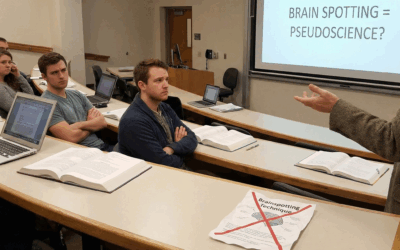
In June of 2024 the FDA convened an advisory committee to decide whether to approve MDMA-assisted therapy as a treatment for PTSD. The results in front of them were the best anybody has ever produced for PTSD, full stop. Around two thirds of the people who went through the treatment no longer met criteria for the disorder. Bigger than any PTSD drug we have. And the committee voted it down. Nine to two that it was not proven effective, ten to one that the risks were not worth the benefits, and a couple of months later the agency made it official and told the sponsor to run the whole thing over again.
The central reason was that the patients could tell they were on the drug.
It is not what it looks like. For about forty-five years the research has been quietly telling us something, and it is not a flaw in the research. It is the finding. The finding is that the brain can tell when it is being measured, and it changes in response to being measured. That is not noise to be cleaned up. That is a property of the thing itself. It is one of the truest things we have ever learned about the mind, and it is the exact thing a psychology would have to be a science of. If you go through a process where you know you are changing, the knowing is part of the change. There is no version of you that changed without knowing. So a science of change that cannot allow the person to know they are changing is not a science of change. It is a science of some other thing that we keep calling change.
And before anybody emails me, I am not a psychedelics guy. People assume I am, because I do trauma work, and they want me to be the one who tells you mushrooms will fix your life. I am not that guy. I am not following the molecule. I am following the science, and I only care about this MDMA story because it is the clearest case I have ever seen of the science being done right and then thrown out for being done right.
Trust in Numbers
The historian Theodore Porter wrote a book called Trust in Numbers. He went looking for why some fields lean so hard on measurement, on turning everything into a number, and what he found is that it is not the confident sciences that do it. Physics does not have to keep proving it is rigorous. It is the insecure fields, the ones that cannot defend their judgment in the open, that reach for the number, because a number feels like it fell out of the sky instead of out of a person you could argue with. His phrase for it is a technology of distance. The number is not there to find the truth. It is there to protect you from having to defend yourself.
We have started believing the number more than the person. When the number and the person disagree, we side with the number. Somebody walks out of treatment and they are better, you can see they are better, but the paperwork is messy, so we trust the paperwork and not the person. We will sit across from somebody who is plainly, observably well, and we will look at a form that says we cannot be sure yet, and we will believe the form.
Once you see it that way, you realize the thing we are protecting is not the truth. The point was never to find the spirit. The point is to build the church. To spend enormous amounts of money building the church, maintaining the church, and credentialing the priests , because this is a secular religion now and not a science. We know, self-evidently, the same way we know a hundred other things we never ran a trial on, that some of this stuff works. We can watch it work. And we are not allowed to accept what we watched, because the ritual we believe turns observation into knowledge matters more to us than the observation does. The machine is more important than the thing the machine was built to find.
The Warm Ghost and the Cold Machine
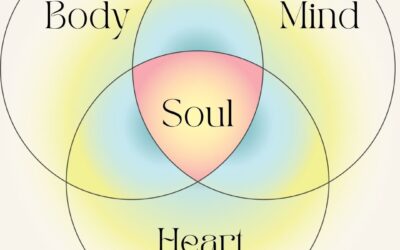
This lands hardest on psychology because psychotherapy was never supposed to be studying what the apparatus is making it study. Therapy was always the study of the warm ghost. The living, moving, relational thing. The person. And you have to pick. You cannot study the warm ghost with the instruments built for the cold machine of bureaucracy, because those instruments were designed to do the opposite thing. They were built to hold something still and count it. The warm ghost is the part that will not hold still. So when you bring the bureaucratic instrument to the living thing, you do not measure the living thing. You kill the part that was alive, and you measure what is left. You have to choose which one you are actually studying, the ghost or the machine, and we chose the machine and kept calling it the ghost.
The treatment works on your mind. To find out whether it worked, we measure your mind. And the only instrument we have for measuring a mind is a mind. The thing being treated, the thing being measured, and the ruler are all the same object. They are all you. So when the committee says, well, maybe they only believe they got better, that sentence has a hidden requirement. With your liver, sure, you can believe it is healing while it is quietly failing, two different things in two different places. But with your mind, the believing and the feeling are happening in the same place, because they are the same place. Asking us to separate them is asking us to separate the thinking from the thinking that you are thinking. There is no instrument for that. It was never two things.
What the Field Already Admitted About Itself
The field has already admitted all of this about itself, and then ignored the admission. Two examples carry most of the weight.
The DSM, the diagnostic manual every therapist and psychiatrist in this country runs on, the book that decides who has what. In 2013 the director of the National Institute of Mental Health, the federal agency that funds the research, announced that the manual’s categories lack validity. Not that they needed tweaking. That they do not cut nature at any real joint, that they were arrived at by committee and consensus rather than discovered, and that the agency was going to stop organizing its research around them. The government’s own research arm said the map is not real. And practice did not change. Everybody kept diagnosing out of the book the next morning, because the book is what the insurance pays on. The book is the church, and the church does not close because the theology turned out to be wrong.
And STAR-D. The biggest, most expensive real-world study of antidepressants ever run, tens of millions of dollars, built to answer the simple question of how well these drugs actually work when you follow real people through treatment after treatment. When researchers went back into the raw data years later, the real number was grim, far worse than what got reported, the remission rate quietly inflated in the published version. And we kept prescribing exactly the same way. The field ran its own biggest test, the test came back bad, and nothing happened, because the result threatened the church, and the church wins.
The Prize That Isn’t a Nobel
I am a therapist, not an economist, but economics caught this disease first and worst. It built the most beautiful version of the church, and the prize is the clearest single proof that the whole thing is a costume.
There are two Nobel Prizes, and they are not the same animal. The real Nobels, physics, chemistry, medicine, literature, peace, come from Alfred Nobel’s will. He died, he left his fortune, he said give these five prizes, and they are paid for out of his estate, exactly as he wrote it. That is what the name means. It carries the authority of the realest sciences there are.
There is no Nobel Prize in economics. There never was. The thing they read off the news every October was invented in 1968, seventy years after Nobel died, by the central bank of Sweden, for the bank’s own three hundredth birthday. The bank threw itself a birthday party and the party favor was a prize for economists with Nobel’s name bolted onto it. It is not in the will. Nobel never mentioned it. His own family objected, loudly, more than once, and the bank simply agreed to pay for it forever out of its own pocket and kept the name. One of his descendants called it a PR coup by economists to make themselves look legitimate. Another called it a cuckoo’s egg in the Nobel nest.
And the reason a central bank specifically wanted to do this is the whole story in one move. Monetary policy, who gets money and who does not, is a political question. One of the most political questions there is. And a central bank does not want it argued about. It wants to lift that question up out of reach of the voters and set it somewhere quiet, somewhere that looks settled and objective and above the fight. The fastest way to make a thing un-arguable is to call it a science. You can argue with a politician. You cannot argue with gravity. So you dress your politics in the robes of gravity, you pin a Nobel on it, and now anyone who argues is just a person who does not understand the science. That is Porter’s technology of distance, built at national scale, on purpose.
The people who won this thing knew. The two economists who shared it in 1974 came from opposite ends of the universe, Hayek the patron saint of free markets and Myrdal the socialist, and both of them turned on the prize. Hayek used his own acceptance speech to say the prize gives an economist an authority no economist should ever possess. Myrdal later said the thing should be abolished. When the free-market saint and the socialist agree that the medal is a fraud, the argument about the medal is over.
Mathiness and the Closed Box
The usual defense is that the math is real, that the math is what makes it a science. One of the people who won the prize spent a whole paper on why the math is a disguise. His name is Paul Romer, and he coined a word for it: mathiness. Not mathematics. Mathiness. Using equations not to pin your ideas tighter to reality but to perform rigor, to look like physics, while you smuggle your politics through underneath where nobody is allowed to inspect it. The math is not a tool for finding things out. It is a smokescreen with good production values.
And it cannot work even in principle, and the reason matters for psychology too. A philosopher named Tony Lawson pointed out that all that beautiful deductive math only runs inside a closed system. A sealed box where the parts do not change and the same cause always produces the same effect. That is a physics lab. That is not people. People are an open system. We are historical, we react to being studied, we do the opposite of what we did last time just to feel free. So economics does the insane thing. Instead of picking a method that fits people, it shaves the people down until they fit the method. It assumes we are identical rational robots with perfect information, because the math needs that, and then it acts shocked every time the real economy refuses to behave like the equation. That move, shaving the subject down to fit the instrument, is the same move psychology makes, for the same reason.
And it is not harmless, because the models do not just describe the world badly. They reshape it. A sociologist named Donald MacKenzie put it perfectly: a financial model is an engine, not a camera. It does not photograph the market, it drives it. When everyone adopted the famous options-pricing formula, traders started pricing options the way the formula said to, until the market bent into the shape of the equation and the equation came true by force. The map did not match the territory. The map won. It went out and conquered the territory and made it obey, and then reality drifted a hair off the model, the way it always does, and the whole thing blew up, in 1987, and again in 1998 when a fund full of geniuses using that formula put a crater in the financial system. The map won, and then the map killed the people standing on it.
This Is Not a Conspiracy Theory
None of this is a conspiracy theory. It is the exact opposite of one. I am using economics and psychology because those are the two I happen to know. I am a therapist who reads too much. I am not an economist, and I am not going to pretend I have the range to do this to every field. But this is not a story about economics, and it is not a story about psychology. It is a story about what happens to any soft science under the incentive structure we live inside. It happens to all of them. It has to. Not because there is a room full of villains. There is no room. There is no cabal. It is the incentives. The grant goes to the study that fits the forms. The career goes to the person who does not rock the church. The money goes to building more church. Economics and psychology are not the disease. They are two places I happen to be standing where I can show you the disease.
It sounds insane at first, and then it is the most obvious thing in the world. These systems are dumber than any one person inside them. Dumber than you. Dumber than me, and I am not a smart man. A bureaucracy can arrive at a decision so stupid that not one single human being in the entire chain would have made it on their own, and every person in the chain can see it is stupid, and it happens anyway, because the system is not the sum of the people. It is the rules between them. And the danger is that because the system can be dumber than any person in it, and because almost nobody understands how it actually works, the few who do understand the gears can walk in and use them. To manipulate you. To make money. To launder a lie into a fact. It can only be run that way as long as most people cannot see the gears. The moment enough people can see them, it cannot be done anymore. That is the entire reason I write these.
How Psychology Caught the Same Disease
My own field caught the identical thing for the identical reason: insecurity, the runt sitting next to medicine wanting to be taken seriously. So psychiatry built a giant apparatus of measurement to make suffering look like something you could weigh in a lab.
It reified. That is the word. Reification is taking something fluid and alive and treating it like a rock sitting in the brain. The manual draws a hard line where there is only a gradient, so you either have major depressive disorder or you do not, like a switch, when no human life has ever worked like a switch. And the rating scales are worse. We hand you a form, ask you to grade a feeling from zero to three, and then we do arithmetic on it. We add the feelings up, as if the distance from numb to a little sad is the same size as the distance from a little sad to wanting to die. You come in, you fill out the form, the form says fifteen. Congratulations, you are carrying fifteen units of depression. A clinician will be right with you. And everything that actually makes the suffering yours, the grief, the marriage, the lost job, the meaning of any of it, gets swept off the table as noise, because it will not fit in the box.
The Ghost in the Active Ingredient
Then we go looking for the mechanism of action, and this is where the whole thing comes apart. We did not simply decide therapy is a drug. We decided therapy has to work the way a drug works. That you find the one active variable, the single ingredient, and that one thing changes reality, and everything else is noise to subtract. But that was never how therapy worked. Therapy worked by the opposite move. It put you into communion with a whole crowd of realities at once: your past, your body, the person across from you, the things you have spent years refusing to look at. A lot of those realities made you feel worse, not better, and that was the point. The upset was the medicine doing its job. Clarity came out of contact with all of it, not out of isolating one clean variable. And we decided to pretend it does not work that way. Then we built a science that only knows how to study things that work the other way. Then we stand around confused about why the science keeps failing to find the thing that heals. We are hunting for a single active ingredient in a process whose entire nature is that there is no single active ingredient, and we are calling the hunt rigorous.
The research has been screaming this for decades. Bruce Wampold has spent his whole career on it, and the answer keeps coming back the same: there is no single active ingredient. When you compare real therapies against each other, the specific techniques barely move the needle on whether people get better. Researchers run dismantling studies where they pull the supposedly critical ingredient out, the part the whole theory is built on, and run the therapy again without it, and the outcomes are the same. The active ingredient is a ghost. What heals people is the relationship, the ritual, the expectation, one nervous system actually witnessed by another in a room. And we have decided the only acceptable way to prove anything is the randomized controlled trial, a machine built to do one thing: hold everything still and isolate one variable. Which is a miracle for an antibiotic. But in therapy the context is not the noise around the medicine. The context is the medicine. So to run the trial you have to surgically remove the one thing that works, and then you stand over the body going, huh, weak effect, must not work very well. You killed it to study it.
Physics Got Humble. We Got Stricter.
Underneath all of it is the observation problem, which is old news. Once you observe something you have changed it, and you cannot rewind time and observe it again the way it was before you touched it. That is true in physics and it is more true of people. You put somebody in a study and they behave differently because they know they are in a study. We have names for that: the Hawthorne effect, demand characteristics. A questionnaire does not read your mood off a dial. It reaches in and forces a swirl of contradictory feelings to collapse into one answer that did not exist until you asked, which is why changing the order of the questions changes the answers. The instrument is not recording the state. It is creating it.
Their favorite phrase is real science. Physics is the realest one there is, the hardest of the hard, and physics, when it got down to the bottom of things, gave up the detached observer. Gave it up. The serious physicists will tell you there is no God’s-eye view, no way to see the thing as it really is with nobody looking, because the looking is part of what you get. They got humble. The hardest science on earth looked at the most basic stuff in the universe and admitted the observer is in the picture and cannot be removed. So if you genuinely want to model yourself on the real sciences, the move is to do what physics did and get humble about the observer. Instead, psychology, which studies the single most observer-entangled thing in the cosmos, a person three feet away bleeding their whole life into the air, did the reverse. It got stricter. It built the double blind. It climbed up onto the throne physics had just climbed down off of. We did not fail to be a real science. We refused to learn the actual lesson the real sciences were teaching.
Evidence-based practice, the whole banner, never once gets used to discover anything. It only ever gets swung as a club. It is the thing you hit somebody with to make them stop, to defund it, to keep it out of the journal, to throw it out of the room. It is not a tool for finding out what is true. It is a weapon for deciding what is allowed.
The Road Not Taken
The deepest version of the observation problem is the one that actually kills the trial. An RCT is a comparison machine. It works by comparing what happened to the people who got the treatment against what would have happened to those same people if they had not. That second thing, the would-have, is the whole game, and it is like trying to prove the road you did not take would have been worse. You only ever drive one road. The statisticians who built this even have a name for the catch. They call it the fundamental problem of causal inference. You can never observe the same person both treated and untreated. One timeline each. So they fake it with randomization: split a big group, assume the two halves are interchangeable, and let one half’s average stand in for the other half’s missing would-have. For a pill that is fine. Bodies are close enough to interchangeable for blood pressure. But a transformation is not a pill. The second you run the real thing on somebody, you have changed them for good. There is no untreated copy of them left anywhere to hold up beside them, and the stuff you would have to strip out to get a clean comparison, the relationship, the meaning, the experience, is the thing itself. So when they stand up at that hearing and ask for the clean blinded trial, they are asking for a thing the universe does not contain. An untreated copy of a transformed person. They are asking to rewind a tape that was never recording.
Back to the Hearing
Yes, there were other objections raised too, about the data, about conduct at one of the trial sites. Fine. But those are not why it died, and you can prove it, because drugs with messy trials get approved all the time. The antidepressants you can buy this afternoon were tested in trials that were functionally unblinded, because the side effects tell you which group you are in. Everybody in those trials could feel whether they got the real pill, and we approved them anyway. So unblinding by itself is obviously not a dealbreaker. The objection comes out when the system wants a no and goes back in the drawer when the system wants a yes. Which tells you the real thing sinking this was not any single objection. It was the system. And the system has one defining feature: it cannot see anything outside itself. It has decided that it is the only thing allowed to say what is real, and so nothing outside it exists to it. A result that does not fit the forms is not a result. A cure it cannot certify is not a cure. A thing that holds the sole right to decide what is real can never discover it is wrong, because being wrong would have to come from outside, and there is no outside.
The central objection was functional unblinding. The blind has to hold, the placebo group cannot know they are the placebo group, or you cannot tell how much of the gap was the drug and how much was people correctly guessing which side they were on. True, for a cholesterol pill. But this is a drug whose entire effect is that it visibly, undeniably alters you for eight hours. There is no universe where the people who took it cannot tell, and no universe where the people who did not take it cannot tell either, sitting there stone cold sober watching the person across the room meet God. The blind cannot hold. Not because anybody was sloppy. Because this study physically cannot be run. And that is the perfect microcosm of the whole problem with studying the mind: the very thing that makes the drug work, that it changes your consciousness, is the exact thing that makes it impossible to measure this way. They took a problem built into the structure of reality and filed it as the researchers’ mistake.
Their proposed fix, and this is real, was to give the control group a believable placebo, a small dose of something so they are a little confused and cannot tell. The answer to that is short. You cannot give somebody a small, disappointing brush with the infinite. You cannot administer forty percent of an ego death and ask them to keep it to themselves. There is no convincing knockoff of facing your own mortality.
The Parachute Problem
We do not run trials on parachutes. Half the jumpers get a chute and the control group gets an empty backpack, double blind, nobody told which until they pull the cord. We do not, and not because we are unscientific, but because the effect is so obvious that demanding the trial is the unscientific part. And if you did run it, you would not stand at the bottom and throw out the data because the subjects figured out which group they were in on the way down. But that is exactly, precisely what the regulator asked for. They asked for the parachute trial, and then they rejected the parachute because the people wearing one could tell.
And even when these trials cough up a number, it is the wrong size and the wrong shape for what happened. The benefit is not a few points off a checklist. The whole psychology changes. People come back talking about a reconciliation with death, a dissolving of the self, a total reordering of what their life was even for, and we hand them a form and ask them to rate, zero to four, their loss of interest in daily activities. Somebody just watched their ego come apart and reassemble, and we go, great, on a scale of one to four, any trouble concentrating? You cannot weigh a resurrection on a scale that counts symptoms. The number was never going to hold it.
The Ritual
The randomized controlled trial has become a ritual. I mean that the way I mean a rain dance. We have come to believe that if we perform the ceremony correctly, science comes out the other end, like a machine. You feed the question in the top, you turn the double-blind crank, and truth drops into the little tray at the bottom. And anything that will not fit through the crank, we have decided, is not real. It is anecdote, it is bias, throw it out. That is not a method anymore. That is the church. The trial is the sacrament. And the whole point of a church is to keep performing the sacrament, not to go find the spirit, because the spirit cannot be billed and cannot be controlled and might walk in and tell you the church was built wrong.
The con underneath it is that the trial pretends it has no assumptions, that it is the one method with no point of view, just the data. That is a lie. It is stuffed with assumptions it cannot prove and will not cop to. That the thing you are measuring holds still. That the context is noise. That the observer stands outside. That the individual is the right unit. That whatever can be counted is what is real. Not one of those can be proven by a trial. They ride in underneath, a whole worldview in the trunk, and then the thing turns around and tells you it has no worldview.
There is a famous proof in mathematics, by Gödel, and the plain version is that no system can prove itself from the inside. It cannot pull itself up by its own bootstraps. Down at the bottom of any system there is always something you cannot prove and just have to take as given to get started, and then you build everything else on top of it. Every body of knowledge that has ever existed stands on a foundation it cannot prove from inside. And the ritual is a system pretending it has no such foundation. Pretending it goes all the way down with nothing taken on faith. Which is the one thing no system can do.
Taking something as given is not the weak part. It is how all knowledge actually works. The Declaration of Independence does not open with a study. It does not say we ran a randomized controlled trial, ten thousand subjects, and we are pleased to report a statistically significant effect of human equality. It says we hold these truths to be self-evident. It starts from the thing you cannot not know and builds a whole country on it. That is not the soft part of the document. That is the foundation. Everything real is built on something self-evident underneath it that you did not prove and never could.
A philosopher named Michael Polanyi has a line: we know more than we can tell. Everything you can write down, all the explicit measurable put-it-in-a-paper stuff, is floating on a huge dark ocean of tacit knowledge, common sense, the felt sense, the thing the experienced clinician knows the second you walk in the room and could never get onto a worksheet if you gave her a year. The explicit is the lit-up tip of the iceberg. The tacit is the whole rest of it underwater, holding the tip up. And you can never fully drag it into the light, because the second you do, it stops being the living thing it was.
So when the ritual says, if you cannot measure it, it is not real, throw out the clinical judgment, throw out the common sense, throw out the self-evident, everybody thinks that is being more rigorous. It is the reverse. You are getting less. You kept the lit tip and you sawed the iceberg off underneath it, and now the tip is bobbing in the air with nothing under it, and you call that rigor. You did not grow what we can know. You shrank it down to what a trial can hold, which is a thimble, and then you stood up and announced that the thimble is the ocean.
The Hall of Mirrors
And it is worse than shrinking. A number is a mirror, a reflection of the thing. It is not the thing. We reach for the mirror in the first place when we have stopped trusting our own eyes. The deep sickness is that we forgot it is a mirror and started treating the reflection as the face. Then we did something worse. We started assuming that because a system is internally consistent, because the numbers behave and the model is tidy and everything adds up, it must be reflecting something real. As if consistency proves correspondence. It does not. A mirror pointed at another mirror is perfectly consistent, flawless, obeys every rule, and reflects nothing but itself, forever, down an infinite hallway of nothing. That is what a lot of American psychology is quietly turning into. A hall of mirrors. A system that is internally immaculate, that passes all of its own checks, that validates itself against its own instruments, that produces beautiful consistent numbers, and is no longer reflecting a human being at all.
What scares me is that we cannot see it from inside, because the instrument that would catch the drift is the same instrument that drifted. The eye cannot see its own blind spot. From inside the hall of mirrors every direction looks like depth, every reflection looks like a window. Everything still adds up, the papers still publish, the numbers still come out clean. Psychology is the eye that America uses to look at itself, and the eye cannot see itself going blind.
The Pretense of Knowledge
The man who saw this coming named it. His Nobel lecture, the prize from the bank’s birthday party, was delivered by Friedrich Hayek, the same man who stood at that podium and said no economist should have this kind of authority. He titled the speech The Pretense of Knowledge. He argued that aping the methods of physics in a field where they do not fit makes you throw away the scattered, unmeasurable, lived knowledge that actually runs a complex system. He took the trophy for the costume of science and used the microphone to warn the whole room about the costume. And we clapped, and pinned the medal on him, and did not listen, and built the next fifty years on the pretense anyway.
The people who profit from this will call everything above an attack on science. It is not. I am not against rigor. I am against ritual. I am against mistaking one ceremony for reality itself. A real science fits its method to the world. A fake science cuts the world down to fit the method and calls the cutting objectivity. Economics did it with the math and steered the economy off a cliff and blamed the cliff. Psychology did it with the trial and the scale and peer-reviewed away the only thing that heals.
And the anger goes at the machine, not the people. Most researchers are good people doing honest work inside a machine pointed the wrong way. Science was supposed to be a collective project, a whole pile of people standing together on that ocean of stuff we agree to assume, and reaching out from there, together, to find one more thing, to know something next year we do not know now, to move the line forward. Somewhere it flipped. Somewhere we grew an industry of people who do not want to discover anything anymore, who build a career and a department and an economy out of proving that you cannot know anything, finding the hole in every claim, demanding a cleaner trial and a more believable placebo and a higher bar, forever, until nothing is ever allowed to be true. They turned doubt into a product. They call it rigor, but it is the opposite, because rigor was supposed to serve knowing more, and this serves knowing less, on purpose, forever. We took the discovery engine and we turned it into a doubt factory.
The Empty Warehouse
This is the same thing at two sizes. We run companies by the numbers now. The dashboard, the targets, all green, the quarterly report immaculate. And you can run a company that way, the books balanced, right up until somebody walks into the actual warehouse and finds out the product you are selling is not what you have been saying it was. The inventory system said it was. But the system didn’t reflect reality any more.
Two People in a Quiet Room
Evidence was never the enemy of the self-evident. It was supposed to be its servant. A study is supposed to sharpen common sense, stretch it, catch the places your gut lied to you. It was never supposed to walk in and abolish common sense and dance on the grave. You start from what is self-evident, that two people in a room can heal each other, that suffering means something, that a person can change, and then you bring evidence in to refine the picture. You do not demand a double-blind placebo-controlled trial before you will let yourself believe a drowning man wants air.
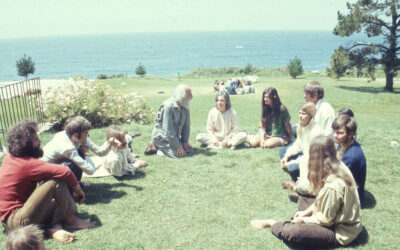
Two people in a quiet room. That is still the only thing that has ever worked. And it is the one thing none of the instruments can find, because the instrument that could find it would have to be another person, and that is the confound. That is the thing we control for.










0 Comments