

No single trauma therapy is the most effective. In head-to-head trials and network meta-analyses, prolonged exposure (PE), cognitive processing therapy (CPT), cognitive therapy for PTSD and EMDR perform about the same on average, and all of them beat waitlists and usual care. What separates them is who finishes and who responds, so the best choice is the evidence-based therapy a person can tolerate and complete.
That points to the argument of this article. The trauma therapies with good evidence share a core ingredient: they help a person approach the memories, sensations and situations they have been avoiding, at a dose they can stay present for. The named protocols differ mostly in how they set that dose. So the real frontier in trauma treatment is matching method and dose to the person, not crowning a winner, and the brain-scan tests that promise to do the matching for us are not ready yet.
This version replaces the earlier post’s source links, many of which pointed to the wrong papers. Every figure below has been checked against the study it comes from.
The short answer: a near tie at the top
The major guidelines agree on a short list, with one difference over EMDR. The American Psychological Association’s PTSD guideline strongly recommends cognitive-behavioral therapy, CPT, cognitive therapy and PE, and gives a conditional recommendation to EMDR, brief eclectic psychotherapy and narrative exposure therapy. Its panel added that newer trials could move EMDR and narrative exposure therapy up to a strong recommendation.1 The 2023 VA/DoD guideline gives its strong recommendation to PE, CPT and EMDR together, and recommends these manualized psychotherapies over medication.2 A 2020 systematic review of 114 randomized trials landed in a similar place: trauma-focused CBT and EMDR both had clinically important effects, and CPT, cognitive therapy and PE had the strongest evidence among the CBT variants.3
When therapies are compared directly, the differences shrink. A 2023 network meta-analysis of 157 trials and 11,565 patients found that every type of psychological therapy it examined beat control conditions, and that overall they did not differ significantly in efficacy. The one consistent edge was small: trauma-focused CBT outperformed therapies without a trauma focus (g = 0.17 at the end of treatment), and slightly more people dropped out of it.4 A large head-to-head trial of 916 veterans at 17 VA medical centers found PE statistically better than CPT, but the gap was too small to matter clinically, and the authors concluded that shared decision-making should guide the choice.5
So the honest answer is that several therapies work about equally well on average. Averages hide the people who do not get better, and that is where the useful questions start.
Where the first-line therapies fall short
PE grew out of emotional processing theory, which Edna Foa and Michael Kozak set out in 1986: a fear memory changes when it is activated while the person takes in information that does not fit it, and avoidance keeps that from happening.6 In practice PE pairs imaginal exposure, retelling the trauma aloud in session, with in vivo exposure to avoided situations between sessions.7, 8 CPT works on the beliefs that formed around the trauma, which its manual calls stuck points, such as “it was my fault” or “no one can be trusted.”9 Both work. Neither works for everyone.
The clearest picture of the limits comes from military and veteran research. A 2015 JAMA review of 36 randomized trials found large within-group effects for CPT and PE, and 49 to 70 percent of patients improved by a clinically meaningful margin. Yet about two-thirds of patients (60 to 72 percent across trials) still met criteria for PTSD after treatment, and both therapies were only marginally better than active comparison treatments without a trauma focus.10 These are military samples, but they correct the idea that going through a gold-standard protocol means being well.
Dropout is the other gap. Pooled across randomized trials, about 16 to 18 percent of people leave PTSD therapy early. One meta-analysis found more dropout from trauma-focused therapies; another found no systematic difference when active treatments were compared within the same study.11, 12 Veteran care looks worse. In routine care at one VA PTSD clinic, 38.5 percent of veterans who started PE or CPT dropped out,13 and even in the 17-site VA comparison trial, dropout reached 55.8 percent for PE and 46.6 percent for CPT.5 A therapy cannot help someone who stops coming.
The usual fear is that exposure retraumatizes people. The data are more reassuring than the fear. In a study of 76 women receiving PE for chronic PTSD, only a minority showed a reliable temporary worsening, and those who did benefited as much as everyone else and were no more likely to drop out.14 For many clients the problem with exposure is not that it harms them. It is that the dose is more than they can make themselves keep showing up for.
A popular claim holds that trauma recall takes the thinking brain “offline,” so cognitive work cannot reach it. That stretches one small study. In a 1996 PET study of eight patients, co-authored by Bessel van der Kolk, trauma scripts raised blood flow in right-sided limbic, paralimbic and visual areas and lowered it in left inferior frontal cortex, which includes Broca’s speech area.15 That says something real about how hard trauma is to put into words. It does not make cognitive work impossible: CPT produces substantial symptom reductions across trials.5, 10
Smaller doses: written exposure and massed PE
If dropout is the bottleneck, one fix is a smaller dose. Written exposure therapy (WET), developed by Denise Sloan and Brian Marx, psychologists at the VA’s National Center for PTSD, has the client write about the trauma in session over five sessions. In a 2018 noninferiority trial of 126 adults, five sessions of WET were noninferior to 12 sessions of CPT, and 6.4 percent dropped out of WET compared with 39.7 percent of CPT.16 A 2023 trial in 178 veterans compared WET (five to seven sessions with 30 minutes of in-session writing) against PE (eight to fifteen 90-minute sessions plus between-session in vivo exposure). WET was again noninferior, with 12.5 percent dropout against 35.6 percent for PE.8
Two cautions. Both trials were run by WET’s developers (the 2023 report discloses royalties from its manual, and the 2018 trial included CPT developer Patricia Resick as a co-author), and both excluded people at high suicide risk or with psychosis.8, 16 Still, WET is the clearest evidence for this article’s thesis: the same active ingredient at a smaller dose kept far more people in treatment, with no meaningful loss of effect in either trial.
Compressing the schedule is another option. In a trial of 370 active-duty military personnel at Fort Hood, Texas, ten PE sessions over two weeks were noninferior to ten sessions over eight weeks, though the authors called the symptom reductions in every arm relatively modest.17 Compression saved time without costing effect. It did not produce larger gains.
EMDR: first-line, with an argument about the eyes
EMDR pairs attention to a traumatic memory with short sets of eye movements or other alternating stimulation inside a structured protocol. Francine Shapiro published the first controlled study of what she then called the eye movement desensitization procedure in 1989,18 and our profile of how Francine Shapiro developed EMDR tells that story. Its guideline status depends on whose guideline you read. VA/DoD 2023 puts it alongside PE and CPT as a strong recommendation.2 The APA guideline rates it conditional, a step below.1 So it is wrong to say that every major guideline rates EMDR equal to PE and CPT.
The evidence for EMDR is real but softer than its reputation. A 2020 meta-analysis of 76 trials, most of them in PTSD, found a large effect against control conditions (g = 0.93), but only four of 27 studies had low risk of bias, there were signs of publication bias, and EMDR’s advantage over other therapies disappeared in the low-risk-of-bias studies. The authors concluded that EMDR may be effective for PTSD in the short term but that study quality was too low for definite conclusions.19
The eye movements have been argued over for decades. A 2013 meta-analysis found that eye movements added a moderate effect (d = 0.41) in clinical dismantling studies and a large one in laboratory studies, where the strongest effect was on how vivid a memory felt.20 The best-supported explanation is not “bilateral” brain stimulation but working memory. Holding a memory in mind while doing a demanding second task leaves less capacity for the memory, which comes back less vivid and less charged. In the experiments behind that account, vertical eye movements worked as well as horizontal ones, and so did tasks with no eye movement at all, as long as they taxed working memory.21 For clients, that means the side-to-side ritual matters less than the steady, effortful attention it demands. If you are weighing the method, our EMDR therapy page describes how we use it.
Somatic Experiencing and Brainspotting: promising, not proven
Bottom-up therapies start from the body rather than the story. Somatic Experiencing (SE), developed by Peter Levine, guides attention to interoceptive and proprioceptive sensation and aims to complete thwarted defensive responses and discharge excess autonomic arousal. A 2015 paper co-written by Levine sets out the theory through a composite case.22 Its tools are familiar to most trauma therapists now: titration, touching small amounts of activation at a time; pendulation, moving back and forth between activation and settling; and resourcing, putting a person in touch with felt states of safety and strength.22 Read that way, SE is another method for setting the dose of approach.
SE’s founding image is the wild animal that meets danger, shakes and trembles, and recovers. In the 2015 paper, Levine and his co-authors say this rests on what he observed over 45 years of practice and on anecdotes from people who work with wild animals, and that they could find no significant treatment of it in the peer-reviewed literature.22 The experimental evidence that does exist points the other way. In a 2019 study, wild-caught black-capped chickadees that heard predator calls for two days, then spent a week in outdoor aviaries, still showed heightened sensitivity to danger and elevated activity in the amygdala and hippocampus at least seven days later. The authors suggested that long-lasting effects of predator-induced fear are the norm in nature, while noting that this has yet to be tested experimentally in free-living animals.23
The outcome research is early. The first randomized trial, published in 2017, assigned 63 people with PTSD in Israel to 15 weekly SE sessions or a waitlist and found large effects on PTSD symptoms (Cohen’s d = 0.94 to 1.26) and depression.24 That is encouraging, but a waitlist is a weak comparison and the sample was small. A 2021 scoping review found preliminary evidence of benefit and mixed study quality,25 and a 2020 systematic review classed SE, along with neurofeedback and transcranial magnetic stimulation, as having emerging evidence only.26 If you want to try it, our Somatic Experiencing therapy page explains what sessions involve.
Brainspotting, which David Grand developed in 2003 out of his EMDR work, uses a fixed gaze instead of moving eyes.27 The therapist moves a pointer across the visual field until the client finds a position where body activation spikes, and the client holds their gaze there while processing. Clinicians have tried to read inner states from eye position since well before this, as our history of eye-position maps in psychotherapy covers. Grand and Frank Corrigan proposed in 2013 that healing in Brainspotting happens in the midbrain, at the level of the superior colliculi and the periaqueductal gray, and they presented this as a set of testable hypotheses.28 The anatomy is real: the superior colliculus is one of the centers that organize gaze, and its superficial layers receive direct input from the retina.29 What has not been shown is that holding a gaze position drives subcortical processing of trauma memories.
The outcome evidence is thin. The study most often cited for it, published in 2017 by Anja Hildebrand, Grand and Mark Stemmler, treated 76 adults with three 60-minute sessions of EMDR (n = 23) or Brainspotting (n = 53). Both groups improved on self-reported PTSD symptoms, with effect sizes of 1.19 to 1.76 for EMDR and 0.74 to 1.04 for Brainspotting.30 The abstract does not describe random assignment, the groups were unequal, outcomes were self-report, and the method’s developer was a co-author. That makes it a preliminary comparison with no control group, not a non-inferiority trial. A 2022 study of 40 psychologists and physicians, a non-clinical sample working on ordinary distressing memories in single sessions, found that EMDR and Brainspotting both reduced distress more than body-scan meditation or reading.31 Neither study tells us how Brainspotting compares with PE or CPT in people with PTSD. Our comparison of Brainspotting vs. EMDR goes further into the choice, and our Brainspotting therapy page describes how we offer it, with that evidence label attached.
One caution about the neuroscience language around these methods. Polyvagal theory, which many somatic therapists use to explain shutdown and safety, rests on anatomical and evolutionary premises that Paul Grossman argued in a 2023 review are untenable or highly implausible, including its reliance on respiratory sinus arrhythmia as a stand-in for vagal tone.32 The “reptilian brain” picture behind talk of bypassing the neocortex comes from the triune-brain model, which neurobiologists have long discredited.33 These frameworks can be useful metaphors in the room. They are not evidence that a therapy works.
Complex trauma, dissociation and the stabilization debate
People with long histories of childhood abuse, emotion dysregulation, self-harm or dissociation are where a one-protocol-for-everyone model strains most. A 2019 meta-analysis of 51 trials in people likely to have complex PTSD symptoms found that CBT, exposure alone and EMDR all outperformed usual care for PTSD symptoms. The benefits were smaller against non-specific comparison treatments, the EMDR evidence was rated low quality, and childhood-onset trauma was associated with poorer outcomes.34 Standard therapies help this group, just less reliably.
A key trial for this population tested DBT-PTSD, a phase-based program from Martin Bohus and colleagues that builds dialectical behavior therapy skills into trauma-focused work. In a 2020 trial at three German university outpatient clinics, 193 women with PTSD after childhood abuse, who also met at least three criteria for borderline personality disorder, received up to 45 individual sessions of either DBT-PTSD or CPT over a year. Both groups improved substantially. DBT-PTSD did better on the primary outcome by a small margin (d = 0.33), with 58.4 percent reaching symptomatic remission against 40.7 percent for CPT, and fewer early dropouts (25.5 versus 39.0 percent).35 A related approach, Melanie Harned’s DBT Prolonged Exposure protocol, integrates PE into standard DBT for people with borderline personality disorder, PTSD and self-injury; its 2014 pilot randomized only 26 women, and its authors said the findings need replication.36
Do these clients need a stabilization phase before trauma processing? The evidence does not say yes as a rule. A 2016 critique by Ad de Jongh, Patricia Resick and colleagues argued that the research behind mandatory phase-based treatment is methodologically limited and that requiring stabilization first risks delaying effective care.37 A Dutch trial then randomized 149 adults with childhood-abuse PTSD to standard PE, intensified PE, or eight sessions of skills training (STAIR) followed by eight of PE. All three produced large improvements, with no significant differences among them and no difference in dropout.38 And a 2020 meta-analysis of 21 trials found that dissociation before treatment did not predict how well psychotherapy worked.39
Read together with the DBT-PTSD result, the lesson is not “stabilize first.” It is “build regulation into the trauma work for the people who need it, and don’t let stabilization become a reason to postpone processing indefinitely.” Developmental and attachment-focused models, such as the one described in our profile of Laurence Heller and developmental trauma, grew out of this same clinical population. None of the trials discussed here tested them, so they should be described as clinically promising rather than established until they are tested at that scale.
Brain-based add-ons and the biomarker promise
Several treatments act on the nervous system directly, and all belong in the column marked “adjunct, evidence still developing.” Start with transcranial magnetic stimulation (TMS). In a sham-controlled trial of 50 veterans, intermittent theta-burst stimulation (iTBS) improved social and occupational function at two weeks; PTSD symptoms were significantly better at one month, a measure that included an unblinded phase.40 A 2026 analysis of 756 veterans with both PTSD and depression, treated with TMS for depression at VA sites, found PTSD response rates of 63 to 78 percent and remission rates of 47 to 49 percent across three protocols. It was an observational cohort, not a randomized trial, and only 71 of those veterans received iTBS.41
Stellate ganglion block, an anesthetic injection at a cluster of sympathetic nerves in the neck, has two sham-controlled trials that disagree. A 2016 trial in service members found no statistically or clinically relevant difference from sham.42 A 2020 multisite trial of 113 active-duty service members found a larger drop in clinician-rated symptoms over eight weeks with the block (12.6 points against 6.1 on the CAPS-5), and its authors noted the mild-to-moderate baseline symptoms and short follow-up.43 A summary that cites only one of those trials leaves out half the evidence.
EEG neurofeedback trains a person to shift their own brain activity using real-time feedback. A 2023 meta-analysis of seven randomized trials found a significant pooled reduction in PTSD symptoms, while noting that the studies were mostly small, heterogeneous and of varied quality.44 Brain mapping and neurofeedback are available in our Hoover office, and the honest place for them is beside therapy, not instead of it. MDMA-assisted therapy produced high response rates in trials, but the FDA declined to approve it in August 2024 over concerns that the evidence was insufficient.45 Medication has a place as well: VA/DoD 2023 recommends paroxetine, sertraline or venlafaxine for PTSD and recommends against benzodiazepines and cannabis.2 Any medication decision belongs with a prescriber who knows your history.
The most exciting idea in the field is choosing treatment by biology. One of the clearest examples so far is a 2019 study that found, in two independent cohorts, a subgroup of patients with PTSD who showed abnormal connectivity in the brain’s ventral attention network on fMRI along with impaired verbal memory. That subgroup responded poorly to psychotherapy even though their symptoms looked no different.46 It is a real lead, but not a clinical test. Subtypes as such are not an invention: in 2010 Ruth Lanius and colleagues set out clinical and neuroimaging evidence for a dissociative subtype of PTSD, marked by emotional overmodulation, alongside the more common re-experiencing and hyperarousal form.47 What I could not find is any study behind the “hyperarousal” and “dissociative” EEG biotypes, each matched to a specific treatment, that circulate in some popular writing. None of the guidelines discussed here uses biomarkers to choose a PTSD therapy.
What this looks like in therapy
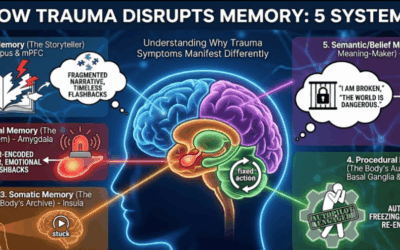
Matching starts with assessment, not with the therapist’s favorite method: what happened and when, what the person avoids, sleep, dissociation or lost time, substance use or self-harm, and what they want from treatment. A standard measure such as the PTSD Checklist for DSM-5 (PCL-5) makes progress, or its absence, visible rather than assumed. Knowing how trauma is stored in different kinds of memory helps here, because a person with a clear narrative memory and a person with body-level reactions and few words may need different entry points.
Then comes an honest conversation about options, which is what the guidelines mean by shared decision-making.2, 5 For someone with a clear traumatic memory and the capacity to tolerate distress, PE, CPT or EMDR is a strong default, and WET is a reasonable choice when time or tolerance is short. For someone whose trauma is early and relational, standard trauma-focused work is still a reasonable start, since plain PE did as well as skills-first treatment in the Dutch childhood-abuse trial.38 Where self-harm and severe emotion dysregulation are part of the picture, an approach that builds regulation skills into the trauma work, such as DBT-PTSD, has been tested directly in that group.35 SE and Brainspotting can be offered as options with emerging evidence, especially for people who have dropped out of, not benefited from or do not want first-line care, as long as the client hears that label plainly.26
The thesis of this article shows up most clearly in the middle of treatment. Every effective approach asks a person to approach something painful, and the therapist’s job is to keep the dose inside what the person can stay present for: slowing down when they start to go numb or flooded, returning attention to the body in the chair, then going back to the material. When seven developers of evidence-based trauma therapies were each asked to name the key interventions their methods share, the common ground the paper drew out was psychoeducation, emotion-regulation and coping skills, imaginal exposure, cognitive processing and meaning-making, emotions, and memory processes.48 Those are the ingredients. The brand names are different recipes.
Finally, measure and switch. If symptoms have not moved after a fair trial, with the number of sessions agreed on in advance, the plan should change: a different first-line therapy, a different dose, an added skills component, or a medication consult with a prescriber. If you want PE or CPT specifically, ask; any therapist should tell you plainly whether they are trained in it, and refer you if not.
If you are in the Birmingham area and trying to work out which approach fits your history, our clinicians offer EMDR, Brainspotting and somatic therapy and will talk through the evidence for each with you. You can reach us through our contact page. If you are in crisis, call or text 988, or see our list of crisis resources in Birmingham.
References
- Guideline Development Panel for the Treatment of PTSD in Adults, American Psychological Association. (2019). Summary of the clinical practice guideline for the treatment of posttraumatic stress disorder (PTSD) in adults. American Psychologist, 74(5), 596–607. https://doi.org/10.1037/amp0000473
- Schnurr, P. P., Hamblen, J. L., Wolf, J., Coller, R., Collie, C., Fuller, M. A., Holtzheimer, P. E., Kelly, U., Lang, A. J., McGraw, K., Morganstein, J. C., Norman, S. B., Papke, K., Petrakis, I., Riggs, D., Sall, J. A., Shiner, B., Wiechers, I., & Kelber, M. S. (2024). The management of posttraumatic stress disorder and acute stress disorder: Synopsis of the 2023 U.S. Department of Veterans Affairs and U.S. Department of Defense clinical practice guideline. Annals of Internal Medicine, 177(3), 363–374. https://doi.org/10.7326/M23-2757
- Lewis, C., Roberts, N. P., Andrew, M., Starling, E., & Bisson, J. I. (2020). Psychological therapies for post-traumatic stress disorder in adults: Systematic review and meta-analysis. European Journal of Psychotraumatology, 11(1), Article 1729633. https://doi.org/10.1080/20008198.2020.1729633
- Hoppen, T. H., Jehn, M., Holling, H., Mutz, J., Kip, A., & Morina, N. (2023). The efficacy and acceptability of psychological interventions for adult PTSD: A network and pairwise meta-analysis of randomized controlled trials. Journal of Consulting and Clinical Psychology, 91(8), 445–461. https://doi.org/10.1037/ccp0000809
- Schnurr, P. P., Chard, K. M., Ruzek, J. I., Chow, B. K., Resick, P. A., Foa, E. B., Marx, B. P., Friedman, M. J., Bovin, M. J., Caudle, K. L., Castillo, D., Curry, K. T., Hollifield, M., Huang, G. D., Chee, C. L., Astin, M. C., Dickstein, B., Renner, K., Clancy, C. P., . . . Shih, M.-C. (2022). Comparison of prolonged exposure vs cognitive processing therapy for treatment of posttraumatic stress disorder among US veterans: A randomized clinical trial. JAMA Network Open, 5(1), Article e2136921. https://doi.org/10.1001/jamanetworkopen.2021.36921
- Foa, E. B., & Kozak, M. J. (1986). Emotional processing of fear: Exposure to corrective information. Psychological Bulletin, 99(1), 20–35. https://doi.org/10.1037/0033-2909.99.1.20
- Foa, E. B., Hembree, E. A., & Rothbaum, B. O. (2007). Prolonged exposure therapy for PTSD: Therapist guide. Oxford University Press. https://doi.org/10.1093/med:psych/9780195308501.001.0001
- Sloan, D. M., Marx, B. P., Acierno, R., Messina, M., Muzzy, W., Gallagher, M. W., Litwack, S., & Sloan, C. (2023). Written exposure therapy vs prolonged exposure therapy in the treatment of posttraumatic stress disorder: A randomized clinical trial. JAMA Psychiatry, 80(11), 1093–1100. https://doi.org/10.1001/jamapsychiatry.2023.2810
- Resick, P. A., Monson, C. M., & Chard, K. M. (2017). Cognitive processing therapy for PTSD: A comprehensive manual. Guilford Press.
- Steenkamp, M. M., Litz, B. T., Hoge, C. W., & Marmar, C. R. (2015). Psychotherapy for military-related PTSD: A review of randomized clinical trials. JAMA, 314(5), 489–500. https://doi.org/10.1001/jama.2015.8370
- Lewis, C., Roberts, N. P., Gibson, S., & Bisson, J. I. (2020). Dropout from psychological therapies for post-traumatic stress disorder (PTSD) in adults: Systematic review and meta-analysis. European Journal of Psychotraumatology, 11(1), Article 1709709. https://doi.org/10.1080/20008198.2019.1709709
- Imel, Z. E., Laska, K., Jakupcak, M., & Simpson, T. L. (2013). Meta-analysis of dropout in treatments for posttraumatic stress disorder. Journal of Consulting and Clinical Psychology, 81(3), 394–404. https://doi.org/10.1037/a0031474
- Kehle-Forbes, S. M., Meis, L. A., Spoont, M. R., & Polusny, M. A. (2016). Treatment initiation and dropout from prolonged exposure and cognitive processing therapy in a VA outpatient clinic. Psychological Trauma: Theory, Research, Practice, and Policy, 8(1), 107–114. https://doi.org/10.1037/tra0000065
- Foa, E. B., Zoellner, L. A., Feeny, N. C., Hembree, E. A., & Alvarez-Conrad, J. (2002). Does imaginal exposure exacerbate PTSD symptoms? Journal of Consulting and Clinical Psychology, 70(4), 1022–1028. https://doi.org/10.1037/0022-006X.70.4.1022
- Rauch, S. L., van der Kolk, B. A., Fisler, R. E., Alpert, N. M., Orr, S. P., Savage, C. R., Fischman, A. J., Jenike, M. A., & Pitman, R. K. (1996). A symptom provocation study of posttraumatic stress disorder using positron emission tomography and script-driven imagery. Archives of General Psychiatry, 53(5), 380–387. https://doi.org/10.1001/archpsyc.1996.01830050014003
- Sloan, D. M., Marx, B. P., Lee, D. J., & Resick, P. A. (2018). A brief exposure-based treatment vs cognitive processing therapy for posttraumatic stress disorder: A randomized noninferiority clinical trial. JAMA Psychiatry, 75(3), 233–239. https://doi.org/10.1001/jamapsychiatry.2017.4249
- Foa, E. B., McLean, C. P., Zang, Y., Rosenfield, D., Yadin, E., Yarvis, J. S., Mintz, J., Young-McCaughan, S., Borah, E. V., Dondanville, K. A., Fina, B. A., Hall-Clark, B. N., Lichner, T., Litz, B. T., Roache, J., Wright, E. C., Peterson, A. L., & STRONG STAR Consortium (2018). Effect of prolonged exposure therapy delivered over 2 weeks vs 8 weeks vs present-centered therapy on PTSD symptom severity in military personnel: A randomized clinical trial. JAMA, 319(4), 354–364. https://doi.org/10.1001/jama.2017.21242
- Shapiro, F. (1989). Efficacy of the eye movement desensitization procedure in the treatment of traumatic memories. Journal of Traumatic Stress, 2(2), 199–223. https://doi.org/10.1002/jts.2490020207
- Cuijpers, P., van Veen, S. C., Sijbrandij, M., Yoder, W., & Cristea, I. A. (2020). Eye movement desensitization and reprocessing for mental health problems: A systematic review and meta-analysis. Cognitive Behaviour Therapy, 49(3), 165–180. https://doi.org/10.1080/16506073.2019.1703801
- Lee, C. W., & Cuijpers, P. (2013). A meta-analysis of the contribution of eye movements in processing emotional memories. Journal of Behavior Therapy and Experimental Psychiatry, 44(2), 231–239. https://doi.org/10.1016/j.jbtep.2012.11.001
- van den Hout, M. A., & Engelhard, I. M. (2012). How does EMDR work? Journal of Experimental Psychopathology, 3(5), 724–738. https://doi.org/10.5127/jep.028212
- Payne, P., Levine, P. A., & Crane-Godreau, M. A. (2015). Somatic experiencing: Using interoception and proprioception as core elements of trauma therapy. Frontiers in Psychology, 6, Article 93. https://doi.org/10.3389/fpsyg.2015.00093
- Zanette, L. Y., Hobbs, E. C., Witterick, L. E., MacDougall-Shackleton, S. A., & Clinchy, M. (2019). Predator-induced fear causes PTSD-like changes in the brains and behaviour of wild animals. Scientific Reports, 9, Article 11474. https://doi.org/10.1038/s41598-019-47684-6
- Brom, D., Stokar, Y., Lawi, C., Nuriel-Porat, V., Ziv, Y., Lerner, K., & Ross, G. (2017). Somatic experiencing for posttraumatic stress disorder: A randomized controlled outcome study. Journal of Traumatic Stress, 30(3), 304–312. https://doi.org/10.1002/jts.22189
- Kuhfuß, M., Maldei, T., Hetmanek, A., & Baumann, N. (2021). Somatic experiencing – Effectiveness and key factors of a body-oriented trauma therapy: A scoping literature review. European Journal of Psychotraumatology, 12(1), Article 1929023. https://doi.org/10.1080/20008198.2021.1929023
- Bisson, J. I., van Gelderen, M., Roberts, N. P., & Lewis, C. (2020). Non-pharmacological and non-psychological approaches to the treatment of PTSD: Results of a systematic review and meta-analyses. European Journal of Psychotraumatology, 11(1), Article 1795361. https://doi.org/10.1080/20008198.2020.1795361
- Talbot, J., de la Salle, S., & Jaworska, N. (2023). A paradigm shift in trauma treatment: Converging evidence for a novel adaptation of eye movement desensitization and reprocessing (EMDR). The Canadian Journal of Psychiatry, 68(4), 283–285. https://doi.org/10.1177/07067437221142283
- Corrigan, F., & Grand, D. (2013). Brainspotting: Recruiting the midbrain for accessing and healing sensorimotor memories of traumatic activation. Medical Hypotheses, 80(6), 759–766. https://doi.org/10.1016/j.mehy.2013.03.005
- May, P. J. (2006). The mammalian superior colliculus: Laminar structure and connections. Progress in Brain Research, 151, 321–378. https://doi.org/10.1016/S0079-6123(05)51011-2
- Hildebrand, A., Grand, D., & Stemmler, M. (2017). Brainspotting – The efficacy of a new therapy approach for the treatment of posttraumatic stress disorder in comparison to eye movement desensitization and reprocessing. Mediterranean Journal of Clinical Psychology, 5(1). https://doi.org/10.6092/2282-1619/2017.5.1376
- D’Antoni, F., Matiz, A., Fabbro, F., & Crescentini, C. (2022). Psychotherapeutic techniques for distressing memories: A comparative study between EMDR, brainspotting, and body scan meditation. International Journal of Environmental Research and Public Health, 19(3), Article 1142. https://doi.org/10.3390/ijerph19031142
- Grossman, P. (2023). Fundamental challenges and likely refutations of the five basic premises of the polyvagal theory. Biological Psychology, 180, Article 108589. https://doi.org/10.1016/j.biopsycho.2023.108589
- Cesario, J., Johnson, D. J., & Eisthen, H. L. (2020). Your brain is not an onion with a tiny reptile inside. Current Directions in Psychological Science, 29(3), 255–260. https://doi.org/10.1177/0963721420917687
- Karatzias, T., Murphy, P., Cloitre, M., Bisson, J., Roberts, N., Shevlin, M., Hyland, P., Maercker, A., Ben-Ezra, M., Coventry, P., Mason-Roberts, S., Bradley, A., & Hutton, P. (2019). Psychological interventions for ICD-11 complex PTSD symptoms: Systematic review and meta-analysis. Psychological Medicine, 49(11), 1761–1775. https://doi.org/10.1017/S0033291719000436
- Bohus, M., Kleindienst, N., Hahn, C., Müller-Engelmann, M., Ludäscher, P., Steil, R., Fydrich, T., Kuehner, C., Resick, P. A., Stiglmayr, C., Schmahl, C., & Priebe, K. (2020). Dialectical behavior therapy for posttraumatic stress disorder (DBT-PTSD) compared with cognitive processing therapy (CPT) in complex presentations of PTSD in women survivors of childhood abuse: A randomized clinical trial. JAMA Psychiatry, 77(12), 1235–1245. https://doi.org/10.1001/jamapsychiatry.2020.2148
- Harned, M. S., Korslund, K. E., & Linehan, M. M. (2014). A pilot randomized controlled trial of dialectical behavior therapy with and without the dialectical behavior therapy prolonged exposure protocol for suicidal and self-injuring women with borderline personality disorder and PTSD. Behaviour Research and Therapy, 55, 7–17. https://doi.org/10.1016/j.brat.2014.01.008
- De Jongh, A., Resick, P. A., Zoellner, L. A., van Minnen, A., Lee, C. W., Monson, C. M., Foa, E. B., Wheeler, K., ten Broeke, E., Feeny, N., Rauch, S. A., Chard, K. M., Mueser, K. T., Sloan, D. M., van der Gaag, M., Rothbaum, B. O., Neuner, F., de Roos, C., Hehenkamp, L. M., . . . Bicanic, I. A. (2016). Critical analysis of the current treatment guidelines for complex PTSD in adults. Depression and Anxiety, 33(5), 359–369. https://doi.org/10.1002/da.22469
- Oprel, D. A. C., Hoeboer, C. M., Schoorl, M., de Kleine, R. A., Cloitre, M., Wigard, I. G., van Minnen, A., & van der Does, W. (2021). Effect of prolonged exposure, intensified prolonged exposure and STAIR+prolonged exposure in patients with PTSD related to childhood abuse: A randomized controlled trial. European Journal of Psychotraumatology, 12(1), Article 1851511. https://doi.org/10.1080/20008198.2020.1851511
- Hoeboer, C. M., de Kleine, R. A., Molendijk, M. L., Schoorl, M., Oprel, D. A. C., Mouthaan, J., van der Does, W., & van Minnen, A. (2020). Impact of dissociation on the effectiveness of psychotherapy for post-traumatic stress disorder: Meta-analysis. BJPsych Open, 6(3), Article e53. https://doi.org/10.1192/bjo.2020.30
- Philip, N. S., Barredo, J., Aiken, E., Larson, V., Jones, R. N., Shea, M. T., Greenberg, B. D., & van ’t Wout-Frank, M. (2019). Theta-burst transcranial magnetic stimulation for posttraumatic stress disorder. American Journal of Psychiatry, 176(11), 939–948. https://doi.org/10.1176/appi.ajp.2019.18101160
- Berlow, Y. A., Cilli, S. L., Kozel, F. A., Zandvakili, A., Marcotullio, N., Cosmo, C., Goldberg, M. A., Wicklund, B. D., Madore, M. R., & Philip, N. S. (2026). Effectiveness of transcranial magnetic stimulation for posttraumatic stress disorder: A multisite, propensity-matched cohort study of treatment parameters. Brain Stimulation, 19(1), Article 102980. https://doi.org/10.1016/j.brs.2025.11.007
- Hanling, S. R., Hickey, A., Lesnik, I., Hackworth, R. J., Stedje-Larsen, E., Drastal, C. A., & McLay, R. N. (2016). Stellate ganglion block for the treatment of posttraumatic stress disorder: A randomized, double-blind, controlled trial. Regional Anesthesia and Pain Medicine, 41(4), 494–500. https://doi.org/10.1097/AAP.0000000000000402
- Rae Olmsted, K. L., Bartoszek, M., Mulvaney, S., McLean, B., Turabi, A., Young, R., Kim, E., Vandermaas-Peeler, R., Morgan, J. K., Constantinescu, O., Kane, S., Nguyen, C., Hirsch, S., Munoz, B., Wallace, D., Croxford, J., Lynch, J. H., White, R., & Walters, B. B. (2020). Effect of stellate ganglion block treatment on posttraumatic stress disorder symptoms: A randomized clinical trial. JAMA Psychiatry, 77(2), 130–138. https://doi.org/10.1001/jamapsychiatry.2019.3474
- Askovic, M., Soh, N., Elhindi, J., & Harris, A. W. (2023). Neurofeedback for post-traumatic stress disorder: Systematic review and meta-analysis of clinical and neurophysiological outcomes. European Journal of Psychotraumatology, 14(2), Article 2257435. https://doi.org/10.1080/20008066.2023.2257435
- Morland, L. A., Rothbaum, B. O., Sippel, L. M., Maples-Keller, J., & Schnurr, P. P. (2026). State of the science: MDMA-assisted psychotherapy for the treatment of posttraumatic stress disorder. Journal of Traumatic Stress, 39(2), 173–187. https://doi.org/10.1002/jts.70060
- Etkin, A., Maron-Katz, A., Wu, W., Fonzo, G. A., Huemer, J., Vértes, P. E., Patenaude, B., Richiardi, J., Goodkind, M. S., Keller, C. J., Ramos-Cejudo, J., Zaiko, Y. V., Peng, K. K., Shpigel, E., Longwell, P., Toll, R. T., Thompson, A., Zack, S., Gonzalez, B., . . . O’Hara, R. (2019). Using fMRI connectivity to define a treatment-resistant form of post-traumatic stress disorder. Science Translational Medicine, 11(486), Article eaal3236. https://doi.org/10.1126/scitranslmed.aal3236
- Lanius, R. A., Vermetten, E., Loewenstein, R. J., Brand, B., Schmahl, C., Bremner, J. D., & Spiegel, D. (2010). Emotion modulation in PTSD: Clinical and neurobiological evidence for a dissociative subtype. American Journal of Psychiatry, 167(6), 640–647. https://doi.org/10.1176/appi.ajp.2009.09081168
- Schnyder, U., Ehlers, A., Elbert, T., Foa, E. B., Gersons, B. P. R., Resick, P. A., Shapiro, F., & Cloitre, M. (2015). Psychotherapies for PTSD: What do they have in common? European Journal of Psychotraumatology, 6(1), Article 28186. https://doi.org/10.3402/ejpt.v6.28186
















0 Comments