

This comprehensive guide breaks down the science, the key differences, and the peer-reviewed evidence behind Brainspotting vs. EMDR, helping you make an informed and empowered choice for your healing journey.
What Is EMDR? (Eye Movement Desensitization and Reprocessing)
EMDR is a highly researched, evidence-based psychotherapy designed to help individuals heal from PTSD, anxiety, and distressing life experiences. Discovered in 1987 by Dr. Francine Shapiro—who noticed that rapid, bilateral eye movements reduced the emotional intensity of her own distressing thoughts—EMDR has been extensively studied for over three decades. It is formally endorsed as a first-line trauma treatment by major global organizations, including the World Health Organization (WHO), the American Psychological Association (APA), and the Department of Veterans Affairs (VA).
The Adaptive Information Processing (AIP) Model
EMDR is grounded in the Adaptive Information Processing (AIP) model. The AIP model suggests that the human brain naturally processes and integrates experiences into healthy, adaptive neural networks.
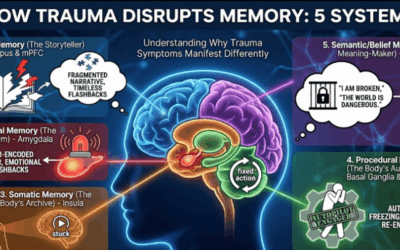
However, during a highly threatening, overwhelming, or traumatic event, extreme autonomic nervous system arousal halts normal cognitive processing. The traumatic memory becomes “stuck” in its raw, fragmented state within the subcortical brain networks. When triggered, these unprocessed memories re-activate, causing intrusive thoughts, flashbacks, panic, and somatic distress.
EMDR utilizes bilateral stimulation (BLS)—most commonly guided lateral eye movements, alternating hand taps, or auditory tones—to engage both hemispheres of the brain. This visual or tactile bilateral engine helps the nervous system safely reprocess and “metabolize” the stuck memory. The memory does not disappear, but its emotional charge is significantly reduced.
The Standardized Eight-Phase Sequence
EMDR is highly structured and protocol-driven, ensuring replicability and predictable clinical outcomes. Clinicians follow a strict eight-phase sequence :
-
History Taking & Treatment Planning: Assessing the client’s past trauma and current triggers.
-
Preparation & Stabilization: Equipping the client with concrete grounding, mindfulness, and emotional regulation tools.
-
Assessment: Identifying a target memory, its associated negative belief (e.g., “I am not safe”), and the desired positive belief (e.g., “I am safe now”).
-
Desensitization: Utilizing bilateral stimulation while the client holds the traumatic memory in mind, pausing periodically to check in.
-
Installation: Using bilateral stimulation to strengthen and install the positive belief.
-
Body Scan: Prompting the client to scan their physical body for residual somatic tension while recalling the target event, clearing any lingering physical activation.
-
Closure: Ensuring the client is grounded and emotionally regulated before leaving the session.
-
Reevaluation: Checking in at the start of the next session to ensure the positive shifts have stabilized.
Notable innovators like Laurel Parnell, Sandra Paulsen, and Robbie Adler Tapia have expanded upon Shapiro’s original protocol to adapt EMDR for complex, attachment-based, and dissociative trauma.
What Is Brainspotting? (Subcortical Somatic Processing)
Brainspotting was discovered in 2003 by Dr. David Grand, an experienced EMDR clinician. While guiding a client with severe physical performance trauma through slow, bilateral eye movements, he noticed her eyes reflexively wobble and freeze at a specific point in her visual field. By holding her gaze at that exact visual coordinate, she experienced a rapid, deep somatic release that went far beyond standard EMDR processing.
This breakthrough established the foundational principle of Brainspotting: “Where you look affects how you feel”.
Accessing the Retinocollicular Pathway
Unlike EMDR’s use of continuous eye movement, Brainspotting relies on sustained visual fixation. Neurobiologically, Brainspotting is designed to bypass the prefrontal cortex (the cognitive, talking brain) and communicate directly with the primitive subcortical structures—specifically the brainstem, amygdala, and limbic system—where trauma is physically stored.
Focusing on a “Brainspot” (an eye position linked to physical tension or emotional distress) is hypothesized to recruit the retinocollicular pathway. This pathway connects the retina to the superior colliculus and the medial pulvinar of the thalamus. The superior colliculus is responsible for spatial orientation, visual coordination, and survival reflexes.
By holding a steady gaze on a Brainspot, the client establishes a stable neurological anchor, allowing the autonomic nervous system to “unspool” and complete interrupted threat-defense cycles. Dr. Grand describes traumatic activation as “frozen maladaptive homeostasis”. Brainspotting accesses this frozen state directly, helping the body safely discharge stored energy.
Depth Psychology, Mythology, and REM Dreams
Because Brainspotting bypasses conscious cognitive filters, it integrates seamlessly with depth psychology and clinical archetypes. In Jungian Shadow Work, a Brainspot functions as an observational portal into the unconscious, allowing suppressed or dissociated parts of the psyche to emerge and integrate. Mythologically, a Brainspotting session mirrors Joseph Campbell’s “Hero’s Journey”—a voluntary descent into the deep psychic underworld of raw somatic activation, culminating in a return with integrated psychological resilience.
Furthermore, clients frequently report experiencing highly vivid, intense dreaming following a Brainspotting session. This occurs because subcortical visual processing activates the exact neural networks responsible for Rapid Eye Movement (REM) sleep, indicating that the brain is actively sorting, consolidating, and healing memory files during sleep cycles.
Brainspotting vs. EMDR: The 3 Key Differences
While both modalities are transformative “bottom-up” somatic therapies, their operational approaches are distinct :
1. Structure vs. Relational Flexibility
-
EMDR is highly structured: It follows a rigid, eight-phase protocol. The therapist acts as an active director, guiding you through a planned sequence. This structure is ideal for clients who feel safest with a predictable, step-by-step roadmap.
-
Brainspotting is highly flexible: It is organic, intuitive, and client-led. The therapist operates on the “dual attunement frame,” holding a quiet, compassionate space while your subcortical brain guides the healing pace. There is no rigid script or cognitive sequencing.
2. The Mechanics: Bilateral Movement vs. Fixed Gaze
-
EMDR uses active movement: The primary processing driver is bilateral visual stimulation (moving the eyes back and forth).
-
Brainspotting uses a fixed gaze: You locate a specific point of ocular fixation (the Brainspot) where your physical distress is most activated, and you hold your eyes steady on that point.
3. The Focus: Cognitive-Somatic Bridge vs. Pure Somatic
-
EMDR incorporates cognitive elements: It explicitly targets negative cognitive schemas (e.g., “I am helpless”) and actively replaces them with healthy, positive beliefs.
-
Brainspotting is purely subcortical and somatic: It works with the “felt sense” in your body. The goal is not to force a new belief, but to physically release the trapped stress in your nervous system. It is particularly effective for those who tend to “intellectualize” or get stuck in their heads.
What Does the Science Say? (Peer-Reviewed Evidence)
To rank as a trusted resource, an article must be backed by rigorous scientific literature. Clinical trials show that both modalities are highly effective, though Brainspotting often demonstrates superior clinical tolerability :
-
The Hildebrand comparative study: In a head-to-head randomized trial of
$N=76$adults with PTSD published in the Mediterranean Journal of Clinical Psychology, researchers found no statistically significant difference in PTSD symptom reduction between Brainspotting and EMDR. However, clients receiving Brainspotting reported that the sustained visual fixation felt significantly more comfortable and was far easier to tolerate without emotional flooding. -
The D’Antoni comparative study : Evaluating single-session interventions of EMDR, Brainspotting, and Body Scan Meditation, this study showed that while all groups reduced immediate distress, both EMDR and Brainspotting cohorts achieved significantly lower Subjective Units of Distress (SUD) scores at long-term follow-up than mindfulness alone. This proves that ocular-focused mechanisms activate deeper subcortical reprocessing than standard somatic scanning.
-
The Talbot practitioner survey & clinical trial ($2023$): Published in The Canadian Journal of Psychiatry, researchers surveyed
112trauma therapists trained in EMDR who subsequently integrated Brainspotting into their practices. A striking82%of therapists reported that, on average, their clients responded “better” or “much better” to Brainspotting than to EMDR, and82%reported that Brainspotting integrated more easily into other clinical modalities. A nested pilot trial showed that six sessions of Brainspotting achieved statistically significant drops in PTSD symptoms on the PCL-5 . -
Brain PET Scans: A single-case study utilizing brain PET scans tracked glucose metabolism changes in an intimate sexual violence survivor during online Brainspotting. The neuroimaging data revealed observable metabolic changes in the amygdala, hippocampus, and prefrontal cortex, providing objective physiological proof of subcortical trauma integration.
At-a-Glance Comparison
Which One Is Right for You?
EMDR may be the ideal fit if you:
-
Are processing a specific, single-incident trauma (like a car accident, a localized assault, or an acute medical event).
-
Appreciate a highly structured, predictable road map led by your therapist.
-
Value a therapy with decades of extensive clinical trials and widespread insurance recognition.
-
Are comfortable identifying and verbally discussing cognitive negative beliefs.
Brainspotting may be the ideal fit if you:
-
Are working through complex, developmental, or pre-verbal childhood trauma.
-
Have tried talk therapy (or even EMDR) and still feel “stuck,” numb, or highly anxious.
-
Struggle to put your feelings or memories into words.
-
Experience severe physical somatization, chronic pain, or fibromyalgia.
-
Prefer an intuitive, meditative, and self-directed process that values relational attunement.
-
Are working through creative blocks, performance anxiety, or athletic boundaries.
Top Trauma Therapy Practices in Birmingham, AL
If you are ready to move past traditional talk therapy, several premier practices in the Birmingham-Hoover metropolitan area offer advanced somatic and ocular trauma reprocessing.
1. Taproot Therapy Collective (Hoover, AL)
Centrally located at 2025 Shady Crest Drive, Suite 203, Hoover, AL 35216, Taproot Therapy Collective is a modern, top-rated clinic specializing in complex trauma, PTSD, and severe anxiety. It is situated on the hill immediately behind and beside the Full Moon BBQ off Highway 31, easily accessible from I-65, I-459, and Highway 280.
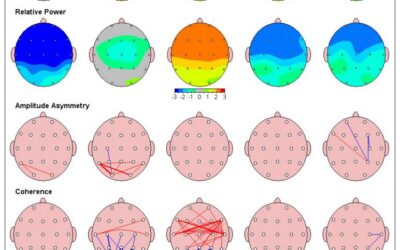
Every clinician at Taproot Therapy Collective is trained in Brainspotting, and they frequently combine subcortical therapies with depth psychology, Jungian shadow work, Internal Family Systems (IFS), and objective diagnostics like QEEG brain mapping.
-
The Team:
-
Joel Blackstock, LICSW-S, PIP: A complex trauma specialist fully trained in EMDR and Brainspotting (Phases 1 & 2), integrating these tools with Jungian depth psychology and parts-based somatic work.
-
Marie Danner, LICSW-S, MSW, CCTP-II: Lead Clinician specializing in PTSD and developmental trauma using Brainspotting, Lifespan Integration, CBT, and DBT.
-
Brittany Gray, M.Ed., LPC-S: Focuses on Complex PTSD (C-PTSD), combat trauma, and sexual abuse, integrating Brainspotting and family systems therapy with somatic nutritional coaching.
-
Robin Taylor, LICSW: Specialized somatic clinician treating religious trauma, narcissistic abuse, and the “freeze” response.
-
Kristi Wood, LICSW, PIP: Expert in both EMDR and Brainspotting, specializing in polyvagal therapy, personality disorders, and affirming care for LGBTQ+ and polyamorous relationships.
-
Alice Hawley, LPC, LMFT: Trained in both EMDR and Brainspotting, blending subcortical processing with depth psychology and relationship dynamics.
-
-
Fees & Policies: Ongoing and initial sessions are priced at $250, with an income-based sliding scale to support therapeutic equity, and BCBS is accepted for most providers. Taproot Therapy Collective utilizes real-time, brief phone intakes to safely assess clinical fit and provide legally binding Good Faith Estimates.
-
Contact: Call (205) 598-6471 or visit .
2. Birmingham Anxiety & Trauma Therapy (Vestavia Hills, AL)
Located at 100 Centerview Drive, Suite 150, Vestavia Hills, AL 35216, off Highway 31 near the I-65 exit, BATT is a leading local provider of structured EMDR and PTSD therapy. They offer an exceptional, research-backed eight-phase EMDR model and avoid exposure therapies that run the risk of re-traumatizing clients.
-
Key Clinicians: Sarah Thomas (LICSW), specializing in EMDR and PTSD; Cicely Walker-Roberts (LPC), bringing over 25 years of trauma-focused counseling; Angelica Bellman (LPC), specializing in pediatric and adolescent trauma; and Kim Carden (LPC), offering over 15 years of trauma-informed care.
-
Contact: Call (205) 807-5372 or email [email protected] to reach their dedicated Solutions Advocate who verifies insurance benefits and matches you with a therapist.
3. Alexander & Associates Counseling Services (Mountain Brook/Birmingham, AL)
This practice offers a grounded, whole-person approach to trauma, utilizing EMDR alongside comprehensive physical stabilization. Their EMDR protocol places heavy emphasis on building practical somatic coping skills prior to starting active reprocessing.
-
Key Clinicians: Charles “Woody” Howard (LPC) and Bethany Morse (LPC), both extensively trained in EMDR, working under the mentorship of practice owner Tiffany Alexander (LPC-S).
-
Contact: Reach out online or request a free 15-minute consultation at .
4. Mallory Lamm Counseling (Birmingham, AL)
Mallory Lamm, LICSW, operates a highly focused private somatic practice at 3 Office Park Circle, Suite 113, Birmingham, AL 35223. She is certified in Brainspotting and specializes in somatic trauma-induced dissociation, chronic anxiety, depression, and eating disorders. She offers standard individual sessions ($140) as well as 90-minute intensive Brainspotting sessions, accepting BCBS, New Directions, and United Healthcare.
-
Contact: Email [email protected] or call (205) 440-2541.
Taking the First Step
You do not have to carry the silent burden of physical, “stuck” trauma in your nervous system. Whether you thrive under the clear, structured guidance of EMDR or find deep healing in the organic, subcortical silence of Brainspotting, advanced brain-based relief is available right here in Birmingham. Reach out to any of the highly specialized local practices listed above to set up a consultation and reclaim safety, regulation, and peace in your body.














0 Comments