
What I found was both more interesting and more complicated than I expected. There is real science here. There are also a lot of marketing claims that outrun the evidence. And there are some genuine risks that most people do not know about.
Here is what I learned.
What Is Kombucha, Really?
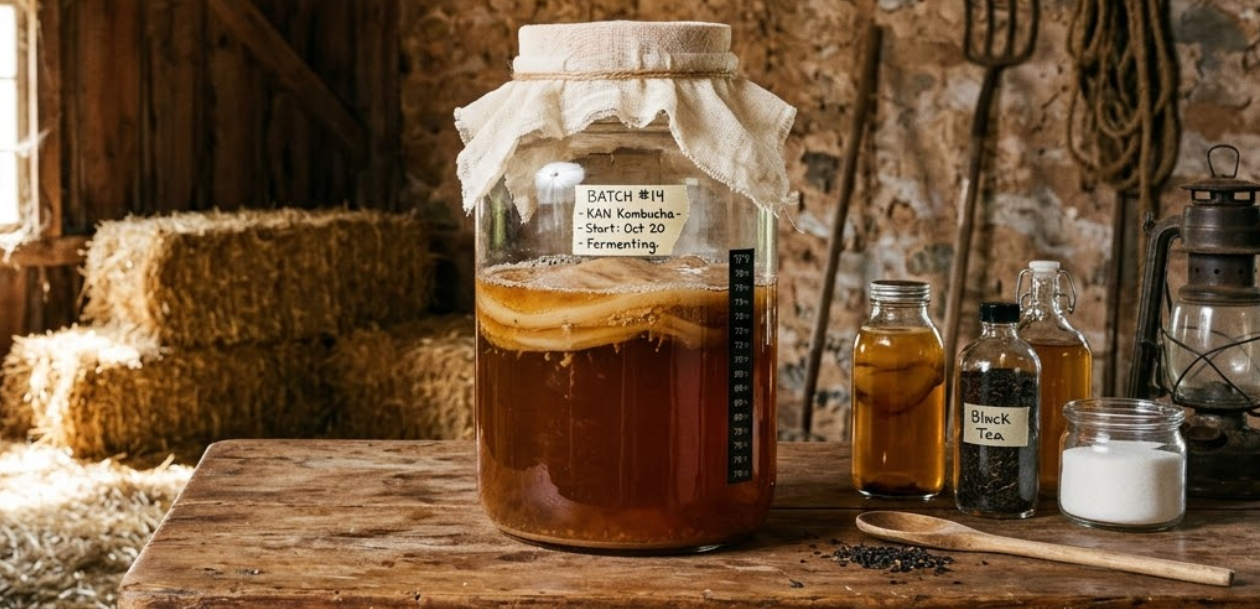
Kombucha is fermented tea. You start with sweetened black or green tea, add a rubbery disc called a SCOBY (Symbiotic Culture of Bacteria and Yeast), and wait. Over one to two weeks, the microorganisms in the SCOBY transform the tea into something entirely different.
The yeasts break down the sugar into alcohol and carbon dioxide (which gives kombucha its fizz). Then the bacteria convert most of that alcohol into acetic acid (vinegar) and other organic acids. The result is a tart, slightly sweet, effervescent drink containing live microorganisms, organic acids, and transformed plant compounds from the tea.
The SCOBY is not one organism. It is an entire ecosystem. Researchers have identified dozens of bacterial and yeast species living together in these cultures, including Lactobacillus strains similar to those found in yogurt, acetic acid bacteria that also make vinegar, and various yeasts. The specific species vary depending on where the SCOBY came from and how it has been maintained.
This variability matters. A kombucha made in someone’s kitchen will have a different microbial profile than one made in a commercial facility. The fermentation time, temperature, type of tea, and amount of sugar all affect the final product. This is why research findings from one specific kombucha product cannot automatically be applied to all kombucha everywhere. According to a 2024 review on microbial composition and safety, this lack of standardization is one of the major challenges in kombucha research.
The Blood Sugar Finding That Surprised Researchers
The most compelling evidence for kombucha’s health benefits comes from a 2023 study on blood sugar control in people with Type 2 diabetes. This was a randomized, double-blinded crossover trial conducted by researchers at Georgetown University, the University of Nebraska-Lincoln, and MedStar Health.
Adults with Type 2 diabetes drank either 8 ounces of kombucha or a specially formulated placebo beverage daily for four weeks. After an eight-week break, they switched to the other drink for another four weeks. Neither the participants nor the researchers knew who was getting which beverage until the study ended.
The results were striking. Fasting blood glucose dropped from an average of 164 mg/dL to 116 mg/dL in the kombucha group, a statistically significant reduction. The placebo group showed only a modest, non-significant change. The effect was most pronounced in people whose blood sugar was poorly controlled at the start, with some experiencing drops of 74 mg/dL.
As Georgetown University noted in their press release, this reduction rivals the short-term efficacy of some pharmaceutical interventions.
How does this work? Several mechanisms are probably involved. The organic acids in kombucha, particularly acetic acid, slow gastric emptying. This means glucose enters your bloodstream more gradually rather than all at once, reducing the spike that follows a meal. The fermentation process also converts much of the added sugar into acids, so you are not actually consuming as much sugar as the ingredient list suggests. And the live bacteria may interact with your gut lining in ways that affect insulin sensitivity, though this pathway needs more research.
The study had limitations. Only 12 participants completed it. The intervention lasted only four weeks, which was not long enough to measure HbA1c (the gold standard for long-term blood sugar control). Larger, longer trials are needed. But this is the most rigorous human evidence we have, and it points to something real.
Antioxidants: More Targeted Than You Might Think
Kombucha is marketed as an antioxidant powerhouse. The fermentation process does transform the polyphenols in tea into more bioavailable forms. But what does this actually do in human bodies?
A 2025 randomized controlled trial published in the British Journal of Nutrition tested this directly. Participants with excess body weight (a group prone to elevated oxidative stress) drank 200 mL of green tea kombucha or a control beverage daily for ten weeks.
The kombucha group showed a significant reduction in hydrogen peroxide, a reactive oxygen species that can damage blood vessel walls. This is a genuine antioxidant effect.
However, and this is important, a whole range of other oxidative stress markers showed no change at all. Malondialdehyde (a marker of cell membrane damage), superoxide dismutase activity, glutathione levels, and markers of blood vessel inflammation all remained unchanged between groups.
The takeaway: kombucha does scavenge certain specific free radicals in humans. But it does not trigger the broad, systemic antioxidant surge that animal studies suggested. It is a helpful dietary addition, not a cure for oxidative damage.
Gut Health: Real But Transient
Given that kombucha contains live bacteria and has a low pH that can affect gut conditions, researchers have looked at its effects on the microbiome. According to a 2025 systematic review of clinical trials, kombucha does appear to modulate gut bacteria in measurable ways.
Clinical trials have found that kombucha helps relieve symptoms of Irritable Bowel Syndrome and functional constipation. Fecal samples from study participants show increases in beneficial bacteria, including Akkermansiaceae (bacteria that help maintain the protective mucus layer in your gut) and Bacteroidota. At the same time, some inflammatory-associated bacteria decrease.
But here is the catch: these benefits seem to require continuous consumption. The microbes from the SCOBY do not permanently colonize your gut. They pass through. Kombucha acts more like an environmental modifier than a lasting microbial transplant. It temporarily shifts conditions in favor of beneficial bacteria, but stop drinking it and those shifts likely reverse.
Studies in healthy people without digestive complaints often show minimal or transient effects. If your gut is already working well, kombucha may not change much.
The Detox Claim: Biochemically Plausible, Clinically Unproven
Perhaps the most popular marketing claim is that kombucha “detoxifies” your body. This claim rests on the presence of glucuronic acid, a compound that plays a real role in liver detoxification.
Here is how it works: your liver processes toxins in phases. In Phase II, enzymes attach a glucuronic acid molecule to toxic compounds, making them water-soluble so your kidneys can excrete them. This is called glucuronidation. The theory is that drinking glucuronic acid should support this process.
The theory is biochemically sound. As a review from the Kombucha Brewers International research archive explains, glucuronic acid does function this way in the liver.
But here is the problem: no clinical trial has actually measured whether drinking kombucha enhances the rate at which your liver clears toxins. We do not have that data.
What we do have is metabolomic evidence that kombucha changes human biochemistry. An eight-week trial analyzing urinary and plasma metabolites found distinct changes in people drinking kombucha daily. They excreted more dihydroferulic acid in their urine, a compound that only appears when gut microbes transform tea polyphenols. This proves the bioactive compounds are being absorbed and processed. But it does not prove enhanced detoxification of actual toxins.
Until someone runs a study measuring clearance rates of specific xenobiotics, the detox claim remains unproven, even if plausible.
Cholesterol and Blood Pressure: The Evidence Is Not There
Animal studies showed kombucha lowering cholesterol and blood pressure. Rats with induced heart attacks fared better when pre-treated with kombucha. Rabbits on high-cholesterol diets had less arterial plaque.
Human trials have not replicated these findings.
A study of 25 participants drinking four ounces of kombucha daily for four weeks found no significant changes in total cholesterol, LDL, HDL, triglycerides, or blood pressure. Subsequent larger trials with longer durations found the same thing: null results across the board.
One interesting finding emerged when researchers looked at composite metrics rather than individual markers. People who combined kombucha with an energy-restricted diet showed improvements in a metric called Lipid Accumulation Product, which factors in both triglycerides and waist circumference. But kombucha alone did not move the needle.
Even more telling: in one trial, participants whose overall diet quality worsened during the study actually saw their cholesterol increase despite drinking kombucha. The beverage does not have enough pharmacological potency to overcome a bad diet.
Mental Health: The Gap Between Theory and Evidence
This is where I have to deliver some disappointing news.
The gut-brain axis is real. Certain bacterial strains do produce neurotransmitters like GABA. Fermented foods have been linked to mental health benefits in some studies. The theoretical framework connecting gut microbes to brain function is well-established.
But kombucha specifically? As a 2023 review on kombucha, probiotics, and mental health acknowledges, there is currently zero clinical evidence that kombucha improves anxiety, depression, or cognitive function in humans.
The Georgetown diabetes study included mental health questionnaires as secondary outcomes. They measured anxiety (GAD-7) and depression (PHQ-2) at baseline, week one, and week four. The results showed no significant difference between kombucha and placebo on any mental health measure.
The study was small and not designed primarily to detect mental health effects. But it remains the only human trial that even attempted to measure these outcomes. Until larger, properly designed studies are conducted, claims that kombucha reduces anxiety or improves mood are marketing, not medicine.
This does not mean the theory is wrong. The individual components of kombucha (certain bacterial strains, tea polyphenols) do have research supporting mental health effects. But kombucha as a complete beverage has not been tested. The gap between biochemical plausibility and clinical proof remains wide.
The Risks You Need to Know About
Here is where things get serious.
Commercial kombucha produced under regulated conditions is generally safe for healthy people. But home-brewed kombucha and artisanal products without proper quality control have caused severe illness and death.
The most alarming case is documented in a CDC report from Iowa. Two women who had been drinking home-brewed kombucha daily for about two months developed unexplained severe illness. One died. Her blood pH had dropped to 6.9 (normal is 7.37 to 7.43), a level incompatible with life. Her lactic acid was nearly four times the upper limit of normal. She went into cardiac arrest from disseminated intravascular coagulopathy triggered by the extreme acidosis.
What happened? Over-fermentation. When fermentation proceeds too long or conditions are not controlled, acetic and lactic acid bacteria proliferate aggressively, driving the pH dangerously low. Drinking highly acidic fluid daily can eventually overwhelm your blood’s ability to buffer acid, especially if you have any underlying kidney problems (as the deceased woman did).
A case report describes a 22-year-old man with newly diagnosed HIV who developed severe hyperthermia, lactic acidosis, and acute kidney failure within 15 hours of drinking kombucha. His compromised immune system could not handle an opportunistic contaminant in the brew.
A recent case of acute liver injury involved a healthy woman whose daily kombucha consumption led to massive liver necrosis requiring transfer to a transplant center and treatment with IV N-acetylcysteine (the antidote for acetaminophen overdose). She recovered without a transplant, but the damage was extensive.
Chemical contamination is another risk. A couple who brewed their kombucha in ceramic pots developed lead poisoning requiring chelation therapy. The acidic beverage leached lead from the ceramic glaze into the liquid they were drinking daily.
The BC Centre for Disease Control published a comprehensive safety report outlining these risks and the importance of proper pH monitoring, temperature control, and appropriate brewing vessels (food-grade glass or stainless steel only).
These cases are rare. But they are real. And they are almost exclusively associated with home brewing or unregulated artisanal production where fermentation parameters are not monitored.
One more thing: kombucha contains alcohol. The yeasts produce it, and while the bacteria convert most of it to acetic acid, trace amounts remain. If kombucha is stored at room temperature after bottling, secondary fermentation can push the alcohol content above the 0.5% threshold for non-alcoholic beverages. This matters for pregnant women, children, people with alcohol sensitivities, and anyone in recovery.
What This Means for You
Based on the current evidence, here is what we can say:
Kombucha appears to help with blood sugar control. If you have Type 2 diabetes or prediabetes, the Georgetown trial suggests it may be a useful dietary addition. The magnitude of the effect was clinically meaningful.
Kombucha has targeted antioxidant effects. It scavenges specific free radicals like hydrogen peroxide. It is not a systemic cure for oxidative stress, but it contributes something real.
Kombucha may help with digestive symptoms. If you have IBS or constipation, the gut microbiome effects might provide relief. But you need to keep drinking it; the benefits do not persist after you stop.
Kombucha does not lower cholesterol or blood pressure in humans based on current evidence. And it cannot compensate for a poor diet.
Kombucha has no proven effects on mental health. The theory is plausible. The evidence is absent.
Commercial kombucha from reputable producers is generally safe. Home-brewed kombucha carries real risks if fermentation is not properly controlled.
So why did I feel better when I started drinking kombucha? The honest answer is: I do not know for certain. Maybe the blood sugar effects are relevant even without a diabetes diagnosis. Maybe the gut effects improved something I was not consciously aware of. Maybe it replaced something worse in my diet. Or maybe I convinced myself something was happening because I wanted it to.
What I do know is that the evidence supports modest, specific benefits while not supporting the grander claims. That is useful information. It means I can keep drinking kombucha without feeling like I am falling for marketing nonsense, while also not expecting it to solve problems it has no evidence of solving.
A Local Recommendation
If you are in the Birmingham area and want to try kombucha from a quality local producer, I recommend checking out Better Kombucha. Founded in 2015 by Nancey Legg, Better Kombucha was Birmingham’s first commercial kombucha brewery. They hand-craft small batches using organic black and green teas, organic cane sugar, and locally sourced fruits and herbs when available. Their Apple flavor won an Outstanding designation from the Good Food Foundation in 2022, selected through blind taste testing and evaluated for both quality and sustainable practices. You can find their bottles at over 200 stores, restaurants, and coffee shops throughout Alabama, or check their retail locations page.
Joel Blackstock, LICSW-S, is the Clinical Director of Taproot Therapy Collective in Birmingham, Alabama. He specializes in complex trauma treatment using qEEG brain mapping, Brainspotting, and somatic approaches.



















0 Comments