

The Microglial Revolution: How the Brain's Immune System Is Reshaping Mental Health
For a century, medicine treated the brain and the immune system as separate countries with a sealed border between them. That picture is wrong. The brain has its own immune cells, called microglia, and they turn out to be active participants in mood, in trauma, and in addiction. This is one of the most genuinely exciting frontiers in neuroscience. It is also one where it is easy to run ahead of the evidence, so this guide is careful to mark what is established, what is still emerging, and what is interpretation.
Read this with the right expectations. This is an active research area, not a menu of treatments. There is no "microglia therapy" for depression that you can ask a doctor for today, and you should be skeptical of anyone who sells one. This article is educational and is not medical advice.
What this science does offer is an explanation of why the body-based and nervous-system approaches we use make sense. Taproot Therapy Collective provides psychotherapy and neurofeedback. We do not provide immunological or drug treatment. We work with the nervous system and with trauma, which is the layer this research keeps pointing back toward.
Microglia, the gardeners of the brain Established
For decades, these cells were assumed to be little more than the brain's cleanup crew, activated only by infection or injury. The newer picture is far more interesting. Microglia are constantly active even in a healthy brain, surveying their surroundings, clearing debris, and pruning the connections between neurons to keep the network efficient. The science writer who has done the most to bring this to a general audience describes them as the gardeners of the mind. That writer is Donna Jackson Nakazawa, whose book The Angel and the Assassin traces how a cell once dismissed as marginal moved to the center of brain science.
This much is well supported. Microglia shape the developing brain, maintain it across the lifespan, and respond to stress and illness. The open questions are about what happens when that maintenance goes wrong.
If the immune cells that prune and maintain the brain can also drive inflammation inside it, then mood, memory, and craving are not purely matters of neurotransmitters. They are also matters of inflammation and repair. That is a genuinely different lens, and it connects the brain to the rest of the body in ways the old chemical-imbalance story never did. We follow that thread into the gut in the second-brain revolution.
Neuroinflammation and depression Emerging
The most studied claim is that inflammation in the brain contributes to depression. There is real evidence behind it. Brain-imaging studies that tag a marker of microglial activation have been pooled in meta-analysis, and they consistently find elevated activation in the brains of people with depression, concentrated in regions like the anterior cingulate cortex, the hippocampus, the insula, and the prefrontal cortex. This is a replicated finding, not a single dramatic study.
It is worth being precise about what that does and does not mean. It is an association, not proof that inflammation causes depression, and the marker used is imperfect, since it is not unique to microglia. The popular phrase "the brain on fire" captures the idea but overstates the certainty. What we can say honestly is that for a meaningful subset of people, inflammation appears to be part of the picture. Intriguingly, one imaging study found that this microglial marker decreased after patients improved with talk therapy, which suggests that psychological treatment may work partly through these same pathways. We connect inflammation to everyday experience in the inflammation and depression link and whether your anxiety is actually inflammation.
Trauma and the primed microglia Emerging
Trauma leaves a mark on the brain, and one of the more compelling proposals is that part of that mark is immunological. In animal models, chronic or severe stress can leave microglia in a state researchers call primed, meaning they stay on a hair trigger long after the threat has passed and overreact to the next stressor. If something similar happens in people, it would help explain why hypervigilance and a sense of ongoing alarm can persist for years after the danger is gone.
This fits closely with what we already understand about how trauma lives in the body and the nervous system rather than only in memory. It is the immunological echo of the same story told by polyvagal theory and by the survival brain. We cover that terrain in the biology of safety, in our guide to complex PTSD, and in how the vagus nerve acts as the body's brake, including on inflammation itself.
Addiction and the inflamed reward system Emerging
The same priming idea has been extended to addiction. Repeated drug exposure appears to activate microglia in the brain's reward circuitry, and some researchers propose that this inflammatory response feeds craving and makes the cycle harder to break. The hope, still mostly at the laboratory stage, is that calming that response might one day reduce the physiological pull toward a substance. It is a promising direction rather than an available treatment, and it should be described that way. It does, however, line up with the broader case that addiction is a brain and body condition rather than a failure of character, which we make in understanding addiction through modern neuroscience.
The hemispheres: a lens, not a finding Interpretive
The psychiatrist and philosopher Iain McGilchrist has spent his career on a different question: how the brain's two hemispheres attend to the world in fundamentally different ways, one grasping and narrow, the other open and contextual. His book The Master and His Emissary argues that the balance between these modes shapes not only individuals but whole cultures. It is a rich framework, and many clinicians find it generative for thinking about what integration and healing might mean.
It is important to be honest about the seam here. Joining McGilchrist's account of attention to the cellular biology of microglia is an interpretation, an attempt to think across levels, and not something the neuroscience has established. The hard experimental work on how the hemispheres divide labor comes from split-brain research, which we cover in the work of Michael Gazzaniga. We hold the microglia-and-hemispheres synthesis as a hypothesis worth thinking with, not as a fact to build treatment on. Naming that distinction is part of taking the science seriously.
What this actually means for you
The honest takeaway is not that you should chase a microglia cure. It is that the levers which are actually available work on the same systems this research implicates: sleep, chronic stress, the gut, trauma, and the state of the nervous system. None of those require a laboratory. They are the ordinary, unglamorous things that move inflammation and regulation in the right direction, and they are exactly where careful therapy lives.
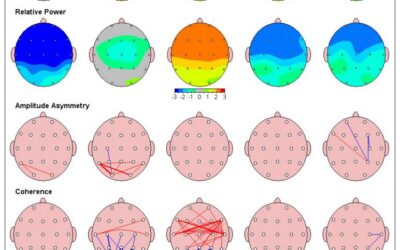
This is why the work we do is built from the bottom up. Somatic Experiencing, Brainspotting, and EMDR work with the nervous system and the trauma underneath, and qEEG brain mapping and neurofeedback let us look at how a brain is regulating itself. We cannot treat your microglia. We can work with the systems that the microglia respond to, which, if this research holds, is a meaningful place to stand.
Microglia are active
They prune synapses and maintain the brain throughout life, not just during infection.
Inflammation and mood
Microglial activation is reliably associated with depression, though causation is not settled.
Primed by trauma and drugs
Strong in animal models, promising in humans, not yet a treatment.
Microglia and hemispheres
A generative way to think across levels, held as hypothesis rather than fact.
Bottom-up care for the whole nervous system
Taproot Therapy Collective serves Birmingham, Hoover, Vestavia Hills, and all of Alabama by teletherapy. We work with trauma and the nervous system using somatic, brain-based, and depth approaches, guided by Joel Blackstock, LICSW-S and our neurotherapy lead Dr. Jason Mishalanie, alongside clinicians across the practice.
Reach out to our team Explore brain-based careBibliography and academic references
- Dantzer, R., et al. (2008). From inflammation to sickness and depression: when the immune system subjugates the brain. Nature Reviews Neuroscience, 9(1), 46-56.
- Kettenmann, H., et al. (2011). Physiology of microglia. Physiological Reviews, 91(2), 461-553.
- McGilchrist, I. (2009). The Master and His Emissary: The Divided Brain and the Making of the Western World. Yale University Press.
- Miller, A. H., & Raison, C. L. (2016). The role of inflammation in depression: from evolutionary imperative to modern treatment target. Nature Reviews Immunology, 16(1), 22-34.
- Nakazawa, D. J. (2020). The Angel and the Assassin: The Tiny Brain Cell That Changed the Course of Medicine. Ballantine Books.
- Ransohoff, R. M., & Perry, V. H. (2009). Microglial physiology: unique stimuli, specialized responses. Annual Review of Immunology, 27, 119-145.
- Salter, M. W., & Stevens, B. (2017). Microglia emerge as central players in brain disease. Nature Medicine, 23(9), 1018-1027.
- Tay, T. L., et al. (2017). Microglia across the lifespan: from origin to function in brain development, plasticity and aging. Progress in Neurobiology, 155, 4-25.
- Wohleb, E. S. (2016). Neuron-microglia interactions in mental health disorders: for better, and for worse. Frontiers in Immunology, 7, 544.
- Yirmiya, R., & Goshen, I. (2011). Immune modulation of learning, memory, neural plasticity and neurogenesis. Brain, Behavior, and Immunity, 25(2), 181-213.
On the imaging evidence. The finding that microglial-activation markers are elevated in depression is drawn from a meta-analysis of TSPO PET studies in the NIH PMC archive, and the overview of microglia in the pathogenesis and treatment of depression is from the Journal of Neuroinflammation. Both describe neuroinflammation as a promising target under study rather than the basis of an approved treatment.












0 Comments