
What Is Emotion? The Science, the Psychology, and the Soul of Our Feeling Life
The question looks simple until you try to answer it carefully. What is an emotion? Where does it live — in the brain, the body, the mind, or the soul? Is it something that happens to you, something you construct, or something you are? The answers to these questions shape everything in psychotherapy: what we think a session is for, what it means to heal, and what counts as change.
The conventional approach to emotions in therapy — identify them, express them, regulate them — is not wrong, but it is incomplete. It treats emotions as fairly clear objects of experience that can be labeled, sorted, and managed. The deeper clinical reality, as anyone who has sat across from a patient in genuine distress knows, is messier and more interesting. Emotions are signals from a nervous system that has been shaped by millions of years of evolution, filtered through a developmental history, organized by a particular culture’s emotional vocabulary, and — particularly in people who have experienced trauma — systematically disrupted at a physiological level that talking about feelings alone cannot reach.
This article explores what contemporary neuroscience, somatic therapy, and depth psychology have collectively learned about the three fundamental negative emotional states — fear, anger, and sadness — and what that understanding means for therapeutic practice at Taproot Therapy Collective.
The Neuroscience Debate: Are Emotions “Basic” or Constructed?
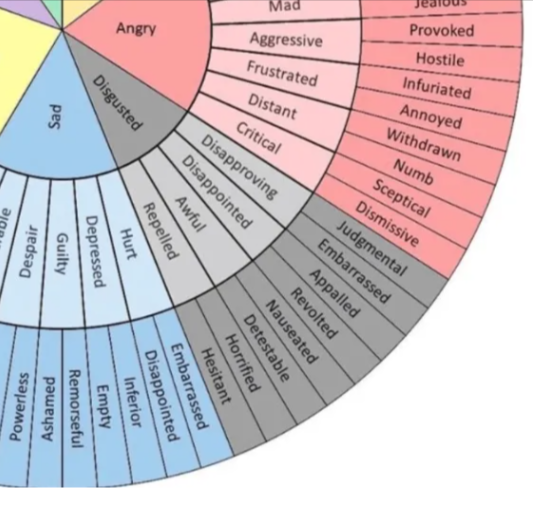
For most of the twentieth century, the dominant scientific model of emotion held that there are a small number of “basic emotions” — happiness, sadness, fear, anger, disgust, and surprise — that are universal across cultures, recognizable in facial expressions, and hardwired into the brain’s structure. Paul Ekman’s research on cross-cultural facial expression was the flagship evidence for this view, and it became so dominant that it shaped clinical training across the field.
That model is now scientifically contested in important ways. Lisa Feldman Barrett’s theory of constructed emotion, developed through two decades of neuroimaging and psychological research, argues that the brain does not have dedicated “emotion circuits” that fire automatically in response to specific stimuli. Instead, the brain constructs emotional experiences in real time by combining interoceptive signals from the body (what the nervous system is doing right now), predictions based on past experience (what has happened in similar circumstances before), and conceptual categories from learned emotional knowledge (the emotional vocabulary provided by culture and language).
This is not a purely academic debate. If Barrett is right, then two people in ostensibly identical situations may be having genuinely different emotional experiences because their brains are constructing those experiences differently — based on different body states, different histories, and different emotional concepts. It also means that expanding someone’s emotional vocabulary and their capacity for interoceptive awareness (the ability to sense what is happening in their own body) may literally change the range of emotions they are capable of experiencing. Psychotherapy becomes, among other things, an exercise in emotional granularity.
At the same time, Joseph LeDoux’s later work complicates the picture further. LeDoux, whose research on the amygdala and fear is foundational to modern trauma neuroscience, has argued in his more recent writing that “fear” as a consciously felt emotion and the defensive survival circuits of the brain are not the same thing. The subcortical survival circuits that activate in response to threat do not necessarily produce the subjective feeling of fear — they produce action tendencies and physiological preparation. The conscious experience of being afraid is a cognitive construction that occurs after the fact, drawing on the same body signals and predictive mechanisms that Barrett describes.
What both of these perspectives share is a view of emotion as fundamentally embodied and relational — not a private inner state but a dynamic process involving the body, the nervous system, the history, and the cultural context of the person having it. This is exactly consistent with a somatic understanding of emotion and with the Jungian tradition’s insistence that emotions are not merely psychological events but involve the whole person.
Antonio Damasio and the Somatic Marker Hypothesis
Among the most clinically useful contributions to the neuroscience of emotion is Antonio Damasio’s somatic marker hypothesis, developed through his work with patients who had suffered damage to the ventromedial prefrontal cortex. These patients retained normal intelligence, memory, and logical reasoning ability but were catastrophically impaired in decision-making — they would deliberate endlessly about trivial choices or make obviously self-defeating decisions with complete equanimity.
Damasio’s insight was that these patients had lost access to their somatic markers — the subtle bodily signals that in healthy people rapidly tag certain options as good or bad, dangerous or safe, based on past experience. Without these signals, the computational burden of every decision became infinite. Emotion, Damasio concluded, is not the enemy of reason but its prerequisite: the body’s rapid-processing system for marking relevance and weighting options in ways that make practical cognition possible at all.
This has direct implications for the patient who arrives in therapy saying “I don’t feel anything” or “I know cognitively that this is bad for me but I can’t feel why it matters.” Alexithymia — the clinical term for difficulty identifying and describing feelings — is not simply emotional immaturity or repression. In many cases it reflects a disruption in the somatic signaling system that links body states to conscious awareness. The treatment is not primarily to talk about feelings but to develop the capacity to notice, tolerate, and differentiate body sensations — the raw material from which emotions are constructed.
Polyvagal Theory and the Hierarchy of Emotional States
Stephen Porges’s Polyvagal Theory has become one of the most clinically influential frameworks in contemporary somatic psychotherapy, and it provides a particularly elegant way of understanding the hierarchy of negative emotional states that this article addresses.
Porges describes three neurological states organized hierarchically from newest to oldest in evolutionary terms:
Ventral Vagal (Social Engagement)
The most evolutionarily recent system, mediated by the ventral branch of the vagus nerve and the facial-vocal-cardiac muscles of social engagement. When this system is online, we feel safe, connected, and available for authentic emotional experience. The full range of human emotional life — including appropriately felt fear, anger, and sadness — is possible from this state. The nervous system can tolerate emotional intensity without becoming overwhelmed.
Sympathetic Activation (Mobilization)
When social engagement fails to achieve safety, the nervous system activates the sympathetic branch: the classic fight-or-flight response. This is the physiological state underlying the most accessible negative emotions — anger in its mobilized form, and fear as the aroused, activated experience that motivates flight. From this state, the social engagement system is offline: we are less able to read social cues accurately, more reactive, and less capable of nuanced emotional experience.
Dorsal Vagal (Immobilization)
The most evolutionarily ancient system, this is the physiological substrate of shutdown, freeze, collapse, and dissociation. When the sympathetic system’s mobilized response fails to achieve safety, the nervous system may shift into dorsal vagal dominance: the felt sense of numbness, hopelessness, disconnection, and immobility. In Porges’s framework, this is not passive — it is an active defensive strategy. But from within it, emotion becomes flattened, unavailable, or experienced as remote and unreal.
This polyvagal framework maps directly onto the clinical presentation of the three basic negative emotions in a way that illuminates their adaptive function. Fear in its fully aroused sympathetic form prepares the organism for flight. Anger mobilizes action against a perceived threat or violation. Sadness — particularly in its most collapsed form — may reflect dorsal vagal activation, the physiological state of giving up that Porges links to the ancient “feigning death” response.
The key clinical implication is that these states are not equally accessible from all neurological conditions. A patient in dorsal vagal shutdown cannot simply decide to feel anger instead of numbness. The neurological state must shift before the emotional state can shift. This is why somatic interventions — working with breath, movement, posture, and titrated contact — are often necessary before emotional processing can proceed. You cannot think your way into a different autonomic state, but you can sometimes move, breathe, or resource your way there.
For more on this, see our articles on the window of tolerance and Somatic Experiencing.
The Three Core Negative Emotions: A Clinical Deep Dive
Fear: The Oldest Signal and the Most Misunderstood
Fear is the emotional experience that most directly corresponds to the activation of the brain’s threat detection systems — the amygdala, the bed nucleus of the stria terminalis, and the downstream body systems they innervate through the hypothalamic-pituitary-adrenal (HPA) axis. In its adaptive form, fear is extraordinarily useful: it orients attention, prepares the body for rapid action, and prioritizes survival over comfort.
In clinical populations, however, fear rarely presents in its clean adaptive form. In patients with PTSD and complex trauma, the threat detection system has been recalibrated by experience in ways that make it fire chronically, in response to stimuli that would not threaten most people, and with intensity that overwhelms the capacity for self-regulation. This is not psychological weakness — it is the nervous system doing exactly what it was designed to do, based on the best information it has about what constitutes danger in the world this particular person lives in.
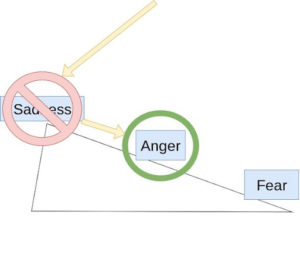
Bucke’s insight that fear represents the “least adaptable” emotional state, characterized by powerlessness and the absence of control, maps onto the polyvagal framework in an important way. Chronic fear — fear that cannot be resolved by action or connection — tends to push the nervous system toward dorsal vagal collapse. The person in learned helplessness is not simply someone who has decided to stop trying; they are someone whose nervous system has concluded that mobilized action is futile and has shifted into energy conservation mode.
The treatments that work best for trauma-based chronic fear — Brainspotting, EMDR, and Somatic Experiencing — work at least in part by completing interrupted defensive responses in the body, allowing the nervous system to update its threat assessment without requiring the patient to consciously relive and reprocess traumatic memories through language-based narrative alone.
Anger: The Emotion That Knows You Have Rights
The clinical observation that anger is “more adaptable” than fear — requiring the belief that one has rights and boundaries worth defending — reflects a deep truth about the phenomenology and neurobiology of anger. Anger is a mobilized sympathetic state, but unlike fear, it moves toward rather than away from the threat. It requires a certain confidence in one’s own agency and in the legitimacy of one’s own needs.
This is why anger is so often absent in patients who have experienced prolonged abuse, neglect, or gaslighting — particularly when those experiences occurred in childhood, when the development of a stable sense of self and one’s own rights was still underway. The patient who cannot feel anger is not simply “passive” or “depressed.” They may be someone who learned, under circumstances of real danger, that anger was a luxury they could not afford, because the person violating their boundaries was also the person keeping them alive.
The Jungian perspective on anger adds an important dimension to this clinical picture. From a depth psychology standpoint, anger that is chronically suppressed does not disappear — it constellates in the shadow, the part of the psyche that contains everything the ego cannot consciously own. Shadow anger tends to emerge in characteristic ways: passive aggression, explosive overreaction to minor triggers, chronic resentment, or the projection of hostility onto others. Working with a patient’s shadow anger — helping them own and integrate what they have been unable to consciously feel and express — is one of the central tasks of Jungian-informed therapy.
Anger that is felt, owned, and expressed appropriately is not destructive — it is the emotion that knows a boundary has been crossed and is motivated to address it. Turning anger into a signpost rather than a threat or a shame-inducing experience is one of the more practically important goals of emotional work in therapy.
Sadness: The Most Integrative Emotion
Sadness is the most philosophically and clinically complex of the three negative emotions, and the one most frequently mislabeled or pathologized. The clinical literature has long distinguished between normal grief — the adaptive response to loss that moves through, integrates, and eventually transforms — and clinical depression, which is characterized by the inability to process loss rather than the process itself.
The observation that sadness is the “most adaptable” emotional state — requiring the capacity for vulnerability, acceptance of what cannot be controlled, and faith in one’s own healing — points to something profound about the relationship between sadness and psychological maturity. To allow oneself to grieve is to relinquish the defensive project of control. It requires tolerating helplessness without collapsing into hopelessness, experiencing pain without converting it into the anesthesia of numbness or the mobilized protest of anger.
Winnicott’s concept of the capacity to be alone in the presence of another captures something important here: genuine sadness, as opposed to depression, requires a secure enough relational context to be felt safely. Many patients cannot access sadness in their daily lives because they have never had a relational environment where being sad was tolerable and safe. The therapy relationship becomes, for such patients, the first context in which sadness can be allowed to exist and move through.
The Jungian understanding of sadness connects it to the process of mourning that is necessary for any genuine transformation. Individuation — the development of the whole personality — requires letting go of earlier versions of the self, earlier attachments, and earlier illusions. This is inherently a grief-involving process. The sadness that arises in the middle of genuine therapeutic work is not a sign that something is wrong; it is often a sign that something real is being surrendered in service of something more authentic.
The Window of Tolerance: The Map for Emotional Work
Dan Siegel’s concept of the window of tolerance provides the most practical clinical map for understanding when emotional work is possible and when it will simply retraumatize. The window describes the arousal range within which a person can process emotional experience without becoming either overwhelmed (hyperaroused, flooded, dysregulated) or dissociated (hypoaroused, shut down, disconnected).
Working within the window of tolerance is not the same as avoiding difficult emotional content. It means titrating the approach to difficult material in a way that keeps the nervous system regulated enough to learn from the experience rather than simply reactivating survival responses. Understanding your window of tolerance is one of the most useful frameworks we share with patients early in treatment.
For patients with narrow windows of tolerance — particularly those with complex developmental trauma — expanding the window is often the first therapeutic task, before processing traumatic content becomes safe or productive. This involves building both bottom-up resources (practices that regulate the nervous system through the body: breath, movement, grounding) and top-down resources (the development of the observing ego, the capacity to be curious about one’s own internal states rather than overwhelmed by them).
Internal Family Systems: Emotions as Parts
Richard Schwartz’s Internal Family Systems model offers a particularly elegant framework for understanding why emotional work is often so complicated in clinical practice. From an IFS perspective, what appears to be a single emotion is often the expression of a complex internal system. The fear that presents in a session may be a “Firefighter” part activating to prevent the patient from feeling the deeper pain of a vulnerable “Exile” part. The anger that cannot be accessed may have been buried by a “Manager” part that learned, long ago, that anger was dangerous.
This parts-based understanding of emotion allows for more precise and compassionate clinical work than a simple “feel your feelings” approach would permit. The question becomes not just “what are you feeling?” but “which part of you is feeling that, and what is it protecting?” Parts-based therapy in Alabama is one of the most effective frameworks we use at Taproot for helping patients develop a more nuanced and compassionate relationship with their emotional lives.
Emotion in Brainspotting and EMDR: Processing Below Language
One of the most consistent findings in trauma therapy is that the most significant emotional material is often not accessible through language-based processing. Bessel van der Kolk’s formulation — “the body keeps the score” — points to the fact that traumatic experience is stored in subcortical and somatic memory systems that operate below the level of verbal narrative.
Both Brainspotting and EMDR are designed to access and process emotional material at the subcortical level where it is stored. In Brainspotting, the use of eye positions to locate and process trauma-held activation allows patients to access and discharge emotional material that years of talk therapy may have been unable to reach. The process often involves a patient arriving at an emotion they have never been able to consciously feel — genuine grief, legitimate rage, or the specific quality of fear that characterized an original traumatic event — and allowing it to complete its processing cycle in the body.
The neuroscience underlying this is connected to the process of memory reconsolidation: the discovery that when a stored memory is activated, it enters a temporary labile state during which it can be updated or transformed before being re-stored. Brainspotting and EMDR appear to work in part by activating traumatic emotional memories in the context of dual awareness (the patient is simultaneously in the past and in the present, grounded in a safe therapeutic relationship), allowing the emotional charge of the memory to be updated and integrated rather than simply reinforced.
The Jungian Dimension: Emotions as the Language of the Soul
Carl Jung’s understanding of emotion was distinctive within the history of psychology. For Jung, emotions were not simply adaptive responses of the nervous system — they were the language through which the unconscious communicated with the ego. The feeling function, which Jung identified as one of the four basic orientations of the psyche, was not a lower faculty to be managed and regulated but a primary mode of knowing — one that could perceive value, relationship, and meaning in ways that thinking alone could not.
This perspective on emotion has important implications for therapy. If emotions are messages from the deeper self — if the rage, the grief, the terror that patients bring to therapy are not simply dysfunctions to be corrected but communications to be understood — then the therapeutic task is not primarily regulation or reduction but translation: what is this emotion trying to say about what matters, what has been violated, what is needed?
This does not mean therapists should encourage the uncritical expression of raw emotion or ignore the damage that dysregulated emotional expression can cause. It means attending to emotion with genuine curiosity — not “how do we make this go away?” but “what does this mean, and what would happen if we understood it more completely?”
For more on the Jungian perspective on emotional life, see our articles on what happens when we can’t feel emotion and the relationship between intuition and trauma.
Practical Clinical Strategies: Meeting Emotion Where It Lives
Drawing on all of the above, here is a framework for working with the three core negative emotions that goes beyond generic mindfulness advice:
1. Assess the Neurological State First
Before doing any emotional work, orient to the patient’s current autonomic state. Are they in ventral vagal regulation (available, connected, present)? Sympathetic activation (mobilized, activated, potentially flooded)? Dorsal vagal collapse (shut down, dissociated, unreachable)? The appropriate intervention varies entirely depending on which state you are working with. Meeting a patient in dorsal collapse with an invitation to “stay with the feeling” may simply deepen the shutdown.
2. Resource Before Processing
Build the nervous system’s capacity to tolerate emotional activation before inviting contact with difficult material. Grounding, titrated contact with pleasurable or neutral sensations, and pendulation (moving between charged and neutral experience) all support window of tolerance expansion. Our article on fast interventions for panic and dissociation offers specific somatic tools for this work.
3. Follow the Body, Not the Story
Emotional processing is more reliably accessed through body sensation than through narrative. Rather than asking “how does that make you feel?” — which invites a cognitive interpretation — try “where do you notice that in your body?” or “what happens in your chest/throat/belly when you bring that to mind?” The body often knows what is being felt before the mind has a label for it.
4. Use Dual Awareness
For processing emotionally charged material, maintain dual awareness: simultaneous contact with the past experience and grounding in the present moment. “I can feel this and I am also here, now, safe.” This capacity is both a therapeutic goal and a technique, and it is what allows emotional material to be processed rather than simply reactivated.
5. Honor the Adaptation
Every emotional pattern that presents in therapy as a problem was once a solution. The numbness that looks like depression was once protection. The rage that looks like a relationship destroyer was once the only way to get needs met. Approaching emotional patterns with respect for their original function — “this kept you safe when nothing else could” — before inviting their revision creates the safety that genuine emotional change requires.
6. Consider Specialized Treatment
For patients whose emotional dysregulation reflects underlying trauma, consider whether more specialized trauma treatment is indicated. Brainspotting, EMDR, Somatic Experiencing, and Internal Family Systems each offer specialized pathways to emotional processing that conventional talk therapy cannot replicate.
Related Articles on Emotion, Trauma, and the Body
- What Is Emotion? Philosophy, Neuroscience, and the Therapeutic Hour
- The Window of Tolerance: Your Map for Emotional Healing
- What Happens When We Can’t Feel Emotion?
- Understanding Alexithymia: When Emotions Have No Words
- The Neurobiology of Shame
- Laughter, Screaming, and the Paradox of Emotion
- Turning Anger Into a Signpost
- The Relationship Between Intuition and Trauma
- Somatic vs. Cognitive Approaches to Emotion
- 20 Fast Interventions for Panic and Dissociation
References
Barrett, L. F. (2017). How Emotions Are Made: The Secret Life of the Brain. Houghton Mifflin Harcourt.
Damasio, A. (1994). Descartes’ Error: Emotion, Reason, and the Human Brain. Putnam.
Damasio, A. (2021). Feeling and Knowing: Making Minds Conscious. Pantheon Books.
Ecker, B., Ticic, R., & Hulley, L. (2012). Unlocking the Emotional Brain: Eliminating Symptoms at Their Roots Using Memory Reconsolidation. Routledge.
Greenberg, L. S. (2015). Emotion-Focused Therapy: Coaching Clients to Work Through Their Feelings (2nd ed.). American Psychological Association. https://doi.org/10.1037/14692-000
LeDoux, J. E., & Brown, R. (2017). A higher-order theory of emotional consciousness. Proceedings of the National Academy of Sciences, 114(10), E2016–E2025. https://doi.org/10.1073/pnas.1619316114
Linehan, M. M. (2015). DBT Skills Training Manual (2nd ed.). Guilford Press.
Ogden, P., Minton, K., & Pain, C. (2006). Trauma and the Body: A Sensorimotor Approach to Psychotherapy. W. W. Norton.
Porges, S. W. (2011). The Polyvagal Theory: Neurophysiological Foundations of Emotions, Attachment, Communication, and Self-Regulation. W. W. Norton.
Porges, S. W., & Dana, D. (2018). Clinical Applications of the Polyvagal Theory. W. W. Norton.
Schwartz, R. C. (2021). No Bad Parts: Healing Trauma and Restoring Wholeness with the Internal Family Systems Model. Sounds True.
Siegel, D. J. (2010). Mindsight: The New Science of Personal Transformation. Bantam.
van der Kolk, B. (2014). The Body Keeps the Score: Brain, Mind, and Body in the Healing of Trauma. Viking Press.
This article is intended for educational purposes. It is not a substitute for professional mental health evaluation or treatment. If you are struggling with emotional dysregulation, trauma, or depression, please contact our team to discuss what kind of support would be most helpful for you.



















0 Comments