Who is Cliford Geertz?

by | Jul 17, 2025 | 0 comments

Weaving the Web of Meaning: Clifford Geertz’s Cultural Anthropology and Its Implications for Trauma and Consciousness in Psychotherapy

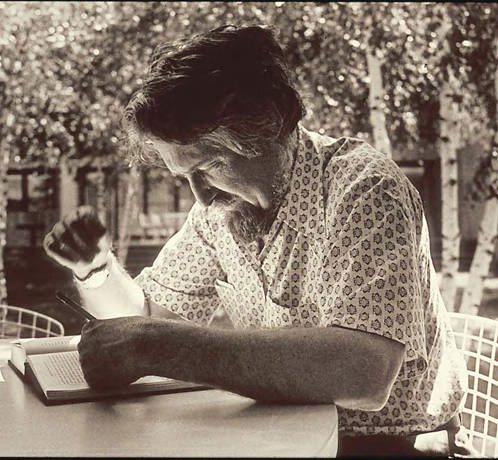
In the realm of psychotherapy, understanding the intricate tapestry of human experience is paramount. To truly grasp the complexities of trauma and consciousness, we must look beyond the individual psyche and consider the cultural context in which it is embedded. This is where the work of renowned cultural anthropologist Clifford Geertz becomes invaluable.

Geertz’s seminal concept of culture as “webs of significance” has profound implications for our understanding of mental health and well-being. According to Geertz, culture is not merely a set of customs or behaviors, but a complex system of shared symbols, meanings, and interpretations that shape our perception of reality. It is the lens through which we make sense of our experiences, including the traumatic events that can shatter our sense of self and world.

This idea resonates strongly with the work of other pioneers in the field of consciousness studies and neuroscience. Erich Neumann, in his exploration of the origins and history of consciousness, emphasized the role of cultural myths and archetypes in shaping the individual psyche. He argued that the development of consciousness is not a purely individual process, but one that is deeply intertwined with the collective stories and symbols of our cultural heritage.

Similarly, neuroscientist Michael Gazzaniga has highlighted the importance of language and narrative in the construction of our sense of self. His research on split-brain patients has revealed the mind’s remarkable capacity to create coherent stories and explanations, even in the face of conflicting or fragmented information. This suggests that our sense of identity is not a fixed, immutable entity, but a dynamic narrative that is constantly being woven and rewoven in response to our experiences and interactions.

Antonio Damasio, another leading figure in neuroscience, has further elaborated on the role of emotion and feeling in the creation of consciousness. His somatic marker hypothesis posits that our decision-making processes are heavily influenced by the emotional associations we form with past experiences. This has important implications for understanding the impact of trauma, which can create powerful negative associations that shape our perceptions and behaviors long after the initial event.

So what does all this mean for psychotherapy? First and foremost, it highlights the need for a culturally-informed approach to treatment. If culture is the web of meaning that shapes our experience, then any attempt to heal trauma and promote well-being must take into account the specific cultural context in which that trauma occurred. This means being attuned to the unique symbols, stories, and beliefs that give meaning to our clients’ lives, and using these as resources in the therapeutic process.

It also suggests that the goal of therapy is not simply to eliminate symptoms or “fix” problematic behaviors, but to help clients reauthor their personal narratives in a way that promotes resilience and growth. By exploring the cultural myths and archetypes that resonate with their experiences, clients can tap into a deeper sense of meaning and purpose, and find new ways of interpreting and integrating traumatic events.

Furthermore, a culturally-informed approach to therapy recognizes that healing is not a purely individual process, but one that is intimately connected to the larger social and cultural context. By helping clients strengthen their connections to their communities and cultural traditions, therapists can promote a sense of belonging and support that is essential for long-term well-being.

Of course, this is not to say that individual factors such as biology, personality, and personal history are unimportant. Rather, it is to recognize that these factors are always embedded within a larger cultural matrix that shapes their expression and meaning. By taking a holistic, culturally-informed approach, psychotherapists can better understand the complex interplay of individual and collective factors that contribute to trauma and resilience.


Explore the Other Articles by Categories on Our Blog 

Hardy Micronutrition is clinically proven to IMPROVE FOCUS and reduce the effects of autism, anxiety, ADHD, and depression in adults and children without drugsWatch Interview With HardyVisit GetHardy.com and use offer code TAPROOT for 15% off

Who Is Victor Lamme?

Who Is Victor Lamme?

The Neuroscientist Who Found Consciousness in the Feedback Loops of the Brain When you look at a face, what happens in your brain? The answer turns out to be surprisingly complex. First, visual information streams forward from your eyes through your visual cortex,...

Somatic Reset Techniques You Can do At Home

Somatic Reset Techniques You Can do At Home

Written by the clinical team at Taproot Therapy Collective, a Birmingham psychotherapy practice specializing in somatic and trauma-focused modalities. Our clinicians are trained in body-based approaches including Brainspotting, EMDR, and somatic trauma resolution....

Why We Recommend Hardy Nutritionals: A Clinical Perspective on the Research That Changed How We Think About Treatment Resistance

Why We Recommend Hardy Nutritionals: A Clinical Perspective on the Research That Changed How We Think About Treatment Resistance

Why Taproot Therapy Collective recommends Hardy Nutritionals Daily Essential Nutrients for treatment-resistant mood disorders, ADHD, and emotional dysregulation. Discovered not through advertising but through patients whose bipolar disorder and other conditions finally responded. Over 40 peer-reviewed studies support the NutraTek chelation technology. Use code TAPROOT at gethardy.com for 15% off for life.

The Second Brain Revolution: How Gut Science Is Rewriting Psychiatric Medicine

The Second Brain Revolution: How Gut Science Is Rewriting Psychiatric Medicine

This 2025 strategic report details the shift from theoretical gut-brain models to clinical applications, analyzing the indole-SK2 channel mechanism in anxiety and the efficacy of oral FMT capsules for refractory depression. It evaluates the diagnostic potential of the gut mycobiome and profiles the pharmaceutical pipelines of key industry players like Kallyope and Bloom Science.

The Metabolic Mind: A 2025 Clinical Update on Nutritional Psychiatry

The Metabolic Mind: A 2025 Clinical Update on Nutritional Psychiatry

A 2025 clinical update on nutritional psychiatry for psychotherapists. Explore the latest research on psychobiotics, vitamin D, magnesium, zinc, omega-3s, amino acid therapies, and herbal interventions—including new safety warnings on ashwagandha and evidence that saffron matches SSRI efficacy for mild depression.

Who is Mark Turner?

Who is Mark Turner?

The Literary Mind: Mark Turner's Cognitive Science and Its Implications for Understanding Trauma and Consciousness in Psychotherapy In the quest to understand the complexities of human consciousness and the impact of trauma on the psyche, the work of cognitive...

The Psychology of the Dragon Archetype

The Psychology of the Dragon Archetype

"Perhaps all the dragons in our lives are princesses who are only waiting to see us act, just once, with beauty and courage. Perhaps everything that frightens us is, in its deepest essence, something helpless that wants our love." - Rainer Maria Rilke Dragons have...

Who was Owen Barfield?

Who was Owen Barfield?

 Prophet of the Evolution of Consciousness Owen Barfield (1898-1997) was a British philosopher, poet, and critic whose groundbreaking work focused on the evolution of human consciousness and its relationship to language and imagination. A close friend of C.S. Lewis...

The Mystical Roots and Therapeutic Fruits of Initiation Rites

The Mystical Roots and Therapeutic Fruits of Initiation Rites

Is Psychotherapy a Type of Initiation Have you ever been part of a fraternity, sorority, or similar organization? If so, you may have experienced rituals or ceremonies that felt both challenging and transformative. Even if you haven't, you've likely encountered such...

Unraveling the Mystery of the Roman Dodecahedra:

Unraveling the Mystery of the Roman Dodecahedra:

   An In-Depth Exploration of the Orphic Cult Object Theory Among the most enigmatic artifacts from the ancient world are the so-called Roman dodecahedra - small, hollow, twelve-faced polyhedrons made of bronze or stone, each face featuring a circular hole of...

Why Consciousness Won’t Emerge from Large Language Models:

Why Consciousness Won’t Emerge from Large Language Models:

 The Competing Elements of Human Consciousness Introduction The quest to create artificial consciousness has long captured the human imagination. From the golems of Jewish folklore to the robots of modern science fiction, we have dreamed of breathing mental life into...

Consciousness and Depth Psychology: Insights from Michael Gazzaniga

Consciousness and Depth Psychology: Insights from Michael Gazzaniga

What are the Origins of Conciousness? The nature of consciousness has long been one of the most profound and perplexing questions in psychology, neuroscience, and philosophy. How does subjective experience arise from the objective, physical processes of the brain?...

0 Comments

Submit a Comment

Your email address will not be published. Required fields are marked *