Christian Mysticism: Sacred Psychology for Healing

Exploring how Christian contemplative traditions—from the Desert Fathers to modern masters—offer profound resources for understanding suffering, spiritual development, and psychological transformation.

Christian Mysticism and Contemplative Therapy

Clinically Reviewed & Edited By:

Joel Blackstock, LICSW-S, MSW, PIP | Clinical Director, Taproot Therapy Collective

Explore the Contemplative Archives

Historical Sacred Psychology

Foundational insights from the early tradition.

  • Desert Tradition: Emotional regulation and the concept of logismoi.
  • Spanish Mystics: St. John of the Cross and the “Dark Night of the Soul.”
  • Medieval Depth: Meister Eckhart on ego transcendence and authentic selfhood.

Contemporary Contemplatives

Modern applications of ancient mystical wisdom.

  • Thomas Merton: Contemplation, social justice, and the “True Self.”
  • Richard Rohr: Transformational spirituality and mid-life transitions.
  • Henri Nouwen: Integrating psychological wounds with spiritual calling.

Clinical Integration

Bridging faith and evidence-based practice.

Clinical Framework & Research

Our integration of Christian mysticism is informed by research from Yale Divinity School, Duke University’s Center for Spirituality, Theology and Health, and the Baylor Institute for Studies of Religion.

Contemporary studies demonstrate that Christian spiritual practices correlate with faster recovery from depression and anxiety, providing biological validation for these ancient healing methods.

Christian Mysticism in Alabama Therapy: FAQ

What is the “Dark Night of the Soul” in a clinical context?

Drawing from St. John of the Cross, we view the Dark Night not as mere depression, but as a “spiritual emergency” or a transitional period of growth where old psychological structures are dismantled to make room for a deeper, more authentic relationship with the Self and the Divine.

Where can I find faith-integrated therapy in Birmingham, AL?

Taproot Therapy Collective in Hoover, AL, provides specialized therapy that integrates Christian contemplative wisdom with evidence-based treatments like EMDR and IFS. We serve the Greater Birmingham community, honoring both Protestant, Catholic, and Orthodox traditions.

Do you offer contemplative retreats in Alabama?

Yes. We host quarterly Christian Contemplative Retreats and monthly Lectio Divina groups at our Birmingham-area clinic, combining therapeutic depth with sacred tradition.

Connect with Our Community

Birmingham Sanctuary for Faith-Integrated Healing

Our clinical practice is rooted in the South, honoring Alabama’s rich Christian heritage while offering a bridge to contemplative wisdom. If you are seeking to integrate your faith with modern psychological healing, our Hoover clinic is accepting new patients.

📍 Located at 2025 Shady Crest Dr, Suite 203, Hoover, AL 35216

Book a Local Session

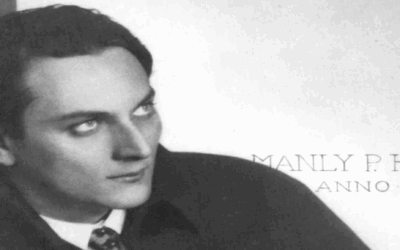
Manly P. Hall and the Psychological Resurrection of Ancient Wisdom

Manly P. Hall and the Psychological Resurrection of Ancient Wisdom

Explore the life and legacy of Manly P. Hall, author of The Secret Teachings of All Ages, examining his prescient influence on depth psychology, Jungian analysis, Gnostic trauma frameworks, and contemporary therapeutic approaches to psychological transformation and archetypal symbolism.

Paul Tillich and the Soul’s Depth: The Enduring Relevance of an Existentialist Theologian for Depth Psychology and Psychotherapy

Paul Tillich and the Soul’s Depth: The Enduring Relevance of an Existentialist Theologian for Depth Psychology and Psychotherapy

Paul Tillich’s profound influence on depth psychology and psychotherapy through his concepts of ultimate concern, existential anxiety, and the courage to be. This comprehensive guide examines how this existentialist theologian’s work on meaning, faith, and human existence continues to shape therapeutic practice, pastoral counseling, comparative religion, and philosophy. Includes timeline and analysis of psychotherapists influenced by Tillich including Rollo May, Carl Rogers, and Irvin Yalom.

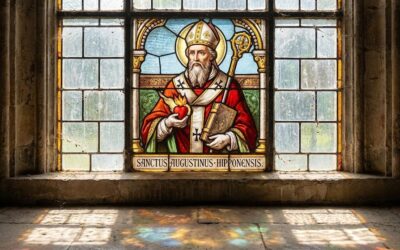
St. Augustine and the Foundations of Depth Psychology: How a Fourth-Century Bishop Became a Forefather of Modern Psychotherapy

St. Augustine and the Foundations of Depth Psychology: How a Fourth-Century Bishop Became a Forefather of Modern Psychotherapy

Explore how St. Augustine’s Confessions shaped depth psychology and modern psychotherapy. Discover why Irvin Yalom values this fourth-century thinker and how Augustine’s insights on the divided will, unconscious motivation, and therapeutic confession remain vital for clinicians today.

Holy Wood: The Intersection of Forestry and Mythology

Holy Wood: The Intersection of Forestry and Mythology

The Sacred Species and Their Archetypal Meanings In the depths of the human psyche, trees stand as primordial witnesses to our spiritual evolution. They are the axis mundi, the world pillars that connect heaven, earth, and the underworld in virtually every mythological tradition. From a Jungian perspective, trees represent the Self—rooted in the unconscious depths while reaching toward conscious enlightenment. This essay explores ten sacred tree species, examining why specific trees were chosen for particular...

Gnosticism as a Metaphor for Consciousness: Meaning, Evolution, and Healing

Gnosticism as a Metaphor for Consciousness: Meaning, Evolution, and Healing

Gnosticism as a Metaphor for Consciousness: Meaning, Evolution, and Healing Gnosticism is an ancient spiritual and philosophical worldview that offers a profound metaphor for the nature and dilemmas of human consciousness. While Gnosticism should not be taken as a literal philosophy or religion to adopt wholesale, it provides a powerful lens for exploring the ways we as conscious beings make meaning, how we evolved psychologically over time, and potential pathways for healing trauma by reconnecting with deeper...

The Mystical Roots and Therapeutic Fruits of Initiation Rites

The Mystical Roots and Therapeutic Fruits of Initiation Rites

Is Psychotherapy a Type of Initiation Have you ever been part of a fraternity, sorority, or similar organization? If so, you may have experienced rituals or ceremonies that felt both challenging and transformative. Even if you haven't, you've likely encountered such rites of passage in religious services, coming-of-age celebrations, or weddings. These experiences tap into a deep human need for initiation—a symbolic death and rebirth that ushers us into a new stage of life. We see this theme in modern day rituals...

The Perennial Philosophy and Depth Psychology: Uncovering Universal Patterns of Wisdom and Healing

The Perennial Philosophy and Depth Psychology: Uncovering Universal Patterns of Wisdom and Healing

Throughout history, mystics, philosophers, and wisdom traditions from around the world have independently arrived at strikingly similar insights into the nature of the human psyche, the path to healing and wholeness, and the fundamental structure of reality. These recurring patterns and themes, often referred to as the perennial philosophy, point to a universal substratum of human experience that transcends cultural and historical boundaries. In the 20th century, the pioneering work of depth psychologists such as...

The Hero’s Journey from Gilgamesh to Greek Tragedy:

The Hero’s Journey from Gilgamesh to Greek Tragedy:

Evolving Mythologies and Depth Psychology The hero's journey is one of the most enduring archetypes in world mythology, a narrative pattern that has shaped stories across cultures and centuries. At its core, the hero's journey is a psychological one—a symbolic representation of the process of individuation, the development of the self through the integration of conscious and unconscious elements. By tracing this archetype through the evolution of ancient mythology, particularly in the Greek tradition, we can gain...

The Blindspot: What We Cannot See in Ourselves and Society

The Blindspot: What We Cannot See in Ourselves and Society

What are our psychological blindspots in mass and individual psychology? "Maybe the only thing each of us can see is our own shadow. We are all like the blind man in the dark room looking for the black cat that isn't there." - The Great Dictator, Charlie Chaplin The Lacuna There is a small region devoid of photoreceptors called the physiological blindspot or lacuna. Located where the optic nerve passes through the retina, this area literally cannot detect light. And yet, we don't perceive a black void in our...

The Holistic Theology and Alchemy of Arnaldus de Villanova

The Holistic Theology and Alchemy of Arnaldus de Villanova

1. Who was Arnaldus de Villanova? Arnaldus de Villanova (c.1240-1311) was a renowned Catalan physician, theologian, diplomat and alchemist who made significant contributions to the development of medicine and spirituality in medieval Europe. An influential figure in the courts of kings and popes, Arnaldus pioneered a holistic approach to health and healing that synthesized insights from Hippocratic-Galenic medicine, Christian theology, Kabbalah, hermeticism and alchemy. At the heart of his thought was a...

Dissecting the Symbolism in Carl Jung’s Bollingen Stone

Dissecting the Symbolism in Carl Jung’s Bollingen Stone

In the garden of his Bollingen Tower retreat, on the shore of Lake Zurich, stands a peculiar monument - a stone cube, some twenty inches thick, carved on three sides with cryptic inscriptions. This is the Bollingen Stone, erected by Carl Jung in 1950 to commemorate his 75th birthday. Far from a mere ornamental marker, however, the Stone represents a profound expression of Jung's psychological and philosophical worldview. Through its amalgam of symbols, quotations, and structural motifs, it encapsulates the core...

Friedrich August Kekulé and the Role of Intuition in the Discovery of the Benzene Ring

Friedrich August Kekulé and the Role of Intuition in the Discovery of the Benzene Ring

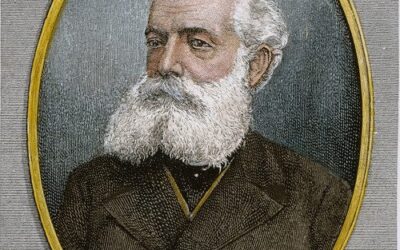
Who was Kekulé? Friedrich August Kekulé (1829-1896) was a German organic chemist who made several groundbreaking discoveries, most famously the cyclic structure of benzene. Kekulé's insight into the benzene ring was a pivotal moment in the history of chemistry that revolutionized the field. Interestingly, Kekulé attributed this discovery to a moment of intuition and visual inspiration that came to him in a dream. Kekulé's Dream and the Benzene Ring Structure The story of Kekulé's benzene ring discovery has become...

The Kabbalistic Concept of Ein Sof

The Kabbalistic Concept of Ein Sof

The Depth Psychology o Kabbalistic Concept of Ein Sof What is Kabbalah? Kabbalah is a mystical tradition within Judaism that seeks to understand the nature of divinity, the structure of the universe, and the purpose of human existence. The term "Kabbalah" comes from the Hebrew root "k-b-l," which means "to receive" or "to accept," referring to the reception of divine wisdom and the acceptance of spiritual practices. Kabbalah emerged in 12th century Provence and Spain, drawing on earlier forms of Jewish mysticism...

The Philosophy Behind and Around Carl Jung

The Philosophy Behind and Around Carl Jung

What were Carl Jung's Major Influences? Carl Jung was profoundly influenced by a wide range of philosophers, thinkers and mystics in developing his groundbreaking theories of analytical psychology. He drew upon ideas from existentialism, phenomenology, German idealism, Neoplatonism, Hermeticism, Gnosticism, and Christian mysticism to formulate his conceptions of the collective unconscious, archetypes, individuation, and the Self. Let's examine in-depth how some of these key figures shaped Jung's thought. Philemon...

The Influence of Christian Mystics on Jungian Thought:

The Influence of Christian Mystics on Jungian Thought:

What is Christian Mysticism? A Jungian Perspective on the Divine Encounter Mysticism is a spiritual discipline and a way of life that seeks direct experience and union with the divine or ultimate reality. It is a phenomenon that has manifested across various religious traditions, including Christianity, Islam, Judaism, Buddhism, and Hinduism. Mystics believe that it is possible to have a profound, transformative encounter with the sacred that transcends intellectual understanding and rational thought. At the core...

St. John of the Cross: Mystical Wisdom for Modern Psychology

St. John of the Cross: Mystical Wisdom for Modern Psychology

St. John of the Cross: The Psychologist of Divine Darkness "In the evening of life, we will be judged on love alone." — St. John of the Cross In the crucible of 16th-century Catholic reform, one man's profound mystical insights illuminated the path of spiritual transformation in a way that continues to resonate with seekers across traditions and modern psychologists alike. St. John of the Cross (1542–1591), the renowned Spanish mystic, Carmelite friar, and Doctor of the Church, gifted humanity with a corpus of...

Gaston Bachelard: Psychology Through Poetics

Gaston Bachelard: Psychology Through Poetics

Gaston Bachelard: The Philosopher of Elements and Dreams Gaston Bachelard (1884–1962) was a French philosopher and literary critic who stands as a unique bridge between the rigid world of science and the fluid world of poetry. He began his career as a philosopher of science, analyzing the history of physics and chemistry, but later underwent a profound intellectual transformation, dedicating his life to the study of the poetic imagination. Bachelard’s work explores how the human psyche engages with the material...

Paul Ricoeur: A Philosopher of Language, Narrative Identity and Hermeneutics

Paul Ricoeur: A Philosopher of Language, Narrative Identity and Hermeneutics

Paul Ricœur: The Philosopher of Narrative Identity and the Capable Self Paul Ricœur (1913–2005) stands as a colossus in 20th-century French philosophy, a thinker who built bridges between disciplines that often refused to speak to one another. He united the rigorous textual analysis of hermeneutics with the lived experience of phenomenology, and the structural study of language with the ethical demands of political life. For psychotherapists and students of depth psychology, Ricœur is indispensable. He is the...

Maurice Merleau-Ponty: Embodied Perception and Existential Phenomenology

Maurice Merleau-Ponty: Embodied Perception and Existential Phenomenology

Maurice Merleau-Ponty: The Philosopher of the Body and the Flesh of the World Maurice Merleau-Ponty (1908-1961) stands as a pivotal figure in 20th-century thought, a French phenomenologist who dared to challenge the ancient dualism separating the mind from the body. While his contemporary Jean-Paul Sartre focused on radical freedom and consciousness, Merleau-Ponty focused on the Body—not as a biological machine, but as the very ground of our existence. His work bridges the gap between the abstract world of...

Jan van Ruusbroec: Flemish Mystic and His Resonance with Depth Psychology

Jan van Ruusbroec: Flemish Mystic and His Resonance with Depth Psychology

The Mystic of the Sonian Forest In the quiet solitude of the Sonian Forest near Brussels, a 14th-century mystic named Jan van Ruusbroec (1293–1381) mapped the landscape of the human soul with a precision that rivals modern psychoanalysis. Known as the "Admirable Doctor," Ruusbroec was not an academic theologian but a contemplative who wrote in the vernacular Middle Dutch, making the deepest truths of the spirit accessible to the common person. Ruusbroec’s work is a vital bridge between medieval mysticism and...

Johannes Tauler’s Mystical Theology

Johannes Tauler’s Mystical Theology

The Doctor Illuminatus of the Rhineland In the 14th century, a spiritual plague swept through Europe alongside the physical Black Death. Amidst this chaos, a German Dominican friar named Johannes Tauler (c. 1300–1361) emerged as a voice of profound psychological clarity. A disciple of Meister Eckhart, Tauler stripped away the complex metaphysics of his teacher to focus on the practical, lived experience of the soul. Tauler is often called the "Doctor Illuminatus." For the modern depth psychologist, his work is a...

The Mystical Philosophy of John Scottus Eriugena:

The Mystical Philosophy of John Scottus Eriugena:

The Irish Mystic Who Synthesized East and West In the dark intellectual winter of the 9th century, a singular voice emerged from Ireland to illuminate the Carolingian court of Charles the Bald. John Scottus Eriugena (c. 815–877) was not merely a theologian; he was a bridge between the mystical theology of the Greek East and the rational Latin West. At a time when few scholars could read Greek, Eriugena translated the works of Pseudo-Dionysius the Areopagite, injecting the potent serum of Neoplatonism into the...

Amalric of Bena and His Insights in Depth Psychology

Amalric of Bena and His Insights in Depth Psychology

The Radical Pantheism of Amalric of Bena In the constellation of medieval mystics, few stars burned as brightly—or were extinguished as violently—as Amalric of Bena (died c. 1205). A theologian at the University of Paris, Amalric proposed a vision of God so radical that it led to the exhumation and burning of his bones five years after his death. His crime was Pantheism: the belief that "God is All." For the modern depth psychologist, Amalric is not a heretic but a pioneer. He anticipated the Jungian realization...

Pseudo-Dionysius the Areopagite and the Mystical

Pseudo-Dionysius the Areopagite and the Mystical

The Mysterious Monk of Divine Darkness In the history of Western thought, few figures are as enigmatic or as influential as Pseudo-Dionysius the Areopagite. Writing under the pseudonym of a convert of St. Paul mentioned in Acts 17:34, this mysterious 5th or 6th-century Syrian monk created a synthesis of Neoplatonic philosophy and Christian theology that would shape the mystical tradition for a millennium. His writings are not merely historical artifacts; they are profound psychological maps of the soul's journey...

How to Understand Carl Jungian Phenomenology:  Empiricism, Mysticism, or Literalism

How to Understand Carl Jungian Phenomenology: Empiricism, Mysticism, or Literalism

Read Part 1, Part 2, Part 3 and Part 4 Read More on Jung here: Carl Jung's Major Influences Jungian Analysis Archetypes Jung’s Method Jungian Thought Part 1: What was Jung's Method to Discover Reality? Jung's Empirical Phenomenology: Uniting Subjective Spirituality and Objective Science At the heart of Carl Jung's approach to psychology was a unique synthesis of empiricism and phenomenology, which sought to bridge the seemingly disparate realms of subjective spirituality and objective science. This approach...

George Fox and the Quaker Path to Integration and Wholeness

George Fox and the Quaker Path to Integration and Wholeness

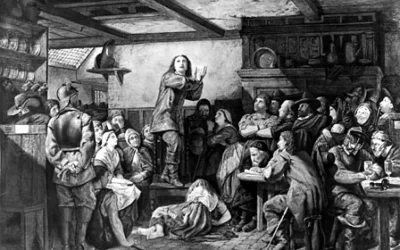
  Who was George Fox?   George Fox (1624-1691), the founder of the Religious Society of Friends (Quakers), developed a form of Christian spirituality that continues to offer valuable insights for contemporary psychology and spiritual practices. This article explores Fox's key teachings and their relevance to modern well-being and personal growth. Key Concepts in Fox's Teachings 1. The Inner Light Central to Fox's philosophy Belief in direct, unmediated experience of God within every individual Challenges...

The “Interior Castle” and Ascent of St. Teresa of Avila

The “Interior Castle” and Ascent of St. Teresa of Avila

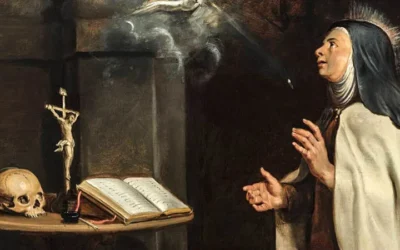
Who was Teresa of Avila? "Christ has no body now but yours, no hands but yours..." - St. Teresa of Avila Introduction: In the heated crucible of the 16th century Catholic Reformation, one woman's spiritual genius illuminated the path of mystical devotion in a way that revolutionized the soul's inward journey to divine union. St. Teresa of Avila (1515-1582), the celebrated Spanish mystic, monastic reformer, and founder of the Discalced Carmelites, bequeathed to humanity a series of timeless writings detailing her...

Rumi’s Mystical Poetry and Its Resonance with Jungian Psychology

Rumi’s Mystical Poetry and Its Resonance with Jungian Psychology

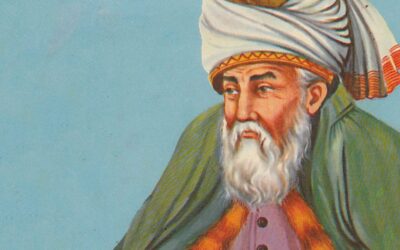
Who was Rumi? “Your task is not to seek for love, but merely to seek and find all the barriers within yourself that you have built against it.” ― Rumi Jalal ad-Din Muhammad Rumi, more popularly known as Rumi, was a 13th-century Persian poet, Sufi mystic, and Islamic scholar whose profound spiritual teachings and evocative poetry have transcended time and cultural boundaries. His works, which explore themes of love, unity, and the search for the divine, have not only influenced Islamic thought but have also found...

Meister Eckhart, the Unconscious, and the Ego: A Metaphor for the Church’s Relationship with Mysticism

Meister Eckhart, the Unconscious, and the Ego: A Metaphor for the Church’s Relationship with Mysticism

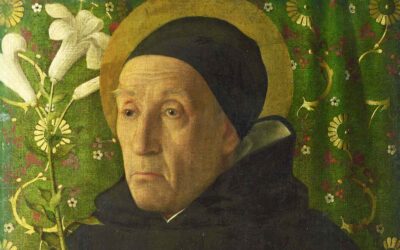
“If I had a friend and loved him because of the benefits which this brought me and because of getting my own way, then it would not be my friend that I loved but myself. I should love my friend on account of his own goodness and virtues and account of all that he is in himself. Only if I love my friend in this way do I love him properly.” ― Meister Eckhart, Selected Writings The relationship between the medieval mystic Meister Eckhart and the Catholic Church can be seen as a powerful metaphor for the relationship...

Emanuel Swedenborg’s Mystical Visions and Their Influence on Carl Jung’s Psychology

Emanuel Swedenborg’s Mystical Visions and Their Influence on Carl Jung’s Psychology

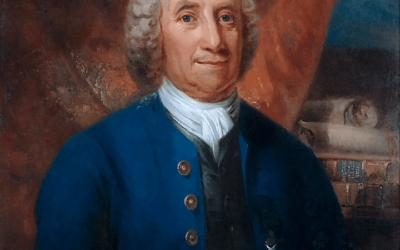
Who was Emanuel Swedenborg? Emanuel Swedenborg, a Swedish philosopher, scientist, and mystic who lived from 1688 to 1772, had a profound impact on the development of Western spirituality and psychology. His visionary experiences and ideas about the nature of the spiritual world and its relationship to the material realm influenced many thinkers, including the renowned Swiss psychiatrist Carl Jung. “Kindness is an inner desire that makes us want to do good things even if we do not get anything in return. It is the...

Simone Weil: Mysticism, Suffering, and the Search for Meaning

Simone Weil: Mysticism, Suffering, and the Search for Meaning

  Simone Weil: The Psychology of Affliction, Decreation, and the Healing Power of Attention By The Clinical Team at GetTherapyBirmingham.com In the landscape of 20th-century thought, few figures cast a shadow as long—or as stark—as Simone Weil. Albert Camus described her as "the only great spirit of our times." T.S. Eliot likened her brilliance to that of the saints. Yet, for the modern clinician and the seeker of psychological wholeness, Weil is more than a philosopher; she is a cartographer of the soul’s...

Check out some of the other categories on our blog: