
In 2003, David Grand sat across from a championship-level figure skater who had exhausted nearly every therapeutic approach without resolution. They had worked together for months using EMDR, Somatic Experiencing, psychoanalytic techniques, and what Grand called “energy therapy,” successfully processing most of her performance blocks. Yet one obstacle remained stubbornly resistant: the triple loop jump, a compulsory movement required for competitive programs. She could manage two revolutions perfectly, but as she approached the third rotation, something happened. Instead of completing the jump, she would “pop out” mid-air, landing after only two turns. This mysterious interruption, this inexplicable collapse of mastery at the crucial moment, defines what athletes call “the yips.”
During that session, Grand was using EMDR’s bilateral eye movements, slowly waving two fingers back and forth as the skater tracked them while focusing on the performance block. Then something shifted. As Grand moved his fingers to a particular position in her visual field, he noticed an involuntary wobble in one eye, a reflexive response he had observed countless times during EMDR sessions but never understood. Usually, he would continue the bilateral movement pattern, following the EMDR protocol. This time, acting on pure intuition, he did something different. He stopped moving his hand and held his fingers in that exact position where the eye wobble occurred.
“Keep looking right here,” he told her.
What happened next changed both their lives and ultimately the field of trauma treatment. As she maintained her gaze on that fixed point, processing accelerated dramatically. Material emerged that hadn’t surfaced during months of bilateral EMDR. Memories, emotions, physical sensations, and insights cascaded through her awareness with unprecedented intensity. The session produced breakthrough after breakthrough, layer after layer of the trauma and psychological material underlying her performance block releasing in ways Grand had never witnessed.
After the session, Grand sat stunned by what he had observed. He didn’t fully understand what had occurred, only that it represented something profoundly different from EMDR or any other approach he had used. That eye wobble, that reflexive response at a specific point in the visual field, seemed to be signaling where trauma was stored in the brain. By maintaining focus on that spot rather than moving the eyes bilaterally, they had somehow allowed deeper, more direct access to the neurobiological source of the problem.
Grand began experimenting cautiously with other clients, many of them therapists who understood trauma processing. He would position their gaze at specific points and instruct them simply, “Keep looking over here and watch what happens.” The results consistently exceeded what he had achieved with standard EMDR. People went deeper, processed faster, accessed material that had been unreachable through other methods. The therapeutic frame he was discovering felt simultaneously neurobiological, experiential, and relational, what he would later call the “neuroexperiential model.”
That 2003 discovery session became the genesis of brainspotting, a therapeutic approach that has since spread to over thirteen thousand trained clinicians on every continent, been translated into six languages by eighteen international trainers, and demonstrated remarkable effectiveness for treating trauma, performance anxiety, chronic pain, creativity blocks, and the mysterious phenomenon of the yips that had brought his skater client to treatment.
David Grand is a Licensed Clinical Social Worker who earned his PhD from International University. His professional journey reflects integration across therapeutic approaches rather than allegiance to single methodology. In the 1980s, he trained extensively in psychoanalysis at the Institute for Psychoanalytic Training and Research on Long Island, New York, immersing himself in depth psychology’s understanding of unconscious process, transference, and the therapeutic relationship.
In 1993, Grand completed training in EMDR, the eye movement therapy developed by Francine Shapiro. This training proved transformative, exposing him to brain-body techniques that directly accessed trauma through bilateral stimulation rather than relying solely on verbal processing. EMDR’s procedural approach, its emphasis on following the brain’s natural information processing rather than interpreting meaning, represented significant departure from psychoanalytic method.
In 1999, Grand encountered Somatic Experiencing, the body-oriented trauma therapy developed by Peter Levine. SE’s deep attention to physical sensation, its tracking of autonomic activation and discharge patterns, its understanding that trauma lives in the nervous system more than in narrative memory, added another dimension to Grand’s therapeutic repertoire.
Rather than practicing these approaches separately or choosing one over others, Grand began integrating them into what he called Natural Flow EMDR. This synthesis drew from psychoanalysis’s relational depth, EMDR’s bilateral brain stimulation, and Somatic Experiencing’s body-based processing. Natural Flow EMDR allowed the therapeutic process to unfold organically rather than following rigid protocol, trusting the client’s natural healing capacity while providing structure through eye movements and somatic tracking.
Grand wrote about Natural Flow EMDR in the book Emotional Healing at Warp Speed, published before the discovery of brainspotting. The approach had already established Grand as innovative thinker within the EMDR community, someone willing to adapt and integrate rather than adhering strictly to standardized protocol. But Grand felt increasingly constrained by what he experienced as the EMDR organizational structure becoming more rigid, less open to creative evolution.
The core principle of brainspotting emerged from that first session’s observation: where you look affects how you feel. This deceptively simple statement contains profound implications for how trauma and other emotional experiences are stored and accessed in the brain. Grand hypothesized that eye position corresponds to specific locations in the subcortical brain where traumatic experiences, emotional conflicts, and performance blocks are held. By identifying and maintaining a particular eye position, what Grand called a “brainspot,” the brain’s focus remains on the internal location where problematic material is stored, facilitating processing and resolution.
This represents fundamental shift from EMDR’s bilateral stimulation. In EMDR, eyes move continuously back and forth, activating both hemispheres and taxing working memory to reduce the vividness of traumatic imagery. In brainspotting, eyes remain fixed on a single point, allowing sustained engagement with whatever is stored at that location in the brain’s information processing system. The difference resembles the distinction between scanning across a landscape versus focusing a laser on a particular spot.
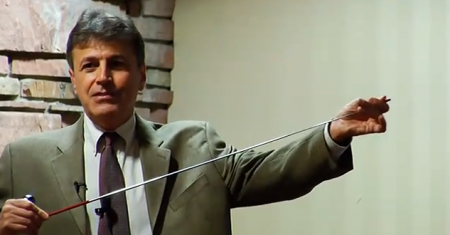
Grand developed two primary methods for locating brainspots. The “Outside Window” approach involves the therapist slowly moving a pointer across the client’s visual field while the client focuses on the issue they want to process. As the pointer moves, the therapist watches carefully for reflexive responses: eye wobbles, blinks, facial tics, swallowing, breathing changes, any somatic signals indicating activation. These reflexes reveal where in the visual field the brain’s processing system connects to the target issue.
The “Inside Window” approach relies on the client’s own felt sense, the internal awareness of where activation intensifies. As the therapist moves the pointer, the client tracks their internal experience, noting where physical sensations, emotional intensity, or body activation increases. When they identify the spot where “they feel it more,” that becomes the brainspot. This Inside Window discovery represented crucial advance because it gave clients feedback about their own internal states, allowing them to direct the therapist to their brainspots through self-observed felt sense.
The term “felt sense” comes from philosopher and therapist Eugene Gendlin, who developed the therapeutic method called Focusing. Felt sense refers to the pre-verbal, bodily knowing that occurs before words can articulate experience. It’s the tightening in the chest, the sinking feeling in the stomach, the tension in the shoulders, the subtle body signals that carry information about emotional and psychological states. Brainspotting harnesses felt sense as diagnostic tool, allowing clients to identify where in their visual field the brain engages most directly with problematic material.
Once a brainspot is identified, the therapeutic process involves simply maintaining gaze on that point while observing whatever emerges. The therapist’s role shifts from directing or interpreting to what Grand calls “dual attunement,” simultaneously attuning to the client’s neurobiological process (observing external cues like breathing, facial expressions, body movements) and to the relational field between therapist and client (maintaining calm, grounded presence that provides safety for deep processing).
This dual attunement creates therapeutic frame that combines the precision of neuroscience-based interventions with the depth of relational psychotherapy. The brainspot provides neurological focus, accessing subcortical material directly. The therapist’s attuned presence provides relational container, allowing the client’s nervous system to feel safe enough to process overwhelming material.
Grand also developed BioLateral Sound, auditory bilateral stimulation specifically engineered to enhance brainspotting processing. Unlike the metronomic bilateral tones used in EMDR, BioLateral Sound moves in “non-metronomic” and “very gentle, fluid way back and forth,” incorporating nature sounds that flow organically between left and right channels. This auditory stimulation appears to facilitate deeper processing while the eyes remain fixed on the brainspot, adding another dimension of bilateral brain activation without requiring eye movement.
The theoretical framework underlying brainspotting proposes that trauma and other overwhelming experiences become stored in subcortical brain regions, the midbrain and brainstem areas that operate below conscious awareness and verbal processing. These subcortical structures include the amygdala, which processes fear and emotional salience; the hippocampus, which encodes spatial and contextual memory; the basal ganglia, which govern automatic motor patterns; and networks throughout the midbrain that regulate autonomic nervous system activation.
When trauma occurs, the experience overwhelms prefrontal cortex capacity for rational processing, encoding instead in these deeper brain structures where it remains frozen, inaccessible to the narrative coherence that normally integrates experience. The person knows cognitively that the trauma is over, but the subcortical systems continue responding as if danger remains present. Triggers activate these subcortical networks, producing flashbacks, panic attacks, dissociative states, or in athletes, the mysterious collapse of motor skills called the yips.
Traditional talk therapy attempts to process trauma through narrative, engaging prefrontal cortex and language centers. But if the traumatic memory never encoded in these cortical systems, talking about the trauma cannot access where it actually lives. EMDR bypassed this limitation by using bilateral stimulation to engage subcortical processing directly. Brainspotting, Grand proposed, goes even deeper, maintaining sustained focus on specific subcortical locations through fixed eye position.
The connection between eye position and subcortical brain regions has neuroanatomical basis. The superior colliculus, a midbrain structure involved in directing gaze, has dense connections to the amygdala and other limbic structures. The position of eyes in the visual field activates different patterns of superior colliculus firing, which in turn activates different networks in the emotional brain. By holding a specific eye position, brainspotting may maintain activation of the particular network where traumatic material is stored, allowing sustained processing and eventual resolution.
Research on brainspotting remains limited, a point critics emphasize. The American Psychological Association does not list brainspotting among recommended interventions for PTSD, noting the lack of large-scale randomized controlled trials. Several psychologists characterize brainspotting as pseudoscience or fringe medicine, though some consider it emerging therapy requiring more research. Published studies have been criticized for small sample sizes, use of non-clinical populations, publication in non-peer-reviewed journals, and authorship by brainspotting’s originators and collaborators, indicating potential bias.
However, emerging research shows promise. A 2014 study by Hildebrand, Grand, and Stemmler published in the Mediterranean Journal of Clinical Psychology found brainspotting significantly reduced PTSD symptoms compared to control groups. A 2017 study comparing EMDR and brainspotting found both effective for emotion regulation and therapy success. Research in Outdoor Education (2021) demonstrated effectiveness of trauma-informed approaches including brainspotting with adolescents.
Grand and supporters counter that clinical outcomes speak for themselves. Thousands of therapists worldwide report dramatic results with clients who haven’t responded to other approaches. The accumulating case evidence, though not meeting standards of controlled research, demonstrates consistent patterns of rapid trauma resolution, release of performance blocks, relief from chronic pain, and breakthrough insights that hadn’t emerged through years of traditional therapy.
The application of brainspotting to sports performance and the yips has generated particular attention. The yips, that mysterious collapse of previously mastered motor skills under pressure, has ended careers of professional athletes across every sport. Baseball players who can no longer throw from second base to first. Golfers who freeze over short putts. Tennis players who cannot execute routine serves. Figure skaters who pop out of jumps they’ve landed thousands of times.
Grand’s work with Olympic athletes, major league baseball players, PGA golfers, and other elite performers has produced documented cases of yips resolution. Former New York Mets catcher Mackey Sasser, whose career was derailed by inability to throw the ball back to the pitcher, found relief through brainspotting after years of failed attempts with other approaches. Olympic skier Lindsey Vonn, triathlete Sam Long, and Cubs shortstop Dansby Swanson have all worked with brainspotting for performance enhancement.
The effectiveness with performance blocks supports Grand’s theoretical framework. The yips appear to involve subcortical motor control networks becoming disrupted by trauma, anxiety, or overthinking. The automatic, unconscious motor patterns that allow elite performance get hijacked by conscious awareness and fear. By accessing the subcortical location where the motor skill became blocked and allowing processing to occur at that neurological level, brainspotting can restore the automatic flow that characterizes peak performance.
Grand’s humanitarian work has brought brainspotting to traumatized populations worldwide. As clinical director of the Faithful Response program, he treated 9/11 survivors and returning Iraq and Afghanistan combat veterans. After September 11, 2001, Grand provided extensive pro bono treatment to World Trade Center attack survivors, work he documented in the play I Witness, based on personal stories from those who survived the towers’ collapse and aftermath.
Following Hurricane Katrina in 2005, Grand traveled to New Orleans to treat survivors, experiences he captured in the documentary Come Hell or High Water, which screened at Queens and Long Island Film Festivals. After the Sandy Hook Elementary School shooting in Newtown, Connecticut in 2012, Grand served as trauma consultant for the acclaimed PBS documentary Newtown, providing treatment to survivors and organizing pro bono trainings for local therapists.
He has organized trauma therapy trainings in Northern Ireland, Israel, and inner cities throughout the United States, bringing brainspotting to communities with limited access to specialized trauma treatment. This humanitarian commitment reflects Grand’s vision of brainspotting as tool to ease human suffering rather than proprietary method to be protected and monetized. He spends months each year traveling internationally, training therapists and sharing brainspotting and BioLateral Sound with professional groups across business, sports, arts, and therapy.
Grand’s media presence has extended brainspotting’s reach beyond therapeutic circles. He has been featured on CNN, NBC, Nightline, The Jane Pauley Show, and Extra. Publications including The New York Times, The Washington Post, O Magazine, Golf Digest, and Newsday have cited his success healing trauma victims and treating the yips. The PBS documentary Depression: Out of the Shadows, which featured Grand as expert, won a 2008 Peabody Award.
Grand authored Brainspotting: The Revolutionary New Therapy for Rapid and Effective Change (2013), published by Sounds True, providing comprehensive introduction to the approach for both professionals and general readers. The book details brainspotting’s evolution from EMDR, explains the Outside Window and Inside Window techniques, presents case studies demonstrating effectiveness, and offers guidance for between-session self-application. Norman Doidge, author of The Brain That Changes Itself, endorsed the book: “David Grand is one of the most important and effective psychological trauma therapists now practicing, and his development of Brainspotting is a very important leap forward in helping people resolve trauma.”
Grand co-authored This Is Your Brain on Sports: Beating Blocks, Slumps and Performance Anxiety for Good!, applying brainspotting specifically to athletic performance enhancement. The book explains the neuroscience of the yips, documents cases of professional athletes overcoming career-ending blocks, and provides framework for understanding how subcortical trauma disrupts peak performance.
Brainspotting training has created international network of practitioners. Over thirteen thousand therapists on six continents have completed brainspotting training. The first International Brainspotting Conference was held in Buzios, Brazil in March 2016. The approach has been translated into multiple languages with trainers operating throughout Europe, Asia, Latin America, and Australia. This rapid global expansion, occurring without major institutional or pharmaceutical company support, testifies to practitioners finding clinical utility that exceeds what research base currently demonstrates.
The relationship between brainspotting and other somatic trauma therapies reveals both continuities and innovations. Like EMDR, brainspotting recognizes trauma’s subcortical encoding and uses eye-based interventions to access non-verbal memory systems. But where EMDR emphasizes bilateral movement and working memory taxation, brainspotting emphasizes sustained focus and direct neurological access through fixed eye position.
Like Somatic Experiencing, brainspotting prioritizes body-based awareness and tracking of autonomic activation patterns. Both approaches recognize that healing happens through the body’s processing rather than through cognitive understanding. But where SE focuses primarily on physical sensation and discharge of activation through tremoring and other somatic release, brainspotting adds the dimension of eye position as entry point for accessing and processing stored material.
Like Sensorimotor Psychotherapy developed by Pat Ogden, brainspotting integrates mindfulness, somatic awareness, and trauma processing. Both approaches recognize that trauma resolution requires engaging the body at the level where trauma is actually stored. Brainspotting’s use of visual field positioning provides another avenue for accessing somatic experience beyond Sensorimotor Psychotherapy’s focus on movement, gesture, and posture.
Integration with Internal Family Systems has proven particularly fruitful. IFS recognizes psyche organizes into parts or subpersonalities, each potentially carrying traumatic memories and defensive functions. Brainspotting can be adapted for parts work, with the client maintaining Self energy while focusing on a brainspot that activates a particular part. This allows processing of the part’s traumatic material while the Self maintains observing awareness, preventing overwhelm.
Structural dissociation work similarly integrates well with brainspotting. Different self-states or parts may have characteristic brainspots, eye positions where that part’s activation is strongest. Processing at those brainspots can help resolve trauma held by specific parts without activating the entire system simultaneously.
Polyvagal theory provides neurobiological framework for understanding brainspotting’s effects on autonomic states. Polyvagal theory describes how the nervous system shifts between ventral vagal social engagement, sympathetic fight-flight, and dorsal vagal shutdown. Brainspotting appears to support processing while maintaining ventral vagal regulation through the therapist’s attuned presence, allowing traumatic material to surface without triggering protective shutdown.
Right brain affect regulation research illuminates why sustained attunement may be crucial. Research demonstrates that early trauma disrupts right brain development and implicit regulation capacities. The dual attunement in brainspotting, therapist tracking both neurobiological process and relational connection, provides right brain to right brain communication that facilitates healing of early attachment trauma.
For depth psychology, brainspotting offers neurobiologically grounded method for accessing unconscious material. Jung emphasized that complexes operate autonomously, that unconscious contents cannot be integrated through conscious will alone but require engagement through their own symbolic and somatic language. Brainspotting’s use of eye position and felt sense provides direct avenue to complexes without requiring verbal articulation or symbolic interpretation.
The concept of the yips as subcortical disruption of mastered skills parallels depth psychology’s understanding of how unconscious material can sabotage conscious intention. When an athlete’s performance suddenly collapses despite countless hours of practice, this resembles how a complex can seize control of consciousness, overriding ego’s conscious goals. Brainspotting provides method for identifying and processing the unconscious material, whether traumatic memory, performance anxiety, or internalized criticism, that has hijacked automatic motor patterns.
Shadow work becomes more accessible through brainspotting framework. Shadow material consists of experiences and affects split off from conscious awareness because they were too threatening, shameful, or overwhelming to integrate. These shadow contents don’t disappear but continue influencing behavior through symptoms and projections. Brainspotting can identify where in the brain shadow material is stored and facilitate processing until it can be consciously held, allowing integration rather than repression.
Active imagination, Jung’s method for engaging unconscious through imagery and dialogue, finds parallel in brainspotting’s process of maintaining focus on a brainspot while allowing whatever emerges to unfold. Both approaches trust the psyche’s natural healing capacity rather than directing the process through interpretation or analysis. The therapist provides frame and witnessing presence while the client’s unconscious material surfaces and reorganizes according to its own logic.
Grand’s private practice in Manhattan serves diverse clientele including professional athletes, entertainers, business leaders, and trauma survivors from 9/11, Hurricane Katrina, Newtown shooting, and Iraq/Afghanistan combat. He has taught scene work at the New Actors Workshop and privately coached stage and screen actors, applying brainspotting to performance anxiety and creative blocks. This work with performers reveals brainspotting’s applicability extends beyond trauma treatment to enhancing creativity, reducing stage fright, and accessing flow states.
The future of brainspotting, as Grand envisions it, involves continued research to establish evidence base while maintaining flexibility and responsiveness to clinical observation. He recognizes the tension between standardization required for research validation and the organic evolution that characterizes effective clinical innovation. Brainspotting’s rapid global spread, driven by practitioners finding it clinically useful, suggests it addresses something real even as the theoretical mechanisms remain incompletely understood.
Critics note that many once-promising therapeutic approaches generated initial enthusiasm before research demonstrated they weren’t more effective than established treatments or that their active ingredients were common therapeutic factors rather than distinctive techniques. Brainspotting’s reliance on clinical anecdote rather than controlled research, its theoretical claims about eye position and subcortical brain locations that lack direct empirical support, and its potential for confirmation bias all warrant caution.
Supporters argue that absence of extensive research doesn’t mean absence of effectiveness, that clinical wisdom and practitioner experience provide valid knowledge even before randomized controlled trials confirm mechanisms. They note that many now-established therapies, including psychoanalysis and early versions of cognitive-behavioral therapy, developed through clinical observation long before research validated their effectiveness. Brainspotting may be following similar trajectory, with research catching up to clinical innovation.
The theoretical question of whether eye position actually corresponds to specific subcortical locations remains open. While neuroanatomical connections between gaze control and limbic structures provide plausible basis for the hypothesis, demonstrating that a particular eye position accesses a particular traumatic memory would require neuroimaging studies tracking brain activation during brainspotting sessions. Such research is beginning but remains preliminary.
An alternative explanation suggests brainspotting’s effectiveness may result from sustained focused attention combined with therapeutic attunement rather than from eye position per se. The process of maintaining gaze on a single point while tracking internal experience may function as form of mindfulness meditation, bringing awareness to sensations and emotions that are usually avoided. The therapist’s calm, attuned presence provides safety for this exposure. The eye position may serve primarily as anchor for attention rather than as neurological access point.
This alternative explanation, if validated, wouldn’t necessarily diminish brainspotting’s value. Even if the mechanism differs from Grand’s hypothesis, the clinical protocol might still represent effective integration of sustained attention, somatic awareness, and relational attunement. The question becomes empirical: does maintaining focus on the specific brainspot identified through Outside or Inside Window produce better outcomes than maintaining focus on an arbitrary point? Research comparing these conditions could help clarify whether eye position has specific effects or serves primarily as attention anchor.
What remains indisputable is that Grand’s 2003 discovery session with a figure skater who couldn’t land a triple loop initiated therapeutic innovation that has spread globally, helped thousands of trauma survivors and performance-blocked individuals, and demonstrated that careful clinical observation combined with willingness to deviate from established protocol can produce genuine advances. Whether brainspotting’s effectiveness stems from the mechanisms Grand proposes or from other factors, its rapid adoption suggests practitioners are finding clinical utility.
Grand’s journey from psychoanalytic training through EMDR and Somatic Experiencing to the development of brainspotting illustrates how therapeutic innovation often emerges from integration across approaches rather than from allegiance to single methodology. His willingness to experiment, to hold his fingers still when intuition suggested stopping bilateral movement, to trust observation over protocol, created space for discovery. His subsequent development of brainspotting into comprehensive approach with training protocols, theoretical framework, and international dissemination demonstrates the difference between interesting clinical observation and sustainable therapeutic innovation.
From that frozen moment when a skater’s gaze revealed where her performance block lived in her brain to thirteen thousand trained therapists using brainspotting worldwide, Grand’s contribution represents both continuation of eye-based trauma treatment pioneered by Shapiro and significant departure into new territory. Whether brainspotting ultimately proves to be fundamental advance in understanding how trauma is stored and accessed or turns out to be effective application of common therapeutic factors through novel protocol, Grand’s work has expanded the field’s understanding of what’s possible when therapists attend closely to the subtle signals indicating where healing needs to happen.
Timeline of David Grand’s Career and Brainspotting Development
1980s: Trained extensively in psychoanalysis at Institute for Psychoanalytic Training and Research, Long Island
1993: Completed training in EMDR
1999: Exposed to Somatic Experiencing
Late 1990s-Early 2000s: Developed Natural Flow EMDR, integrating psychoanalysis, EMDR, and SE
2003: Discovery session with figure skater led to observation of brainspotting phenomenon
2003-2005: Experimental application of brainspotting with early clients
2005: Traveled to New Orleans to treat Hurricane Katrina survivors
2001-Present: Clinical Director of Faithful Response program treating 9/11 survivors and Iraq/Afghanistan veterans
2008: Featured expert in PBS documentary Depression: Out of the Shadows (won Peabody Award)
2012: Trauma consultant for PBS documentary Newtown following Sandy Hook shooting
2013: Published Brainspotting: The Revolutionary New Therapy for Rapid and Effective Change
2016: First International Brainspotting Conference held in Buzios, Brazil
Present: Over 13,000 therapists trained in brainspotting on six continents
Present: Maintains private practice in Manhattan
Present: Continues international training and humanitarian work
Complete Bibliography of Major Works by David Grand
Grand, D. (2013). Brainspotting: The Revolutionary New Therapy for Rapid and Effective Change. Boulder, CO: Sounds True.
Grand, D. Emotional Healing at Warp Speed. (Publication details for pre-brainspotting book on Natural Flow EMDR)
Grand, D. & Goldberg, A. This Is Your Brain on Sports: Beating Blocks, Slumps and Performance Anxiety for Good!
Grand, D. I Witness (Play based on 9/11 survivor stories)
Grand, D. Come Hell or High Water (Documentary on Hurricane Katrina trauma treatment)
Key Research Publications on Brainspotting
Hildebrand, A., Grand, D., & Stemmler, M. (2014). Brainspotting-the efficacy of a new therapy approach for the treatment of Posttraumatic Stress Disorder in comparison to Eye Movement Desensitization and Reprocessing. Mediterranean Journal of Clinical Psychology, 5(1), 1-17.
Hildebrand, A., Stemmler, M., & Grand, D. (2017). Emotionsregulation und Therapieerfolg: Vergleich der Wirksamkeit von EMDR und Brainspotting. Trauma and Gewalt, 11(3), 204-216.
Corrigan, F. M., & Grand, D. (2013). Brainspotting: Recruiting the midbrain for accessing and healing sensorimotor memories of traumatic activation. Medical Hypotheses, 80(6), 759-766.
Influences and Legacy
Grand’s work builds on Francine Shapiro’s pioneering development of EMDR, extending eye-based trauma treatment in new directions. From Peter Levine’s Somatic Experiencing, Grand learned deep body-oriented processing and attention to felt sense. Psychoanalytic training provided understanding of unconscious process, relational dynamics, and therapeutic frame.
Eugene Gendlin’s concept of felt sense, developed through Focusing, informed the Inside Window technique. Polyvagal theory provided framework for understanding autonomic states during processing. Research on right brain affect regulation illuminated the importance of dual attunement.
Grand has influenced how therapists integrate multiple modalities. His development of Natural Flow EMDR before discovering brainspotting demonstrated possibility of synthesizing approaches while maintaining therapeutic effectiveness. Brainspotting has been integrated with Internal Family Systems, Sensorimotor Psychotherapy, and other trauma treatments.
Thousands of therapists worldwide have adopted brainspotting for trauma treatment, performance enhancement, chronic pain, and creative blocks. Athletes across professional sports have used brainspotting for yips resolution and peak performance. Humanitarian applications have brought the approach to disaster zones, war-torn regions, and underserved communities.


















0 Comments