
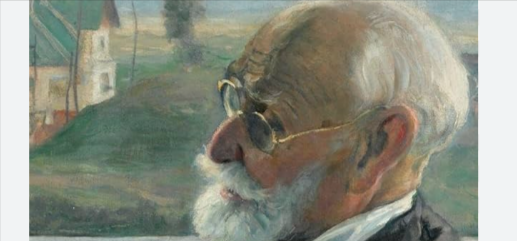
It is one of the great ironies of scientific history that the father of behavioral psychology never considered himself a psychologist at all. Ivan Petrovich Pavlov was a physiologist consumed by the mechanical workings of the digestive system. He viewed the body as an intricate machine and devoted his professional life to understanding how the gears and levers of digestion operated. Yet in the course of this work, he stumbled upon a discovery that would revolutionize our understanding of learning and transform the treatment of anxiety, trauma, and countless other psychological conditions.
Pavlov was born on September 14, 1849, in the provincial Russian city of Ryazan. His father was a village priest, and Pavlov initially followed in his footsteps, enrolling in a theological seminary with the intention of taking holy orders. However, the intellectual ferment of mid-nineteenth century Russia pulled him away from the church. The era’s radical thinkers, along with the writings of Charles Darwin and the Russian physiologist I.M. Sechenov, ignited in him a passion for natural science that ecclesiastical training could not satisfy. In 1870, he abandoned his theological studies and enrolled at St. Petersburg University to study chemistry and physiology.
After completing his studies and earning his medical degree, Pavlov spent time in Germany, which was then the center of the scientific world. He returned to Russia and in 1890 was appointed Professor of Pharmacology at the Military Medical Academy and was asked to organize the Physiology Department of the Institute of Experimental Medicine in St. Petersburg. It was here, in a laboratory filled with dogs, surgical instruments, and carefully calibrated measurement devices, that he would conduct the research that earned him the Nobel Prize in Physiology or Medicine in 1904.
Pavlov’s Nobel-winning research concerned the physiology of digestion. He developed ingenious surgical techniques that allowed him to study digestive processes in conscious, healthy animals over extended periods. Through painstaking observation, he mapped out how different parts of the nervous system controlled the secretion of gastric juices, saliva, and other digestive fluids. This work was groundbreaking in its own right, establishing fundamental principles of gastrointestinal physiology that remain relevant to modern medicine.
Yet it was an unexpected observation that would secure Pavlov’s place in the history of psychology. While conducting his digestion experiments, he noticed something peculiar about his dogs. They did not merely salivate when food was placed in their mouths, which would have been a straightforward physiological reflex. Instead, they began to salivate when they heard the footsteps of the laboratory assistant who brought their food. Some dogs salivated at the sight of the food dish. Others began drooling the moment they were placed in the experimental apparatus, before any food appeared at all.
A strictly mechanical understanding of physiology could not account for this phenomenon. If the salivary glands simply responded to the direct stimulus of food touching the tongue, the dogs should not salivate in response to sounds or sights or spatial contexts. Pavlov recognized that the dogs had learned something. They had come to associate originally neutral stimuli with the biologically significant event of feeding, and their bodies now responded to these associated signals as though the food itself were present.
This insight gave birth to what Pavlov initially called conditional reflexes, though English translators rendered this as conditioned reflexes, a term that has stuck ever since. Pavlov devoted the remaining decades of his life to systematically investigating this phenomenon. He was a demanding and meticulous experimenter who insisted on absolute silence and precision in his laboratory. He had little patience for the vague language of consciousness and preferred to measure drops of saliva rather than speculate about what his dogs might be thinking or feeling.
The implications of Pavlov’s work extended far beyond the laboratory. His research demonstrated that organisms constantly learn to predict their environments by forming associations between events that occur together. A neutral stimulus, when repeatedly paired with a biologically significant one, acquires the power to elicit a response on its own. This simple principle has proven extraordinarily powerful in explaining how human beings acquire emotional responses, develop fears and phobias, and form countless other learned associations.
For the clinician, Pavlov’s work provides a foundational model for understanding how psychological problems develop. Consider how trauma operates according to classical conditioning principles. A person who experiences a panic attack in a grocery store may find that the store itself, though objectively safe, becomes paired with the overwhelming fear of the attack. The brain learns to associate the neutral place with danger, and subsequent visits to similar environments trigger anxiety even in the absence of any actual threat. The sights, sounds, and smells of the store become conditioned stimuli capable of eliciting a fear response.
Understanding this mechanism opens the door to treatment. If fear can be learned through conditioning, it can also be unlearned through a process Pavlov called extinction. By repeatedly exposing an organism to the conditioned stimulus without the unconditioned stimulus, the learned association gradually weakens and eventually disappears. This principle forms the scientific foundation for exposure-based therapies that remain among the most effective treatments for anxiety disorders, phobias, and post-traumatic stress.
For the individual seeking to understand their own psychology, Pavlov’s insights offer a framework for recognizing the conditioned responses that shape daily experience. If you feel a surge of anxiety every time your phone buzzes with a notification, you are likely experiencing a conditioned response. The phone sound has become associated with potential stressors, deadlines, or interpersonal conflicts, and now triggers a physiological reaction independent of the message’s actual content. Recognizing this pattern creates opportunities for intervention. You might change the notification tone, place the phone in another room, or deliberately practice relaxation techniques when you hear the sound. In doing so, you begin breaking the chain between stimulus and stress response, teaching your nervous system a new association.
Pavlov remained productive until the very end of his life, continuing to conduct research and attend scientific meetings well into his eighties. He died on February 27, 1936, in Leningrad, reportedly asking a student to sit beside his bed and record observations of his dying process with the same scientific detachment he had brought to every other aspect of his work. His legacy lives on in every therapy session where a clinician helps a client overcome a learned fear and in every moment when an individual recognizes the power of association in shaping their emotional life.
Timeline of Major Events in the Life of Ivan Pavlov
1849: Born September 14 in Ryazan, Russia, the son of a village priest
1870: Left the theological seminary to study natural sciences at St. Petersburg University
1875: Graduated with the degree of Candidate of Natural Sciences
1879: Earned his medical degree from the Imperial Medical Academy
1890: Appointed Professor of Pharmacology at the Military Medical Academy and organized the Physiology Department of the Institute of Experimental Medicine in St. Petersburg
1901: First described the phenomenon of conditional reflexes jointly with his assistant Ivan Tolochinov
1904: Awarded the Nobel Prize in Physiology or Medicine for his work on the physiology of digestion
1907: Elected a Foreign Member of the Royal Society
1915: Awarded the Copley Medal by the Royal Society
1927: Published his landmark work Conditioned Reflexes
1936: Died February 27 in Leningrad
Selected Bibliography of Ivan Pavlov
The Work of the Digestive Glands (1897): Pavlov’s comprehensive account of his Nobel Prize-winning research on digestive physiology
Conditioned Reflexes: An Investigation of the Physiological Activity of the Cerebral Cortex (1927): The definitive presentation of Pavlov’s research on classical conditioning, translated into English by G.V. Anrep
Lectures on Conditioned Reflexes (1928): A collection of Pavlov’s lectures presenting his theoretical framework for understanding learned behavior
Legacy and Influences of Ivan Pavlov
Pavlov’s influence on psychology and psychotherapy has been profound and far-reaching. His work established the foundational principles of what would become known as classical conditioning, demonstrating that learned associations between stimuli shape behavior in predictable ways. This insight directly inspired John B. Watson to apply conditioning principles to human subjects, leading to the Little Albert experiment and the broader behaviorist movement in American psychology.
In the clinical realm, Pavlov’s discoveries laid the groundwork for systematic desensitization and exposure-based treatments that remain gold-standard interventions for anxiety disorders. The understanding that fears are learned responses subject to extinction has guided the development of evidence-based therapies including Prolonged Exposure therapy for PTSD and graduated exposure techniques for specific phobias and obsessive-compulsive disorder.
Beyond individual therapy, Pavlov’s work has influenced fields as diverse as advertising, education, and behavioral economics. His demonstration that organisms can be conditioned to respond to previously neutral stimuli has been applied to understand consumer behavior, develop more effective teaching methods, and design interventions that promote healthy habits. Carl Jung drew upon Pavlov’s research on transmarginal inhibition to develop his theory of introversion and extroversion, while later researchers have connected Pavlov’s findings to contemporary neuroscience research on fear circuits and emotional learning.












0 Comments