
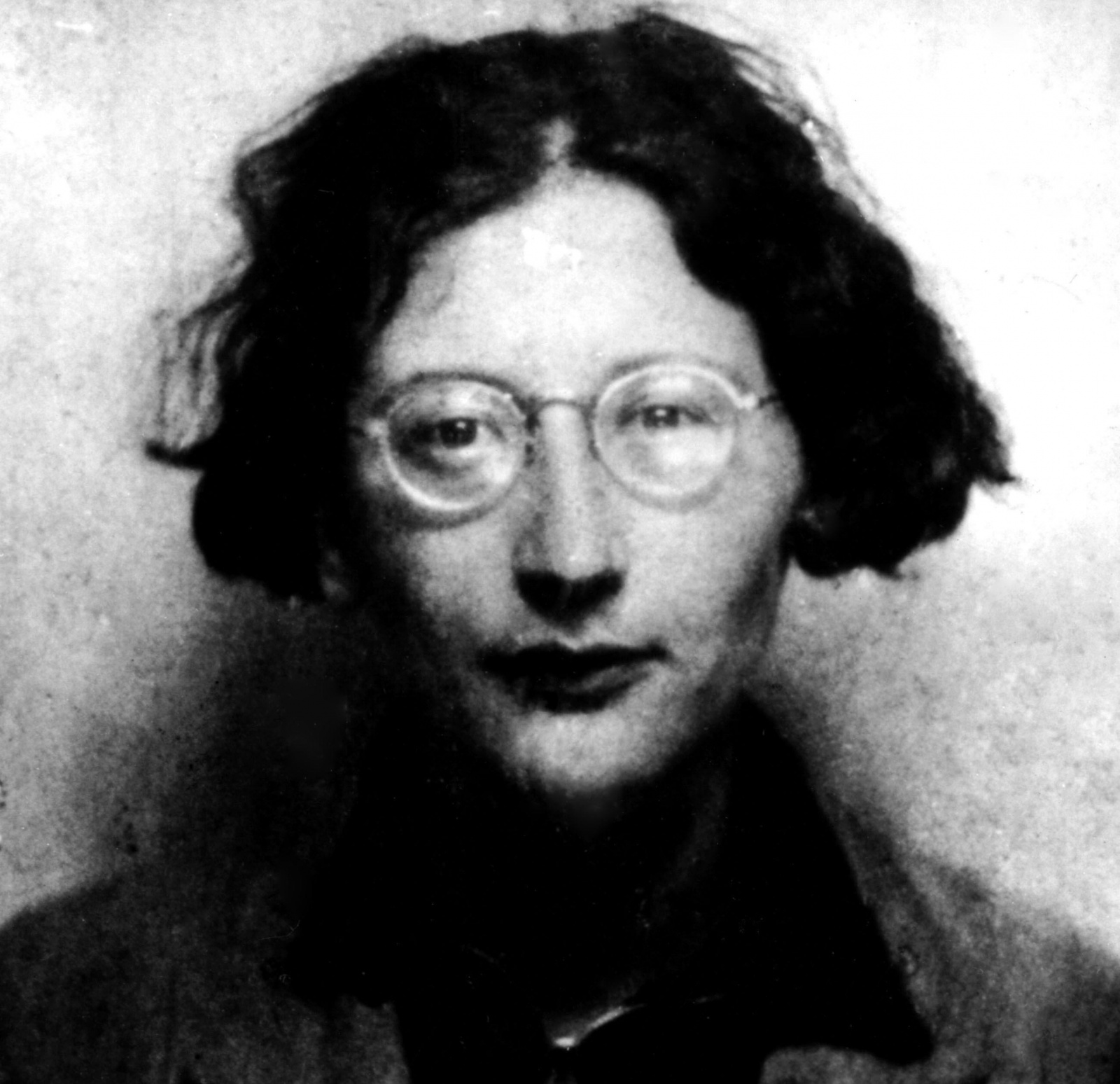
Simone Weil: The Psychology of Affliction, Decreation, and the Healing Power of Attention
By The Clinical Team at GetTherapyBirmingham.com
In the landscape of 20th-century thought, few figures cast a shadow as long—or as stark—as Simone Weil. Albert Camus described her as “the only great spirit of our times.” T.S. Eliot likened her brilliance to that of the saints. Yet, for the modern clinician and the seeker of psychological wholeness, Weil is more than a philosopher; she is a cartographer of the soul’s deepest wounds.
Born in 1909 to a secular Jewish family in Paris, Weil was a study in contradictions: an intellectual prodigy who died of starvation and tuberculosis at 34; a mystic who refused baptism; a fragile woman who worked the assembly lines of Renault to understand the crushing weight of industrial oppression. Her life was a short, intense flame that burned through the superficial layers of existence to reveal the bedrock of human suffering.
The Mystic of the Absolute
For those of us working in Depth Psychology, Weil offers a vocabulary for experiences that often defy clinical categorization. She speaks to the client who feels “unmade” by trauma, the addict chasing a void they cannot fill, and the high-functioning depressive who has lost the ability to feel. Her concepts of Affliction (Malheur) and Decreation offer a bridge between the clinical treatment of trauma and the spiritual search for meaning.
This guide explores Weil’s work not just as philosophy, but as a manual for psychological hygiene and spiritual survival in a fragmented world.
The Anatomy of Affliction (Malheur) and Trauma
More Than Just Pain
Central to Weil’s psychology is the concept of Malheur, usually translated as “Affliction.” It is crucial to distinguish this from simple suffering or physical pain. Pain is an event; Affliction is a condition. Weil describes Affliction as a “pounding of the whole soul” that destroys the “I”—the social personality.
In modern clinical terms, Weil is describing Complex Trauma (C-PTSD). She notes that Affliction possesses the power to seize the very soul and mark it as a branding iron marks the slave. It induces a state of anonymity and silence. When we work with clients in Trauma Therapy, we see this specific phenomenon: the trauma has not just hurt the client; it has fundamentally altered their sense of agency and identity.
The Somatic Reality of Affliction
Weil was arguably a somatic psychologist before the field existed. She understood that spiritual and psychological anguish inevitably manifests in the body. She wrote, “The body is the lever of the soul.” She recognized that trauma lodges itself in the nervous system, creating a rigid physiological state.
This aligns with Polyvagal Theory. Affliction pushes the nervous system into a “Dorsal Vagal” shutdown—a state of freeze and collapse where the individual feels disconnected from the world and themselves. Weil’s prescription for this was not intellectual analysis, but a specific quality of presence, which we will explore later as “Attention.”
Decreation: The Jungian Ego and the False Self
The Necessary Destruction of the “I”
Perhaps Weil’s most controversial and misunderstood concept is “Decreation.” It is easy to mistake this for a morbid desire for self-destruction or a symptom of depression. However, psychologically, Decreation is the antidote to Narcissism.
Weil posits that the “self” (the ego) is a screen that blocks us from reality. We project our desires, our fears, and our narratives onto the world, and thus we never see the world as it is; we only see ourselves reflected back. To “decreate” is to withdraw the ego from the center of the universe to make space for reality (or God) to enter.
Connection to Jungian Shadow Work
This process mirrors the goals of Jungian Shadow Work. The “Persona” (the social mask) and the Ego must be relativized. If the Ego remains the master of the house, we remain trapped in neurotic loops of self-protection. Weil argues that we must “undo” the creaturely self.
“We possess nothing in the world—a mere chance can strip us of everything—except the power to say ‘I’. That is what we have to give to God—in other words, to destroy.” — Simone Weil
In therapy, this looks like the surrender of the “False Self”—the defensive structure built to survive childhood. It is a painful process, often experienced as a “dark night of the soul,” but it is the only path to authentic connection.
The Healing Power of Radical Attention
Attention vs. Willpower
If Decreation is the goal, how do we achieve it? Weil’s answer is Attention. She famously stated, “Attention, taken to its highest degree, is the same thing as prayer.”
This is not the “focus” of a student cramming for an exam (which involves furrowing the brow and contracting the muscles). Weil defines Attention as a “negative effort”—a suspension of the will. It is a state of open, receptive waiting. In Mindfulness-Based Therapy, this is the “Observing Self.”
Clinical Application: Bearing Witness
For the therapist, Weil’s concept of Attention is the gold standard of clinical presence. It asks the therapist to suspend their theories, their desire to cure, and their judgments, and simply be with the suffering of the other. She writes:
“The soul empties itself of all its own contents in order to receive into itself the being it is looking at, just as he is, in all his truth.”
This radical empathy allows the client to feel seen—often for the first time. It is the mechanism by which the Attachment Wound begins to heal. When the therapist holds this space, the client’s nervous system can shift from defensive mobilization to social engagement.
God, The Void, and the Psychology of Addiction
The God-Sized Hole
Weil’s insights into the nature of desire provide a profound framework for understanding Addiction. She believed that all human beings are driven by a hunger for the Absolute. However, in a secular world, we misdirect this hunger toward finite things: alcohol, drugs, sex, power, or validation.
She writes, “Every sin is an attempt to fly from emptiness.” The addict is not a hedonist; the addict is a mystic who has mistaken the map for the territory. They are seeking a state of transcendence, a relief from the burden of the self, but they are using a substance that ultimately traps them further in the self.
Atheism as Purification
In a fascinating twist, Weil suggests that there are two kinds of atheism. One is a denial of reality, but the other is a purification. The “purifying atheism” rejects the false idols—the “Santa Claus God” who grants wishes and protects us from pain. Weil argues that we must sometimes lose our belief in a small God to find the true, nameless reality.
This is vital for clients navigating a Spiritual Crisis or religious trauma. The loss of faith can be reframed not as a failure, but as a necessary step in psychological maturation—the withdrawal of projections from the sky so that one can find the divine rooted in the earth.
The Metaxu: Bridges to the Divine
Weil did not believe we should reject the world entirely. She introduced the concept of Metaxu (a Greek term meaning “intermediaries” or “bridges”). These are things in the world that are not God, but which can lead us toward the divine if we love them rightly.
Examples of Metaxu include:
- Beauty: The awe we feel in nature.
- Order: The elegance of mathematics or music.
- Friendship: The intimacy of shared truth.
In the context of the Anima and Animus, these bridges allow the conscious mind to communicate with the unconscious. They are vital resources for clients suffering from depression. Reconnecting a client with their “bridges”—their art, their community, their connection to nature—is a primary task of recovery.
Weil and Jung: The Union of Opposites
While Weil and Carl Jung never met, their work resonates on the same frequency. Both were concerned with the integration of the Shadow and the transcendence of the Ego.
The Shadow of the Church
Weil stood on the threshold of the Catholic Church but refused to enter. She felt she belonged with the “outsiders”—the heretics, the unbaptized, and the non-believers. Jung would analyze this as a refusal to identify with the collective persona of the institution. By remaining outside, Weil held the tension of the opposites, embodying the Gnostic impulse to seek direct knowledge (Gnosis) over dogma.
Enantiodromia
Jung’s concept of Enantiodromia (things turning into their opposites) is present in Weil’s life. She was a pacifist who fought in the Spanish Civil War; an intellectual who worked in a factory. She understood that to know the truth, one must inhabit the contradiction. This is the essence of Dialectical Behavior Therapy (DBT)—finding the synthesis between acceptance and change.
Timeline of Simone Weil’s Life and Legacy
- 1909: Born in Paris. A childhood marked by intellectual rigor and physical frailty.
- 1928: Enters the École Normale Supérieure. Top of her class, often beating Simone de Beauvoir.
- 1934: Takes a leave from teaching to work at the Renault factory. This experience breaks her health but forms the basis of her philosophy on oppression.
- 1936: Travels to Spain to join the Anarchist column in the Civil War. suffers a burn injury and returns to France.
- 1938: Mystical experience at Solesmes Abbey while listening to Gregorian chants. The beginning of her “Christocentric” mysticism.
- 1942: Flees Nazi-occupied France for New York, then travels to London to join the French Resistance.
- 1943: Dies in Ashford, Kent, at age 34. The coroner rules it suicide by starvation, though she likely died of tuberculosis exacerbated by her refusal to eat more than the rations allowed to soldiers in occupied France.
- 1947: Gravity and Grace is published posthumously by Gustav Thibon.
- 1951: Albert Camus publishes her political masterpiece, The Rebel, which draws heavily on her critique of power.
Clinical Takeaways: Applying Weil in the Room
How do we apply the rigorous, sometimes severe philosophy of Weil in a modern therapeutic setting?
- Validate the Void: When a client speaks of emptiness or meaninglessness, do not rush to “fill” it with positive affirmations. Validate the void. It may be the birthplace of the true self.
- The Use of Silence: Weil teaches us that truth emerges in silence. Therapists should not be afraid of long pauses. In those pauses, the “Decreation” of the defensive ego occurs.
- Justice as Therapy: For clients from marginalized groups, acknowledge the reality of structural oppression. Weil’s concept of justice was not abstract; it was about “not hurting” the other. Validation of systemic trauma is a Weilian act of love.
- Intermediaries: Help clients identify their Metaxu. What connects them to the world? Is it a pet, a garden, a piece of music? Strengthen these bonds as a lifeline out of Affliction.
Annotated Bibliography
- Weil, S. (1952). Gravity and Grace. Routledge.
A collection of aphorisms and notes compiled by Gustave Thibon. This is the best entry point for her mystical philosophy, covering the void, gravity, and the nature of the self. - Weil, S. (1951). Waiting for God. HarperCollins.
Contains her spiritual autobiography and letters to Father Perrin. Essential for understanding her concept of “Attention” and her relationship to the Church. - Weil, S. (1949). The Need for Roots. Routledge.
Her primary political text, analyzing the spiritual uprooting of modern society. Highly relevant for social psychology and community trauma work. - Pétrement, S. (1976). Simone Weil: A Life. Pantheon.
The definitive biography written by her close friend. It provides the necessary context to understand that her philosophy was lived, not just thought. - Miles, S. (1986). Simone Weil: An Anthology. Weidenfeld & Nicolson.
A curated collection that organizes her thoughts by theme, making it easier for researchers and clinicians to find relevant quotes on specific psychological topics.
The Root in the Sky
Simone Weil famously wrote, “It is only from the light which streams constantly from heaven that a tree can derive the energy to strike its roots deep into the soil. The tree is in fact rooted in the sky.”
In therapy, we often focus on the roots—the childhood, the trauma, the past. Weil reminds us that we are also sustained by what is above us—our values, our search for meaning, and our capacity for transcendent love. To heal the human being, we must attend to both the soil of the psyche and the sky of the spirit.
If you are struggling with “Affliction,” burnout, or a sense of spiritual emptiness, you do not have to navigate the labyrinth alone. Contact GetTherapyBirmingham.com to connect with a therapist who understands the depth of the human soul.

















0 Comments