
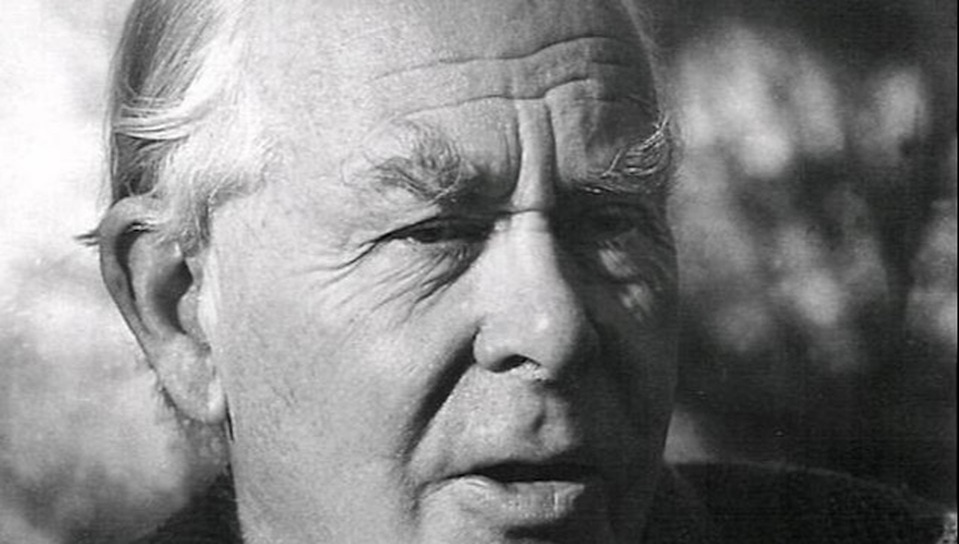
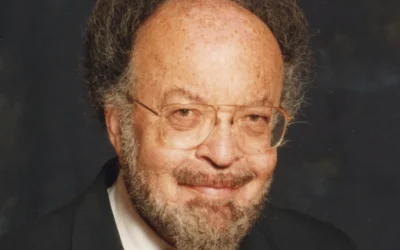
John Bowlby (1907-1990) was a British psychiatrist and psychoanalyst who created attachment theory: the idea that infants are born with a biological need to stay close to a protective caregiver, and that the quality of that bond shapes how we handle fear, love, separation and grief for the rest of our lives. His work changed how psychology understands relationships, loss and childhood.
Key takeaways
- John Bowlby (1907-1990) argued that the infant’s bond to a caregiver is a primary biological system for protection, not a by-product of feeding.
- Bowlby built attachment theory from clinical work, ethology and control systems theory, and set it out in the Attachment and Loss trilogy (1969-1980).
- Mary Ainsworth’s Strange Situation identified secure, avoidant and ambivalent patterns, and Main and Solomon later added disorganized attachment.
- Internal working models formed in early relationships carry expectations about self and others into adult love, grief and friendship.
- Bowlby saw the therapist as a secure base from which clients can explore painful experience and revise old relational expectations.
Who was John Bowlby?
Edward John Mostyn Bowlby was born in London on 26 February 1907, the fourth of six children. His father, Sir Anthony Bowlby, was a surgeon to the royal household. Like many upper-middle-class English children of the period, John saw his parents for perhaps an hour a day and was raised mostly by nannies and nursemaids.1
Bowlby is usually grouped with the post-Freudian analysts who moved the focus of psychoanalysis from instinct toward relationship, alongside Donald Winnicott and the object relations school. What set him apart was his insistence that real events in a child’s life, not only fantasies, decide how a person learns to love. He spent his career testing that idea against observation, animal research and, later, the laboratory work of his colleagues.2
How did Bowlby’s own childhood shape his ideas?
When Bowlby was almost four, Minnie, the nursemaid who had been his main caregiver, left the family. Bowlby later spoke of it as a real grief, the loss of the person who had been closest to him. At about seven he was sent away to boarding school. Biographers such as Jeremy Holmes connect these early separations to the questions that occupied him for sixty years: why separation hurts so much, and what happens to children who lose the people they depend on.1
He went on to the Royal Naval College at Dartmouth and then to Trinity College, Cambridge, where he studied preclinical medicine and psychology. After Cambridge he spent several months teaching at progressive schools for troubled children. Two experiences there stayed with him: a withdrawn, isolated adolescent who had never had a stable mother figure, and an anxious younger boy who followed Bowlby everywhere. He finished medical training at University College Hospital, trained in psychiatry at the Maudsley Hospital and began working at the London Child Guidance Clinic in 1936.3
At the same time he trained as a psychoanalyst at the British Psychoanalytical Society, with Joan Riviere as his analyst, and qualified in 1937. His supervisor was Melanie Klein. The relationship was a source of friction: Klein told him to treat a three-year-old boy without seeing the child’s mother, who was in hospital, because the child’s fantasies mattered more than the family’s actual situation. Bowlby thought that was a mistake, and the disagreement became the seed of his life’s work.3
Why did Bowlby break with psychoanalytic orthodoxy?
Psychoanalysis in the 1930s and 1940s explained a child’s tie to the mother as a by-product of feeding. Freud’s drive theory held that the infant loves the mother because she satisfies oral needs, and the Kleinian school placed the main drama inside the infant’s own aggressive and loving fantasies. In the debates of the British Psychoanalytical Society, Klein’s followers and those of Anna Freud argued about the inner world. Both camps gave less weight to what had actually happened to the child.2
Bowlby saw children at the Child Guidance Clinic whose troubles followed real losses, real neglect and real disruptions in care. He came to believe that the profession had the causal arrow pointing the wrong way. The broader shift from drive theory toward relational models, traced in the evolution of psychoanalytic thought, owes a great deal to the fact that Bowlby took this observation seriously and kept collecting evidence for it.
What did “Forty-Four Juvenile Thieves” show?
Bowlby’s first major study, “Forty-Four Juvenile Thieves: Their Characters and Home-Life,” appeared in the International Journal of Psycho-Analysis in 1944. He compared 44 young thieves seen at the clinic with 44 children from the clinic who did not steal. Among the thieves he identified a group he called “affectionless characters,” children who seemed unable to form warm bonds. Most of them had suffered long separations from their mothers or main caregivers in their first five years, a history that was rare in the comparison group.3
After serving as an army psychiatrist in the Second World War, Bowlby joined the Tavistock Clinic in 1946 and became head of its Department for Children and Parents. In 1950 the World Health Organization asked him to report on the mental health of homeless children in post-war Europe. The result, Maternal Care and Mental Health (1951), argued that a warm, intimate and continuous relationship with a mother or permanent mother substitute was as important for a young child’s mental health as vitamins and proteins were for physical health.4
His colleague James Robertson, a social worker at the Tavistock, filmed young children separated from their parents in hospital. His 1952 film A Two-Year-Old Goes to Hospital showed a little girl named Laura moving from distress to a frozen, quiet compliance over eight days. The film, and Bowlby’s arguments, helped change hospital practice in Britain, where the 1959 Platt Report recommended that parents be allowed to visit children freely.1
Where did attachment theory come from?
Bowlby still needed a theory that explained why the bond mattered, and psychoanalysis alone could not give it to him. In the early 1950s he discovered ethology, the biological study of animal behaviour. Konrad Lorenz had shown that goslings follow and bond with the first moving figure they see, without being fed by it. The Cambridge ethologist Robert Hinde became a close collaborator, and Harry Harlow’s experiments with infant rhesus monkeys, who clung to a soft cloth “mother” rather than a wire one that gave milk, supported the same conclusion.2
Bowlby combined ethology with control systems theory (cybernetics), developmental psychology, cognitive psychology and evolutionary theory. He set out the result in “The Nature of the Child’s Tie to His Mother” (1958), read to the British Psychoanalytical Society, and then in the trilogy Attachment and Loss: Attachment (1969), Separation: Anxiety and Anger (1973) and Loss: Sadness and Depression (1980).5 His central claim was that attachment is a primary motivational system with its own evolutionary function, protection from predators and other dangers, and not a secondary drive built on feeding.9
What are the foundations of attachment theory?
Attachment theory says that human infants are biologically prepared to form close emotional bonds with the people who care for them. Bowlby described this as a behavioural system, much like a thermostat: it switches on when the child senses danger, fatigue, illness or distance from the caregiver, and it switches off when closeness and comfort are restored.5
Proximity seeking
Crying, calling, following, clinging and smiling are the behaviours that keep the attachment figure near. They are not signs of a spoiled child. In Bowlby’s view they are the equipment natural selection gave a helpless infant to keep an adult close.
The secure base
The phrase “secure base” came from Mary Ainsworth. A child who trusts that the caregiver is available uses that person as a base from which to explore, checking back from time to time and returning when frightened. Attachment and exploration work together: security makes curiosity possible.10
Separation anxiety
Bowlby treated distress at separation as a natural and healthy alarm, the attachment system signalling that protection is out of reach. In Separation (1973) he argued that much of what clinicians call anxiety in adults is a later form of this same alarm about the availability of attachment figures.6
Internal working models
Out of repeated experience, children build what Bowlby called internal working models: mental expectations about whether others will respond, and whether the self is worth responding to. These models operate largely outside awareness and are carried into later relationships, which is why early patterns can feel like the shape of reality rather than one way of seeing it.5 For a broader overview of how these models show up between partners, see our post on attachment relationship patterns and dynamics.
What are the phases of attachment development?
In the first volume of Attachment and Loss, Bowlby described four phases through which the bond develops. The ages are approximate and vary from child to child.5
- Orientation and signals with limited discrimination of figure (birth to about 8-12 weeks): the baby orients to people, tracks faces and is soothed by voices, without clear preference for one person.
- Orientation and signals directed toward one or more discriminated figures (to about 6 months): the baby smiles and vocalizes more readily for familiar caregivers.
- Maintenance of proximity by means of locomotion as well as signals (from about 6-7 months into the second and third year): the child crawls and walks after the caregiver, protests at separation, uses the caregiver as a secure base and becomes wary of strangers.
- Formation of a goal-corrected partnership (from about the third year): the child begins to grasp that the caregiver has plans and feelings of her own and can negotiate, for example accepting a separation once told when the parent will return.
The sequence shows the system moving from reflexive signals toward a two-way relationship between two minds. Each phase builds on the previous one, and the fourth points toward the mutual give and take of adult relationships.
Bowlby’s account sits beside, and partly in conversation with, Margaret Mahler’s separation-individuation phases, which describe the same developmental span from inside psychoanalytic ego psychology.
How did Bowlby explain separation and loss?
Robertson’s observations of children in hospitals and residential nurseries gave Bowlby a three-stage description of how young children respond to prolonged separation from their attachment figure: protest, despair and detachment.6
- Protest: the child cries, searches, rattles the cot and rejects comfort from others, trying with every means available to bring the parent back.
- Despair: the child becomes quiet, withdrawn and listless, a state adults often misread as settling in.
- Detachment: the child seems to recover and may engage with nurses, but when the parent returns the child may ignore or turn away from them. Bowlby understood this as a defensive exclusion of attachment feelings, and he warned that repeated or very long separations could leave lasting difficulty with trust.
In Loss: Sadness and Depression (1980) Bowlby carried this framework into adult bereavement. Drawing on his work with Colin Murray Parkes, he described mourning as moving through numbing, yearning and searching for the lost person, disorganization and despair, and eventual reorganization. He insisted that yearning and anger in grief are normal attachment responses, not signs of illness, and that grief becomes complicated when it is chronically prolonged or when it is never allowed to begin.7 This framework still shapes grief counselling at our Hoover practice.
In his 1977 paper “The Making and Breaking of Affectional Bonds” he summed up the clinical point: many forms of emotional distress follow the making, breaking and renewal of affectional bonds, and the strongest emotions in human life arise in exactly those moments.
What are the patterns of attachment?
Bowlby built the theory; Mary Ainsworth gave it a method. Ainsworth had worked with Bowlby at the Tavistock from 1950, then observed mothers and infants in Uganda and later in Baltimore. Her Strange Situation, a twenty-minute laboratory procedure with eight short episodes, watches how a child of about 12 to 18 months responds to a playroom, a stranger, two brief separations from the parent and, most tellingly, two reunions.8 Ainsworth and her colleagues described three main patterns in Patterns of Attachment (1978). In the 1980s Mary Main and Judith Solomon added a fourth.
Secure attachment
Securely attached children may cry at separation, seek the parent on reunion, settle quickly and return to play. Ainsworth’s home observations linked this pattern to caregivers who were sensitive to the baby’s signals and responded promptly and appropriately. These children develop working models of themselves as worth caring for and of others as reliable.8
Anxious-ambivalent (resistant) attachment
Ambivalent children are highly distressed by separation and hard to comfort on reunion, often reaching for the parent and then pushing away in anger. The pattern was associated with caregiving that was inconsistent, available at some times and not at others. These children stay preoccupied with monitoring the caregiver, at the cost of exploration, and their working models carry uncertainty about both their own worth and other people’s reliability.
Avoidant attachment
Avoidant children show little visible distress at separation and tend to ignore or turn away from the parent on reunion, although physiological studies show they are stressed. Ainsworth found that their mothers were more often rebuffing of bids for closeness, especially physical contact. The child learns to suppress attachment behaviour to stay near a parent who dislikes neediness, and comes to expect others to reject them. Our post on anxious and avoidant nervous systems describes how these strategies feel in the body.
Disorganized attachment
Main and Solomon identified children who lacked any coherent strategy: freezing, approaching the parent with the head averted, or showing fear of the parent on reunion. Main and Erik Hesse later linked disorganization to caregivers who were themselves frightening or frightened, often because of unresolved loss or trauma. The child faces an impossible problem: the person who should be the solution to fear is also its source. The work of Mary Main and the Adult Attachment Interview grew from this research.
How did attachment theory change society?
The WHO report and the Robertson films changed the treatment of children in hospitals, orphanages and residential nurseries. Policies of minimal parental visiting gave way to open visiting and, later, to parents staying overnight with sick children. Large institutions for young children came to be seen as harmful, and foster care and adoption were favoured where possible.4
Attachment theory also entered parenting advice, child care policy and the case for parental leave, all built on the claim that young children need continuity with a small number of familiar caregivers.
Cross-cultural research tested whether the patterns were a Western artefact. A 1988 meta-analysis by Marinus van IJzendoorn and Pieter Kroonenberg pooled nearly 2,000 Strange Situation classifications from eight countries. Secure attachment was the most common pattern in every country studied. Avoidant classifications were relatively more frequent in Western European samples and resistant ones in Israeli and Japanese samples, and the variation within countries was about one and a half times larger than the variation between them.11
How has attachment theory developed since Bowlby?
Adult and romantic attachment
In 1987 Cindy Hazan and Phillip Shaver proposed that romantic love is itself an attachment process. Using a newspaper “love quiz,” they found that adults described their romantic relationships in ways that matched Ainsworth’s three patterns, in proportions close to those seen in infants, with secure the most common pattern.12 Their work started the large field of adult attachment research, which our post on understanding attachment styles covers in more detail, and it informs couples methods such as the Psychobiological Approach to Couple Therapy.
Transmission across generations
Mary Main’s Adult Attachment Interview asks adults about their own childhood and codes not what happened but how coherently they can talk about it. A 1995 meta-analysis by van IJzendoorn found that parents’ interview classifications strongly predicted their infants’ Strange Situation classifications, even when the interview was given before the baby was born. Parental sensitivity explained only part of that link, a remainder van IJzendoorn called the “transmission gap.”13
Long-term studies
The Minnesota Longitudinal Study of Risk and Adaptation, begun in 1975 with first-time mothers living in poverty, followed their children from before birth into adulthood. Alan Sroufe and colleagues found that early attachment history predicted later self-reliance, emotion regulation and social competence, always in combination with later experience rather than as a fixed destiny.14
Mentalization
Peter Fonagy and his colleagues extended attachment theory with the concept of mentalization: the capacity to understand one’s own and other people’s behaviour in terms of feelings, wishes and intentions. They argue that secure attachment is the setting in which this capacity grows, because a child learns about their own mind by being held in the mind of a caregiver who reflects it back.15
The brain and the body
Neuroscientists and clinicians have connected attachment to the development of stress response systems. Allan Schore’s work on affect regulation describes how a caregiver’s attuned responses help organize the infant’s right-brain emotional circuits, and Daniel Siegel’s interpersonal neurobiology frames secure attachment as a model of integration. Bessel van der Kolk drew on attachment research to explain why trauma within relationships is stored in the body, not only in memory. Current research also explores gene-environment interactions, in which the effect of early care depends partly on a child’s inherited sensitivity.
Researchers now look at how attachment patterns show up in friendships, workplace relationships and even political attitudes, and attachment ideas are being applied in organizational psychology and in the design of artificial companions. The common thread is Bowlby’s claim that relationships are a basic human need, not a luxury.
What are the main critiques of attachment theory?
Attachment theory has drawn serious criticism. Michael Rutter’s Maternal Deprivation Reassessed (1972) argued that many harms Bowlby attributed to separation came from the poor care, discord and deprivation that often surrounded it. Others have argued that the theory overemphasizes the first years or the mother-child pair, or that it fits some family structures and cultures better than others.2
Feminist writers both criticized and adopted the theory. The WHO report was used in post-war Britain to argue that mothers belonged at home, although Bowlby himself increasingly stressed that children form bonds with several familiar caregivers. Feminist psychologists have also used attachment research to argue for better parental leave and quality child care. The debates helped make clear that what matters is a small number of sensitive, continuous caregivers, not that the caregiver must be the biological mother.1
What does attachment theory mean for therapy?
Bowlby trained as an analyst and always saw his theory as a guide for clinicians. In A Secure Base (1988) he described the therapist’s main tasks: provide a secure base from which the client can explore painful experience; help the client look at how they approach significant people in their life; examine the relationship with the therapist, where old expectations show up in the room; consider how present feelings and expectations grew out of childhood experience, including what parents said and did; and help the client see that those models, however reasonable once, may no longer fit.10
His ideas have shaped parent-infant psychotherapy, where the work is with the caregiving relationship itself, as well as individual adult therapy and work with couples, in which each partner’s attachment history is part of the pattern between them.
That framework gives a therapist something concrete to do with relational problems: repeated choices of unavailable partners, panic when someone close goes quiet, inability to ask for help, numbness after a loss, or anger that seems too large for its occasion. We look for the protective strategy inside the symptom and treat it with respect, because it once kept a child close to someone they needed.
At Taproot we bring Bowlby’s ideas into body-based and depth-oriented work. Attachment patterns live in the nervous system as much as in belief, so we pay attention to breath, posture and the urge to reach or withdraw as they show up in session. Brainspotting relies on the therapist’s attuned presence as a kind of secure base while the brain processes early relational injury, and somatic therapy helps clients feel what security is like from the inside, often for the first time.
Where to read Bowlby’s work
For a first book by Bowlby himself, A Secure Base (1988) collects his late lectures and is the most readable. The Attachment and Loss trilogy remains the full statement of the theory. Inge Bretherton’s 1992 paper on the origins of attachment theory traces how Bowlby and Ainsworth built it together, and Jeremy Holmes’s John Bowlby and Attachment Theory (1993) and Frank van der Horst’s John Bowlby: From Psychoanalysis to Ethology (2011) are the clearest biographies of his thought.3 Robert Karen’s Becoming Attached is a readable history for non-specialists. Bowlby’s papers are held at the Wellcome Collection in London. The Bowlby Centre in London trains attachment-based psychoanalytic psychotherapists, and the journal Attachment & Human Development, founded in 1999, publishes current research. Bowlby’s final book was a biography, Charles Darwin: A New Life, published in 1990, the year he died on the Isle of Skye on 2 September.
What is Bowlby’s legacy?
Bowlby gave psychology a way to take relationships seriously as a biological fact. He showed that the need for closeness is not weakness or regression but part of how humans survive, and that the losses and disruptions of early life leave patterns that can be understood and changed.
That idea underlies much of the therapy we practise at Taproot: a person who learned early that closeness was unsafe can, in a steady relationship, learn something different. If you recognize your own patterns of reaching and retreating in Bowlby’s work, our depth-oriented Jungian therapy and somatic work offer a place to explore them.
Frequently asked questions
What is John Bowlby best known for?
John Bowlby is best known for creating attachment theory, which holds that infants are biologically prepared to seek closeness to a protective caregiver. He also wrote the 1951 WHO report Maternal Care and Mental Health and the trilogy Attachment and Loss, and described how children respond to separation with protest, despair and detachment.
What are the four stages of attachment according to Bowlby?
Bowlby described four phases: undiscriminating orientation and signalling from birth to about 8-12 weeks; signals directed at familiar people to about 6 months; active proximity seeking with protest at separation from about 6-7 months; and a goal-corrected partnership from around the third year, when the child begins to understand the caregiver’s own plans.
What is the difference between Bowlby and Ainsworth?
John Bowlby developed the theory of attachment as an evolved behavioural system. Mary Ainsworth, his colleague from 1950, gave it an empirical method: home observations in Uganda and Baltimore and the Strange Situation procedure, which identified secure, avoidant and ambivalent patterns and linked them to caregiver sensitivity.
What is an internal working model in attachment theory?
An internal working model is Bowlby’s term for the mental expectations a child builds from repeated experience with caregivers: whether others will respond, and whether the self deserves a response. These models work largely outside awareness and shape how a person approaches closeness, conflict and loss in adult relationships.
How is attachment theory used in therapy?
Following John Bowlby’s A Secure Base, a therapist offers a reliable relationship from which the client can explore painful experiences, notice how old expectations show up with partners and with the therapist, trace them to childhood, and test whether they still fit. Body-based methods such as Brainspotting and somatic therapy add attention to how these patterns live in the nervous system.
Related reading
- The Self Psychology of Heinz Kohut: Revolutionizing Narcissism and the Psychology of the Self
- The Interpersonal Theory of Psychiatry: Harry Stack Sullivan’s Vision of the Social Self
- Otto Rank: Pioneer of Birth Trauma Theory and the Will in Psychoanalysis
- Erik Erikson: Life, Theory, and Legacy in Developmental Psychology
- The Jester Archetype: Exploring the Creation, Destruction, and Deconstruction
- The Theories and Ideas of Rollo May
References
- Holmes, J. (1993). John Bowlby and attachment theory. Routledge.
- van der Horst, F. C. P. (2011). John Bowlby: From psychoanalysis to ethology. Unravelling the roots of attachment theory. Wiley-Blackwell. https://doi.org/10.1002/9781119993100
- Bretherton, I. (1992). The origins of attachment theory: John Bowlby and Mary Ainsworth. Developmental Psychology, 28(5), 759-775. https://doi.org/10.1037/0012-1649.28.5.759
- Bowlby, J. (1951). Maternal care and mental health. World Health Organization.
- Bowlby, J. (1969). Attachment and loss: Vol. 1. Attachment. Basic Books.
- Bowlby, J. (1973). Attachment and loss: Vol. 2. Separation: Anxiety and anger. Basic Books.
- Bowlby, J. (1980). Attachment and loss: Vol. 3. Loss: Sadness and depression. Basic Books.
- Ainsworth, M. D. S., Blehar, M. C., Waters, E., & Wall, S. (1978). Patterns of attachment: A psychological study of the Strange Situation. Lawrence Erlbaum.
- Ainsworth, M. D. S., & Bowlby, J. (1991). An ethological approach to personality development. American Psychologist, 46(4), 333-341. https://doi.org/10.1037/0003-066X.46.4.333
- Bowlby, J. (1988). A secure base: Parent-child attachment and healthy human development. Basic Books.
- van IJzendoorn, M. H., & Kroonenberg, P. M. (1988). Cross-cultural patterns of attachment: A meta-analysis of the Strange Situation. Child Development, 59(1), 147-156. https://doi.org/10.2307/1130396
- Hazan, C., & Shaver, P. (1987). Romantic love conceptualized as an attachment process. Journal of Personality and Social Psychology, 52(3), 511-524. https://doi.org/10.1037/0022-3514.52.3.511
- van IJzendoorn, M. H. (1995). Adult attachment representations, parental responsiveness, and infant attachment: A meta-analysis on the predictive validity of the Adult Attachment Interview. Psychological Bulletin, 117(3), 387-403. https://doi.org/10.1037/0033-2909.117.3.387
- Sroufe, L. A. (2005). Attachment and development: A prospective, longitudinal study from birth to adulthood. Attachment & Human Development, 7(4), 349-367. https://doi.org/10.1080/14616730500365928
- Fonagy, P., Gergely, G., Jurist, E. L., & Target, M. (2002). Affect regulation, mentalization, and the development of the self. Other Press.

















0 Comments