
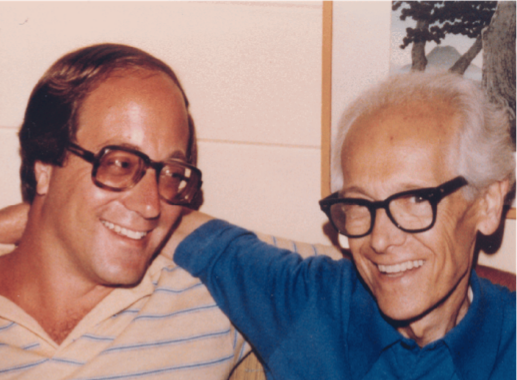
Heinz Kohut (1913-1981) was a Vienna-born psychoanalyst in Chicago who founded self psychology. He argued that narcissism is not simply pathological self-love but a normal line of development, and that people need lifelong experiences of being mirrored, of borrowing calm from someone they admire, and of feeling alike with others. Empathy, in his view, is both how a therapist observes and how a damaged self repairs.
Key takeaways
- Heinz Kohut (1913-1981) was a Viennese-born Chicago psychoanalyst who founded self psychology and moved the focus of analysis from drives and conflict to the cohesion of the self.
- Kohut argued that narcissism follows its own normal line of development and matures into ambition, ideals, creativity, humour, empathy and wisdom when it receives an adequate response.
- Selfobjects are people or experiences that perform mirroring, idealizing and twinship functions for the self, and Kohut held that we need them throughout life, not only in childhood.
- Kohut defined empathy as vicarious introspection and made it both the therapist’s way of observing and a source of the responsiveness a damaged self needs to grow.
- In therapy, self psychology works through cycles of empathic failure and repair, which act as optimal frustration and let arrested development resume.
Who was Heinz Kohut?
Kohut was born in Vienna on 3 May 1913, the only child of Felix Kohut, a gifted pianist, and Else Lampl Kohut. His parents were assimilated Jews. Felix spent much of his son’s early childhood away at the front in the First World War and came back changed, and the biographer Charles Strozier describes Heinz’s bond with his mother as close, controlling and enmeshed.9 Later readers have seen these early experiences, an absent father and a mother who used her son for her own needs, behind his ideas about mirroring and idealization.
He studied medicine at the University of Vienna from 1932 and qualified in 1938, the year of the Anschluss. That year he also began an analysis with August Aichhorn, a close friend of Sigmund Freud. He left Austria in 1939, spent months in a refugee camp in Kent, England, and reached the United States early in 1940, settling in Chicago. Many relatives who stayed behind were killed in the Holocaust.9
In Chicago he trained first in neurology at the University of Chicago, then moved to psychiatry and psychoanalysis. He entered the Chicago Institute for Psychoanalysis in 1946, qualified as an analyst in 1950, and became a training analyst and faculty member in 1953. For years he taught the Institute’s theory course and was known as a strict Freudian; he later joked that he had been “Mr. Psychoanalysis.” He served as president of the American Psychoanalytic Association in 1964-65 and was a friend and correspondent of Anna Freud.9
What set him apart was where he went next. Working with patients who were called narcissistic, he came to see narcissism as a normal developmental line that needs a response, not a moral failing to be interpreted away. Kohut and self psychology was how I got the introduction to humanistic psychology when I started my practice, Taproot Therapy Collective in Hoover, Alabama.
How did Kohut break with Freudian drive theory?
Classical analysis explained suffering as conflict between drives (sex and aggression) and the defences raised against them. Kohut kept the importance of the unconscious and of early experience, but shifted the centre of attention to the self: whether a person feels cohesive, continuous in time and worth something. The history of that shift is part of the wider story of psychoanalysis moving from drive theory to relational models.
The break with classical theory
The break came gradually and from the consulting room. Kohut noticed that a group of patients did not respond to standard interpretations of their grandiosity or neediness as defences. Interpreting them that way often made them feel attacked, and they either withdrew or flared into rage. In a 1968 paper and in The Analysis of the Self (1971) he described these patients as suffering from “narcissistic personality disorders” and laid out a different way of treating them.34 By The Restoration of the Self (1977) he no longer framed his ideas as an addition to drive theory but as a psychology of the self in its own right.6
He also proposed a new picture of the human condition. Freud’s “Guilty Man” suffers from forbidden wishes and the guilt they bring. Kohut’s “Tragic Man” suffers because the deepest ambitions and ideals of his self go unrealized, often because the people around him could not respond to them.6 The key difficulty moves from conflict to deficit, and the key feeling from guilt to shame and emptiness.
The empathic method
The second break was in method. In his 1959 paper “Introspection, Empathy, and Psychoanalysis” Kohut argued that psychoanalysis is defined by the way it gathers data: from the inside, through introspection and empathy. Anything that cannot be reached by empathy, he said, is not properly psychological.1 Sustained empathic immersion became the analyst’s main instrument. It was also, he later argued, a source of the psychological nourishment the patient had missed.
What did Kohut mean by empathy?
Kohut’s best-known definition comes from the 1959 paper: empathy is “vicarious introspection.”1 In How Does Analysis Cure? (1984) he described it as the capacity to think and feel oneself into the inner life of another person.7 Empathy here is not kindness or agreement. It is a way of knowing: the therapist tries to grasp how something feels from inside the patient’s skin, including feelings the patient would rather not have.
Kohut also insisted that empathy is value-neutral. A con artist can read a victim empathically. What makes empathy therapeutic is what the listener does with it. In his last public talk, at a self psychology conference in Berkeley in October 1981, days before his death, he returned to this theme and to the idea that being understood is itself a basic human need.9
Readers often compare him with Carl Rogers, who worked at the University of Chicago at the same time. Edwin Kahn’s 1985 comparison found both men giving empathy a central healing role and both trusting a built-in tendency of the self to grow, while differing on transference and on how far the therapist should interpret.12 Kohut also has forerunners inside psychoanalysis, above all Sándor Ferenczi, who had argued decades earlier for a warmer and more responsive analyst.
What is a selfobject?
A selfobject is a person, or sometimes an experience, an idea or a work of art, that we use to keep our sense of self together. We do not experience a selfobject as a fully separate person with their own centre. We experience it as performing a function the self needs: soothing, admiring, steadying, or keeping us company. Kohut wrote “self-object” with a hyphen in 1971 and later dropped it.410
This marks a difference from the object relations school of Ronald Fairbairn and Donald Winnicott. Object relations theory traces how relationships with others are taken inside and become internal structures. Kohut agreed that structure forms this way, but he added that the need for selfobjects never ends. In How Does Analysis Cure? he wrote that moving from dependence on selfobjects to independence from them is as impossible as moving from a life that needs oxygen to one that does not.7 Maturity changes the selfobjects we use, from parents to friends, partners, mentors, ideals and culture. It does not remove them.
Four features follow from this view:
- Selfobject experiences are largely unconscious. We notice them mostly when they fail.
- Their job is to maintain self-cohesion, the felt sense of being a whole, continuous person.
- They continue across the whole of life.
- Development transforms them into more mature forms but never eliminates them.
The three main selfobject needs are:
- Mirroring: the need to be seen, understood and confirmed, the “gleam in the mother’s eye” that tells a child its existence is welcome.
- Idealizing: the need to look up to a calm, strong figure and draw strength and steadiness from them.
- Twinship (alter ego): the need to feel essentially like other human beings, to belong among people who are like us.
What is the bipolar and tripolar self?
In The Restoration of the Self (1977) Kohut described a “bipolar self.” One pole holds a person’s basic ambitions, which grow out of the child’s grandiose and exhibitionistic wish to be admired. The other holds idealized goals and values, which grow out of the wish to merge with a strong, perfect parent. Between them runs a “tension arc” of talents and skills: what we are actually able to do in moving from what pushes us toward what draws us.6
In How Does Analysis Cure? (1984) Kohut gave twinship its own place as a third independent need, and later self psychologists often speak of a “tripolar self.”710
The grandiose-exhibitionistic pole
This pole seeks mirroring. A young child shows off and expects delight. When parents respond with enough admiration, and the child then meets small, bearable limits, this early grandiosity is gradually transformed into realistic ambition, enjoyment of one’s own abilities and steady self-esteem.
The idealizing pole
This pole seeks an idealized selfobject. The child feels safe by merging with a parent who seems all-powerful and calm. Through gradual and bearable disillusionment, as the parent turns out to be ordinary, the child takes in the calming and guiding functions and they become their own ideals, values and capacity to self-soothe.
The twinship pole
This pole seeks the experience of essential likeness: the child working beside a parent in the garage or kitchen, feeling like a little version of an adult. It develops into the capacity for peer relationships, for using skills alongside others, and for a sense of belonging to a human community and a culture.
Selfobject transferences
Kohut first found these needs in the transference, the relationship patients form with the analyst. In The Analysis of the Self he described two main forms. In the idealizing transference the patient experiences the analyst as powerful and wise and feels calmer in their presence. In the mirror transference the patient needs the analyst to echo and admire them. In 1971 he divided the mirror transference into three subtypes: merger through extension of the grandiose self, the alter ego or twinship transference, and the mirror transference in the narrower sense.4 In 1984 he moved twinship out of the mirror group and treated it as a third selfobject transference of its own.7
These transferences are not obstacles to be cleared away. They are the patient’s thwarted developmental needs coming alive again with a new person, which makes them the main route to growth.
How did Kohut redefine narcissism?
In his 1966 paper “Forms and Transformations of Narcissism” Kohut proposed that narcissism follows its own independent line of development, separate from the line that leads to love for other people. It does not have to be outgrown and replaced by object love. It needs to mature. When it matures, he argued, it shows up in creativity, in the capacity for empathy, in the ability to contemplate one’s own impermanence, in humour and in wisdom.2 The link between healthy narcissism and creative work is one reason the question are artists narcissists? keeps coming up.
Narcissism as development
Seen this way, an adult who craves admiration or cannot bear criticism is not simply selfish. Their healthy narcissistic needs went unanswered at the age when they should have been met, and the archaic form of those needs, along with the fragility behind them, remains. The grandiose display often sits on top of a self that falls apart easily.
Therapeutic implications
This changed technique. Instead of confronting narcissistic patterns as defences, Kohut treated them as arrested developments. Given an empathic, reliable relationship, the stalled needs could reactivate in the transference and growth could resume.4
His Chicago view contrasted with that of Otto Kernberg in New York, who saw pathological narcissism as a defensive structure built against envy and rage and recommended confronting it. The Kohut-Kernberg debate of the 1970s shaped how a whole generation of clinicians thought about narcissistic and borderline patients.10
Narcissistic rage
In “Thoughts on Narcissism and Narcissistic Rage” (1972) Kohut described a particular kind of anger: the vengeful, unrelenting fury that follows a narcissistic injury, such as a humiliation or a failure to be recognized. It differs from ordinary aggression aimed at a goal. Its aim is to wipe out the offence and restore control over a world felt as an extension of the self.5 He read it as a sign of selfobject failure, not of a primary destructive drive. This framework also helps people make sense of relationships with someone who cannot tolerate injury, a theme in patterns of narcissistic abuse.
Optimal frustration and the growth of the self
Kohut’s account of development rests on four ideas: the importance of early selfobject relationships, the gradual building of self-structure, responsiveness that fits the child’s phase of development, and the vulnerability of the self to fragmentation under stress.
Optimal frustration
“Optimal frustration” names the kind of failure that helps a child grow. No parent responds perfectly. When lapses are small, bearable and repaired, the child gradually learns to do for itself what the parent used to do. When they are too severe or too constant, they are traumatic, and the need goes underground in its archaic form. When there is no frustration at all, nothing pushes the child to build its own capacities.4
Transmuting internalization
Kohut called the process by which these small, managed disappointments become inner structure “transmuting internalization.” The child does not copy the parent wholesale. Bit by bit, the parent’s functions of soothing, admiring and guiding become the child’s own regulation of tension and self-esteem.4 Later self psychologists such as Howard Bacal argued that what heals in therapy is “optimal responsiveness” more than frustration as such.10
Fragmentation
When selfobject support is withdrawn, a fragile self can fragment. People describe this as feeling unreal, scattered, empty, frantic or suddenly worthless. In 1978, with Ernest Wolf, Kohut sketched the kinds of self-disorder this produces, from understimulated selves that seek stimulation to overburdened selves that cannot calm down.10 In a sense the whole therapy aims at restoring cohesion.
How does self psychology work in therapy?
Kohut called his clinical stance empathic-introspective. In practice it involves:
- Sustained immersion in the patient’s subjective experience.
- Treating narcissistic needs as legitimate rather than as pathology.
- Close attention to small empathic failures and their effect on the patient.
- Watching for fragmentation and for the return of cohesion.
- Understanding defences instead of confronting them. What looks like resistance is often self-protection against another injury.
Understanding and explaining
In How Does Analysis Cure? Kohut described interpretation in two steps. First comes understanding: the therapist conveys that they have grasped what the patient is feeling. Then comes explaining: the therapist links the reaction to its history, for example how a weekend break feels like a parent who repeatedly vanished.7 Skipping the first step and going straight to explanation is experienced as another failure to be seen.
Rupture and repair
The therapeutic process runs through a sequence that recurs throughout the work:
- Sustained empathic immersion builds a selfobject transference.
- The therapist inevitably fails, by missing something, being late or misunderstanding.
- The patient reacts with withdrawal, rage or fragmentation.
- The therapist understands and explains the reaction without defensiveness.
- The repaired bond, repeated many times, functions as optimal frustration, and arrested development resumes.
Working with narcissistic vulnerability
Kohut changed the treatment of narcissistic problems in four ways. He looked for the fragility under grandiose presentations. He read narcissistic rage as a response to empathic failure. He aimed at building self-structure more than uncovering hidden conflict. And he treated the therapeutic relationship as a second developmental chance. His case “The Two Analyses of Mr. Z” (1979) contrasts a first, classical analysis with a second one conducted along self-psychological lines; Strozier and others have concluded the case is largely autobiographical.9
Shame, assessment and goals
Self psychology also put shame at the centre of the clinical picture. Andrew Morrison’s Shame: The Underside of Narcissism (1989) extended Kohut’s ideas to show how shame follows failed grandiosity and failed ideals.15 These ideas inform how self-psychological therapists assess a person (which selfobject needs are hungriest, how quickly the self fragments), set goals (greater cohesion and steadier self-esteem, more than insight alone), choose interventions and judge outcomes.
Kohut on culture, groups and history
Kohut applied his ideas beyond the individual. Charles Strozier collected these writings in Self Psychology and the Humanities (1985), which includes essays on leadership, creativity, charisma, history and the arts.8
The group self
Kohut proposed that groups, like individuals, have a “group self” with shared ambitions and ideals. When a nation suffers a deep injury to its collective self-esteem, it may turn to a leader who offers grandiose repair. He used this idea to think about Germany after the First World War and the appeal of Hitler, and about the way messianic and charismatic leaders meet a population’s hunger for an idealized figure.8 Many social problems, in his view, reflected collective failures of empathic responsiveness.
Culture and change
His framework gives tools for understanding social movements and group behaviour, cultural transitions, conflicts between generations, and the psychological effects of technological change. In The Restoration of the Self he suggested that the typical psychological problem of his era had moved from the overstimulated, conflict-ridden child of Freud’s Vienna to the understimulated child of distant, preoccupied parents, a shift he linked to changes in family and work.6 Writers since have applied the same lens to societal narcissism and fragmentation, cultural trauma and healing, the intergenerational transmission of values, and cycles of collective idealization and disillusionment. Kohut’s attention to identity and the social world sits close to Erik Erikson’s work on identity and history.
Groups and organizations
Self psychology has been used to understand group dynamics and leadership, organizational culture and change, educational settings, and collective behaviour. A leader who can tolerate being idealized and then gently disappointing, or a teacher who mirrors students’ ambitions, is performing selfobject functions for a group.
What were the main criticisms of self psychology?
Kohut drew strong reactions. Critics questioned whether selfobject needs are universal or culturally specific, whether he neglected aggression and sexuality by treating them as products of selfobject failure, whether empathy can replace interpretation, and whether a “cohesive self” is a coherent idea or an overly tidy one.10 Kernberg’s alternative remains the main rival account of narcissism.
Practitioners describe their own challenges: keeping up empathic immersion with a patient who is contemptuous or enraged, managing countertransference with narcissistic patients, deciding when firm limits or confrontation are needed, and defining what a finished treatment looks like when selfobject needs never end. Self psychologists answer that empathy is not the same as gratification and that good self-psychological work includes honest limits.
What research connects with Kohut’s ideas?
Several lines of research fit closely with Kohut’s view of development.
Attachment and attunement
John Bowlby’s attachment theory, developed in the same decades, also places the child’s need for a responsive caregiver at the centre of development. In 2005 Erez Banai, Mario Mikulincer and Phillip Shaver built a questionnaire measuring hunger for mirroring, idealization and twinship and the denial of those needs. In several studies these selfobject needs were linked with attachment insecurity, weaker self-cohesion, poorer affect regulation and poorer adjustment, which is close to what Kohut predicted.11
Infant research and self-regulation
Beatrice Beebe and Frank Lachmann, working from infant observation and self psychology, used frame-by-frame video of mothers and infants to show how regulation is built in moment-to-moment interaction, through matching, mismatch and repair. Their Infant Research and Adult Treatment (2002) applied these findings to adult therapy, giving a developmental picture of what Kohut called optimal frustration.14
Empathy and early relational trauma
Neuroscientists studying empathy, including the mirror neuron research begun in Parma in the 1990s, have given clinicians a new vocabulary for how one nervous system reads another. Research on early relational trauma likewise shows that repeated failures of attunement in childhood leave lasting effects on self-regulation, which is the territory Kohut mapped clinically.
How has self psychology developed since Kohut?
New theories
Kohut’s students and successors took his work in several directions. Robert Stolorow, George Atwood and Donna Orange developed intersubjectivity theory, which treats experience as arising between two subjectivities. Howard Bacal proposed optimal responsiveness. Joseph Lichtenberg described motivational systems. Ernest Wolf wrote a practical guide, Treating the Self (1988). Arnold Goldberg described the “vertical split” between disavowed parts of the personality. James Fosshage traced how self psychology and relational psychoanalysis have influenced each other.13 Group self psychology has developed as its own field, and selfobject functions are now understood more widely.
The same ideas run through the interpersonal tradition of Harry Stack Sullivan and the existential psychology of Rollo May, who were also concerned with how a person comes to feel real in the presence of others.
Integration with other approaches
Clinicians have joined self psychology with attachment theory, neuroscience, intersubjectivity theory, mindfulness practices, trauma theory, somatic approaches, trauma-informed care and even cognitive-behavioural techniques. It has been applied to group therapy, child development and parenting, organizational consulting, education and cultural analysis.
Open questions
The field continues to work on adapting to brief therapy formats, on its relationship with the evidence-based practice movement, on applying selfobject concepts across cultures, and on addressing current social issues. Promising directions include closer links with neuroscience, the study of relationships in the digital age, where so much mirroring now runs through screens, preventive work with parents, and cross-cultural applications.
Timeline of Heinz Kohut’s life
- 1913: born in Vienna on 3 May.
- 1932-1938: medical studies at the University of Vienna; qualifies in 1938 and begins analysis with August Aichhorn.
- 1939: leaves Austria for England after the Nazi annexation.
- 1940: arrives in the United States and settles in Chicago.
- 1941-1944: neurology residency at the University of Chicago, then a move into psychiatry.
- 1946-1950: psychoanalytic training at the Chicago Institute for Psychoanalysis.
- 1953: training and supervising analyst and faculty member at the Institute.
- 1959: publishes “Introspection, Empathy, and Psychoanalysis.”
- 1964-1965: president of the American Psychoanalytic Association.
- 1966: publishes “Forms and Transformations of Narcissism.”
- 1971: publishes The Analysis of the Self.
- 1977: publishes The Restoration of the Self.
- 1981: dies in Chicago on 8 October.
- 1984: How Does Analysis Cure? appears after his death.
Heinz Kohut’s major publications
Books
- The Analysis of the Self (1971), International Universities Press.
- The Restoration of the Self (1977), International Universities Press.
- How Does Analysis Cure? (1984), University of Chicago Press, edited by Arnold Goldberg with Paul Stepansky.
- Self Psychology and the Humanities (1985), W. W. Norton, edited by Charles Strozier.
Significant papers
- “Introspection, Empathy, and Psychoanalysis” (1959).
- “Forms and Transformations of Narcissism” (1966).
- “The Psychoanalytic Treatment of Narcissistic Personality Disorders” (1968).
- “Thoughts on Narcissism and Narcissistic Rage” (1972).
- “The Disorders of the Self and Their Treatment” (1978, with Ernest Wolf).
- “The Two Analyses of Mr. Z” (1979).
Collected works and further reading
Paul Ornstein edited The Search for the Self: Selected Writings of Heinz Kohut: volumes 1 and 2 (1978) cover 1950-1978, and volumes 3 and 4 (1990 and 1991) cover 1978-1981. Useful secondary reading includes Strozier’s biography Heinz Kohut: The Making of a Psychoanalyst (2001), Allen Siegel’s Heinz Kohut and the Psychology of the Self (1996), Wolf’s Treating the Self (1988), Goldberg’s Being of Two Minds (1999), Patricia DeYoung’s Relational Psychotherapy: A Primer (2003), Peter Lessem’s Self Psychology: An Introduction (2005), Doris Brothers’ Toward a Psychology of Uncertainty (2008), Judith Teicholz’s Kohut, Loewald, and the Postmoderns (1999), Douglas and Susan Detrick’s edited volume Self Psychology: Comparisons and Contrasts (1989), Frank Summers’ Object Relations Theories and Psychopathology (1994), Elsa Ronningstam’s Identifying and Understanding the Narcissistic Personality (2005), Stolorow, Atwood and Orange’s Worlds of Experience (2002), Bacal and Carlton’s The Power of Specificity in Psychotherapy (2011), and Stephen Mitchell and Margaret Black’s Freud and Beyond (1995). The International Association for Psychoanalytic Self Psychology (IAPSP) supports the field and publishes the journal Psychoanalysis, Self and Context. The Heinz Kohut Archives at the Chicago Institute for Psychoanalysis hold lectures, correspondence and unpublished papers.
How we use Kohut’s ideas at Taproot
Kohut’s ideas shape how we sit with people at Taproot. Clients who come with chronic shame, a self-esteem that collapses at the first criticism, rage they do not understand, emptiness, or a lifelong sense of not being seen often carry the selfobject failures Kohut described. We listen first for the need under the symptom: the wish to be mirrored, the search for someone steady to lean on, the loneliness of never feeling like anyone else.
We also treat the therapy relationship the way Kohut did. Ruptures are expected, and repairing them is part of the work. When a client pulls away after a session or feels hurt by something we said, we try to understand it from their side before explaining it.
Kohut worked with words. Many of the states he described, fragmentation, a self that cannot calm down, shame felt as heat in the face, are also states of the body. Brain-based and body-based methods let us work with those states directly. In Brainspotting the therapist’s attuned presence, what Brainspotting calls the dual attunement frame, does much of what Kohut meant by a selfobject function while the client processes material held deep in the brain. Parts work such as IFS gives a language for the split-off grandiose or frightened parts that Kohut and Goldberg described, and focusing in the tradition of Eugene Gendlin helps clients feel their way to what they actually need.
Kohut’s view that people need to be understood, not corrected, is close to how we work across Jungian, existential and somatic therapy. If his description of a self that needs mirroring, idealizing and kinship sounds familiar, you can contact Taproot Therapy Collective to talk with one of our therapists.
Frequently asked questions
What is Heinz Kohut best known for?
Heinz Kohut is best known for founding self psychology, a school of psychoanalysis built on his books The Analysis of the Self (1971) and The Restoration of the Self (1977). He reframed narcissism as a normal developmental line, introduced the idea of selfobjects, and made empathy, which he called vicarious introspection, the central method of psychoanalytic observation and treatment.
What are the three selfobject needs in Kohut’s theory?
Kohut described three selfobject needs: mirroring, the need to be seen and confirmed; idealizing, the need to draw calm and strength from an admired figure; and twinship or alter ego, the need to feel essentially like other people. He treated twinship as part of the mirror transference in 1971 and as a separate third need in How Does Analysis Cure? in 1984.
How is Kohut’s view of narcissism different from Freud’s and Kernberg’s?
Freud saw narcissism mainly as libido turned toward the self that should give way to love for others. Otto Kernberg saw pathological narcissism as a defensive structure against envy and rage, to be confronted. Heinz Kohut saw narcissism as its own developmental line and pathological narcissism as an arrest caused by missing responsiveness, to be met with empathy so growth can resume.
What does optimal frustration mean in self psychology?
Optimal frustration is Heinz Kohut’s term for small, bearable failures of a caregiver or therapist that are noticed and repaired. Through them a person gradually takes over soothing and self-esteem functions that someone else used to provide, a process Kohut called transmuting internalization. Failures that are too large become traumatic, while no frustration at all gives the self no reason to build its own capacities.
Is self psychology still used in therapy today?
Yes. Self psychology is taught and practised widely and shapes intersubjective, relational and attachment-informed psychotherapy. Many therapists who do not call themselves Kohutians still use his ideas about mirroring, rupture and repair, shame and narcissistic vulnerability. The International Association for Psychoanalytic Self Psychology supports the field and publishes the journal Psychoanalysis, Self and Context.
Related reading
- Positive Psychotherapy: Harnessing Strengths for Flourishing
- The Pragmatic Turn: William James, the Architecture of Consciousness, and the Roots of Modern Psychotherapy
- Francine Shapiro: From Cancer Diagnosis to Revolutionary Trauma Treatment Through Eye Movements
- The Significance of Lev Vygotsky in Psychology and Education
- Attachment, Emotional Arcs, and Somatic Approaches: From Mary Main’s Revolutionary Research to Contemporary Therapeutic Integration
- The Far-Reaching Influence of Hegel’s Dialectical Philosophy on Psychology and Psychotherapy
References
- Kohut, H. (1959). Introspection, empathy, and psychoanalysis: An examination of the relationship between mode of observation and theory. Journal of the American Psychoanalytic Association, 7(3), 459-483. https://doi.org/10.1177/000306515900700304
- Kohut, H. (1966). Forms and transformations of narcissism. Journal of the American Psychoanalytic Association, 14(2), 243-272. https://doi.org/10.1177/000306516601400201
- Kohut, H. (1968). The psychoanalytic treatment of narcissistic personality disorders: Outline of a systematic approach. The Psychoanalytic Study of the Child, 23(1), 86-113. https://doi.org/10.1080/00797308.1968.11822951
- Kohut, H. (1971). The analysis of the self: A systematic approach to the psychoanalytic treatment of narcissistic personality disorders. International Universities Press.
- Kohut, H. (1972). Thoughts on narcissism and narcissistic rage. The Psychoanalytic Study of the Child, 27(1), 360-400. https://doi.org/10.1080/00797308.1972.11822721
- Kohut, H. (1977). The restoration of the self. International Universities Press.
- Kohut, H. (1984). How does analysis cure? (A. Goldberg, Ed., with P. E. Stepansky). University of Chicago Press.
- Kohut, H. (1985). Self psychology and the humanities: Reflections on a new psychoanalytic approach (C. B. Strozier, Ed.). W. W. Norton.
- Strozier, C. B. (2001). Heinz Kohut: The making of a psychoanalyst. Farrar, Straus and Giroux.
- Baker, H. S., & Baker, M. N. (1987). Heinz Kohut’s self psychology: An overview. American Journal of Psychiatry, 144(1), 1-9. https://doi.org/10.1176/ajp.144.1.1
- Banai, E., Mikulincer, M., & Shaver, P. R. (2005). “Selfobject” needs in Kohut’s self psychology: Links with attachment, self-cohesion, affect regulation, and adjustment. Psychoanalytic Psychology, 22(2), 224-260. https://doi.org/10.1037/0736-9735.22.2.224
- Kahn, E. (1985). Heinz Kohut and Carl Rogers: A timely comparison. American Psychologist, 40(8), 893-904. https://doi.org/10.1037/0003-066X.40.8.893
- Fosshage, J. L. (2003). Contextualizing self psychology and relational psychoanalysis: Bi-directional influence and proposed syntheses. Contemporary Psychoanalysis, 39(3), 411-448. https://doi.org/10.1080/00107530.2003.10747214
- Beebe, B., & Lachmann, F. M. (2002). Infant research and adult treatment: Co-constructing interactions. The Analytic Press.
- Morrison, A. P. (1989). Shame: The underside of narcissism. The Analytic Press.



















0 Comments