
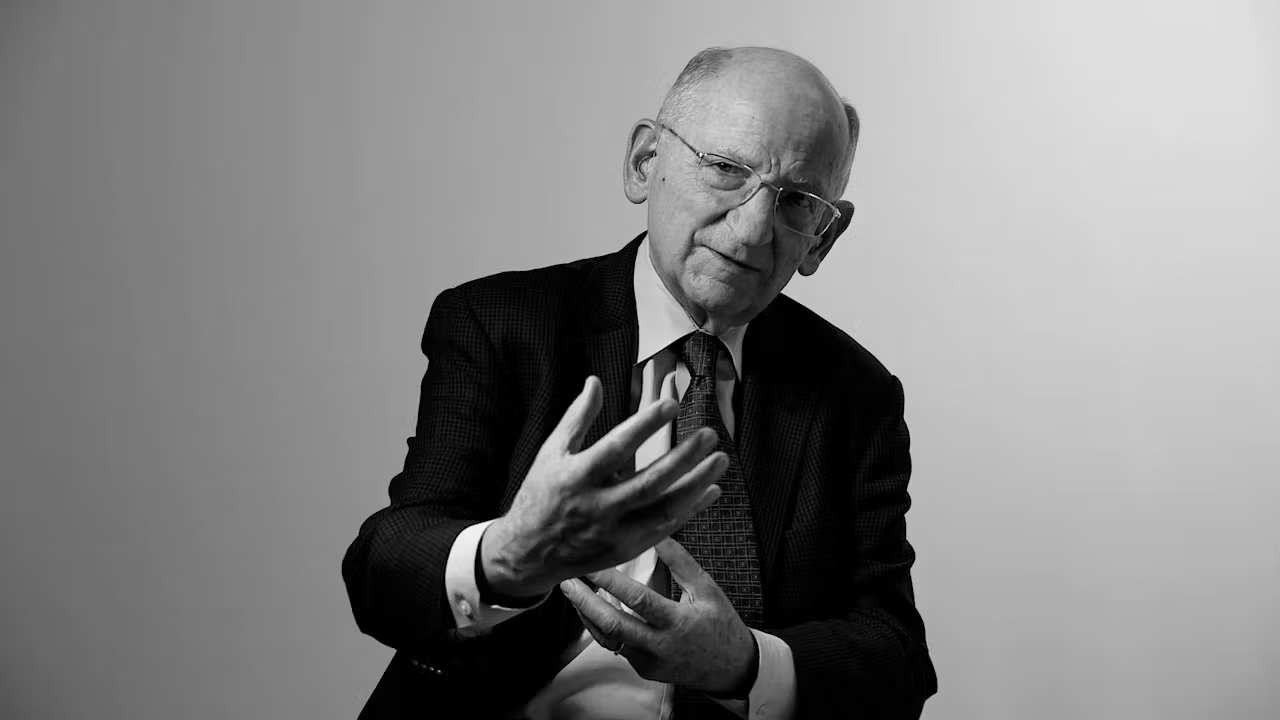
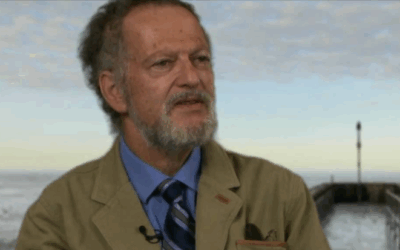
Otto Kernberg is a Vienna-born psychiatrist and psychoanalyst whose work joined object relations theory to American ego psychology. His main contributions are the model of borderline personality organization, a structural account of pathological narcissism and malignant narcissism, Transference-Focused Psychotherapy for severe personality disorders, and psychoanalytic studies of love, aggression, leadership and institutions.
Key takeaways
- Otto Kernberg joined British object relations theory to American ego psychology, treating self-image, other-image and linking affect as the building blocks of personality.
- His model sorts personality into neurotic, borderline and psychotic organization by identity integration, defenses, reality testing and quality of relationships.
- Kernberg saw pathological narcissism as a defensive grandiose self and gave malignant narcissism, a term from Erich Fromm, its clinical definition.
- Transference-Focused Psychotherapy uses a treatment contract and work in the here and now of the therapy relationship to help patients integrate split images of self and others.
- Kernberg also wrote on mature love, aggression, regression in groups and leaders, and the training of psychoanalysts.
Otto Kernberg’s life and career
Kernberg was born in Vienna on 10 September 1928. His family left Austria in 1939, after the Nazi annexation, and settled in Chile. He studied medicine and psychiatry at the University of Chile and trained as a psychoanalyst with the Chilean Psychoanalytic Society, where Ignacio Matte Blanco was a leading teacher.
A Rockefeller Foundation fellowship brought him to the United States in 1959 to study psychotherapy research with Jerome Frank at Johns Hopkins. In 1961 he joined the Menninger Foundation in Topeka, Kansas, where he directed the C. F. Menninger Memorial Hospital and later led the Menninger Psychotherapy Research Project, one of the first long-term studies of what psychoanalytic treatment actually does. Much of his thinking about borderline patients was formed in that hospital, with severely disturbed people who did not respond to classical analysis.
In 1973 he moved to New York, first to Columbia University and the New York State Psychiatric Institute, and in 1976 to Cornell University Medical College and the Westchester Division of New York Hospital. There he founded the Personality Disorders Institute with John Clarkin, Frank Yeomans and others, the group that turned his theory into a teachable treatment. He served as president of the International Psychoanalytical Association from 1997 to 2001. His wife, Paulina Kernberg, was a child psychiatrist and psychoanalyst who worked on personality disorders in children.
How did Kernberg combine object relations theory and ego psychology?
In the 1960s American psychoanalysis was dominated by ego psychology, the school of Heinz Hartmann and Anna Freud, which studied the ego’s defenses and adaptive functions. British analysts such as Melanie Klein and Ronald Fairbairn had built object relations theory instead, which places the mind’s inner images of other people at the center of development. Kernberg treated the two schools as complementary rather than rival.
He kept Freud’s structural model of id, ego and superego but rebuilt it out of internalized relationships. He also drew heavily on Edith Jacobson’s The Self and the Object World (1964) and on Margaret Mahler’s separation-individuation research. His synthesis was set out most fully in Object Relations Theory and Clinical Psychoanalysis (1976).3
The object relations dyad
For Kernberg the basic building block of personality is not a drive but an internalized object relations dyad: a self-representation, an object-representation, and the affect that links them. A hungry infant who is fed takes in something like “a satisfied self with a nourishing other, bathed in pleasure.” A frustrated infant takes in “a helpless self with a depriving other, charged with rage.” These units are laid down in intense early moments with caregivers and become the material from which identity is built.3
Kernberg gave affects a central place. In his later formulation, libido and aggression are not raw instincts but higher-order motivational systems assembled from many experiences of pleasurable and painful affect.7 This kept Freud’s dual drive theory while grounding it in observable emotion.
The ego’s task of integration
The ego’s job, in this view, is to synthesize these many dyads into one coherent picture of the self and of the important people in one’s life. That means bringing loving and hating experiences of the same person together. When the synthesis succeeds, a person has a stable sense of self, can hold ambivalence, and can stay connected to someone who has disappointed them. When it fails, the person relies on primitive defenses that keep good and bad apart, and the features of severe personality disorder follow.
What are Kernberg’s three levels of personality organization?
Kernberg’s best known contribution is a structural map of personality with three levels: neurotic, borderline and psychotic organization. First laid out in his 1967 paper “Borderline Personality Organization,” the map sorts people by four features rather than by symptoms: identity integration, the type of defenses used, reality testing, and the quality of object relations, with superego functioning as a further marker.1
Neurotic organization
- An integrated identity with a stable sense of self and others
- Mature defenses built around repression, such as intellectualization and reaction formation
- Reliable reality testing
- The capacity for deep, lasting relationships
- A superego that guides conduct but also allows self-forgiveness
Borderline organization
- Identity diffusion, with contradictory and poorly integrated experiences of self
- Primitive defenses centered on splitting
- Reality testing that is generally intact but can falter under stress
- Marked impairment in relationships
- A harsh, poorly integrated superego, often alternating with lapses in moral functioning
Psychotic organization
- Severe lack of identity integration and blurred boundaries between self and other
- Primitive defenses, which here protect against fusion and disintegration
- Loss of reality testing
- Severe difficulty in relationships, often with withdrawal or merging
- Defective superego development
The map matters clinically because it cuts across diagnostic categories. Kernberg’s “borderline” level includes the diagnosis of borderline personality disorder but also narcissistic, antisocial, paranoid and schizoid personalities. To assess it he devised the structural interview, in which the clinician gently probes contradictions in how a patient describes themselves and others and watches how the patient responds.5 The level of organization, not the label, guides treatment: neurotic patients may do well in standard psychoanalytic therapy, while borderline organization calls for a more structured approach.
How does personality develop in Kernberg’s theory?
Kernberg’s developmental theory is a sequence of integrations. In Object Relations Theory and Clinical Psychoanalysis he described five stages, from an early undifferentiated state through to a consolidated adult ego and superego.3 The core tasks can be put in three steps.
- Differentiation. The child separates self-representations from object-representations, setting a basic boundary between “me” and “you,” and between inner and outer reality.
- Integration. Good and bad self-representations are brought together, and in parallel good and bad images of the same caregiver, so that the mother who comforts and the mother who frustrates become one person.
- Consolidation. The integrated representations stabilize under the dominance of loving rather than aggressive affect, and the superego becomes a coherent internal guide.
Development can stall at different points. Failure at the first step, where self and other remain fused, corresponds to psychotic organization. Failure at the second step, where self and other are distinguished but good and bad stay split, corresponds to borderline organization. Kernberg thought both constitution, such as an innate intensity of aggressive affect, and environment, such as abuse, neglect or chaotic care, shape how these tasks go.6 The quality of early relationships therefore leaves its mark on later personality structure.
What is borderline personality organization?
Kernberg’s 1967 paper turned “borderline” from a vague term for patients on the edge of psychosis into a defined level of personality organization.1 His structural approach and John Gunderson’s descriptive research were the two main streams feeding the borderline diagnosis that entered the DSM in 1980.
The central feature is identity diffusion: the lack of an integrated concept of oneself and of significant others. It shows up as contradictory behavior, sudden swings in how a person sees a partner or a therapist, a shaky sense of what one values, and chronic emptiness. Someone with borderline organization can experience a friend as wonderful on Monday and as a betrayer on Wednesday, with little sense that both views describe the same person.
Primitive defenses
Splitting is the defense that keeps loving and hating experiences apart. Kernberg described a cluster of related defenses that serve the same purpose:
- Primitive idealization and devaluation, in which people are either perfect or worthless
- Projective identification, a concept taken from Klein, in which unwanted feelings are attributed to another person, who is then pressured to feel or act them out
- Denial of whole areas of emotional reality
- Omnipotent control of others
- Primitive dissociation, in which contradictory states of mind alternate without being linked
These defenses protect the good images from being destroyed by rage, which lowers anxiety in the moment, but at the cost of stable relationships and a stable identity.3 The same patterns appear in quieter forms in people whose distress is hidden behind competence, which is sometimes described as the covert borderline presentation.
How did Kernberg explain narcissistic personality?
Kernberg’s account of narcissistic personality, developed from 1970 and gathered in Borderline Conditions and Pathological Narcissism (1975), was written partly in dialogue with Heinz Kohut’s self psychology.2 The two men disagreed. Kohut saw narcissistic disorders as developmental arrests: normal childhood needs for mirroring and idealization that went unmet. Kernberg saw pathological narcissism as a defensive structure, different in kind from normal childhood narcissism.
At its center is what Kernberg called the pathological grandiose self, a fusion of the actual self, the ideal self and the ideal object. It defends against underlying envy, rage and a sense of worthlessness, but it also blocks intimacy. Other people are used as admirers, mirrors or extensions of the self, and their separate inner lives are hard to register. Those on the receiving end often describe the experience in terms that match his account, which is why his work is often cited in writing on narcissistic abuse.
Malignant narcissism
Kernberg arranged narcissistic pathology on a spectrum, from higher-functioning narcissistic personalities through narcissistic personality with overt borderline features to malignant narcissism. The term came from Erich Fromm, who used it in The Heart of Man (1964). Kernberg gave it a clinical definition in Severe Personality Disorders (1984): narcissistic personality combined with6
- Ego-syntonic aggression, meaning cruelty experienced as justified rather than as a problem
- Paranoid tendencies
- Antisocial behavior
- Sadistic pleasure in others’ suffering
Malignant narcissism sits close to antisocial personality, which Kernberg regarded as the most severe point on the narcissistic spectrum. His analysis implied technical changes for narcissistic patients: early, tactful attention to the patient’s devaluation of the therapist, and to the envy that makes receiving help feel humiliating.
What is Transference-Focused Psychotherapy?
Transference-Focused Psychotherapy, or TFP, is the treatment Kernberg and his Cornell colleagues built for borderline personality organization. It was first set out by Kernberg and colleagues in 1989 and manualized by Clarkin, Yeomans and Kernberg in Psychotherapy for Borderline Personality (1999).11 It is a psychodynamic therapy, usually twice weekly, that aims at personality change rather than only symptom control.
Transference means the patient’s tendency to relive old relationship patterns with the therapist. The premise of TFP is that a patient’s split internal dyads will inevitably come alive in the therapy relationship. When they do, they can be observed, named and integrated in the room, with feeling present, rather than discussed in the abstract. The treatment emphasizes:
- Careful attention to the treatment frame
- Systematic analysis of the transference as it develops
- Early attention to negative transference, the anger, suspicion and contempt that otherwise drive patients out of treatment
- A clear focus on the dominant object relations dyad in each session
- Technical neutrality, which Kernberg defined, following Anna Freud, as a stance equidistant from the patient’s impulses, prohibitions and external reality
The treatment contract
TFP begins with a negotiated contract covering attendance, payment, and what will happen if the patient feels suicidal or acts in ways that threaten the treatment. The contract contains acting out, gives both people a framework, and starts to activate the patient’s inner world, because whatever the patient feels about the frame is itself transference material. Within sessions the therapist follows a priority order: threats to life come first, then threats to the continuation of therapy, then dishonesty, and only then the emotionally dominant theme of the hour.11
Clarification, confrontation, interpretation
Interventions follow a sequence. Clarification asks the patient to describe their experience more exactly. Confrontation, which in Kernberg’s sense is tactful rather than aggressive, points out contradictions: “You say you trust me, and you also said you were sure I was laughing at you.” Interpretation then links the split-off states and offers a hypothesis about why they are kept apart, often in the here and now of the session. Repeated over many months, this working through helps the patient hold both sides of experience and build a more stable identity.3
What did Kernberg write about love and aggression?
The thread running through all of Kernberg’s work is that psychological health requires integrating love and aggression within relationships. A mature person can be furious with someone they love without the love collapsing, can see others realistically, and can feel genuine concern, a capacity Donald Winnicott had also described. Kernberg examined the role of hatred in Aggression in Personality Disorders and Perversions (1992).7
Early development involves the gradual fusion of loving and aggressive feelings toward the same people. When it is disrupted, split relations persist into adulthood. Much of the therapeutic task is helping a patient tolerate the anxiety of seeing both the good and bad in someone important, including the therapist.
Mature love relations
In Love Relations: Normality and Pathology (1995) Kernberg treated romantic love as a psychoanalytic subject in its own right.8 He described mature love as involving:
- Integration of the sensual and tender currents that Freud had described as often split
- A capacity for sustained erotic desire over time
- Recognition of the partner as a separate person
- Tolerance of ambivalence, including the aggression present in every intimate bond
- Shared ideals and values, which he saw as the couple’s own superego
Pathological forms of love reflect the same structural problems seen in the consulting room:
- Inability to bring sexuality and tenderness together
- Perverse fixations
- Relationships based on fusion rather than two separate people
- Sadomasochistic patterns
- Fear of real intimacy
How did Kernberg approach clinical technique and aggression?
Across his writing on technique Kernberg asks the therapist to be active with the patient’s inner world while keeping firm boundaries. He advocated:
- Systematic exploration of affect states as they shift during a session
- Attention to nonverbal communication, which carries much of what borderline patients cannot yet say
- A focus on the dominant object relation at each moment
- Clear interpretation of defensive operations
- Careful use of countertransference, the therapist’s own reactions, as information about the patient’s inner world
Working with aggression
Aggression is the hardest part of treating severe personality disorders. Kernberg’s approach involves naming aggressive fantasies directly, analysing the primitive defenses that disown them, watching for countertransference such as fear or retaliatory anger, holding technical neutrality, and setting clear limits when behavior endangers the patient or the treatment.6 The goal is for the patient to own and integrate aggressive feelings, rather than acting them out or splitting and projecting them onto others.
What did Kernberg say about leaders, groups and organizations?
Kernberg’s years running a psychiatric hospital at Menninger made him a student of institutions. He built on Wilfred Bion’s work on group dynamics to show how groups regress, and in “Regression in Organizational Leadership” (1979) and Ideology, Conflict, and Leadership in Groups and Organizations (1998) he examined:109
- The damage done by narcissistic and paranoid leaders
- Regression in small groups, large groups and mass gatherings
- The defensive operations of institutions, such as bureaucratic rigidity
- Power dynamics and the misuse of authority
- The corruption of an organization’s ideals over time
He distinguished functional leaders, whose healthy narcissism and moral integrity serve the task, from leaders whose grandiosity or suspicion pulls the whole system into regression. The same dynamics run through executive leadership in ordinary workplaces.
Society and mass movements
Kernberg extended the same analysis to mass movements, political extremism and fundamentalism, the cultural celebration of narcissism, institutional corruption, and the ways societies change. In large regressed groups, he argued, people project their own aggression onto an enemy and idealize a leader, which is splitting on a social scale. The analysis offers a lens on political cults and cults of personality.9
Why does Kernberg still matter in psychoanalysis and personality disorder treatment?
Within psychoanalysis Kernberg’s integration of object relations and ego psychology linked classical Freudian concepts to later relational approaches, a history traced in the evolution of psychoanalytic thought. It shaped how analysts think about early object relations, how therapy produces change, the treatment of severe personality disorders, the value of systematic technique, and the link between inner life and relationships.
Influence on personality disorder treatment
Kernberg’s vocabulary of splitting, identity diffusion and levels of organization is now part of the shared language of the field. Other treatments for borderline personality developed from different roots: Dialectical Behavior Therapy from Marsha Linehan’s behavioral work, Mentalization-Based Treatment from Peter Fonagy and Anthony Bateman’s research on attachment and reflective functioning, and Schema Therapy from Jeffrey Young. They share with TFP an emphasis on a clear frame and on the patient’s shifting states of mind. The Alternative Model for Personality Disorders in DSM-5, which rates impairment in identity, self-direction, empathy and intimacy, echoes Kernberg’s structural thinking.
Research on TFP
Kernberg’s ideas have generated a substantial research program on TFP, on the validity of personality organization, on borderline and narcissistic pathology, on aggression, and on the process of change. In a Cornell study of 90 patients randomized to TFP, Dialectical Behavior Therapy or supportive psychotherapy for a year, all three groups improved across several domains, and TFP was associated with change in the widest range of outcomes, including anger, irritability and verbal and physical assault.12 In the same trial only the TFP group showed increased reflective function, the capacity to think about one’s own and others’ minds, and greater coherence in how patients described attachment relationships.13 In a Munich and Vienna trial of 104 women, TFP was compared with treatment by experienced community psychotherapists and produced fewer dropouts, fewer suicide attempts, fewer borderline criteria and greater gains in personality organization.14
How did Kernberg shape psychotherapy training and supervision?
Kernberg taught and supervised for decades, and his model of training combines:
- A theoretical grounding in object relations
- Development of specific technical skills
- Personal growth through supervision
- Integration of research and clinical practice
- Attention to the trainee’s countertransference
The supervision process
Supervision in TFP relies on detailed examination of session material, often video recordings, close analysis of therapist and patient interaction, attention to countertransference, practice in maintaining technical neutrality, and the link between theory and what happened in the hour. The supervisor helps the trainee recognize transference and countertransference dynamics while keeping appropriate boundaries.
Institutions and psychoanalytic education
Kernberg also wrote pointedly about psychoanalytic institutes themselves. In Psychoanalytic Education at the Crossroads (2016) and earlier papers he argued that authoritarian, insular training structures can stifle candidates’ creativity, and he pressed for structured clinical education, closer ties between research and training, better supervision models, sound organization of treatment teams, and awareness of institutional dynamics.15
Where have other analysts disagreed with Kernberg?
Kernberg’s work has drawn debate within psychoanalysis, as any major body of theory does. The longest-running argument was with Kohut and self psychology over the role of aggression in development, the nature of therapeutic action, and whether narcissistic patients need interpretation of their defenses or empathic attunement to unmet needs. Analysts have also discussed the relationship between structure and process, the meaning of technical neutrality, and the right balance between support and interpretation.
Technical questions have centered on the emphasis on transference interpretation, the early focus on negative transference, the structured frame, the place of supportive interventions, and how to manage regression. Relational, interpersonal and trauma-informed clinicians, working in a line that runs from Harry Stack Sullivan onward, have offered alternative views on the nature of borderline pathology, the role of early trauma, the importance of support, the focus on the here and now, and the goals of change. These exchanges have refined psychodynamic technique, and Kernberg himself revised his approach over the years.
Where is Kernberg’s work going next?
TFP has been extended in several directions: to higher-level personality pathology, in Caligor, Kernberg, Clarkin and Yeomans’ Psychodynamic Therapy for Personality Pathology (2018), to adolescents, and to the specific treatment of pathological narcissism.4 Researchers have studied neurobiological correlates of personality organization and of change in TFP, cross-cultural uses of object relations theory, links with attachment research, shorter-term adaptations, integration with other modalities, and assessment instruments such as the Structured Interview of Personality Organization, which grew out of his structural interview.
Kernberg’s legacy
His lasting theoretical contributions are the integration of object relations and ego psychology, the model of personality organization, the theory of narcissistic pathology, a model of therapeutic change, and the analysis of institutional dynamics. Clinically he gave the field TFP, a systematic approach to severe personality disorders, a way of combining supportive and expressive technique, careful assessment, and respect for the treatment frame. In education he left structured training programs, an insistence on joining research and practice, and attention to the dynamics of the institutes that train analysts.
How do therapists use Kernberg’s ideas today?
In practice, Kernberg’s work gives a therapist a way to understand people whose relationships swing between idealization and bitter disappointment, who feel empty or unsure who they are, or who keep ending up in the same painful pattern with partners, bosses and friends. Assessing the level of personality organization helps decide how much structure a person needs and how directly to address what is happening in the therapy relationship. Watching for split dyads, such as the neglected child and the indifferent parent, makes sense of sudden shifts in a session.
At Taproot we find his idea of split self and object images sits naturally alongside parts-based therapy, where clients get to know distinct inner parts that carry different feelings and memories, and with body-based trauma work such as Brainspotting, which helps people process the emotional charge that keeps those states apart. Kernberg’s insistence that integration of love and aggression is the work of a lifetime informs how we sit with clients who are learning to hold contradiction without falling apart.
Kernberg’s central lesson is that people heal when the pieces of their inner world can meet each other in a relationship strong enough to hold them. That is the work our therapists do with clients in Hoover and across Birmingham.
Frequently asked questions
What is Otto Kernberg best known for?
Otto Kernberg is best known for the concept of borderline personality organization, introduced in a 1967 paper, for his theory of pathological narcissism and malignant narcissism, and for developing Transference-Focused Psychotherapy with John Clarkin and Frank Yeomans at Cornell. He also served as president of the International Psychoanalytical Association from 1997 to 2001.
What is splitting according to Kernberg?
For Otto Kernberg, splitting is a primitive defense that keeps loving and hating experiences of the self and of other people apart. It protects good images from being overwhelmed by rage, but it produces all-good or all-bad views of people, unstable relationships and identity diffusion. Splitting is the central defense of borderline personality organization.
How did Kernberg and Kohut differ on narcissism?
Heinz Kohut saw narcissistic disorders as developmental arrests caused by unmet childhood needs for mirroring and idealization, and recommended empathic attunement. Otto Kernberg saw pathological narcissism as a defensive grandiose self that wards off envy, rage and worthlessness, and recommended tactful interpretation of those defenses, including the patient’s devaluation of the therapist.
What is malignant narcissism in Kernberg’s work?
Malignant narcissism is the term Erich Fromm coined in 1964 and Otto Kernberg defined clinically in 1984. In Kernberg’s account it combines narcissistic personality with antisocial behavior, paranoid tendencies and ego-syntonic aggression or sadism, meaning cruelty the person experiences as justified. He placed it near the severe end of the narcissistic spectrum, close to antisocial personality.
What does a TFP session focus on?
In Transference-Focused Psychotherapy, a session focuses on the relationship pattern that is most emotionally alive between patient and therapist at that moment. After any threats to safety or to the treatment are addressed, the therapist clarifies the patient’s experience, points out contradictions, and interprets how split images of self and others are being relived in the room.
Related reading
- The Theories and Ideas of Rollo May
- Otto Rank: Pioneer of Birth Trauma Theory and the Will in Psychoanalysis
- Positive Psychotherapy: Harnessing Strengths for Flourishing
- The Existential Psychology of Viktor Frankl:
- The Far-Reaching Influence of Hegel’s Dialectical Philosophy on Psychology and Psychotherapy
- Ivan Pavlov: Pioneer of Classical Conditioning
References
- Kernberg, O. F. (1967). Borderline personality organization. Journal of the American Psychoanalytic Association, 15(3), 641-685. https://doi.org/10.1177/000306516701500309
- Kernberg, O. F. (1975). Borderline conditions and pathological narcissism. Jason Aronson.
- Kernberg, O. F. (1976). Object relations theory and clinical psychoanalysis. Jason Aronson.
- Caligor, E., Kernberg, O. F., Clarkin, J. F., & Yeomans, F. E. (2018). Psychodynamic therapy for personality pathology: Treating self and interpersonal functioning. American Psychiatric Association Publishing. https://doi.org/10.1176/appi.books.9781615373529
- Kernberg, O. F. (1981). Structural interviewing. Psychiatric Clinics of North America, 4(1), 169-195. https://doi.org/10.1016/s0193-953x(18)30944-4
- Kernberg, O. F. (1984). Severe personality disorders: Psychotherapeutic strategies. Yale University Press.
- Kernberg, O. F. (1992). Aggression in personality disorders and perversions. Yale University Press.
- Kernberg, O. F. (1995). Love relations: Normality and pathology. Yale University Press.
- Kernberg, O. F. (1998). Ideology, conflict, and leadership in groups and organizations. Yale University Press.
- Kernberg, O. F. (1979). Regression in organizational leadership. Psychiatry, 42(1), 24-39. https://doi.org/10.1080/00332747.1979.11024004
- Clarkin, J. F., Yeomans, F. E., & Kernberg, O. F. (1999). Psychotherapy for borderline personality. Wiley.
- Clarkin, J. F., Levy, K. N., Lenzenweger, M. F., & Kernberg, O. F. (2007). Evaluating three treatments for borderline personality disorder: A multiwave study. American Journal of Psychiatry, 164(6), 922-928. https://doi.org/10.1176/ajp.2007.164.6.922
- Levy, K. N., Meehan, K. B., Kelly, K. M., Reynoso, J. S., Weber, M., Clarkin, J. F., & Kernberg, O. F. (2006). Change in attachment patterns and reflective function in a randomized control trial of transference-focused psychotherapy for borderline personality disorder. Journal of Consulting and Clinical Psychology, 74(6), 1027-1040. https://doi.org/10.1037/0022-006X.74.6.1027
- Doering, S., Hörz, S., Rentrop, M., Fischer-Kern, M., Schuster, P., Benecke, C., Buchheim, A., Martius, P., & Buchheim, P. (2010). Transference-focused psychotherapy v. treatment by community psychotherapists for borderline personality disorder: Randomised controlled trial. British Journal of Psychiatry, 196(5), 389-395. https://doi.org/10.1192/bjp.bp.109.070177
- Kernberg, O. F. (2016). Psychoanalytic education at the crossroads: Reformation, change and the future of psychoanalytic training. Routledge. https://doi.org/10.4324/9781315681405





















0 Comments