
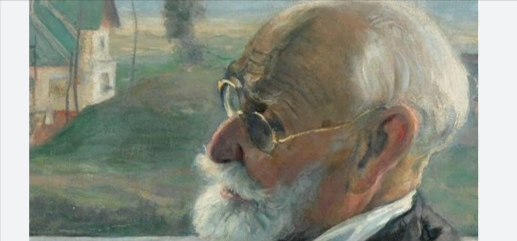
Ivan Pavlov (1849–1936) was a Russian physiologist who won the 1904 Nobel Prize for research on digestion and then spent more than thirty years studying what he called conditional reflexes. Classical conditioning is the process he mapped: a neutral signal, such as the beat of a metronome, is paired again and again with something that already triggers a reflex, such as food, until the signal alone produces the response.
His laboratory also recorded something trauma therapists see every week. Extinguished reflexes came back on their own, and a dog that had been made to swim to safety in a 1924 flood broke down again two months later when a thin stream of water ran under the door of its room. My argument follows from those records. A trauma trigger is a conditioned signal, and extinction, the process behind exposure therapy, does not erase it. Extinction lays down newer learning that has to compete with the old, so the work of therapy is making that newer learning strong enough, and portable enough, to win.
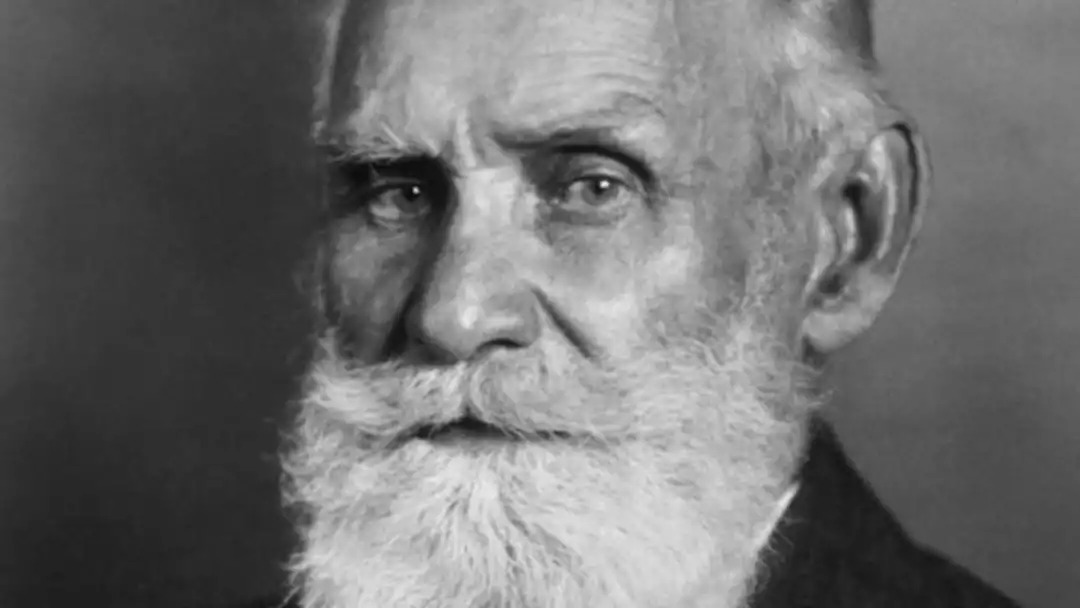
Who Ivan Pavlov was
Pavlov was born on 26 September 1849 (14 September by the Julian calendar Russia then used) in Ryazan, the eldest of ten children of an Orthodox priest. He left the local seminary without graduating, drawn to science by the critic Dmitry Pisarev and the physiologist Ivan Sechenov, and studied natural science at St. Petersburg University from 1870. He finished medical training in 1879, defended a doctoral thesis on the nerves of the heart in 1883, and trained from 1884 to 1886 with Carl Ludwig in Leipzig and Rudolf Heidenhain in Breslau. In 1891 he organized the physiology department of the Institute of Experimental Medicine in St. Petersburg, and in 1895 he took the chair of physiology at the Military Medical Academy.1
The Nobel citation honored “his work on the physiology of digestion.”1 That work depended on what he called chronic experiments: dogs fitted with fistulas and an isolated “miniature stomach” that kept its nerve supply, so secretions could be measured in a healthy animal for months.1, 2 The historian Daniel Todes calls the laboratory a “physiology factory,” staffed largely by physicians seeking quick doctorates and organized so that Pavlov could use co-workers as “extensions of his sensory reach.”3 He made no secret of his contempt for the Bolsheviks, protesting the persecutions that followed the 1934 murder of Sergei Kirov, while the Soviet state kept funding him. He died of pneumonia on 27 February 1936, at 86.1
How a source of error became the conditional reflex
Classical conditioning began as a nuisance. In The Work of the Digestive Glands (English edition, 1902), Pavlov warned that a hungry dog’s stomach would start secreting at “every little triviality,” including “the appearance of the attendant who ordinarily feeds the animal.” He called this psychic secretion, “a dangerous source of error” the lab had to “constantly fight.”2 By 1901 he and his assistant Ivan Tolochinov had turned the error into the object of study, and in 1903 Pavlov presented it in Madrid as “The Experimental Psychology and Psychopathology of Animals.”1
His Russian term is better rendered conditional reflex. Even the 1927 English edition explains that, unlike inborn reflexes, the new ones “actually do depend on very many conditions.” English settled on “conditioned” anyway.1, 4 Food is the unconditioned stimulus; a cue that comes to predict food becomes a conditioned stimulus, and salivation to the cue alone is the conditioned response. The same lectures describe extinction, spontaneous recovery, generalization, discrimination and secondary conditioning. The cues were metronomes, buzzers, whistles, tones, lights, shapes and touches to the skin. A bell does appear in reports from the laboratory, but it was one signal among many.4, 5
Pavlov’s own framing matters more than the vocabulary. He treated the cerebral hemispheres as a signaling apparatus: “it is not the sight and sound of the beast of prey which is in itself harmful to the smaller animal, but its teeth and claws.”4 Robert Rescorla made the modern version of the point in 1988. Conditioning is not a cue borrowing a reflex through mere pairing; it is the learning of relations among events, so the organism can represent its world.6 In those terms a trigger is a prediction, usually an old one.
Extinction is new learning, not erasure
The finding that matters most for therapy is in Lecture IV of Conditioned Reflexes. When Pavlov’s group sounded a metronome again and again without food, salivation faded. Then it came back. “Left to themselves,” he wrote, “extinguished conditioned reflexes spontaneously recover their full strength after a longer or shorter interval of time.” A fresh pairing with food sped the return. His conclusion: extinction “cannot be regarded as an irreparable destruction of the conditioned reflex” and “must be regarded as a special form of inhibition.”4
Later research has largely confirmed him. Mark Bouton’s review concludes that extinction “does not destroy the original learning, but instead generates new learning that is especially context-dependent.”7 So extinguished fear returns with the passage of time, after a fresh brush with threat, and in settings other than the one where it was extinguished. A 2013 review put it in one line: fear extinction is “relatively easy to ‘learn’ but difficult to ‘remember.'”8
Can the old learning be erased instead? In 2010 Daniela Schiller and colleagues reported that extinction delivered shortly after a fear memory was reactivated, inside the so-called reconsolidation window, kept fear from returning in the laboratory; in a follow-up about a year later, which reached 19 of the 65 original participants, the effect still held.9 Merel Kindt and Marieke Soeter, using several measures of fear, did not find the effect.10 A 2016 meta-analysis found a small-to-moderate added benefit in humans (g = 0.40).11 The idea is promising and unsettled. It does not support any therapy’s claim to delete a memory.
The 1924 flood: a trauma trigger recorded in a dog
On 23 September 1924 a flood hit the city. With waves breaking against the walls and trees falling, the dogs had to be made to swim in groups from their kennels to the laboratory building. Some came through with their conditioned reflexes intact. Others, those Pavlov classed as the inhibitable type, did not.4
One of them, a dog with ten well-established reflexes, was brought back to its stand a week later. It was restless, its reflexes had nearly vanished, and it turned its head away from food. When the experimenter stayed in the room while Pavlov ran the session from outside, the reflexes returned at once; when he left, the symptoms came back. Reintroducing the buzzer, its strongest old signal, made the reflexes collapse again; the dog refused food and stared at the door. Normal reflexes took forty-seven days of work to restore. Then, on 17 November, the team let a small stream of water trickle noiselessly under the door. The record reads: “The animal jumps up quickly, gazes restlessly at the floor, tries to get off the stand and breathes heavily.” Every conditioned reflex dropped to zero and the dog refused food. Months later the experimenter’s presence, or even his clothes placed out of sight, was enough to restore its reflexes. Pavlov concluded that “minutest components of the extraordinary stimulus” were “sufficient to evoke the same abnormal reaction,” and he called the flood’s effect “obviously analogous to traumatic neurosis in man.”4
That is a trauma trigger written up as physiology: a fragment of the original event sets off the whole reaction in an animal that had otherwise recovered, and a familiar person steadies it. In Jungian language the dog was in the grip of a complex, a charged cluster of feeling that one small cue switches on all at once. Pavlov’s group could also produce breakdowns without disaster. In Dr. Shenger-Krestovnikova’s experiment, a dog fed after a luminous circle but not after an ellipse had to tell them apart as the ellipse grew rounder; at a ratio of 9:8 its discrimination failed and “the whole behaviour of the animal underwent an abrupt change.” Pavlov treated these breakdowns as experimentally produced neuroses and tied vulnerability to temperament: an excitable type, an inhibitable type, and later four types modeled on the ancient temperaments.1, 4 Readers who know Gordon Allport’s trait psychology will recognize the question of why individuals differ, though Pavlov looked for the answer in the nervous system.
Modern research supports the general picture. Shmuel Lissek and Brian van Meurs note that of all anxiety disorders, PTSD “may be most clearly attributable to discrete, aversive learning events.”12 A meta-analysis of 44 conditioning studies found that people with anxiety disorders react more strongly than controls to safety cues while fear is learned, and hold on to fear longer during extinction.13 In a small brain-imaging study led by Mohammed Milad, 16 people with PTSD learned and extinguished conditioned fear on day one about as well as 15 trauma-exposed controls, but on day two they recalled the extinction less well.14 In that sample the trouble was less in learning safety than in remembering it. Body sensations can act as signals too: Bouton, Susan Mineka and David Barlow argue that panic disorder develops partly through anxiety conditioned to internal cues such as a racing heart.15
Conditioning is not the whole story. Fear can be acquired by watching someone else’s fear or by being told about danger, with no direct pairing.16 Lev Vygotsky raised a related objection in 1925: human beings carry historical and social experience, “a multitude of connections that were established in the experience of other people,” which no dog in a stand possesses.17
From the kennel to the clinic: Watson, Jones and Wolpe
Pavlov’s work reached the West largely through behaviorism.1 He credited Edward Thorndike‘s puzzle-box study Animal Intelligence (1898) as the starting point of systematic objective animal research, and admitted he had been “quite ignorant” of it when his own work began.4 Thorndike asked how consequences shape what an animal does. Pavlov asked how signals shape what a body does.
John B. Watson made the conditioned reflex central to his program in 1916.18 In 1920 he and Rosalie Rayner conditioned fear in an eleven-month-old they called Albert B., striking a steel bar behind his head as he reached for a white rat. After seven pairings the rat alone made him cry and crawl away, and the fear spread to a rabbit, a fur coat, cotton wool and a Santa Claus mask. Albert left the hospital before anyone tried to remove the fear; Watson and Rayner guessed it might “persist indefinitely.”19, 20 Our post on John B. Watson and behaviorism covers the case and its ethics.
Mary Cover Jones showed the reverse in 1924. Peter, aged two years and ten months, was afraid of rats, rabbits, fur and feathers. At first he simply played alongside fearless children while a rabbit was in the room. Then came a relapse: returning from a hospital stay for scarlet fever, Peter and his nurse were jumped at by a large dog, and his fear fell back to its early level. Jones then switched to what she called direct conditioning. Peter sat in a high chair eating food he liked while the experimenter brought a caged rabbit as close as she could without disrupting his eating. Over the months of the study he went from screaming at a rat to letting the rabbit nibble his fingers, and by the last interview his fear of cotton, a fur coat and feathers was gone.20
Joseph Wolpe (1915–1997), a South African psychiatrist who had treated soldiers for what was then called war neurosis, built the clinical method. He induced experimental neuroses in cats and reduced their fear by feeding them in the presence of the feared cues. For people he replaced eating with a shortened form of Edmund Jacobson’s muscle relaxation, paired it with a graded hierarchy of feared situations, and called the procedure systematic desensitization.21, 22, 23 When Psychotherapy by Reciprocal Inhibition appeared in 1958, psychoanalysts predicted symptom substitution. Paul Salkovskis notes that Wolpe’s view, that anxieties are best reduced by confronting them, has since passed into common sense.24 A meta-analysis of 33 randomized trials for specific phobia found exposure-based treatment outperformed no treatment, placebo and other active psychotherapies.25 For PTSD, a meta-analysis of 13 trials of prolonged exposure found a large effect against wait-list or placebo controls and no significant difference from other active treatments, including cognitive processing therapy and EMDR.26
Brave New World and the politics of conditioning
Conditioning entered the culture as a threat as much as a therapy. Chapter Two of Aldous Huxley’s Brave New World (1932) is set in the “Neo-Pavlovian Conditioning Rooms,” where eight-month-old Delta babies crawl toward roses and picture books and are met with an explosion, a siren, alarm bells and a mild electric shock. The Director promises “reflexes unalterably conditioned.” His reasons are economic. Primroses, he explains, are “gratuitous,” and “a love of nature keeps no factories busy,” so the lower castes are taught to hate flowers but love country sports requiring “elaborate apparatus,” so that “they consume manufactured articles as well as transport.”27
Read with a historical-materialist eye, Huxley saw what conditioning could be for in an industrial economy: reliable workers and reliable consumers, with desire installed below the level of argument. The Director is half wrong on the science, though. Pavlov’s records show conditioned reactions that are durable but not unalterable. Old learning persists under new learning, and which one shows up depends on time, context and stress.4, 7
What this looks like in therapy
Few people come to therapy saying they have a conditioned response. They say their chest tightens at a certain tone of voice, or that a smell in a parking garage ruins the afternoon. The first work is usually mapping those reactions as signals: what the cue is, what it once predicted, and what the body does before the thinking mind catches up. Seeing a reaction as learning rather than weakness tends to ease shame.
Discrimination comes first. In laboratory studies, people with anxiety disorders react more strongly than others to cues that signal safety, which may reflect fear spreading to things that merely resemble the danger.13 Part of therapy is practicing the difference between then and now: this voice sounds like his, and it is not his.
Contact with the cue is graded and varied. Wolpe’s hierarchy is still the basic shape. Michelle Craske and colleagues’ inhibitory-learning approach adds specifics: arrange contact so the feared outcome is clearly disconfirmed, vary cues and settings, drop the safety signals and behaviors that keep the old prediction alive, practice in more than one context, and put feelings into words.28 The goal is not calm in the therapist’s office. It is new learning that can be retrieved in the parking garage.
The return of fear is expected. Because extinction does not erase, a trigger that flares after months of quiet, after a move, an illness or a new threat, is predictable, not proof that therapy failed. Pavlov’s flooded dog relapsed at a reminder, Jones’s Peter after a fresh fright, and both recovered.4, 20 Saying so in advance helps people treat a flare as a cue to practice rather than a verdict.
Safety is relational. The most striking detail in the flood records is that the dog’s reflexes came back when a familiar person stayed in the room. Harry Harlow’s attachment research later made a related point: infant monkeys spent more and more time with a cloth surrogate rather than a wire one that gave milk, a result Harlow called “completely contrary” to the idea that the mother is merely conditioned to hunger reduction.29 Conditioning explains how a trigger forms. Relationship helps explain what makes new learning feel safe enough to happen.
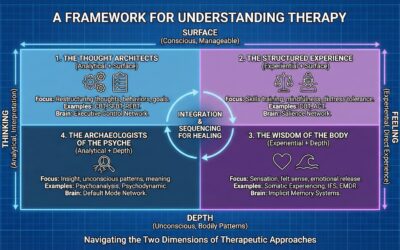
Not everything in trauma is conditioned fear. Shame, grief and dissociation follow other rules. Pierre Janet, whose L’automatisme psychologique appeared in 1889, described how traumatic memories may return as sensory perceptions, affect states and reenactments rather than as a story.30 The trauma approaches we use, including EMDR therapy and somatic therapy, rest on different theories, but each brings a person into contact with trauma-related cues while nothing bad happens, which is the basic condition for extinction learning. Whether that is the whole of how any of them works is still debated.
If a reaction keeps arriving ahead of your thoughts, it is worth understanding as learning, because learning can be added to. Taproot’s anxiety and trauma treatment works with triggers this way, at a pace set with you, in Hoover or by teletherapy in Alabama. If you want to talk about whether it fits, you can contact us.
References
- Wikipedia contributors. (2026). Ivan Pavlov. In Wikipedia, the free encyclopedia. Retrieved November 8, 2026, from https://en.wikipedia.org/wiki/Ivan_Pavlov
- Pavlov, I. P. (1902). The work of the digestive glands (W. H. Thompson, Trans.). Charles Griffin. https://archive.org/details/cu31924080030640
- Todes, D. P. (1997). Pavlov’s physiology factory. Isis, 88(2), 205–246. https://doi.org/10.1086/383690
- Pavlov, I. P. (1927). Conditioned reflexes: An investigation of the physiological activity of the cerebral cortex (G. V. Anrep, Trans.). Oxford University Press. https://psychclassics.yorku.ca/Pavlov/
- Thomas, R. K. (1997). Correcting some Pavloviana regarding “Pavlov’s bell” and Pavlov’s “mugging.” The American Journal of Psychology, 110(1), 115. https://doi.org/10.2307/1423704
- Rescorla, R. A. (1988). Pavlovian conditioning: It’s not what you think it is. American Psychologist, 43(3), 151–160. https://doi.org/10.1037/0003-066X.43.3.151
- Bouton, M. E. (2004). Context and behavioral processes in extinction. Learning & Memory, 11(5), 485–494. https://doi.org/10.1101/lm.78804
- Vervliet, B., Craske, M. G., & Hermans, D. (2013). Fear extinction and relapse: State of the art. Annual Review of Clinical Psychology, 9, 215–248. https://doi.org/10.1146/annurev-clinpsy-050212-185542
- Schiller, D., Monfils, M.-H., Raio, C. M., Johnson, D. C., LeDoux, J. E., & Phelps, E. A. (2010). Preventing the return of fear in humans using reconsolidation update mechanisms. Nature, 463(7277), 49–53. https://doi.org/10.1038/nature08637
- Kindt, M., & Soeter, M. (2013). Reconsolidation in a human fear conditioning study: A test of extinction as updating mechanism. Biological Psychology, 92(1), 43–50. https://doi.org/10.1016/j.biopsycho.2011.09.016
- Kredlow, M. A., Unger, L. D., & Otto, M. W. (2016). Harnessing reconsolidation to weaken fear and appetitive memories: A meta-analysis of post-retrieval extinction effects. Psychological Bulletin, 142(3), 314–336. https://doi.org/10.1037/bul0000034
- Lissek, S., & van Meurs, B. (2015). Learning models of PTSD: Theoretical accounts and psychobiological evidence. International Journal of Psychophysiology, 98(3), 594–605. https://doi.org/10.1016/j.ijpsycho.2014.11.006
- Duits, P., Cath, D. C., Lissek, S., Hox, J. J., Hamm, A. O., Engelhard, I. M., van den Hout, M. A., & Baas, J. M. (2015). Updated meta-analysis of classical fear conditioning in the anxiety disorders. Depression and Anxiety, 32(4), 239–253. https://doi.org/10.1002/da.22353
- Milad, M. R., Pitman, R. K., Ellis, C. B., Gold, A. L., Shin, L. M., Lasko, N. B., Zeidan, M. A., Handwerger, K., Orr, S. P., & Rauch, S. L. (2009). Neurobiological basis of failure to recall extinction memory in posttraumatic stress disorder. Biological Psychiatry, 66(12), 1075–1082. https://doi.org/10.1016/j.biopsych.2009.06.026
- Bouton, M. E., Mineka, S., & Barlow, D. H. (2001). A modern learning theory perspective on the etiology of panic disorder. Psychological Review, 108(1), 4–32. https://doi.org/10.1037/0033-295X.108.1.4
- Olsson, A., & Phelps, E. A. (2007). Social learning of fear. Nature Neuroscience, 10(9), 1095–1102. https://doi.org/10.1038/nn1968
- Vygotsky, L. S. (1999). Consciousness as a problem in the psychology of behavior (N. Veresov, Trans.). In N. Veresov, Undiscovered Vygotsky: Etudes on the pre-history of cultural-historical psychology (pp. 251–281). Peter Lang. (Original work published 1925) https://www.marxists.org/archive/vygotsky/works/1925/consciousness.htm
- Watson, J. B. (1916). The place of the conditioned-reflex in psychology. Psychological Review, 23(2), 89–116. https://doi.org/10.1037/h0070003
- Watson, J. B., & Rayner, R. (1920). Conditioned emotional reactions. Journal of Experimental Psychology, 3(1), 1–14. https://doi.org/10.1037/h0069608
- Jones, M. C. (1924). A laboratory study of fear: The case of Peter. The Pedagogical Seminary, 31(4), 308–315. https://doi.org/10.1080/08856559.1924.9944851
- Wolpe, J. (1952). Experimental neuroses as learned behaviour. British Journal of Psychology, 43(4), 243–268. https://doi.org/10.1111/j.2044-8295.1952.tb00347.x
- Wikipedia contributors. (2026). Joseph Wolpe. In Wikipedia, the free encyclopedia. Retrieved November 8, 2026, from https://en.wikipedia.org/wiki/Joseph_Wolpe
- Wolpe, J. (1958). Psychotherapy by reciprocal inhibition. Stanford University Press.
- Salkovskis, P. M. (1998). Changing the face of psychotherapy and common sense: Joseph Wolpe, 20 April 1915 – 4 December 1997. Behavioural and Cognitive Psychotherapy, 26(2), 189–191. https://doi.org/10.1017/S1352465898000216
- Wolitzky-Taylor, K. B., Horowitz, J. D., Powers, M. B., & Telch, M. J. (2008). Psychological approaches in the treatment of specific phobias: A meta-analysis. Clinical Psychology Review, 28(6), 1021–1037. https://doi.org/10.1016/j.cpr.2008.02.007
- Powers, M. B., Halpern, J. M., Ferenschak, M. P., Gillihan, S. J., & Foa, E. B. (2010). A meta-analytic review of prolonged exposure for posttraumatic stress disorder. Clinical Psychology Review, 30(6), 635–641. https://doi.org/10.1016/j.cpr.2010.04.007
- Huxley, A. (1932). Brave new world. Chatto & Windus.
- Craske, M. G., Treanor, M., Conway, C. C., Zbozinek, T., & Vervliet, B. (2014). Maximizing exposure therapy: An inhibitory learning approach. Behaviour Research and Therapy, 58, 10–23. https://doi.org/10.1016/j.brat.2014.04.006
- Harlow, H. F. (1958). The nature of love. American Psychologist, 13(12), 673–685. https://doi.org/10.1037/h0047884
- van der Kolk, B. A., & van der Hart, O. (1989). Pierre Janet and the breakdown of adaptation in psychological trauma. American Journal of Psychiatry, 146(12), 1530–1540. https://doi.org/10.1176/ajp.146.12.1530
















0 Comments