
Gordon Allport’s trait theory holds that personality is made of traits: real, lasting dispositions inside a person that make many different situations feel alike and steer behavior in consistent ways. He sorted them into cardinal traits (a single ruling passion, which few people have), central traits (the handful that capture a person) and secondary traits (narrow preferences that show up only in certain settings).
That three-tier list is what textbooks remember, and it is the least interesting part of his work. Allport (1897–1967) helped build the vocabulary of trait psychology and then spent decades warning that traits averaged across a population describe nobody in particular. His real claim was that each person’s traits form a pattern found in no one else, so psychology has to study the individual as well as the group. That idiographic insistence, together with his argument that adult motives can come loose from their childhood origins, makes him an unlikely bridge between trait science and depth psychology’s interest in what a life means to the person living it. It also makes him a useful critic of depth psychology, which can be quick to look past what people say about themselves.
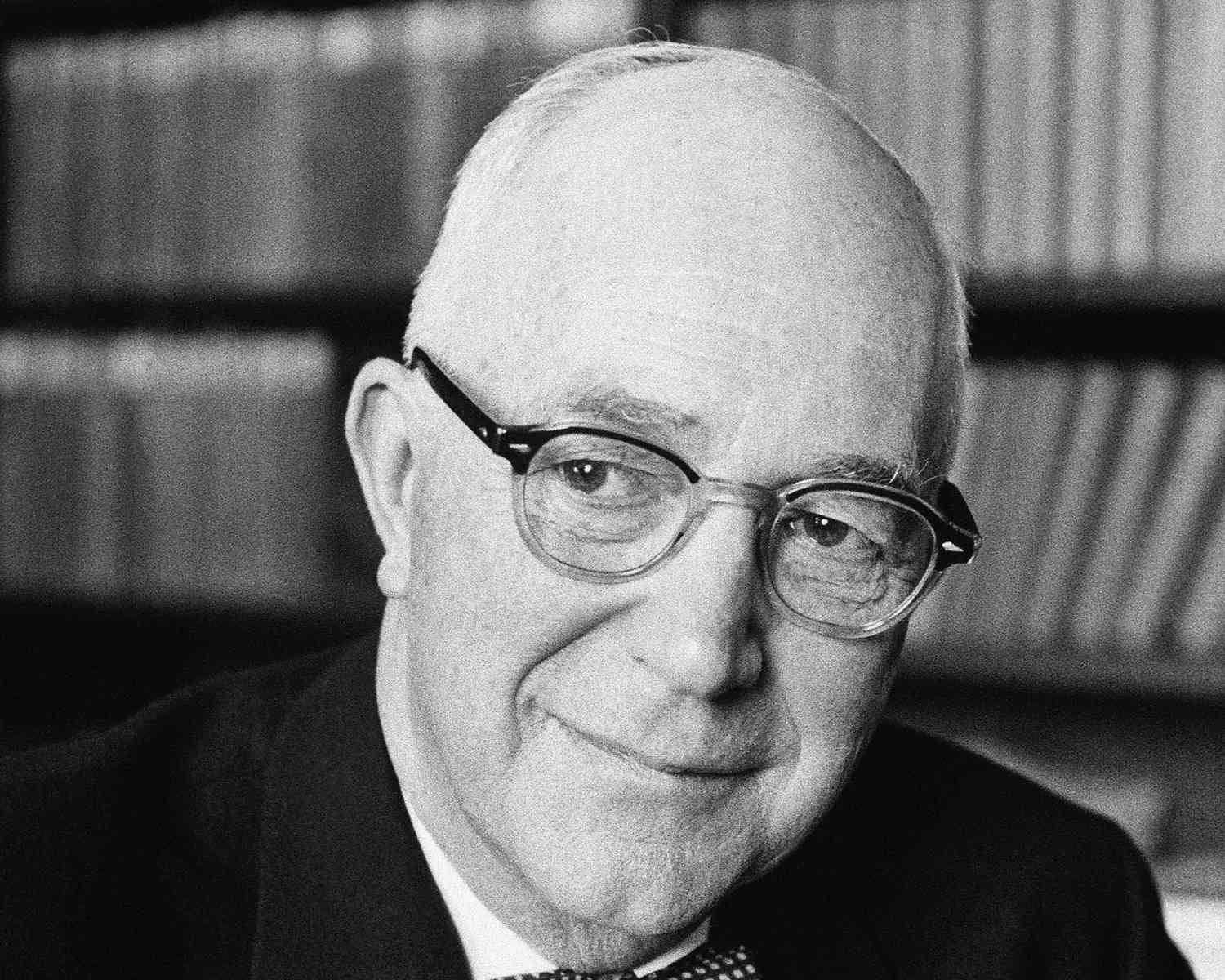
Who Gordon Allport was
Gordon W. Allport was born on November 11, 1897, in Montezuma, Indiana, the youngest of four sons of a physician. He took his bachelor’s degree at Harvard in 1919, taught English for a year at Robert College in Constantinople, and returned to Harvard for a PhD, finished in 1922. Two years of study in Germany and England followed. One of his mentors there was William Stern, whose person-centered psychology Allport saw as a step toward his own focus on the individual.1 His first paper, written with his older brother Floyd, later a major figure in social psychology, proposed ways to classify and measure personality traits.2
Apart from four years at Dartmouth (1926–1930), he spent his career at Harvard. He helped establish Harvard’s first separate Department of Psychology in the mid-1930s, when psychology split off from philosophy, and was one of the architects of the interdisciplinary Department of Social Relations, created in 1946. He received the American Psychological Foundation’s Gold Medal in 1963, became the first Richard Clarke Cabot Professor of Social Ethics in 1966, and retired in the summer of 1967.3 He died in Cambridge, Massachusetts, on October 9 of that year.1 He had been president of the American Psychological Association in 1939,4 and a 2002 ranking of the century’s most eminent psychologists placed him eleventh.5
The historian Ian Nicholson counts him among the leading figures who, between 1921 and 1937, made “personality” a research category in American psychology, a project that wore away the older moral language of “character” even as Allport resisted the erosion.6 Allport’s own formula was compact: “Character is personality evaluated, and personality is character devaluated” (p. 52).7
Allport’s trait theory: cardinal, central and secondary traits
The book that defined the field was Personality: A Psychological Interpretation (1937). Allport surveyed roughly fifty existing definitions of personality and settled on “the dynamic organization within the individual of those psychophysical systems” that shape a person’s unique adjustments to the environment. The key words are organization, a pattern rather than a list, and within the individual: traits are real structures, not labels an observer pins on from outside. A trait, in his phrase, is “a generalized and focalized neuropsychic system” that makes many situations functionally alike for that person and so produces consistent behavior.7
The three levels follow from this. A cardinal trait is so dominant that almost everything a person does can be traced to it, as in a life organized entirely around ambition or around a grievance. Central traits are the handful of qualities you would put in a good letter of recommendation. Secondary traits are narrow and situational, like irritability that appears only when hungry. These examples are illustrations, not a fixed list. The levels describe how a quality is organized in one person, not a ranking of traits in general, so honesty could be cardinal in one person and secondary in another.
Allport also supplied the raw material for the trait science that followed. In 1936 he and Henry Odbert combed Webster’s New International Dictionary and pulled out 17,953 words that distinguish one person’s behavior from another’s, 4,504 of which named stable traits.8 Raymond Cattell later reduced that list to factors, and the same lexical tradition produced the Big Five.9 The irony is that the Big Five scores everyone on the same five dimensions, exactly the kind of psychology Allport resisted. He handed the field its dictionary and then argued that no dictionary can describe a single life.
The idiographic argument: why averages miss the person
The distinction Allport made famous comes from the German philosopher Wilhelm Windelband. Nomothetic knowledge seeks general laws; idiographic knowledge seeks to understand a particular case. Allport is usually credited with bringing the terms into American psychology in 1937, but Hugo Münsterberg used them in 1898, and Stern had already absorbed them.10 In his 1939 presidential address, Allport reported a survey of fourteen leading journals showing that interest in the single case had fallen sharply. He asked why psychology could not also be idiographic, among other unfashionable things, noting that great insights of Aristotle, Locke, Fechner, James and Freud had stemmed from such presuppositions.4
His one sustained case study was Letters from Jenny. “Jenny” was the mother of Allport’s college roommate, and she wrote Allport a long series of letters. He published them in a journal in 1946 and as a book in 1965, setting out several competing theories that might explain her difficult personality.11, 12, 13 Critics note that he championed case studies and published essentially one. Nicole Barenbaum’s archival work found an unfinished second case and suggests that his wife, Ada, a clinical psychologist, was an important collaborator.14 The single-case method itself is older. Our post on Théodore Flournoy, whose From India to the Planet Mars (1900) was built around one medium, shows what it looked like a generation earlier.
The argument outlived him. Walter Mischel’s Personality and Assessment (1968) challenged trait psychology by arguing that behavior is far less consistent across situations than trait theories assumed.15 Experience-sampling studies by William Fleeson found both sides partly right: over two to three weeks of daily life, the typical person showed nearly every level of every Big Five trait, yet differences between people in their average levels were almost perfectly stable.16 A trait, on this view, is a distribution of states. Peter Molenaar then showed that patterns found across a group describe the processes inside each member only under strict conditions that real psychological processes rarely meet.17 When Aaron Fisher and colleagues tested this in six repeated-measures datasets, variance within individuals was two to four times larger than within groups.18 That is Allport’s complaint in modern form: a correlation across a thousand people may say little about any one of them.
Freud, the clean little boy, and functional autonomy
In 1920, after his year in Constantinople, the 22-year-old Allport visited Sigmund Freud in Vienna. He opened with an anecdote about a small boy he had noticed on the way over, who seemed terrified of dirt and whose mother struck Allport as fastidious and domineering. Freud’s response, as Allport told it nearly half a century later, was to ask whether that little boy was Allport himself. The lesson Allport drew: depth psychology can dig too deep, and a psychologist should give a person’s conscious, stated motives their full weight before looking for hidden ones.12, 19
The episode cuts both ways. A depth psychologist might answer that a nervous visitor who chooses to tell Freud a story about cleanliness is telling him something. David Winter suggests that Allport’s need to set himself apart from his roommate Ross, Jenny’s son, helped shape functional autonomy and his sharp line between normal and abnormal personality.11 Theorists’ biographies leak into their theories, as our post on how Freud’s and Jung’s parents shaped their psychology argues about the founders of psychoanalysis.
Functional autonomy, set out in a 1937 paper, holds that adult motives are “self-sustaining, contemporary systems, growing out of antecedent systems, but functionally independent of them” (p. 143). The conclusion is plain: “Whatever bond remains, is historical, not functional.” Allport called the theory “obviously opposed to psychoanalysis” (p. 143) and summed it up in four words: “whatever drives, drives now” (p. 155). His examples were ordinary: the ex-sailor who still craves the sea after becoming a wealthy banker, the miser whose hoarding grows after the necessity that taught him thrift is gone. He credited William James, whose idea that instincts are transformed into habits was, Allport wrote, “the logic of functional autonomy” (p. 144). Against stimulus-response psychology, the line that runs from Edward Thorndike through the behaviorists, he said the principle “dethrones the stimulus” (p. 155).20
He applied the idea to neurosis. Tics, phobias and anxiety are stubborn, he argued, because symptoms “have set themselves up in their own right as independent systems of motivation. Merely disclosing their roots does not change their independent activity” (p. 150).20 In Becoming (1955) he introduced the term “proprium” for the core functions of the self.1, 21
The Nature of Prejudice and the contact hypothesis
Allport’s best-known book grew out of a Harvard course on prejudice and intergroup conflict that he taught from 1944 into the mid-1950s.22 The Nature of Prejudice (1954) gives a definition still quoted in the research literature: “Ethnic prejudice is an antipathy based upon a faulty and inflexible generalization. It may be felt or expressed. It may be directed toward a group as a whole, or toward an individual because he is a member of that group” (p. 9). Its most important move was to treat prejudgment as ordinary cognition rather than a defect of bad people. “The human mind must think with the aid of categories,” he wrote, and categories are “the basis for normal prejudgment” (p. 20).23 Prejudice, on this account, is a category that has stopped updating in the face of the individual in front of you. It is the social version of the error Allport accused his own discipline of making: seeing the class and missing the person.
The book’s practical claim is the contact hypothesis: contact between groups reduces prejudice when they meet with equal status, pursue common goals, cooperate, and have the backing of authorities, law or custom.23 His former student Thomas Pettigrew, with Linda Tropp, tested it meta-analytically across 713 samples from 515 studies. Contact typically reduced prejudice, more so under Allport’s conditions, but the conditions worked as a bundle and were not strictly necessary.24 A stricter review by Elizabeth Levy Paluck and colleagues kept only the 27 studies with random assignment and delayed outcomes. The overall conclusion held, but effects on racial and ethnic prejudice were substantially weaker, and no such study addressed adults’ racial or ethnic prejudice.25 The evidence supports its general idea well and its strongest policy uses less well.
Religion: mature faith, intrinsic and extrinsic
In The Individual and His Religion (1950) Allport contrasted mature religious sentiment, dynamic, open-minded and able to hold inconsistencies together, with immature religion, which is self-serving.26 The better-known terms intrinsic and extrinsic came later and were formalized in the 1967 Religious Orientation Scale, built with J. Michael Ross, along with a line that stuck: “the extrinsically motivated person uses his religion, whereas the intrinsically motivated lives his religion” (p. 434). The paper confirmed three findings from earlier research: churchgoers were on average more prejudiced than non-attenders, the relationship was curvilinear, and extrinsically oriented people were more prejudiced than intrinsically oriented ones. It added a fourth: people who endorsed every pro-religious statement indiscriminately were the most prejudiced of all.27
By 1985 nearly 70 published studies had used the scale. Michael Donahue’s meta-analytic review found that extrinsic religiousness tended to correlate with negatively evaluated traits, while intrinsic religiousness was largely unrelated to them.28 Lee Kirkpatrick and Ralph Hood asked in 1990 whether the framework had been a boon or a bane for the psychology of religion.29 A 2010 meta-analysis of U.S. studies since the Civil Rights Act found that strong religious in-group identity went with derogation of racial out-groups and that only religious agnostics were racially tolerant.30 Allport’s hope that lived religion protects against prejudice is not well supported. His durable point was methodological: two people can belong to the same church and be doing different things with it.
What Allport’s ideas look like in therapy
Allport was a research psychologist, not a therapist, and none of his concepts is a treatment. But several of his arguments describe what good therapy already does.
Start with what the person says. Allport’s lesson from Freud is a fair rule for a first session. Depth work, including the Jungian depth therapy we practice, earns its interpretations by taking the manifest story seriously first. Unconscious material arrives in time, and lands better when the client has not been told in the first hour that she does not know her own reasons.
Separate where a pattern came from and what keeps it going. A defense that began as protection in childhood, such as staying small, staying vigilant or pleasing everyone, may now run on habit, identity and the relationships built around it. Allport’s line that “merely disclosing their roots does not change their independent activity” names something clients often discover: insight into origins can bring relief without bringing change. The work is to address both the history and the present-day machinery that keeps a symptom alive.
Measure the individual against herself. David Barlow and Matthew Nock have argued for more single-case designs that follow one person intensively over time,31 and Aidan Wright and William Woods describe personalized models that map how symptoms, situations and moods interact within one life.32 In practice this means tracking a client’s own sleep, panic or dissociation over weeks rather than comparing her to a norm, and treating a trait label as a distribution. “I’m an anxious person” becomes “I’m anxious more often in these situations.” Typologies such as the neurotic styles Karen Horney described are useful maps as long as they do not replace the territory.
Notice categories that have stopped updating. Allport’s normal prejudgment applies to clinicians too. Diagnoses, theoretical orientations and assumptions about faith, race, class or the South are categories that help until they keep a therapist from seeing the person in the room. Harry Stack Sullivan’s interpersonal psychiatry, developed in the same decades, is a reminder that what a clinician sees is shaped by the relationship in which he sees it.
Ask what a person’s faith is doing for them. The intrinsic and extrinsic distinction is a blunt research tool but a good clinical question. Belief that steadies a life in grief and makes room for doubt differs from belief used for belonging, status or self-justification. Existential therapy takes up questions of meaning this way, without reducing religion to neurosis or assuming all belief is healthy.
If you are in the Birmingham area and want therapy that takes your own account seriously while still looking underneath it, you can read more about depth-oriented therapy at Taproot or contact us to ask whether it is a good fit.
References
- Delahanty, E. J. (2013). Gordon Allport. In Research starters: History. EBSCO. https://www.ebsco.com/research-starters/history/gordon-allport
- Allport, F. H., & Allport, G. W. (1921). Personality traits: Their classification and measurement. The Journal of Abnormal Psychology and Social Psychology, 16(1), 6–40. https://doi.org/10.1037/h0069790
- The Harvard Crimson. (1967, August 4). Gordon W. Allport, psychologist, Soc Rel Dept. architect, retires. The Harvard Crimson. https://www.thecrimson.com/article/1967/8/4/gordon-w-allport-psychologist-soc-rel/
- Allport, G. W. (1940). The psychologist’s frame of reference. Psychological Bulletin, 37(1), 1–28. https://doi.org/10.1037/h0060064
- Haggbloom, S. J., Warnick, R., Warnick, J. E., Jones, V. K., Yarbrough, G. L., Russell, T. M., Borecky, C. M., McGahhey, R., Powell, J. L., III, Beavers, J., & Monte, E. (2002). The 100 most eminent psychologists of the 20th century. Review of General Psychology, 6(2), 139–152. https://doi.org/10.1037/1089-2680.6.2.139
- Nicholson, I. A. M. (1998). Gordon Allport, character, and the “culture of personality,” 1897–1937. History of Psychology, 1(1), 52–68. https://doi.org/10.1037/1093-4510.1.1.52
- Allport, G. W. (1937). Personality: A psychological interpretation. Henry Holt.
- Allport, G. W., & Odbert, H. S. (1936). Trait-names: A psycho-lexical study. Psychological Monographs, 47(1), i–171. https://doi.org/10.1037/h0093360
- John, O. P., Angleitner, A., & Ostendorf, F. (1988). The lexical approach to personality: A historical review of trait taxonomic research. European Journal of Personality, 2(3), 171–203. https://doi.org/10.1002/per.2410020302
- Hurlburt, R. T., & Knapp, T. J. (2006). Münsterberg in 1898, not Allport in 1937, introduced the terms “idiographic” and “nomothetic” to American psychology. Theory & Psychology, 16(2), 287–293. https://doi.org/10.1177/0959354306062541
- Winter, D. G. (1997). Allport’s life and Allport’s psychology. Journal of Personality, 65(3), 723–731. https://doi.org/10.1111/j.1467-6494.1997.tb00332.x
- Elms, A. C. (1994). Allport meets Freud and the clean little boy. In Uncovering lives: The uneasy alliance of biography and psychology (pp. 71–84). Oxford University Press. https://doi.org/10.1093/oso/9780195082876.003.0005
- Allport, G. W. (Ed.). (1965). Letters from Jenny. Harcourt, Brace & World.
- Barenbaum, N. B. (1997). The case(s) of Gordon Allport. Journal of Personality, 65(3), 743–755. https://doi.org/10.1111/j.1467-6494.1997.tb00334.x
- Mischel, W. (1968). Personality and assessment. Wiley.
- Fleeson, W. (2001). Toward a structure- and process-integrated view of personality: Traits as density distributions of states. Journal of Personality and Social Psychology, 80(6), 1011–1027. https://doi.org/10.1037/0022-3514.80.6.1011
- Molenaar, P. C. M. (2004). A manifesto on psychology as idiographic science: Bringing the person back into scientific psychology, this time forever. Measurement: Interdisciplinary Research and Perspectives, 2(4), 201–218. https://doi.org/10.1207/s15366359mea0204_1
- Fisher, A. J., Medaglia, J. D., & Jeronimus, B. F. (2018). Lack of group-to-individual generalizability is a threat to human subjects research. Proceedings of the National Academy of Sciences, 115(27), E6106–E6115. https://doi.org/10.1073/pnas.1711978115
- Allport, G. W. (1967). Gordon W. Allport. In E. G. Boring & G. Lindzey (Eds.), A history of psychology in autobiography (Vol. 5, pp. 1–25). Appleton-Century-Crofts. https://doi.org/10.1037/11579-001
- Allport, G. W. (1937). The functional autonomy of motives. The American Journal of Psychology, 50(1/4), 141–156. https://doi.org/10.2307/1416626
- Allport, G. W. (1955). Becoming: Basic considerations for a psychology of personality. Yale University Press.
- Cherry, F. (2000). The nature of The Nature of Prejudice. Journal of the History of the Behavioral Sciences, 36(4), 489–498. https://doi.org/10.1002/1520-6696(200023)36:4<489::AID-JHBS13>3.0.CO;2-N
- Allport, G. W. (1954). The nature of prejudice. Addison-Wesley.
- Pettigrew, T. F., & Tropp, L. R. (2006). A meta-analytic test of intergroup contact theory. Journal of Personality and Social Psychology, 90(5), 751–783. https://doi.org/10.1037/0022-3514.90.5.751
- Paluck, E. L., Green, S. A., & Green, D. P. (2019). The contact hypothesis re-evaluated. Behavioural Public Policy, 3(2), 129–158. https://doi.org/10.1017/bpp.2018.25
- Allport, G. W. (1950). The individual and his religion: A psychological interpretation. Macmillan.
- Allport, G. W., & Ross, J. M. (1967). Personal religious orientation and prejudice. Journal of Personality and Social Psychology, 5(4), 432–443. https://doi.org/10.1037/h0021212
- Donahue, M. J. (1985). Intrinsic and extrinsic religiousness: Review and meta-analysis. Journal of Personality and Social Psychology, 48(2), 400–419. https://doi.org/10.1037/0022-3514.48.2.400
- Kirkpatrick, L. A., & Hood, R. W., Jr. (1990). Intrinsic-extrinsic religious orientation: The boon or bane of contemporary psychology of religion? Journal for the Scientific Study of Religion, 29(4), 442–462. https://doi.org/10.2307/1387311
- Hall, D. L., Matz, D. C., & Wood, W. (2010). Why don’t we practice what we preach? A meta-analytic review of religious racism. Personality and Social Psychology Review, 14(1), 126–139. https://doi.org/10.1177/1088868309352179
- Barlow, D. H., & Nock, M. K. (2009). Why can’t we be more idiographic in our research? Perspectives on Psychological Science, 4(1), 19–21. https://doi.org/10.1111/j.1745-6924.2009.01088.x
- Wright, A. G. C., & Woods, W. C. (2020). Personalized models of psychopathology. Annual Review of Clinical Psychology, 16, 49–74. https://doi.org/10.1146/annurev-clinpsy-102419-125032

















0 Comments