
Karen Horney: The Tyranny of the Should and the Search for Glory
By The Clinical Team at GetTherapyBirmingham.com
The Architecture of Anxiety
At the time of this writing, my daughter is two years old. In public, she often oscillates between two distinct modes of being. One moment, she gets a glimmer in her eye, giggles, and runs toward oncoming traffic, drunk on her newfound power and convinced of her invincibility. The next moment, terrified by a stranger or a loud noise, she is wrapping herself around my wife’s leg, pressing her cheek into her calf, refusing to speak.
This oscillation—between the god-like delusion of total independence and the terrified infant craving total merger—is not just the behavior of a toddler. According to Karen Horney, the groundbreaking Neo-Freudian psychoanalyst, this dynamic is the fundamental engine of the human personality.
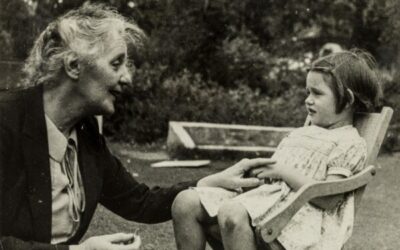
Horney (1885–1952) challenged the patriarchal and biological determinism of Freud. She argued that neurosis was not just about repressed sexual instincts, but about Basic Anxiety: the feeling of being small, insignificant, and endangered in a world that is out to abuse, cheat, attack, humiliate, and betray. To survive this anxiety, we build elaborate defense mechanisms—masks that harden into personality styles.
For the modern clinician and the seeker alike, Horney offers a map of the “False Self” that is unparalleled in its clarity. Whether you are struggling with codependency, narcissism, or isolation, Horney’s triad of “Moving Towards,” “Moving Against,” and “Moving Away” explains not just what you do, but why you do it.
The Roots of Neurosis: The First Trauma
The Separation from the Mother
The first traumatic event in a human life is the psychological separation from the mother. Harry Harlow’s famous rhesus monkey experiments in the 1950s proved that contact comfort is as vital as food. When we are born, we do not know where we end and our mother begins. We are in a state of symbiotic union.
As the child grows, they must “individuate.” They must realize they are a separate entity. This is terrifying. It is an existential crisis. If the environment is warm, consistent, and respectful, the child develops “Basic Confidence.” But if the environment is hostile, indifferent, or erratic, the child develops Basic Anxiety.
The Origin of the Coping Styles
To deal with this feeling of being “isolated and helpless in a potentially hostile world,” the child adopts a strategy. Horney observed that children (and eventually adults) react to this anxiety in three distinct ways:
- Compliance: “If I make you love me, you will not hurt me.” (Moving Towards)
- Aggression: “If I have power, you cannot hurt me.” (Moving Against)
- Withdrawal: “If I withdraw, nothing can hurt me.” (Moving Away)
In a healthy person, these are fluid states. We can be compliant with a boss, aggressive in a sport, and withdrawn when reading a book. In the neurotic personality, these become rigid compulsions. The person must act this way, regardless of the context, or they risk psychological collapse.
Trend 1: Moving Towards People (The Compliant Type)
“If I am Good, I am Safe”
The “Moving Towards” personality manages anxiety by clinging. In modern trauma language, this is often associated with the Fawn Response. This individual has unconsciously decided that the only way to survive is to become completely self-effacing and pleasing to others.
This is the archetype of the “Saint” or the eternal helper. They are often diagnosed with Codependency in modern therapy. Their sense of self is entirely reflective; they only know they exist if someone else is approving of them.
The Bargain of Compliance
This is not genuine love; it is a neurotic bargain. The logic runs: “I will give you everything, I will have no boundaries, and I will never get angry. In return, you must protect me and never leave me.” When this bargain is broken (as it inevitably is), the compliant type falls into despair.
Clinical Features:
- Inability to say “No”: Boundaries feel like violence.
- Repression of Aggression: They cannot access anger, which leads to Panic Attacks and somatic symptoms.
- The “Should” of Goodness: “I should always be sweet, I should never be selfish.”
In therapy, treating this type involves helping them reclaim their “aggressive” energy—the ability to stand up, speak out, and risk being disliked. We must teach them that Attachment does not require the erasure of the Self.
Trend 2: Moving Against People (The Aggressive Type)
“If I am Powerful, I am Safe”
If the compliant type seeks safety in love, the aggressive type seeks safety in mastery. These individuals often grew up in environments where softness was punished or where the only way to get needs met was to fight for them. They view the world as a Darwinian struggle: eat or be eaten.
This personality type is often correlated with Narcissism, but Horney views them with deep empathy. Their grandiosity is not a sign of self-love, but a desperate fortress built to hide a terrified, vulnerable child.
The Search for Glory
Horney coined the term “The Search for Glory” to describe this drive. The aggressive type must always be the smartest, the strongest, or the most successful. They cannot tolerate weakness in themselves or others. Sadness is viewed as a defect.
Clinical Features:
- Externalization: They blame others for failures to avoid feeling their own shame.
- Need for Control: Vulnerability is equated with death.
- Transactional Relationships: “What can you do for me?” becomes the primary metric of friendship.
Treating this type requires a therapist who can withstand their initial hostility and help them grieve. They must learn that they are lovable not for their victories, but for their humanity. This requires accessing the Shadow Self—the weak, needy parts they have spent a lifetime trying to kill.
Trend 3: Moving Away From People (The Detached Type)
“If I am Invisible, I am Safe”
The third solution is resignation. Having failed to get needs met through compliance or aggression, the child gives up. They withdraw into an “Ivory Tower” of the mind. This is the “Moving Away” pattern, often seen in those with Avoidant or Schizoid personality traits.
These individuals prize Freedom above all else. However, it is a negative freedom—it is “freedom from” rather than “freedom to.” They avoid commitments, emotional intimacy, and strong obligations. They often have rich inner lives, becoming artists or intellectuals, because the inner world is the only safe place.
The Onlooker
The detached person feels like an observer of life rather than a participant. They may look at their own life with the same objective interest they would have for a painting. Emotional numbness is a common defense mechanism.
Clinical Features:
- Hypersensitivity to Coercion: Any expectation (even a birthday party invitation) feels like a collar tightening around their neck.
- Emotional Flattening: They dampen their joy so they don’t have to feel their pain.
- Self-Sufficiency: They pride themselves on needing nothing from anyone.
Therapy with the detached type is a slow process of building trust. The therapist must respect their need for distance while gently inviting them back into the world of human connection. We work to show them that independence is not the same as isolation.

The Tyranny of the Shoulds and the Idealized Self
Perhaps Horney’s most enduring contribution to psychology is the concept of the “Idealized Self-Image.”
To compensate for Basic Anxiety, the neurotic creates a perfect, imaginary version of themselves.
- The Compliant type imagines they are a Saint.
- The Aggressive type imagines they are a Master.
- The Detached type imagines they are a Sage.
The tragedy is that the real person can never live up to this ideal. This creates the “Tyranny of the Should.” The person is constantly whipping themselves with internal demands: “I should have known better,” “I should not feel sad,” “I should be working harder.”
In Cognitive Behavioral Therapy (CBT), we call this “perfectionism,” but Horney sees it as a form of self-hatred. The goal of therapy is to help the client smash the Idealized Image and accept the Real Self—flawed, limited, and human.
The Writer’s Room: Horney for Character Development
For screenwriters and novelists, Karen Horney is a secret weapon. A character is defined not by their plot, but by their neurosis. Great characters are usually stuck in one of Horney’s trends, and the “Arc” of the story is their attempt to break free.
Character Archetypes based on Horney:
- The Tragic Hero (Moving Against): Think of Walter White or Tony Soprano. They are driven by a need for mastery and control. Their flaw is their inability to accept vulnerability. Their arc usually ends when they are forced to confront the limits of their power.
- The Martyr (Moving Towards): Think of the classic “self-sacrificing mother” trope or a sidekick who has no identity without the hero. The tension in their story comes from the resentment building beneath their “nice” exterior.
- The Lone Wolf (Moving Away): Think of Sherlock Holmes or House, M.D. They are brilliant but emotionally crippled. The dramatic question is always: Will they let someone in before it’s too late?
When writing dialogue, ask: What is this character’s “Should”? What are they terrified of?
- The Compliant character fears conflict.
- The Aggressive character fears humiliation.
- The Detached character fears intrusion.
Timeline of Karen Horney’s Life and Legacy
- 1885: Born near Hamburg, Germany. Her father was a strict authoritarian sea captain (likely influencing her views on the “Aggressive” type).
- 1906: Enters medical school, one of the first women in Germany to do so.
- 1915: Studies with Karl Abraham, a close associate of Freud.
- 1923: Begins her own psychoanalysis, struggling with depression and her brother’s death.
- 1932: Emigrates to the United States to escape the rise of Nazism, landing in Chicago.
- 1937: Publishes The Neurotic Personality of Our Time, introducing culture (not just biology) as a cause of neurosis.
- 1941: Expelled from the New York Psychoanalytic Institute for her anti-Freudian views; founds the American Institute for Psychoanalysis.
- 1945: Publishes Our Inner Conflicts, detailing the three personality types.
- 1950: Publishes her magnum opus, Neurosis and Human Growth.
- 1952: Dies in New York City.
Annotated Bibliography
- Horney, K. (1937). The Neurotic Personality of Our Time. W.W. Norton & Company.
The book that broke from Freud, arguing that neurosis is driven by cultural pressure and basic anxiety rather than sexual instinct. - Horney, K. (1945). Our Inner Conflicts. W.W. Norton & Company.
The definitive guide to the three trends: Moving Towards, Against, and Away. Essential reading for understanding defense mechanisms. - Horney, K. (1950). Neurosis and Human Growth. W.W. Norton & Company.
Her final and most complex work, detailing the “Pride System,” the “Search for Glory,” and the “Tyranny of the Should.” - Paris, B. J. (1994). Karen Horney: A Psychoanalyst’s Search for Self-Understanding. Yale University Press.
A biography that explores how Horney’s own life struggles influenced her theories. - Bowlby, J. (1969). Attachment and Loss. Basic Books.
While not by Horney, this foundational text on Attachment Theory provides the scientific backing for her earlier observations on mother-infant separation.
Conclusion: The Path to Realization
Karen Horney teaches us that we are not condemned by our instincts. We are shaped by our relationships, and thus, we can be healed by them. The goal of therapy is not to create a “perfect” person—that is just another Search for Glory. The goal is Self-Realization.
Self-Realization is the ability to be spontaneous, to feel one’s feelings without judgment, and to take responsibility for one’s life. It is the ability to stop “Moving” compulsively towards, against, or away from people, and instead, simply move with them.
Do you recognize yourself in the Compliant, Aggressive, or Detached styles? Are you tired of living under the “Tyranny of the Should”? Contact GetTherapyBirmingham.com to schedule a consultation with a therapist who can help you uncover your Real Self.




















0 Comments