
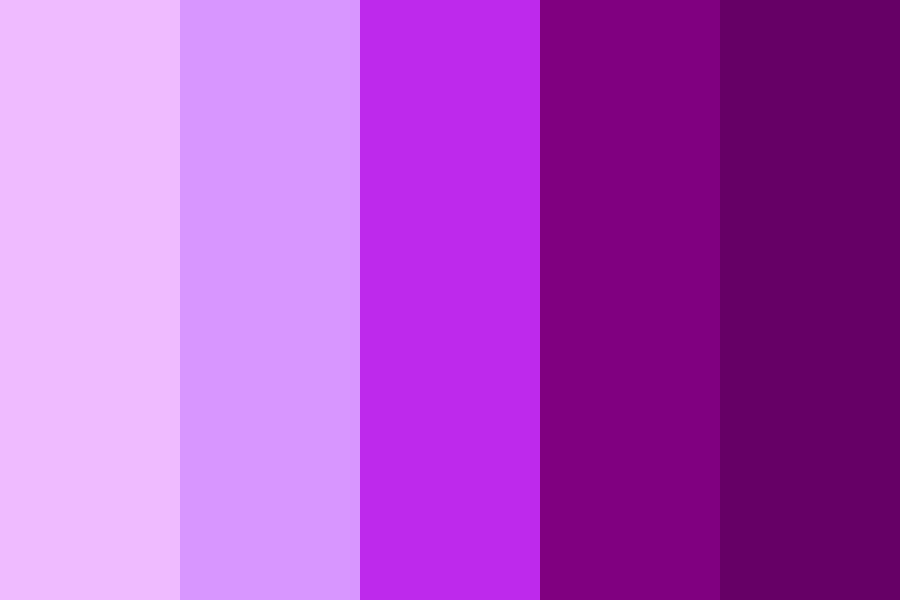
What Does the Color Violet Mean in a Dream?
Violet, a color that sits at the edge of the visible spectrum, has long been associated with spirituality, creativity, and altered states of consciousness. From its effects on neurobiology and photoreception to its rich symbolic significance across cultures and religions, violet invites us to explore the frontiers of human perception and experience. In this article, we’ll delve into the science and symbolism of violet, examining how this enigmatic hue relates to Jungian psychology, dreams, and personal transformation.
When violet appears in dreams, it often signifies a convergence of the mystical and the psychological, representing a bridge between the known and the unknown. This color merges the stabilizing depth of blue with the fiery energy of red, creating a symbolic space for spiritual insight, transformation, and deep introspection. Violet frequently suggests a calling toward higher consciousness, intuition, or the integration of opposites within the psyche.
From a Jungian perspective, violet may represent the individuation process, where the ego transcends its limitations and encounters the Self. It is often associated with wisdom, mystery, and the sacred, appearing in dreams as a portal to the unconscious or a guide to hidden knowledge. Violet can indicate an encounter with archetypal figures such as the Wise Old Man, the Crone, or the Mystic, reflecting a stage of psychological maturation.
Dreams featuring violet often include celestial imagery, twilight landscapes, or sacred objects such as amulets, robes, or flowers, all suggesting transcendence and initiation. It may symbolize a period of deep personal reflection, an awakening to new dimensions of being, or an encounter with the numinous. If violet appears in clothing or personal objects, it may indicate a desire to embody wisdom, express individuality, or seek solitude for inner exploration.
Conversely, in a negative context, violet can indicate feelings of isolation, alienation, or an overwhelming sense of existential mystery. It may suggest an overemphasis on intellectual or spiritual pursuits at the expense of grounding and practicality. Dreams of violet can invite reflection on how one balances the material and the ethereal, ensuring that spiritual insight is integrated into daily life rather than becoming a means of escape.
The Somatic Associations of Violet
Violet’s physiological impact is often subtle yet profound, influencing states of relaxation, introspection, and dreamlike consciousness. It is associated with the activation of the parasympathetic nervous system, promoting a sense of calm and inner stillness while also stimulating higher cognitive and spiritual functions.
Violet is often experienced in the body as a cooling, expansive force, linked to deep breathing, meditative awareness, and a sense of spaciousness in the mind. It is connected to the pineal gland, which regulates sleep and dream cycles, and can facilitate access to altered states of consciousness. This aligns with its symbolic association with the mystical and the transcendent, as it encourages deep thought and spiritual attunement.
In somatic therapies, violet is used to support meditation, intuitive work, and emotional integration. It can help individuals connect with unconscious material, enhancing dream recall and creative inspiration. However, excessive exposure to violet—whether in the form of lighting, clothing, or visualization—can sometimes lead to dissociation, lethargy, or a feeling of being disconnected from reality, reflecting the challenge of maintaining balance between the mystical and the mundane.
In chakra-based traditions, violet is linked to the crown chakra (Sahasrara), the center of spiritual awareness and unity with the cosmos. When balanced, it fosters a sense of peace, enlightenment, and connection to a larger whole. If imbalanced, however, violet may manifest somatically as headaches, dizziness, or feelings of disorientation, indicating a need for grounding and integration.
By consciously engaging with violet through meditation, artistic expression, or mindful contemplation, individuals can harness its potential for inner wisdom and transformation. Understanding its somatic effects allows for a deeper, more embodied experience of intuition and insight, making it a powerful ally in both personal and therapeutic work.
The Neurobiology of Violet
Recent research suggests that violet light may have unique effects on the brain, particularly in areas associated with spiritual experiences, self-transcendence, and altered states of consciousness. One key region of interest is the anterior cingulate cortex (ACC), part of the brain’s default mode network (DMN). The ACC is involved in self-referential processing, emotional regulation, and experiences of unity and connectedness.
Studies using fMRI have found that practices like meditation, which can induce spiritual states, increase activation and connectivity in the ACC and DMN. A study by Brewer et al. published in the Proceedings of the National Academy of Sciences (PNAS) found that experienced meditators show distinct deactivation of the DMN, associated with “selfless” awareness. While the specific effects of violet light on these brain regions are still being explored, there is speculation that violet’s high frequency oscillations may help entrain neural activity in the ACC and facilitate state changes.
Violet light has also been linked to the pineal gland, a small endocrine gland in the epithalamus that produces melatonin. The pineal gland contains photoreceptors sensitive to light and has been a focus of speculative research into consciousness and altered states. Psychiatrist Rick Strassman famously proposed in his research published in academic literature that the pineal gland may produce trace amounts of the psychedelic compound DMT, potentially facilitating visionary experiences.
The photobiomodulation effects of violet and near-ultraviolet light on mitochondrial function, energy metabolism, and intercellular signaling may also induce systemic changes that affect neurological function and subjective experience. Exposure to high frequency light seems to upregulate cell repair processes and stimulate the production of key neurotransmitters and neuromodulators involved in arousal, memory, mood and expanded states of awareness.
Quantitative EEG (qEEG) studies have found associations between peak experiences of meditative unity and increased high frequency gamma synchrony (35-50 Hz), particularly in posterior and central regions. A study in PNAS by Lutz et al. demonstrated high-amplitude gamma synchrony in long-term practitioners of meditation. Contemplative traditions have practices involving violet light visualization to activate the “crown chakra” and induce spiritual awakenings, which may have some basis in stimulating gamma entrainment.
The Symbolism of Violet
Violet’s position at the threshold of visibility gives it a symbolic resonance with liminal states and spiritual transformation. It’s the boundary between light and darkness, the known and unknown. In color psychology research, violet is associated with imagination, dreams, and the unconscious. It’s the color of dusk and dawn, death and rebirth, the material and the immaterial.
In Jungian psychology, violet can represent the union of opposites (coniunctio oppositorum), the integration of conscious and unconscious, and the wholeness of the Self. It evokes the archetype of the magician or the mystic who can travel between worlds and transmute base reality into gold.
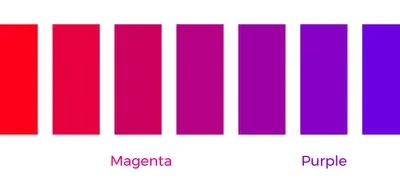
As a secondary color that doesn’t exist in the rainbow (spectral violet vs. non-spectral purple), it hints at dimensions beyond ordinary perception. Visionary artists often report encountering violet hues in their altered state experiences. In dreams, violet can symbolize spirituality, intuition, and mystical insight. A violet object might represent a bridge to higher consciousness or a call to bring creative inspiration into material form.
Violet in World Religions
Violet and purple have a long history of sacred and royal associations. In ancient Egypt, violet was associated with the divine and was used in religious contexts. In the Greek cult of Dionysus, violet signified ecstatic intoxication and liberation from the constraints of the ego.
- Judaism: Violet (Tekhelet) is one of the ritual colors of the Tabernacle and the priestly robes, symbolizing holiness and consecration. Recent archaeological research confirms the use of Murex trunculus snails to create this sacred dye.
- Christianity: Early Christian art depicted Christ wearing violet to signal his sovereignty. It remains the liturgical color of Advent and Lent, representing penance and preparation.
- Hinduism: Violet is associated with the Crown Chakra (Sahasrara), the thousand-petaled lotus of pure consciousness. Deities like Krishna and Kali are often depicted with violet or blue skin tones, representing the infinite expanse of eternal being.
- Buddhism: The violet aura represents the all-encompassing wisdom of enlightenment. It is associated with the Buddha Amitabha.
- Islam (Sufism): In Sufi psychology, colors often represent stages of the soul’s ascent, with violet sometimes symbolizing the mystery of the divine essence.
Violet as a Symbol of Transcendence
In all these traditions, violet serves as a symbolic bridge between the mundane and the transcendent. In Jungian terms, violet can represent the archetype of the Self, the transpersonal center of the psyche that unites the opposites. Encountering violet in dreams, art, or meditation can be a sign of the ego’s surrender to the Self and the emergence of a more expansive, integrated consciousness.
However, violet can also signal spiritual inflation or dissociation. The allure of visionary states can lead to escapism and a disconnection from the body. The key with violet is balance and integration. Like the alchemical axiom “solve et coagula” (dissolve and coagulate), violet calls us to dissolve our limiting patterns and reform them into a higher wholeness.
Further Reading and Scientific References
- Vandewalle, G., et al. (2010). “Spectral quality of light modulates emotional brain responses in humans.” Proceedings of the National Academy of Sciences.
- Elliot, A. J., & Maier, M. A. (2014). “Color Psychology: Effects of Perceiving Color on Psychological Functioning in Humans.” Annual Review of Psychology.
- Brewer, J. A., et al. (2011). “Meditation experience is associated with differences in default mode network activity and connectivity.” Proceedings of the National Academy of Sciences.
- Cahn, B. R., & Polich, J. (2006). “Meditation states and traits: EEG, ERP, and neuroimaging studies.” Psychological Bulletin.
- Lutz, A., et al. (2009). “Mental training enhances attentional stability: neural and behavioral evidence.” Journal of Neuroscience.
- Azeemi, S. T. Y., & Raza, S. M. (2005). “A Critical Analysis of Chromotherapy and Its Scientific Evolution.” Evidence-Based Complementary and Alternative Medicine.
- Hamblin, M. R. (2016). “Photobiomodulation or low-level laser therapy.” Journal of Biophotonics.
- Emotional Transformation Therapy (ETT) Information
Explore More Color Psychology








0 Comments