
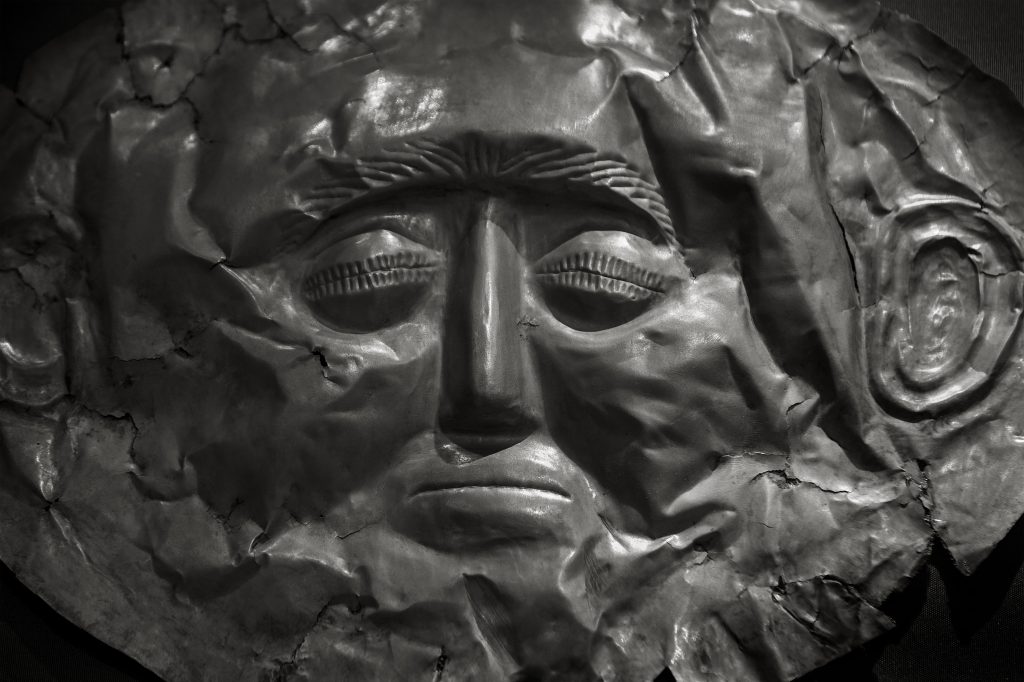
Why did Freud Abandon His Death Drive Theory?
In the hit TV show Mad Men, ad executive Pete Campbell makes a daring pitch to Lucky Strike cigarettes. To sell their product, he suggests, they should embrace the subconscious “death wish” that drives people to smoke.
While Campbell’s pitch was shocking, the concept he based it on – Sigmund Freud’s “death drive,” or thanatos – is one of the most intriguing and controversial ideas in the history of psychology. Freud believed that just as humans have an innate drive towards life, sex, and pleasure (eros), we also have an unconscious urge towards death, self-destruction, and a return to our original inorganic state.
The Origins and Evolution of Thanatos
Sigmund Freud’s concept of the death drive, or thanatos, is one of the most provocative and controversial ideas in the history of psychology. Freud first proposed it in his 1920 essay Beyond the Pleasure Principle to explain aspects of human behavior that seemed to contradict his earlier understanding of the mind as governed solely by the “pleasure principle” – the instinctive seeking of pleasure and avoidance of pain.
What led Freud to posit a fundamental drive towards death and self-destruction? Several factors converged to shape his thinking:
- The horrors of World War I, which unleashed destructive impulses on an unprecedented scale
- Patients who repeated painful experiences or entered into doomed relationships
- Self-harmful behaviors like addiction and alcoholism that violated the pleasure principle
- Freud’s own speculative forays into biology and the notion that organic life seeks to return to an inorganic state
Drawing on the physics concept of entropy and the Greek mythological figure of Thanatos (the personification of death), Freud argued that all living things have an innate urge to return to the inanimate state from which they emerged. In a letter to his friend and colleague Marie Bonaparte, he summarized the idea:
The aim of all life is death. Organic substance is seized by an ever-stronger tendency to return to the quiescence of the inorganic world.
In Freud’s updated model of the psyche, eros (the life instincts of sex, pleasure, and self-preservation) was counterbalanced by thanatos (the death instinct). He saw evidence of this death drive in the repetition compulsion of traumatized patients, suicidal and self-destructive behaviors, and humanity’s innate aggression and propensity for warfare.
However, Freud himself seems to have had doubts about the concept from the beginning. He introduced it tentatively in Beyond the Pleasure Principle, describing it as “far-fetched speculation” and admitting there was little clinical evidence for it beyond some patients’ repetitive behaviors.
In later works like The Ego and the Id (1923) and Civilization and Its Discontents (1930), he revised and downplayed the death drive. Rather than an independent instinct, thanatos became a kind of turning inward of outwardly-directed aggression, expressed through the harsh self-criticism of the superego or the broader discontent and guilt of civilized life.
Why Did Freud Abandon Thanatos?
There are several reasons why Freud may have ultimately distanced himself from the death drive concept:
- It was too speculative and not well supported by clinical evidence, especially compared to his more established theories
- It clashed with the progressive, future-oriented spirit of the early 20th century and was poorly received by other analysts
- It had troubling implications, seeming to normalize or naturalize humanity’s worst destructive impulses
- Freud himself was unsettled by the pessimistic worldview it implied and sought a more hopeful understanding of human nature
- He may have realized that behaviors like aggression and repetition could be explained through other concepts like repression, displacement, and the repetition compulsion
Despite Freud’s own abandonment of thanatos, the concept took on a life of its own in 20th century thought. Other psychoanalytic thinkers reinterpreted it through the lenses of the Shadow (Carl Jung), inferiority complexes (Alfred Adler), and sexual repression (Wilhelm Reich). Philosophers like Herbert Marcuse and Jacques Lacan drew connections between the death drive, social domination, and language.
In popular culture, echoes of thanatos can be found in works like Fight Club, Eros and Civilization, and the post-apocalyptic despair of The Road or The Walking Dead. The concept resonates with the human fascination with death, violence, and self-destruction that persists even as we disavow it.
The Death Drive Reconsidered
Hillman and the Terrible Love of War
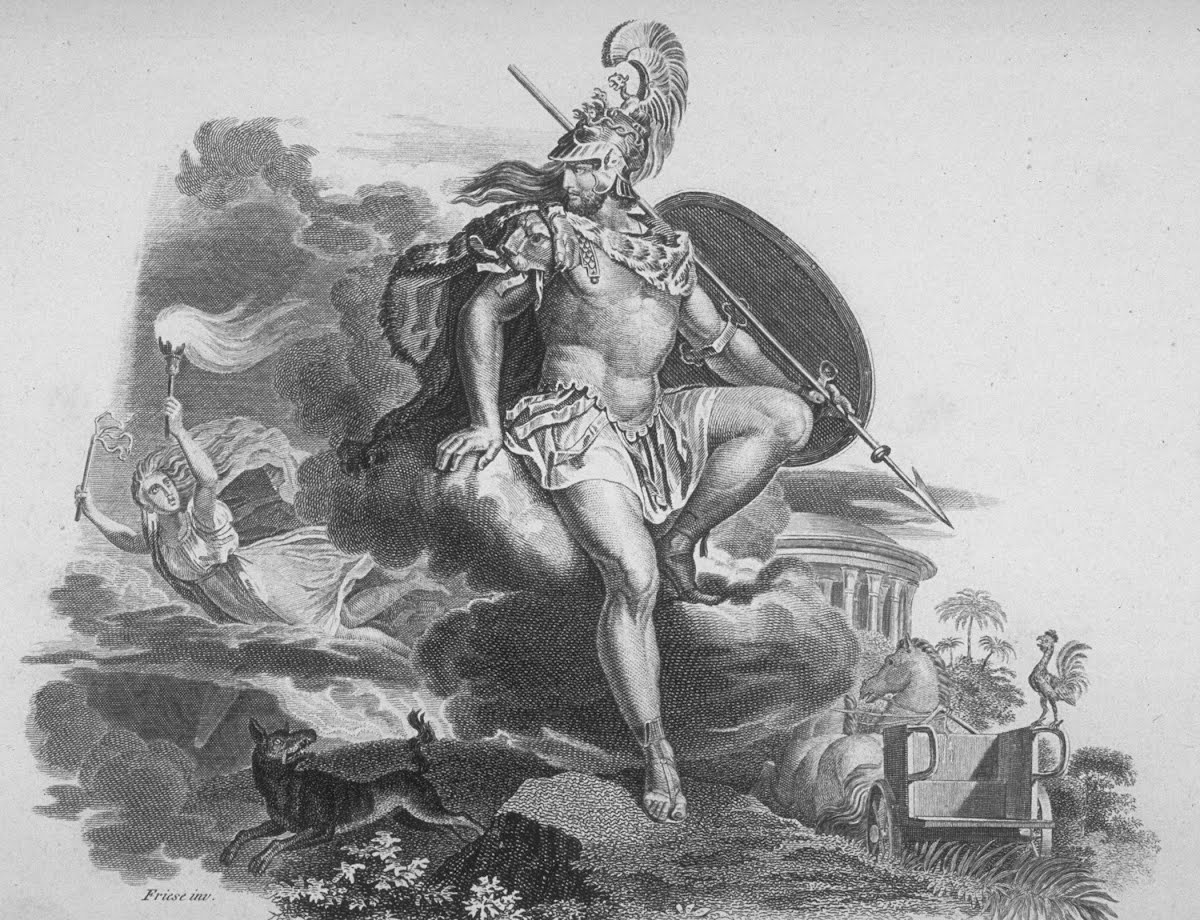
Ares the god of war
Freud’s death drive concept found new life in the work of James Hillman, a prominent post-Jungian scholar and founder of archetypal psychology. In his provocative book A Terrible Love of War, Hillman argues that war and destruction are not aberrations or deviations from human nature, but fundamental expressions of it.
Drawing on mythology, literature, and cultural history, Hillman portrays war as an archetypal force that has always captivated the human imagination. He suggests that our attraction to war – what he calls “a terrible love” – is rooted in the same psychological dynamics that Freud identified as the death drive.
For Hillman, war is:
- A “mythical force” that taps into deep layers of the psyche
- An expression of the archetypal “warrior” and “hero” energies
- A ritual that gives life meaning through shared sacrifice
- A mirror in which we glimpse the gods and confront our own mortality
While Hillman does not glorify or justify war, he challenges us to face its psychological reality and the ways in which it reflects enduring human needs and desires. Like Freud’s death drive, Hillman’s “terrible love of war” points to a shadowy, paradoxical dimension of the soul that defies easy moralizing.
The Mythopoetic Perspective
Other Jungian and mythopoetic thinkers have further developed these ideas, exploring the role of destructive energies in the psyche and culture.
Michael Meade, in his book Fate and Destiny: The Two Agreements of the Soul, looks at how the death drive manifests in the “Self-destruct” and “Death” agreements that shape our lives. He argues that by consciously engaging these energies, we can tap into a deeper source of creativity and transformation.
Robert A. Johnson’s Owning Your Own Shadow similarly emphasizes the need to integrate the dark, destructive aspects of the psyche. Drawing on Jungian shadow work, Johnson shows how the denied parts of ourselves, when repressed, can wreak havoc in our lives and in the world.
Finally, the poet Robert Bly, in A Little Book on the Human Shadow, uses fairy tales and myths to illustrate the power of the shadow. Like Freud’s death drive, Bly’s shadow is a force of negation and destruction that must be reckoned with for psychological wholeness.
Key Takeaways
- Freud proposed the controversial “death drive” (thanatos) as a counterpart to the life instincts of eros
- He saw evidence for it in aggression, addiction, doomed relationships, and the horrors of WWI
- Other thinkers like Jung, Adler, and Reich reinterpreted the death drive through their own lenses
- Freud himself largely abandoned thanatos, perhaps due to lack of evidence and external criticism
- The concept has nonetheless had an enduring cultural resonance, from Fight Club to Mad Men
- Jungian scholars like Hillman, Meade, Johnson, and Bly have re-envisioned the death drive through the lenses of myth, culture, and the shadow
Bibliography
Becker, Ernest. The Denial of Death. Free Press, 1973.
Freud, Sigmund. Beyond the Pleasure Principle. Translated by James Strachey, W.W. Norton & Company, 1961.
Freud, Sigmund. The Ego and the Id. Translated by Joan Riviere, W.W. Norton & Company, 1960.
Fight Club. Directed by David Fincher, performances by Brad Pitt, Edward Norton, and Helena Bonham Carter, 20th Century Fox, 1999.
Jung, C. G. Aion: Researches into the Phenomenology of the Self. Translated by R. F. C. Hull, Princeton University Press, 1979.
Jung, C. G. The Archetypes and the Collective Unconscious. Translated by R. F. C. Hull, Princeton University Press, 1980.
Laplanche, Jean. Life and Death in Psychoanalysis. Translated by Jeffrey Mehlman, Johns Hopkins University Press, 1976.
“Lucky Strike.” Mad Men, season 1, episode 1, AMC, 19 July 2007. Netflix, www.netflix.com/watch/70136116.
Marcuse, Herbert. Eros and Civilization: A Philosophical Inquiry into Freud. Beacon Press, 1955.
The Scream. Directed by Wes Craven, performances by Neve Campbell, Courteney Cox, and David Arquette, Dimension Films, 1996.
Spielrein, Sabina. “Destruction as the Cause of Coming Into Being.” Journal of Analytical Psychology, translated by K. A. McCormick, vol. 39, no. 2, 1994, pp. 155-186.
The Walking Dead. Created by Frank Darabont, AMC, 2010-2022.
Žižek, Slavoj. The Sublime Object of Ideology. Verso Books, 1989.
Additional Resources
Adler, Alfred. The Collected Clinical Works of Alfred Adler. Edited by Henry T. Stein, The Alfred Adler Institute of Northwestern Washington, 2002-2006. 12 vols.
Freud, Sigmund. Civilization and Its Discontents. Translated by James Strachey, W.W. Norton & Company, 1962.
Freud, Sigmund. The Future of an Illusion. Translated by James Strachey, W.W. Norton & Company, 1961.
Klein, Melanie. Love, Guilt and Reparation: And Other Works 1921-1945. Edited by Roger Money-Kyrle, The Free Press, 1984.
Rank, Otto. Will Therapy. Translated by Jessie Taft, W.W. Norton & Company, 1978.
Reich, Wilhelm. Character Analysis. Translated by Vincent R. Carfagno, Farrar, Straus and Giroux, 1980.
Reich, Wilhelm. The Function of the Orgasm: Sex-Economic Problems of Biological Energy. Translated by Vincent R. Carfagno, Farrar, Straus and Giroux, 1973.

















0 Comments