

Barbara Hannah (1891–1986) was an English painter who entered analysis with Carl Jung in Zurich in 1929 and later wrote Encounters with the Soul (1981), a book-length guide to active imagination. Her method: let an inner image arise, keep your attention on it, record it, and answer it as seriously as you would answer a real person, without letting it take you over.
That last condition is the part of her work worth keeping. Hannah’s real contribution was less a technique than a stance. The ego has to enter the inner drama as itself, awake and holding its own values, treating the figures it meets as real without becoming them and without using them. That stance is what separates useful imaginal work from daydreaming on one side and from being flooded on the other. Trauma and parts-based therapies later reached the same rule by another road, and some of their methods have been tested in ways hers never was.
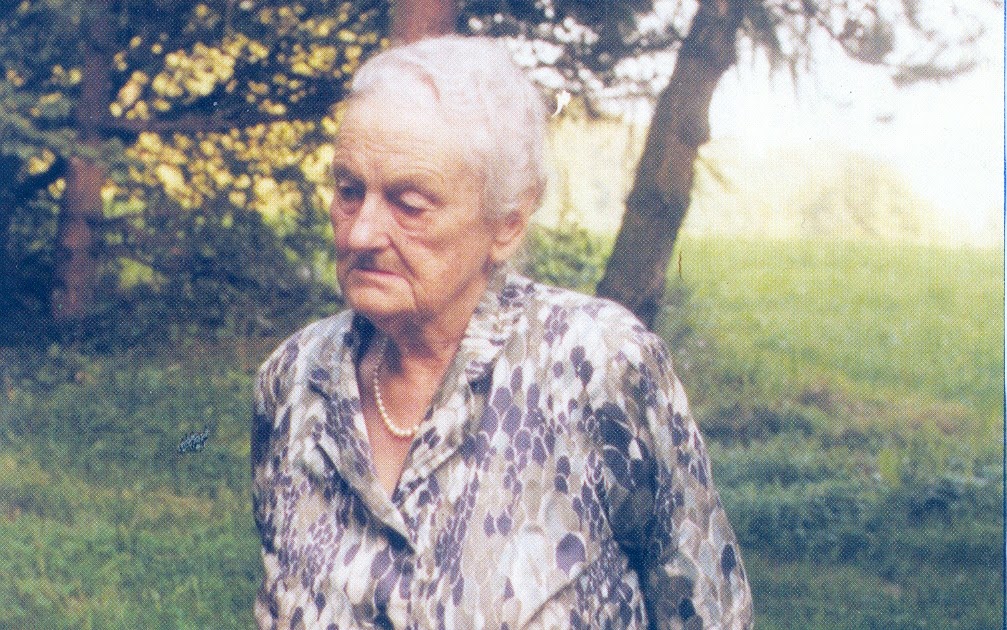
Who Barbara Hannah was
Hannah was born in England on 2 August 1891. The German National Library’s authority file lists two occupations: painter and psychoanalyst. It records that she came from England to Switzerland in 1929, became Jung’s pupil, worked as a psychotherapist and training analyst at the C.G. Jung Institute, and kept a lifelong friendship with Marie-Louise von Franz.1 She was a clergyman’s daughter. When she took Marion Woodman, the Canadian analyst who later carried Jungian work into the body and eating disorders, into analysis in late 1974, Woodman remembered Hannah telling her that they were both parsons’ daughters and that Jung had once told her only a parson’s child can handle a parson’s child.2
That first year in Zurich she befriended the young American Joseph Henderson, who went on to shape Jungian training in San Francisco, and shared lodgings with him; Henderson’s recollection of that time is printed in The Inner Journey.2 Jung later introduced her to Marie-Louise von Franz, the scholar of fairy tales and alchemy, more than twenty years her junior, and encouraged the two women to live together. In the portrait of Hannah by Dean Frantz and Ann Wintrode, the reason Jung gave was that analysts should not live alone.3 The friendship lasted the rest of Hannah’s life.1
The C.G. Jung Institute opened in Zurich in 1948, and Hannah taught there for many years. Her lectures there on animal symbolism from the 1950s survive and were published in 2006.4 She died on 4 September 1986, aged 95.1
Popular summaries, including an earlier version of this article, add art school in London and Paris, a creative block that sent her to Zurich, and a founding lectureship at the Institute in 1948. I found no source for any of them.
What she wrote
- Striving Towards Wholeness (1971), published by Putnam for the C.G. Jung Foundation, reads the lives and writing of Robert Louis Stevenson, Mary Webb, and Charlotte, Emily and Anne Brontë, along with their brother Branwell, as studies of the drive toward an integrated personality.5 Stevenson is an obvious choice: Strange Case of Dr Jekyll and Mr Hyde (1886) is the Victorian era’s best-known story of a divided self.
- Jung, His Life and Work: A Biographical Memoir (1976) draws on more than thirty years of acquaintance, from 1929 until Jung’s death in 1961.6 It is a friend’s memoir, warm and anecdotal, best read alongside later histories built on Jung’s papers.
- Encounters with the Soul: Active Imagination as Developed by C.G. Jung (1981) is her account of the method, illustrated with historical and modern case material.7
- After her death, editors assembled The Cat, Dog, and Horse Lectures, and “The Beyond” (1992), six unpublished lectures and an essay;3 The Inner Journey (2000), lectures and essays;2 The Archetypal Symbolism of Animals (2006);4 and two volumes titled The Animus: The Spirit of Inner Truth in Women (2010).8
What active imagination is
Jung developed the method on himself. Beginning in late 1913 he deliberately let himself drop into waking fantasies, wrote down and painted what he met there, and spent years working the material into the manuscript now published as The Red Book.9, 10 In “The Transcendent Function,” written in 1916 but not published for four decades, he described the method in two parts: first letting unconscious material come up and giving it form in words or images, then having the conscious ego come to terms with what has appeared.11
Active imagination is not passive fantasy, where images drift past and nobody answers them. Nor is it guided imagery, where a therapist or a script chooses a scene, usually a calming one. Here neither the analyst nor the ego writes the script. Hannah reports that when she was in analysis, Jung always asked whether she had done any active imagination, listened carefully, and then neither analyzed nor commented on it, so the process could develop in its own way. She also treated the practice as very old: a form of meditation people have used since early history to come to know their gods, which Jung rediscovered rather than invented.7
Hannah’s rule: take part as yourself
Hannah’s instructions are plain. Be alone and undisturbed. Wait for whatever comes up from the unconscious and let it gain intensity. When an image appears, fix it by drawing, painting or writing, so it does not sink back. Keep attention on the first image instead of letting it shift like a kaleidoscope. Her example is a bird that, left to itself, turns within seconds into a lion, a ship and a battle scene; the bird is to be held until it explains why it came and what it wants. Talking with personified figures was, in Jung’s view as she reports it, usually a later stage, and people who cannot reach images directly can start by writing stories that seem to be about other people.7
Underneath the steps is one rule. The person must give full conscious attention to what they say and do inside the fantasy, as much as they would in an important outer situation; that is what keeps it from sliding into passive fantasy.7 Jung made the same demand when he wrote that you have to enter the inner scene with your own reactions and treat the drama as real.9 That is what turns a reverie into a conversation.
The other half of the rule is that the figures are not you and are not yours to command. Jung’s 1928 essay on the relations between the ego and the unconscious has a section titled “The technique of differentiation between the ego and the figures of the unconscious.”12 His argument there is that an inner figure nobody has addressed tends to act through the person, as moods, sudden convictions and something close to possession, and that personifying it and speaking with it is how the ego separates itself. Identifying with the figure inflates or swamps the ego. Talking with it differentiates the two.
Hannah added a moral test. One should never bring living people into the fantasy, she wrote, and whenever the temptation arises one should ask whether the work is being done honestly, to find one’s own wholeness, or dishonestly, to get one’s own way. In her account the second kind can seem to succeed for a while but sooner or later ends in disaster. She also seldom started analysands on active imagination early. First they had to know from experience that the unconscious was as real as the outer world.7
So there are two ways to fail. If the ego writes the script, the exercise collapses into wish-fulfilment, her “dishonest” use. If the ego dissolves into the figure, the person starts speaking as the inner tyrant, the abandoned child or the sage, and is flooded or inflated. The workable position lies between: fully engaged, still yourself. That is why Hannah’s stance matters more than her steps.
Not every Jungian was comfortable with the method. In London, Michael Fordham, who built the developmental London school, returned to it several times, asking in the title of a 1967 paper whether active imagination amounted to deintegration, his term for the self’s normal, temporary opening toward experience, or to disintegration.13 He later called it a method of studying the self, one an analyst can induce by urging the patient to treat archetypal images as real and objective.14 On the popular side, Robert A. Johnson turned the method into a practical book for general readers, Inner Work (1986).15 Hal and Sidra Stone’s Voice Dialogue later built a practice in which a facilitator talks with a person’s inner selves one at a time.
Animals and the animus, read in their time
Hannah’s animal lectures at the Jung Institute follow Jung’s view that animals live in closer contact with the order of nature and follow their own inner laws, beyond human good and evil. In her reading, our animal nature can become a source of renewal and natural wholeness.4 A dream animal, on this view, is first an image of instinct to be met on its own terms, which is a useful check on the habit of translating every dream cat straight into a concept.
Her work on the animus needs more care. Classical Jungian theory, beginning with Jung, described the animus as the masculine side of a woman’s psyche and its negative form as a voice of rigid opinion.16 Hannah worked inside that frame, and her two posthumous volumes carry the subtitle The Spirit of Inner Truth in Women.8 The gender assumptions have not aged well. Within the Jungian literature, Susan McKenzie argued in the Journal of Analytical Psychology that a person’s sense of gender emerges from body, brain and culture rather than being an archetypal inheritance, and that the anima/animus model needs revising to include all genders and sexualities.17 What survives is the clinical observation without the sex-role theory: many people, of any gender, carry an inner voice that speaks in absolutes and seems to arrive from outside. Treating that voice as a figure to talk with, rather than a truth to obey, is still useful.
Where this meets trauma and dissociation
An earlier version of this page claimed that Striving Towards Wholeness presents trauma as splitting the soul and anticipates structural dissociation theory. I found nothing to support that reading of the book. The real historical link runs through Pierre Janet. Jung studied with Janet in Paris in the winter semester of 1902–1903, and the historian Henri Ellenberger judged that what Jung called a complex was originally the equivalent of Janet’s “subconscious fixed idea.”18, 19 On this reading, Jung’s complex theory began as a theory of dissociation.
The theory of structural dissociation of the personality, developed by Onno van der Hart, Ellert Nijenhuis and Kathy Steele, also builds on Janet.20 Nijenhuis and van der Hart define dissociation in trauma as a division of the personality into subsystems that are not sufficiently integrated, each with at least a rudimentary first-person perspective of its own.21 Read from there, Hannah’s caution about timing is sound clinical sense. For someone whose parts are already walled off from one another, an invitation to let inner figures rise and speak can produce switching, flooding or lost time rather than dialogue. The treatment guidelines of the International Society for the Study of Trauma and Dissociation call for phase-oriented treatment that puts safety and stabilization before work on traumatic memories.22 Imagery is not ruled out in that first phase. Onno van der Hart describes imagery techniques used during stabilization itself, mostly aimed at steadier daily functioning and applied judiciously, with the person’s dissociative parts in mind.23
Internal Family Systems therapy reached Hannah’s stance in different vocabulary. IFS asks a client to notice a part, “unblend” from it enough to be curious about it, and then relate to it instead of speaking as it.24 That is Jung’s differentiation, and Hannah’s rule of taking part as yourself, in a modern clinical form. The research on IFS is early: a 2022 uncontrolled pilot with 17 adults who had PTSD after multiple childhood traumas found large symptom reductions over 16 sessions, which the authors, among them the model’s founder Richard Schwartz, present as preliminary support.25
What the evidence can and cannot say
I could find no controlled trial of Jungian active imagination, so claims about its effects rest on case reports and clinical experience. Two neighboring methods have been tested. In imagery rescripting, a person re-enters a distressing memory in imagination and changes how it unfolds. A 2023 meta-analysis of 17 randomized trials with 908 participants found it outperformed passive, mostly waitlist, controls in seven trials (g = 0.68) and did about as well as exposure, cognitive restructuring and EMDR, with no significant difference between them; the authors issued a corrigendum to the paper in 2025.26, 27 AVATAR therapy has people who hear hostile voices hold facilitated dialogues with a digital embodiment of the voice, which the therapist animates so that it gradually concedes power. In a 2018 randomized trial of 150 people with persistent voices, it reduced the severity of voices at 12 weeks more than supportive counselling did; by 24 weeks the counselling group had kept improving and the difference was no longer significant.28 A larger 2024 trial with 345 participants found that voice-related distress improved more than with usual care alone at 16 weeks, but not at 28 weeks.29
None of this validates active imagination, which is looser and aims at different ends. The studies suggest something narrower: structured work with an imagined or embodied figure, with a therapist holding the frame, can reduce distress, at least in the short term. That is close to the stance Hannah described, though none of these trials tested it.
What this looks like in therapy
In a session, imaginal work usually starts with something already present: a dream image, a recurring figure, a harsh inner voice, or a sensation the client can locate in the body. The therapist asks the client to stay with it, describe it, notice their own reaction, and then respond as themselves. Following Hannah, a therapist resists interpreting too quickly. The image gets to finish speaking before anyone decides what it means.
The therapist’s other job is to watch the line between engaging a figure and becoming it. Signs that a client has crossed it include speaking in the figure’s voice without noticing, losing track of the room, losing time, or leaving the session feeling taken over rather than informed. When that happens the work slows down: grounding, orientation to the present, and more stabilization before any further open-ended imaginal work. People with active psychosis, an unstable dissociative disorder or an acute crisis usually need other work first, and imaginal methods do not replace established trauma treatments.
At Taproot a client might bring dreams into depth work, use Internal Family Systems therapy to relate to parts without being run by them, or need the slower pacing of therapy for dissociation and lost time before open-ended imaginal work begins. The principle is the same in each: meet what lives inside you as real, and stay yourself while you do it.
If dreams or inner figures have been pressing on you and you want help keeping that work grounded, you can read about our Jungian depth therapy in Hoover or contact us to ask whether it fits what you are dealing with.
References
- Deutsche Nationalbibliothek. (n.d.). Hannah, Barbara, 1891–1986 (Integrated Authority File record GND 109949595). https://d-nb.info/gnd/109949595
- Hannah, B. (2000). The inner journey: Lectures and essays on Jungian psychology (D. L. Frantz, Ed.). Inner City Books.
- Hannah, B. (1992). Barbara Hannah: The cat, dog, and horse lectures, and “The beyond” (D. L. Frantz, Ed.). Chiron Publications.
- Hannah, B. (2006). The archetypal symbolism of animals: Lectures given at the C. G. Jung Institute, Zurich, 1954/1958 (D. Eldred, Ed.). Chiron Publications.
- Hannah, B. (1971). Striving towards wholeness. G. P. Putnam’s Sons for the C. G. Jung Foundation for Analytical Psychology.
- Hannah, B. (1976). Jung, his life and work: A biographical memoir. G. P. Putnam’s Sons.
- Hannah, B. (1981). Encounters with the soul: Active imagination as developed by C. G. Jung. Sigo Press.
- Hannah, B. (2010). The animus: The spirit of inner truth in women (E. Kennedy & D. Eldred, Eds.; Vols. 1–2). Chiron Publications.
- Jung, C. G. (1997). Jung on active imagination (J. Chodorow, Ed.). Princeton University Press. https://doi.org/10.1515/9781400866854
- Jung, C. G. (2009). The red book: Liber novus (S. Shamdasani, Ed.; M. Kyburz, J. Peck, & S. Shamdasani, Trans.). W. W. Norton.
- Jung, C. G. (1997). The transcendent function. In J. Chodorow (Ed.), Jung on active imagination (pp. 42–60). Princeton University Press. https://doi.org/10.1515/9781400866854-006 (Original work written 1916)
- Jung, C. G. (1997). The technique of differentiation between the ego and the figures of the unconscious. In J. Chodorow (Ed.), Jung on active imagination (pp. 61–72). Princeton University Press. https://doi.org/10.1515/9781400866854-007 (Original work published 1928)
- Fordham, M. (1967). Active imagination—deintegration or disintegration? Journal of Analytical Psychology, 12(1), 51–66. https://doi.org/10.1111/j.1465-5922.1967.00051.x
- Fordham, M. (2018). Amplification and active imagination. In Jungian psychotherapy (pp. 35–42). Routledge. https://doi.org/10.4324/9780429476365-4 (Original work published 1978)
- Johnson, R. A. (1986). Inner work: Using dreams and active imagination for personal growth. Harper & Row.
- Jung, C. G. (2014). Part two: Individuation. In Two essays on analytical psychology (R. F. C. Hull, Trans.; 2nd ed., pp. 173–242). Princeton University Press. https://doi.org/10.1515/9781400850891.173 (Original work published 1928)
- McKenzie, S. (2006). Queering gender: Anima/animus and the paradigm of emergence. Journal of Analytical Psychology, 51(3), 401–421. https://doi.org/10.1111/j.0021-8774.2006.00599.x
- Monahan, P. A. (2009). C. G. Jung: Freud’s heir or Janet’s? The influence upon Jung of Janet’s dissociationism. International Journal of Jungian Studies, 1(1), 33–49. https://doi.org/10.1080/19409050802681876
- Haule, J. R. (1983). Archetype and integration: Exploring the Janetian roots of analytical psychology. Journal of Analytical Psychology, 28(3), 253–267. https://doi.org/10.1111/j.1465-5922.1983.00253.x
- Van der Hart, O., Nijenhuis, E. R. S., & Steele, K. (2006). The haunted self: Structural dissociation and the treatment of chronic traumatization. W. W. Norton.
- Nijenhuis, E. R. S., & van der Hart, O. (2011). Dissociation in trauma: A new definition and comparison with previous formulations. Journal of Trauma & Dissociation, 12(4), 416–445. https://doi.org/10.1080/15299732.2011.570592
- International Society for the Study of Trauma and Dissociation. (2011). Guidelines for treating dissociative identity disorder in adults, third revision. Journal of Trauma & Dissociation, 12(2), 115–187. https://doi.org/10.1080/15299732.2011.537247
- van der Hart, O. (2012). The use of imagery in phase 1 treatment of clients with complex dissociative disorders. European Journal of Psychotraumatology, 3, Article 8458. https://doi.org/10.3402/ejpt.v3i0.8458
- Schwartz, R. C., & Sweezy, M. (2020). Internal family systems therapy (2nd ed.). Guilford Press.
- Hodgdon, H. B., Anderson, F. G., Southwell, E., Hrubec, W., & Schwartz, R. (2022). Internal Family Systems (IFS) therapy for posttraumatic stress disorder (PTSD) among survivors of multiple childhood trauma: A pilot effectiveness study. Journal of Aggression, Maltreatment & Trauma, 31(1), 22–43. https://doi.org/10.1080/10926771.2021.2013375
- Kip, A., Schoppe, L., Arntz, A., & Morina, N. (2023). Efficacy of imagery rescripting in treating mental disorders associated with aversive memories: An updated meta-analysis. Journal of Anxiety Disorders, 99, Article 102772. https://doi.org/10.1016/j.janxdis.2023.102772
- Kip, A., Schoppe, L., Arntz, A., & Morina, N. (2025). Corrigendum to “Efficacy of imagery rescripting in treating mental disorders associated with aversive memories: An updated meta-analysis” (Journal of Anxiety Disorders, 99, 102772). Journal of Anxiety Disorders, 115, Article 103071. https://doi.org/10.1016/j.janxdis.2025.103071
- Craig, T. K. J., Rus-Calafell, M., Ward, T., Leff, J. P., Huckvale, M., Howarth, E., Emsley, R., & Garety, P. A. (2018). AVATAR therapy for auditory verbal hallucinations in people with psychosis: A single-blind, randomised controlled trial. The Lancet Psychiatry, 5(1), 31–40. https://doi.org/10.1016/S2215-0366(17)30427-3
- Garety, P. A., Edwards, C. J., Jafari, H., Emsley, R., Huckvale, M., Rus-Calafell, M., Fornells-Ambrojo, M., Gumley, A., Haddock, G., Bucci, S., McLeod, H. J., McDonnell, J., Clancy, M., Fitzsimmons, M., Ball, H., Montague, A., Xanidis, N., Hardy, A., Craig, T. K. J., & Ward, T. (2024). Digital AVATAR therapy for distressing voices in psychosis: The phase 2/3 AVATAR2 trial. Nature Medicine, 30(12), 3658–3668. https://doi.org/10.1038/s41591-024-03252-8















0 Comments