
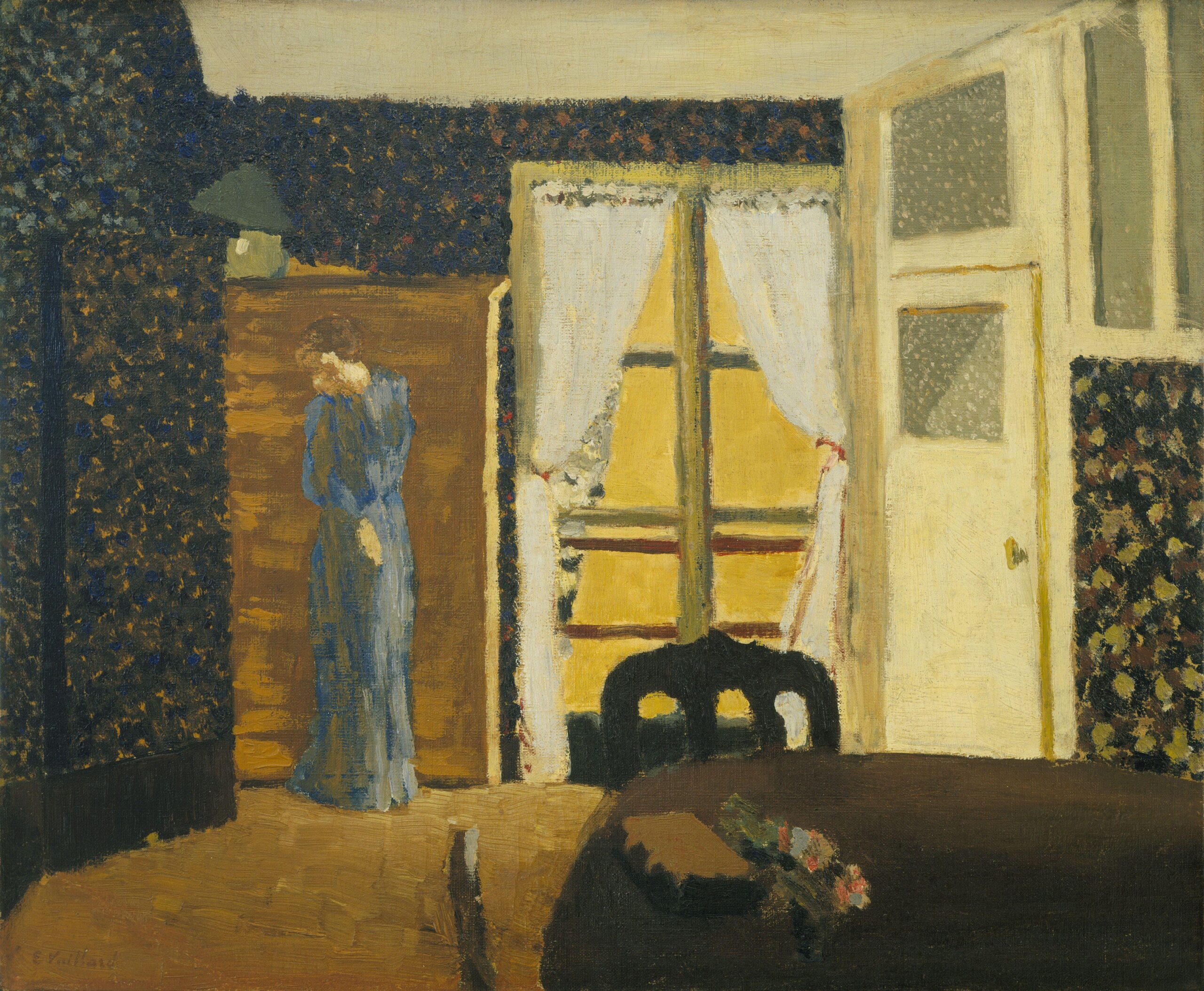
The window of tolerance is the range of arousal in which a person can feel strong emotion and still think, speak and stay aware of the present moment. Psychiatrist Daniel Siegel introduced the term in 1999. Above the window lies hyperarousal: panic, rage, racing thoughts. Below it lies hypoarousal: numbness, fog, collapse, the sense of watching your own life from far away.1, 3
Most popular explanations treat the window as a place to stay inside, and treat therapy as a way of keeping people calm. That gets the clinical use of the idea backwards. Trauma is processed at the edge of the window: enough activation that the memory is actually present in the room, not so much that the person floods or goes absent. The therapist’s job is to keep the work at that edge in doses a person can get through, and the window widens because they keep getting through it.

Where the idea comes from
Siegel trained in pediatrics and psychiatry at UCLA after Harvard Medical School, and spent a National Institute of Mental Health research fellowship studying how attachment shapes emotion, memory and narrative.2 The window of tolerance comes from The Developing Mind (1999), the book in which he laid out what he calls interpersonal neurobiology: the argument that the mind takes shape through relationships as well as through the brain.1
Pat Ogden, Kekuni Minton and Clare Pain turned the phrase into a working clinical tool. The second chapter of their 2006 book Trauma and the Body is titled “Window of Tolerance: The Capacity for Modulating Arousal,” and the book carries a series editor’s foreword by Siegel.3 Our post on Pat Ogden and sensorimotor psychotherapy covers her wider work. A 2022 systematic review summarizes the resulting model: when reminded of trauma, people switch between high-arousal active defense (fear, anger, impulsivity, vigilance) and low-arousal passive defense (submission, depression, numbing), and the window is the zone of flexibility between them, where emotions can be regulated and integrated.4
Corrigan, Fisher and Nutt applied the model to the long-term effects of childhood abuse and severe adult trauma. They read self-harm and substance misuse as attempts to regulate an autonomic nervous system that reminders of the trauma readily push into extreme states, and proposed midbrain and dopamine pathways for the swings, which remain hypotheses.5 In 2018 David Treleaven made “Stay within the window of tolerance” the first of his five principles of trauma-sensitive mindfulness.6
The window of tolerance is a clinical map, not a diagnosis or a measurement. No standard instrument gives a person’s window a width; clinicians infer it from what they see and what people tell them. The model is only as good as the observations it organizes, so the next question is which of those observations hold up.
Above and below the window
Above the window, the body mobilizes. The heart pounds, breathing goes high and fast, muscles brace, and thinking either races or narrows to the threat. People describe panic, rage, the urge to run or hit something, and flashbacks that feel like the event happening now. Below the window, the system drops. The voice flattens, limbs feel heavy, thinking goes foggy, and the room seems far away or unreal. People describe numbness, a heavy collapse, losing time, or going through the motions. Many people do both, sometimes within one conversation.
The upper half of the map has solid support. Nnamdi Pole’s 2007 meta-analysis pooled 58 resting-baseline studies, 25 startle studies and 39 trauma-cue studies. Adults with PTSD had higher resting heart rate and skin conductance, stronger eyeblink startle, and larger heart-rate and facial-muscle reactions to reminders of their own trauma than adults without PTSD. The effects were small to moderate, and the studies leaned heavily on male veterans.7
The lower half is more complicated. Ruth Lanius and colleagues described two forms of emotional dysregulation in PTSD: the common undermodulated form, dominated by reexperiencing and hyperarousal, and a dissociative form marked by overmodulation, in which midline prefrontal regions clamp down on limbic activity. They noted that one patient can show both patterns, at the same time or at different points.8 When the World Mental Health Surveys interviewed 25,018 people in 16 countries, symptoms of depersonalization or derealization appeared in 14.4% of those with past-year PTSD, and that group had more childhood adversity, more severe impairment and more suicidality.9
Yet when the 2022 review gathered 28 studies, with about 1,300 participants, that measured heart rate, blood pressure and similar markers in relation to dissociation in PTSD, it found no consistent pattern and could not confirm that dissociation goes with physiological hypoarousal.4 “Below the window” is accurate as a description of how a state looks and feels. It is not yet a verified bodily signature. Diagrams that label the zone “dorsal vagal shutdown” borrow from polyvagal theory, whose five basic premises the psychophysiologist Paul Grossman argued in 2023 are untenable or highly implausible.10 The window model does not need that theory.
Evolution supplies a simpler logic for the map. Kasia Kozlowska and colleagues describe a defense cascade that begins with arousal and includes fight or flight; freezing, which they describe as fight or flight put on hold and which often comes before it; and, as a last resort when active defense has failed against an inescapable threat, tonic or collapsed immobility. Animals usually return to baseline once the danger passes; people often stay locked in the pattern.11 Hyperarousal looks like the mobilizing end of that cascade and hypoarousal like the immobilizing end. The heat that rises when a boundary is crossed sits near the top (see our piece on anger as the body’s biological “no”); the heavy, hiding collapse of toxic shame can be read as a shutdown near the bottom (see a somatic approach to the shame spiral). When the lower end dominates, with numbness, lost time or a sense of unreality, an assessment for dissociation is worth having; our page on dissociation therapy in Hoover describes what that involves.
Why the work happens at the edge
Edna Foa and Michael Kozak’s emotional processing theory, published in 1986, holds that a fear memory changes when it is activated and, at the same time, corrective information is taken in. They named what gets in the way: cognitive defenses, autonomic arousal, mood and erroneous ideas.12 That is the window argument in another vocabulary. With too little activation, nothing is being processed. With too much, the person cannot take anything in.
A 1998 study by Lisa Jaycox, Foa and Andrew Morral made this concrete. Thirty-seven women treated with repeated imaginal reliving of an assault rated their distress every ten minutes. Three patterns emerged: high initial distress that came down gradually across sessions, high distress that did not come down, and moderate distress that did not come down. The first group improved most.13 Engagement mattered, and so did settling.
This is why the window is not a comfort zone. The inhibitory learning approach to exposure, set out by Michelle Craske and colleagues, moves the goal away from watching fear drop within a session and toward new learning, using methods such as violating the expected catastrophe, removing safety signals and putting feelings into words as they happen.14 A person can be very uncomfortable and still inside the window. The test is presence: can they notice their body, answer a question, know where they are, and choose to pause? When they cannot, they are in a flashback rather than remembering, or narrating from somewhere far away, and the session has stopped being processing in the sense Foa and Kozak meant.
Titration and pendulation
Body-based therapies built specific tools for working at that edge. Peter Levine’s Somatic Experiencing borrows the word titration from chemistry, where two reagents are combined drop by drop to avoid a violent reaction: traumatic material is approached in small amounts to avoid flooding. Pendulation is the movement back and forth between activation and settling. Payne, Levine and Crane-Godreau write that it “needs to be finely tuned” and set it against exposure therapies, “which do not tend to avoid extremes of activation.”15 That is a claim from a theory paper. A randomized trial in Israel comparing SE with prolonged exposure for veterans with PTSD offers a direct test, but the only report from it I can find is an interview study of 30 participants’ experiences, not the outcome results, so the belief that SE reaches fear extinction more quickly and with much less distress is still untested.16 Our post on how Somatic Experiencing works goes further into the mechanism.
The trial evidence is promising and thin. In the first randomized trial, 63 people with PTSD either received 15 weekly sessions of SE or waited; SE produced large reductions in PTSD symptoms and moderate to large reductions in depression, but the comparison was a waitlist, not another therapy.17 A 2021 scoping review found 16 eligible studies, called the evidence preliminary and rated overall study quality as mixed.18
Stabilize first, or dose from the start?
The window has also been used to argue that people with complex trauma need a long stabilization phase before any memory work. In a 2011 survey of 50 trauma experts organized by the International Society for Traumatic Stress Studies, 84% endorsed a phase-based or sequenced approach for complex PTSD.19 In 2016, 21 trauma researchers led by Ad de Jongh countered that the research behind this is methodologically limited, that no rigorous study shows a stabilization phase is necessary, and that the guidelines risk denying or delaying treatments people could benefit from.20
The trials point both ways. Marylene Cloitre’s 2010 study of 104 women with PTSD related to childhood abuse found that skills training in affective and interpersonal regulation (STAIR) followed by exposure produced more sustained full remission than supportive counseling followed by exposure, 27% against 13%, with lower dropout and fewer cases of worsening.21 A Dutch trial of 149 patients with childhood-abuse PTSD, published in 2021, compared standard prolonged exposure, an intensive version, and STAIR followed by exposure. All three produced large improvements that held at one year, with no significant differences between them and similar dropout.22 In the same sample, a complex PTSD diagnosis neither predicted outcomes nor made the skills-first version work better than exposure alone,23 and an earlier study of 71 patients found that pretreatment dissociation and depression did not predict gains from prolonged exposure.24
My reading: a narrow window is a reason to dose the work carefully and to build resources inside it, not an automatic reason to postpone trauma processing for months. Stabilization comes first when someone is unsafe, in crisis, or cannot stay present for even a minute of the material. Otherwise the window widens by being used.
What this looks like in therapy
In early sessions a therapist helps you find your own first signs of leaving the window. For one person the first sign of going up is a tight jaw or faster speech; for another the first sign of going down is a yawn, a heavy head, or the feeling that the therapist’s voice is coming from a distance. You also find things that steady you before going near hard material: the felt sense of the chair holding your weight, a place or person you can picture, a posture that feels upright, the room itself.
Then the work is dosed. Instead of telling the whole story, you might start with one image, the first few seconds of an event, or only the sensation in your chest when the memory comes up. The therapist watches breathing, voice, speed of speech, eye contact and posture, and asks often what is happening in your body. If arousal climbs too far, the work slows: a longer exhale, eyes open and naming what is in the room, feet pressed into the floor, a pause in the story. If it drops too far, the work activates: sitting up, standing, pressing the hands together or against a wall, a stronger sensory cue, more eye contact. Then you return to the material at a smaller dose.
Widening, in practice, means that more of a memory can be held for longer while you still know where you are and that you are safe now. It does not mean feeling less. Our somatic therapy practice in Birmingham combines several methods that work this way. Between sessions, simple bottom-up grounding techniques for panic can take the edge off a spike, and other somatic reset techniques you can do at home help with regulation. They support trauma therapy; they do not replace it.
The middle way, the tuned string and the inverted U
The window has older relatives, East and West, and they are worth getting right. The famous simile of the tuned string comes from the Pali Canon, not from Zen. In the Sona Sutta (Anguttara Nikaya 6.55), the Buddha asks a monk who has walked in meditation until his feet bled whether his vina, a stringed instrument, plays well with its strings too taut or too loose, and concludes that “over-aroused persistence leads to restlessness, overly slack persistence leads to laziness.”25 The first sermon describes the middle way as avoiding two extremes, sensual indulgence and self-affliction (Samyutta Nikaya 56.11). The Bhagavad Gita compares the disciplined mind of the yogi to a lamp that does not flicker in a windless place (6.19).
These texts share the window’s shape, a band between too much and too little, but not its subject. They concern the discipline of monks and yogis in training; the window concerns defensive arousal in people whose nervous systems learned threat. Meditation itself can push people out of the window, the problem Treleaven’s trauma-sensitive principles were written for. In a study of 96 people taking mindfulness-based cognitive therapy, 83% reported at least one meditation-related side effect, mostly transient and at rates the authors judged similar to other psychological treatments; lasting bad effects, seen in 6% to 14%, were associated with signs of dysregulated arousal, both hyperarousal and dissociation.26 Our post on why meditation can sometimes make trauma worse covers the adaptations that help.
The Western ancestor is the Yerkes-Dodson law. In 1908 Robert Yerkes and John Dodson trained Japanese dancing mice to choose a white box over a black one, with an electric shock for wrong choices. When the two boxes were easy to tell apart, learning got faster as the shock got stronger. When they were hard to tell apart, both weak and strong shocks slowed learning, and a shock nearer the threshold worked best.27 The familiar inverted U linking arousal to performance in general came later. Karl Halvor Teigen traced how textbooks recast the finding as a law about arousal, anxiety or stress and attributed that version to Yerkes and Dodson themselves.28 The window borrows that shape but asks a different question: not how well you perform, but whether an experience can be integrated or stays in the body as an alarm.
At Taproot Therapy Collective in Hoover, and by teletherapy across Alabama, we use the window of tolerance as a working map in trauma therapy alongside methods such as EMDR, Brainspotting and Somatic Experiencing. If you notice yourself swinging between too much and too little, read more about our somatic therapy approach or contact us with questions.
References
- Siegel, D. J. (1999). The developing mind: Toward a neurobiology of interpersonal experience. Guilford Press.
- Siegel, D. J. (n.d.). Biography. Dr. Dan Siegel. https://drdansiegel.com/about/biography/
- Ogden, P., Minton, K., & Pain, C. (2006). Trauma and the body: A sensorimotor approach to psychotherapy. W. W. Norton.
- Beutler, S., Mertens, Y. L., Ladner, L., Schellong, J., Croy, I., & Daniels, J. K. (2022). Trauma-related dissociation and the autonomic nervous system: A systematic literature review of psychophysiological correlates of dissociative experiencing in PTSD patients. European Journal of Psychotraumatology, 13(2), Article 2132599. https://doi.org/10.1080/20008066.2022.2132599
- Corrigan, F. M., Fisher, J. J., & Nutt, D. J. (2011). Autonomic dysregulation and the window of tolerance model of the effects of complex emotional trauma. Journal of Psychopharmacology, 25(1), 17–25. https://doi.org/10.1177/0269881109354930
- Treleaven, D. A. (2018). Trauma-sensitive mindfulness: Practices for safe and transformative healing. W. W. Norton.
- Pole, N. (2007). The psychophysiology of posttraumatic stress disorder: A meta-analysis. Psychological Bulletin, 133(5), 725–746. https://doi.org/10.1037/0033-2909.133.5.725
- Lanius, R. A., Vermetten, E., Loewenstein, R. J., Brand, B., Schmahl, C., Bremner, J. D., & Spiegel, D. (2010). Emotion modulation in PTSD: Clinical and neurobiological evidence for a dissociative subtype. American Journal of Psychiatry, 167(6), 640–647. https://doi.org/10.1176/appi.ajp.2009.09081168
- Stein, D. J., Koenen, K. C., Friedman, M. J., Hill, E., McLaughlin, K. A., Petukhova, M., Ruscio, A. M., Shahly, V., Spiegel, D., Borges, G., Bunting, B., Caldas-de-Almeida, J. M., de Girolamo, G., Demyttenaere, K., Florescu, S., Haro, J. M., Karam, E. G., Kovess-Masfety, V., Lee, S., … Kessler, R. C. (2013). Dissociation in posttraumatic stress disorder: Evidence from the World Mental Health Surveys. Biological Psychiatry, 73(4), 302–312. https://doi.org/10.1016/j.biopsych.2012.08.022
- Grossman, P. (2023). Fundamental challenges and likely refutations of the five basic premises of the polyvagal theory. Biological Psychology, 180, Article 108589. https://doi.org/10.1016/j.biopsycho.2023.108589
- Kozlowska, K., Walker, P., McLean, L., & Carrive, P. (2015). Fear and the defense cascade: Clinical implications and management. Harvard Review of Psychiatry, 23(4), 263–287. https://doi.org/10.1097/HRP.0000000000000065
- Foa, E. B., & Kozak, M. J. (1986). Emotional processing of fear: Exposure to corrective information. Psychological Bulletin, 99(1), 20–35. https://doi.org/10.1037/0033-2909.99.1.20
- Jaycox, L. H., Foa, E. B., & Morral, A. R. (1998). Influence of emotional engagement and habituation on exposure therapy for PTSD. Journal of Consulting and Clinical Psychology, 66(1), 185–192. https://doi.org/10.1037/0022-006X.66.1.185
- Craske, M. G., Treanor, M., Conway, C. C., Zbozinek, T., & Vervliet, B. (2014). Maximizing exposure therapy: An inhibitory learning approach. Behaviour Research and Therapy, 58, 10–23. https://doi.org/10.1016/j.brat.2014.04.006
- Payne, P., Levine, P. A., & Crane-Godreau, M. A. (2015). Somatic experiencing: Using interoception and proprioception as core elements of trauma therapy. Frontiers in Psychology, 6, Article 93. https://doi.org/10.3389/fpsyg.2015.00093
- Harwood-Gross, A., Elias, S., Lerner, K., Nacasch, N., Lawi, C., Brom, D., & Barak, A. (2025). Veterans’ experiences of somatic experiencing and prolonged exposure therapies for post-traumatic stress disorder: A qualitative analysis. Psychology and Psychotherapy: Theory, Research and Practice, 98(1), 175–192. https://doi.org/10.1111/papt.12570
- Brom, D., Stokar, Y., Lawi, C., Nuriel-Porat, V., Ziv, Y., Lerner, K., & Ross, G. (2017). Somatic experiencing for posttraumatic stress disorder: A randomized controlled outcome study. Journal of Traumatic Stress, 30(3), 304–312. https://doi.org/10.1002/jts.22189
- Kuhfuß, M., Maldei, T., Hetmanek, A., & Baumann, N. (2021). Somatic experiencing – effectiveness and key factors of a body-oriented trauma therapy: A scoping literature review. European Journal of Psychotraumatology, 12(1), Article 1929023. https://doi.org/10.1080/20008198.2021.1929023
- Cloitre, M., Courtois, C. A., Charuvastra, A., Carapezza, R., Stolbach, B. C., & Green, B. L. (2011). Treatment of complex PTSD: Results of the ISTSS expert clinician survey on best practices. Journal of Traumatic Stress, 24(6), 615–627. https://doi.org/10.1002/jts.20697
- De Jongh, A., Resick, P. A., Zoellner, L. A., van Minnen, A., Lee, C. W., Monson, C. M., Foa, E. B., Wheeler, K., ten Broeke, E., Feeny, N., Rauch, S. A. M., Chard, K. M., Mueser, K. T., Sloan, D. M., van der Gaag, M., Rothbaum, B. O., Neuner, F., de Roos, C., Hehenkamp, L. M. J., … Bicanic, I. A. E. (2016). Critical analysis of the current treatment guidelines for complex PTSD in adults. Depression and Anxiety, 33(5), 359–369. https://doi.org/10.1002/da.22469
- Cloitre, M., Stovall-McClough, K. C., Nooner, K., Zorbas, P., Cherry, S., Jackson, C. L., Gan, W., & Petkova, E. (2010). Treatment for PTSD related to childhood abuse: A randomized controlled trial. American Journal of Psychiatry, 167(8), 915–924. https://doi.org/10.1176/appi.ajp.2010.09081247
- Oprel, D. A. C., Hoeboer, C. M., Schoorl, M., de Kleine, R. A., Cloitre, M., Wigard, I. G., van Minnen, A., & van der Does, W. (2021). Effect of prolonged exposure, intensified prolonged exposure and STAIR+prolonged exposure in patients with PTSD related to childhood abuse: A randomized controlled trial. European Journal of Psychotraumatology, 12(1), Article 1851511. https://doi.org/10.1080/20008198.2020.1851511
- Hoeboer, C. M., de Kleine, R. A., Oprel, D. A. C., Schoorl, M., van der Does, W., & van Minnen, A. (2021). Does complex PTSD predict or moderate treatment outcomes of three variants of exposure therapy? Journal of Anxiety Disorders, 80, Article 102388. https://doi.org/10.1016/j.janxdis.2021.102388
- Hagenaars, M. A., van Minnen, A., & Hoogduin, K. A. L. (2010). The impact of dissociation and depression on the efficacy of prolonged exposure treatment for PTSD. Behaviour Research and Therapy, 48(1), 19–27. https://doi.org/10.1016/j.brat.2009.09.001
- Thanissaro Bhikkhu (Trans.). (1997). Sona Sutta: About Sona (Anguttara Nikaya 6.55). Access to Insight. https://www.accesstoinsight.org/tipitaka/an/an06/an06.055.than.html
- Britton, W. B., Lindahl, J. R., Cooper, D. J., Canby, N. K., & Palitsky, R. (2021). Defining and measuring meditation-related adverse effects in mindfulness-based programs. Clinical Psychological Science, 9(6), 1185–1204. https://doi.org/10.1177/2167702621996340
- Yerkes, R. M., & Dodson, J. D. (1908). The relation of strength of stimulus to rapidity of habit-formation. Journal of Comparative Neurology and Psychology, 18(5), 459–482. https://doi.org/10.1002/cne.920180503
- Teigen, K. H. (1994). Yerkes-Dodson: A law for all seasons. Theory & Psychology, 4(4), 525–547. https://doi.org/10.1177/0959354394044004
———————————————————————-
======================================================================
154. SEARCH POSTS FOR: The Psychology Of Architecture: The Forces that Move Our Buildings
URL: https://gettherapybirmingham.com/blog/the-psychology-of-architecture-the-forces-that-move-our-buildings/
YOAST SEO TITLE: Psychology of Architecture: Why American Styles Change
YOAST META DESCRIPTION: Why American architectural styles change: from Greek Revival to glass towers and New Urbanism, each works as a collective defense against a specific fear.
YOAST FOCUS KEYPHRASE: psychology of architecture
DIVI CODE BOX (copy everything between the lines):
———————————————————————-
Updated November 2026 · By Joel Blackstock, LICSW-S
The psychology of architecture studies two things: how buildings change the way people feel and behave, and how people’s fears and hopes decide what gets built. The first is a small, careful science of windows, curves and sightlines. The second explains why styles change. American styles shift when material conditions and a society’s dominant anxiety change together, which is why each style works like a collective defense.
That last sentence is the argument of this page, and it borrows a clinical idea. In therapy, a defense is a strategy the mind builds against a real threat. It protects something, it hides something, and it usually outlasts the danger it was built for. Read American architecture that way and the parade of styles stops looking like fashion. A Greek temple front on a Philadelphia bank, a Roman temple copied on top of Shades Mountain, a glass box in Chicago and the pastel porches of Seaside, Florida each answered a specific fear with the money, materials and laws available at the time. This page is also the hub for our series on individual styles, linked as each one comes up.
What the research on buildings and minds actually shows
Environmental psychology has real findings, and most of them are smaller than design marketing suggests. In the best-known study, Roger Ulrich went through the records of gallbladder-surgery patients at a suburban Pennsylvania hospital between 1972 and 1981. The 23 patients whose windows looked out on trees had shorter post-operative stays and took fewer strong painkillers than 23 matched patients who faced a brick wall.1 It was a small, retrospective record review at one hospital, and it has been asked to carry far more weight than one study can.
Reviews give a more sober picture. A 2022 meta-analysis of 61 studies found a reliable, medium-sized preference for curved over angular forms, but not a universal one: it shifts with expertise, with the task, and with how long people look.2 In a brain-imaging study, people rated curvilinear rooms as more beautiful, yet the curves did not change whether they wanted to enter or leave those rooms.3 The geographer Jay Appleton’s prospect-refuge theory, the idea that we prefer places where we can see out while staying sheltered, is quoted constantly by designers.4 A meta-analysis of the quantitative tests called the evidence inconsistent: urban and interior studies supported prospect but were more neutral about refuge, and the studies architects cite most often were done on natural landscapes, not on interiors or streets.5 A systematic review of attention restoration theory found that exposure to natural settings improved three of thirteen pooled attention measures and showed no marked benefit on the other ten.6
So buildings act on us, modestly and with many conditions attached. That evidence explains comfort. It does not explain why a whole country drops Greek columns for Gothic gables, then for steel and glass, then for irony. For that you need history, money and a theory of fear.
Buildings as defenses: the argument
Anna Freud catalogued the ego’s defenses in 1936, and later research has kept the core of her idea: defenses are largely unconscious operations that manage anxiety, different ones appear at different ages, and they are not automatically pathological.78 The strategy that helps a child survive a chaotic house can become the rigid adult habit that brings that same person to therapy at forty.
Carl Jung gave the building a permanent place in depth psychology. On his seven-week trip to America with Freud in 1909, he dreamed of a house he did not know but recognized as his own: a rococo salon upstairs, a dark medieval ground floor, a vaulted Roman cellar, and beneath that a cave with scattered bones and broken pottery. He concluded that the house “represented a kind of image of the psyche,” each floor a deeper and older layer, and he later described the dream as his first step toward the idea of a collective unconscious.9 Then he built one. At Bollingen on the upper lake of Zurich he raised a round stone tower in 1923 and kept adding to it for decades, calling it “a confession of faith in stone.”9 Gaston Bachelard carried the idea into philosophy with a poetics of the house that runs from cellar to attic, treating the house as our first universe and the place that shelters daydreaming.10
The materialist half of the argument comes from Marx’s claim that a society’s forms and ideas rest on how it produces wealth, and from geographers such as David Harvey, who tied the look of the postmodern city to a shift from factory mass production toward what he called flexible accumulation.11 Put the two traditions together and you get the thesis. A style appears when new capital, materials and laws make it buildable and when it answers the anxiety of the people paying for it. Like a personal defense, it protects something real, hides something its builders would rather not see, and hardens into habit after the threat has passed.
One caution belongs here. Terror management theory predicts that reminders of death push people to defend their cultural worldview harder, and grand public architecture is one place a worldview gets defended in stone. A 2010 meta-analysis of 277 experiments reported moderate effects,12 but a 17-lab replication, which compared a protocol designed with the original authors’ input against one designed without it, could not reproduce a classic version of the finding under either condition.13 The defense reading of architecture is an interpretive lens for asking better questions. It is not a laboratory result.
1780s to 1890s: legitimacy, nature and new money
A young republic’s first anxiety was legitimacy. The colonies had built English forms, from timber-framed vernacular houses to Georgian brick, and in the South the grandest houses were built and run by enslaved people; our piece on what colonial architecture still carries into American design traces that inheritance. After independence the borrowing became classical and deliberate. Thomas Jefferson and Charles-Louis Clérisseau modeled the Virginia State Capitol, built from 1785 to 1788, on the Maison Carrée, a Roman temple in Nîmes. William Strickland based his Second Bank of the United States in Philadelphia on the Parthenon. A nation with no history borrowed Athens and Rome so it would look old. The Greek Revival spread that temple front to courthouses, banks and plantation houses, and that is the style’s shadow: a vocabulary of democracy dressing an economy that ran on slavery.
Industrialization brought the next fear, that the machine and the city would strip life of feeling. Gothic Revival churches and cottages, and the wider Romantic movement in architecture, answered with pointed arches, irregular plans and houses set into landscape. Andrew Jackson Downing’s The Architecture of Country Houses (1850) opened by calling a good house “a powerful means of civilization” and claimed a moral influence for the country home.14 After the Civil War, Victorian eclecticism piled towers, turrets and machine-made ornament onto the houses of people who had just made money and needed it seen. In Jungian terms that is persona: the social face, assembled from whatever historical costume signaled arrival.
1890s to 1940s: order, craft and escape from the industrial city
By the 1890s the threat was the industrial city itself: smoke, epidemics, crowding and labor unrest. The City Beautiful movement answered with order. Daniel Burnham’s “White City” at the 1893 World’s Columbian Exposition in Chicago presented uniform classical buildings and a model city with no poverty in sight, and the McMillan Plan of 1902 remade the monumental core of Washington in the same spirit. Beaux-Arts architecture brought that grandeur to stations and libraries. Birmingham’s Terminal Station, designed by P. Thornton Marye, opened in 1909 and was demolished in 1969, and the psychology of tearing down the station still says a lot about this city.
The Arts and Crafts movement took the opposite route, from monument to handwork. William Morris in England and Gustav Stickley, whose magazine The Craftsman began in October 1901, promoted honest materials and hand labor against factory production. The defense here was nostalgia: a wish to be held by a world before the machine.
Birmingham shows the escape version of the same anxiety. After the young city suffered a major cholera epidemic in 1873, residents went looking for healthier ground, and the settlements that later merged into Homewood, a suburb shaped by fear and aspiration, grew out of that search.15 Wealthy families later built estates on Shades Mountain to get away from the noise and pollution of the mills, and in 1924 former mayor George B. Ward built a house modeled on the Roman temple of Vesta, the estate that gave Vestavia Hills its name and its self-image.16 In the 1920s Robert Jemison Jr. developed Mountain Brook Estates with Tudor and revival-style houses, barred hospitals, garages and other noisy or smelly businesses, and restricted the community to whites.17 Our study of how policy became identity in Mountain Brook follows that story. The styles were picturesque. The function was a wall.
Art Deco and Streamline Moderne made a different bargain with the machine: if you cannot escape it, make it glamorous. Art Deco towers wrapped commerce in ornament, and at the 1939 New York World’s Fair Norman Bel Geddes’s Futurama exhibit for General Motors showed visitors a world twenty years ahead, built around automated highways and vast suburbs. The fear of the machine had been turned into a sales pitch for it.
1930s to 1970s: glass towers, covenants and defensible space
Modernism arrived as a cure for clutter and a promise of rational control. Henry-Russell Hitchcock and Philip Johnson named and packaged it in 1932 in The International Style, published the same year as the Museum of Modern Art’s modern architecture exhibition they organized.18 Ludwig Mies van der Rohe, the last director of the Bauhaus, left Nazi Germany for Chicago in 1937 or 1938 and went on to design the Seagram Building in New York, completed in 1958. After a depression and a world war, a flat glass skin promised that nothing was hidden and nothing was out of place. Its shadow was coldness, which designers such as Alvar Aalto, who humanized modernism with wood and light, worked to answer.
At home, the defense was distance, and federal policy wrote it into the mortgage. The Federal Housing Administration, created under the National Housing Act of 1934, gave its appraisers an underwriting manual that rewarded “protection against some adverse influences” and counted “inharmonious racial or nationality groups” among those influences.1920 Levittown on Long Island, built from 1947 to 1951 and often treated as the archetype of the postwar suburb, had its first residents sign a lease clause barring occupancy by anyone “other than members of the Caucasian race.” The ranch house and the Cape Cod box were friendly, modest forms. The system that financed them sorted the country by race, and the quiet lawn was part of the wall.
Public housing got the opposite treatment. Pruitt-Igoe in St. Louis, 33 eleven-story towers designed by Minoru Yamasaki’s firm and first occupied in 1954, began coming down on March 16, 1972. Charles Jencks later declared that modern architecture died with one of those 1972 implosions,21 and Oscar Newman used the project in Defensible Space to argue that design itself could invite or prevent crime.22 Later histories point elsewhere: federal cost limits that dictated the design, a shrinking city, segregation, and a housing authority that could not keep up with maintenance. Katharine Bristol called the familiar story a myth, arguing that blaming the architects shifted attention away from those institutional causes.23 In clinical language the building became a scapegoat, a defense by displacement. Jane Jacobs had already proposed the alternative in 1961: safety comes from eyes on the street, from mixed and busy ordinary neighborhoods, not from towers set apart in open space.24
1960s to 2000s: irony, nostalgia and the end of the factory
Postmodernism treated modernist purity as a kind of repression. Robert Venturi’s Complexity and Contradiction in Architecture (1966) argued for layered, messy meaning,25 and Learning from Las Vegas (1972), written with Denise Scott Brown and Steven Izenour, set the expressive modernist “duck” against the “decorated shed” that speaks through signs.26 Charles Moore’s Piazza d’Italia in New Orleans (1978) rebuilt classical columns in stainless steel and neon. Philip Johnson and John Burgee’s AT&T Building in Manhattan, completed in 1984 in pink granite, topped a corporate tower with a broken pediment. The postmodern classicism of these years brought ornament back with a wink, and the wink did defensive work: irony lets you want the past without admitting you miss it.
The economy under these buildings was changing. The 1973 Arab oil embargo ended cheap energy and set off a wave of passive-solar and energy-conscious design. Factories closed, and the postmodern corporate headquarters replaced the plant as the public face of capital. Harvey read the collage surfaces of the period as the look of flexible accumulation,11 and Fredric Jameson used John Portman’s Bonaventure Hotel in Los Angeles to argue that postmodern space outruns a person’s ability to locate themselves in it.27
The suburb answered with nostalgia. New Urbanism revived the walkable small town. Seaside, Florida, first built in 1981 for developer Robert Davis on a plan by Andrés Duany and Elizabeth Plater-Zyberk, was based on small Southern towns the team toured together. In 1998 it served as the set for The Truman Show, a film about a man whose perfect town is a stage built to keep him from leaving. Few places have been cast so exactly as a persona. Closer to home, our study of Liberty Park and the achievement culture built into its streets looks at the same wish for control in a community now inside Vestavia Hills.
2008 to now: the screen, the bubble and the flood
The 2008 financial crisis turned the house from shelter into a failed asset for millions of families, and the anxieties since have been instability and heat. One answer is total fluidity. Patrik Schumacher coined “parametricism” in 2008 for computer-generated architecture built on continuous variation, and neo-modernism returned to clean lines with better glass and engineering. Another answer turns back toward the body. Post-digital architecture pushes against screen life with texture and touch. New materialism in architecture draws on philosophers such as Jane Bennett, who treat matter as an actor rather than inert stuff.28 Biophilic design builds on E. O. Wilson’s hypothesis that humans carry an inborn affinity for living things,29 a hypothesis the restoration research above supports only in part.
The climate answer is the most literal defense yet. After Hurricane Sandy in 2012, the Living Breakwaters project began building oyster-seeded breakwaters off the south shore of Staten Island, funded in part by $60 million from the federal housing department, to blunt storm surge while restoring habitat. The Living Building Challenge, launched in 2006, certifies buildings against demanding standards for energy, water and materials. Adaptive reuse, keeping old buildings and changing what they do, may be the most psychologically mature move of the lot. It treats the past as material to work with, neither bulldozed nor embalmed.
What this looks like in therapy
Clinicians see the same logic at the scale of one life. A defense is a structure put up in a hurry against a real danger, and good therapy works more like adaptive reuse than demolition. Tearing down a defense before a person has somewhere else to stand tends to produce panic or a thicker wall. The work is to learn what the structure was built against, respect that it once worked, and decide together which rooms can be opened now.
Homes and rooms come up in sessions all the time. Some people keep a house so perfect that no one can visit, and the facade does the work of a persona. Others cannot throw anything away, move every two years, or rearrange the furniture whenever life feels out of control. Many people with trauma histories describe needing a seat that faces the door, which echoes Appleton’s prospect and refuge even though the research on that theory is mixed. None of these is a diagnosis. Each is information about what the nervous system still treats as a threat, and somatic therapy works with those bodily reactions directly.
Dreams use the same vocabulary. Houses turn up often in the dreams people bring to depth-oriented work: rooms they never knew were there, a flooded basement, a house that keeps adding wings. In Jungian depth therapy we read a dream house the way this page reads a style, asking what it protects, what it hides and which era of the dreamer’s life built it. Our dream dictionary of symbols, including architecture collects common images. The therapy room has its own part to play. The Greeks called a sacred precinct a temenos, a bounded space set apart, and a good therapy hour builds a version of it: a room safe enough that old defenses can be examined without being needed. For the smaller scale of furniture, color and the rooms we live in, see the psychology of design and how our spaces reveal our minds.
If an old structure in your life is still standing guard long after the danger passed, that is ordinary work for therapy. Taproot Therapy Collective in Hoover offers depth-oriented and somatic therapy in person and by teletherapy across Alabama, and you can contact us to ask whether it would be a good fit.
References
- Ulrich, R. S. (1984). View through a window may influence recovery from surgery. Science, 224(4647), 420–421. https://doi.org/10.1126/science.6143402
- Chuquichambi, E. G., Vartanian, O., Skov, M., Corradi, G. B., Nadal, M., Silvia, P. J., & Munar, E. (2022). How universal is preference for visual curvature? A systematic review and meta-analysis. Annals of the New York Academy of Sciences, 1518(1), 151–165. https://doi.org/10.1111/nyas.14919
- Vartanian, O., Navarrete, G., Chatterjee, A., Fich, L. B., Leder, H., Modroño, C., Nadal, M., Rostrup, N., & Skov, M. (2013). Impact of contour on aesthetic judgments and approach-avoidance decisions in architecture. Proceedings of the National Academy of Sciences, 110(Suppl. 2), 10446–10453. https://doi.org/10.1073/pnas.1301227110
- Appleton, J. (1975). The experience of landscape. Wiley.
- Dosen, A. S., & Ostwald, M. J. (2016). Evidence for prospect-refuge theory: A meta-analysis of the findings of environmental preference research. City, Territory and Architecture, 3, Article 4. https://doi.org/10.1186/s40410-016-0033-1
- Ohly, H., White, M. P., Wheeler, B. W., Bethel, A., Ukoumunne, O. C., Nikolaou, V., & Garside, R. (2016). Attention restoration theory: A systematic review of the attention restoration potential of exposure to natural environments. Journal of Toxicology and Environmental Health, Part B, 19(7), 305–343. https://doi.org/10.1080/10937404.2016.1196155
- Freud, A. (1937). The ego and the mechanisms of defence (C. Baines, Trans.). Hogarth Press and the Institute of Psycho-Analysis. (Original work published 1936)
- Cramer, P. (2015). Understanding defense mechanisms. Psychodynamic Psychiatry, 43(4), 523–552. https://doi.org/10.1521/pdps.2015.43.4.523
- Jung, C. G. (1963). Memories, dreams, reflections (A. Jaffé, Ed.; R. Winston & C. Winston, Trans.). Pantheon Books.
- Bachelard, G. (1964). The poetics of space (M. Jolas, Trans.). Orion Press. (Original work published 1958)
- Harvey, D. (1989). The condition of postmodernity: An enquiry into the origins of cultural change. Blackwell.
- Burke, B. L., Martens, A., & Faucher, E. H. (2010). Two decades of terror management theory: A meta-analysis of mortality salience research. Personality and Social Psychology Review, 14(2), 155–195. https://doi.org/10.1177/1088868309352321
- Klein, R. A., Cook, C. L., Ebersole, C. R., Vitiello, C., Nosek, B. A., Hilgard, J., Ahn, P. H., Brady, A. J., Chartier, C. R., Christopherson, C. D., Clay, S., Collisson, B., Crawford, J. T., Cromar, R., Gardiner, G., Gosnell, C. L., Grahe, J., Hall, C., Howard, I., . . . Ratliff, K. A. (2022). Many Labs 4: Failure to replicate mortality salience effect with and without original author involvement. Collabra: Psychology, 8(1), Article 35271. https://doi.org/10.1525/collabra.35271
- Downing, A. J. (1850). The architecture of country houses. D. Appleton & Company.
- Kaetz, J. P. (2011, August 8; last updated 2025, December 19). Homewood. In Encyclopedia of Alabama. Auburn University. https://encyclopediaofalabama.org/article/homewood/
- Wilson, C. M. (2011, July 11; last updated 2025, July 2). Vestavia Hills. In Encyclopedia of Alabama. Auburn University. https://encyclopediaofalabama.org/article/vestavia-hills/
- Maloney, C. (2011, September 23; last updated 2025, October 15). Mountain Brook. In Encyclopedia of Alabama. Auburn University. https://encyclopediaofalabama.org/article/mountain-brook/
- Hitchcock, H.-R., & Johnson, P. (1932). The International Style: Architecture since 1922. W. W. Norton.
- Jackson, K. T. (1985). Crabgrass frontier: The suburbanization of the United States. Oxford University Press.
- Rothstein, R. (2017). The color of law: A forgotten history of how our government segregated America. Liveright.
- Jencks, C. (1977). The language of post-modern architecture. Rizzoli.
- Newman, O. (1972). Defensible space: Crime prevention through urban design. Macmillan.
- Bristol, K. G. (1991). The Pruitt-Igoe myth. Journal of Architectural Education, 44(3), 163–171. https://doi.org/10.1080/10464883.1991.11102687
- Jacobs, J. (1961). The death and life of great American cities. Random House.
- Venturi, R. (1966). Complexity and contradiction in architecture. Museum of Modern Art.
- Venturi, R., Scott Brown, D., & Izenour, S. (1972). Learning from Las Vegas. MIT Press.
- Jameson, F. (1991). Postmodernism, or, the cultural logic of late capitalism. Duke University Press.
- Bennett, J. (2010). Vibrant matter: A political ecology of things. Duke University Press.
- Wilson, E. O. (1984). Biophilia. Harvard University Press.























0 Comments