

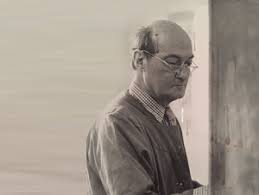
The Bridge Between the Sacred and the Clinical
In the history of analytical psychology, Gerhard Adler (1904–1988) occupies a vital but often overlooked position. While figures like Marie-Louise von Franz focused on the archaic depths of fairy tales and alchemy, Adler dedicated his life to demonstrating the practical, clinical reality of Carl Jung’s ideas. He was not just a theoretician; he was a clinician who meticulously documented how the individuation process manifests in the consulting room.
Adler was a founding father of the “London School” of Analytical Psychology (along with Michael Fordham). His work served as a crucial bridge, connecting the numinous, archetypal psychology of Zurich with the developmental, object-relations focus of British psychoanalysis. For the modern therapist, Adler offers a roadmap for integrating the “Grand Themes” of the collective unconscious with the gritty, day-to-day work of healing early childhood trauma.
Biography & Timeline: Gerhard Adler
Born in Berlin to a Jewish family, Adler’s early life was marked by the cultural richness of Weimar Germany and the looming shadow of the Third Reich. He studied medicine and psychology in Freiburg, Heidelberg, and Berlin, eventually training directly under C.G. Jung in Zurich in the early 1930s.
With the rise of Nazism, Adler, like many Jewish intellectuals, was forced to flee. He emigrated to London in 1936, where he became a central figure in establishing analytical psychology in the English-speaking world. Unlike some who sought to distance themselves from Jung during the war years, Adler remained a staunch defender and explicator of Jung’s work, while simultaneously engaging in dialogue with the Freudian and Kleinian schools dominant in London at the time.
He was a co-editor of the monumental Collected Works of C.G. Jung, a task that required not only linguistic precision but a profound understanding of the evolution of Jung’s thought. He founded the Society of Analytical Psychology (SAP) in 1946, creating the institutional structure that allows Jungian training to flourish in the UK today.
Key Milestones in the Life of Gerhard Adler
| Year | Event / Publication |
| 1904 | Born in Berlin, Germany. |
| 1932-1934 | Undergoes training analysis with C.G. Jung in Zurich. |
| 1936 | Emigrates to London to escape Nazi persecution. |
| 1946 | Co-founds the Society of Analytical Psychology (SAP) in London. |
| 1948 | Publishes Studies in Analytical Psychology, establishing his reputation as a major theorist. |
| 1961 | Publishes The Living Symbol, his magnum opus on the clinical case study of individuation. |
| 1988 | Dies in London, leaving a legacy of clinical rigor and spiritual depth. |
Major Concepts: The Living Symbol and the Self
The Living Symbol
Adler’s most significant contribution is his detailed exploration of how symbols function in therapy. In his book The Living Symbol (1961), he presents a case study of a single patient suffering from claustrophobia. Unlike standard case histories that focus on pathology, Adler traces the emergence of archetypal symbols (mandalas, stones, trees) in the patient’s dreams over time.
He demonstrated that the symbol is not just a “sign” of repressed trauma (as Freud might argue), but a transformer of psychic energy. The symbol acts as a vessel that carries the patient from a state of neurosis to a state of wholeness. This validates the use of Active Imagination in therapy, showing that engaging with images is a biological necessity for the psyche’s regulation.
The Actualization of the Self
Adler expanded on Jung’s concept of the Self—the regulating center of the psyche. He argued that the Self is not a static entity but a dynamic process. He distinguished between the “potential Self” (which exists from birth) and the “actualized Self” (which is realized through the hard work of consciousness).
For Adler, the goal of therapy was to align the Ego with the Self. When this axis is damaged—often due to early parental failures—the individual feels alienated and meaningless. Healing involves repairing this connection so that the ego can once again be fed by the archetypal energies of the unconscious.
The Conceptualization of Trauma: The Pre-Oedipal Layer
Adler was one of the first Jungians to seriously engage with “pre-Oedipal” trauma—the wounds that occur in the first years of life, before language develops. While classical Jungian analysis often focused on adult mid-life crises (The Middle Passage), Adler recognized that many patients could not reach that stage because they were stuck in infantile survival modes.
The Logos and Eros of Therapy
Adler emphasized that the therapeutic relationship is the primary vehicle for healing these early wounds. He argued that the analyst must provide both the “paternal” function of Logos (interpretation, structure, discrimination) and the “maternal” function of Eros (containment, feeling, relatedness). Trauma survivors often need a “maternal container” to hold their fragmented psyche before they can begin the work of analyzing symbols. This anticipated modern findings in attachment theory and neurobiology.
Legacy: The Integration of Schools
Gerhard Adler’s legacy is one of synthesis. He refused to let Jungian psychology become a mystical cult detached from clinical reality. By founding the Society of Analytical Psychology, he ensured that Jungian analysts were trained to the highest professional standards, capable of working with severe pathologies like borderline personality disorder and psychosis.
His work reminds us that the spiritual and the clinical are not opposites. A dream of a golden scarab is a spiritual event, but it is also a clinical intervention by the psyche to save a life. Adler taught us to read the symbol with the precision of a surgeon and the reverence of a priest.
Bibliography
- Adler, G. (1948). Studies in Analytical Psychology. Routledge & Kegan Paul.
- Adler, G. (1961). The Living Symbol: A Case Study in the Process of Individuation. Pantheon Books.
- Adler, G. (1979). Dynamics of the Self. Coventure.
- Jung, C.G. (Adler, G. as Editor). (1953-1979). The Collected Works of C.G. Jung. Princeton University Press.




















0 Comments