
Who was John Bowlby?
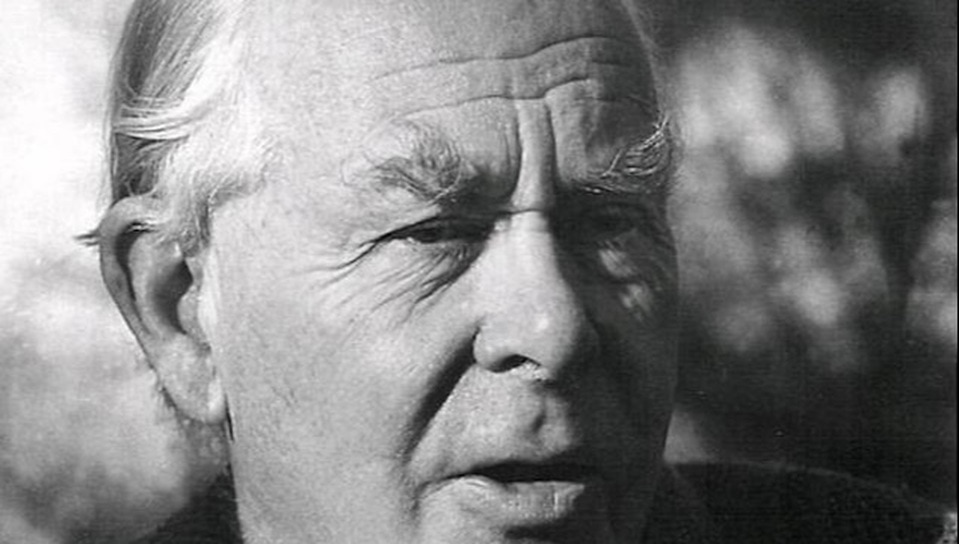
“What cannot be communicated to the mother cannot be communicated to the self.” – John Bowlby
John Bowlby (1907-1990) stands as one of the most influential psychologists of the twentieth century, fundamentally transforming our understanding of human relationships, emotional development, and mental health. His attachment theory, developed through careful observation and innovative thinking, challenged the prevailing psychoanalytic dogma of his time and created a new paradigm for understanding human development. This paper explores Bowlby’s revolutionary contributions, their historical context, and their continuing influence on contemporary psychology and human development.
Further Resources on Bowlby’s Work:
- Books: A Secure Base
- Article: Understanding Attachment Theory
- Biography: John Bowlby’s Life
- Research: The Origins of Attachment Theory
- Archive: Bowlby-Ainsworth Archives
- Institute: Bowlby Centre
- Conference: Attachment Theory Symposium
- Journal: Attachment & Human Development
- Video: Bowlby’s Clinical Work
- Book Review: Attachment and Loss Review
The Making of a Revolutionary Thinker
Born into a privileged British family in 1907, John Bowlby’s early experiences would profoundly shape his later theoretical work. The emotional distance typical of upper-class British child-rearing practices, including his own separation from his beloved nursemaid at age four, likely influenced his later interest in attachment and separation. After studying medicine and psychiatry, Bowlby began working with maladjusted children at the London Child Guidance Clinic, where his observations would plant the seeds of attachment theory.
The prevailing psychoanalytic theories of his time emphasized internal fantasies and drives, largely dismissing the importance of actual early experiences and relationships. Bowlby’s clinical work, however, repeatedly demonstrated the profound impact of early parent-child relationships and separations on psychological development. This disconnect between theory and observation would lead him to develop a radically new understanding of human development.
The Origins of Attachment Theory
Bowlby’s theoretical revolution began with his 1944 paper “Forty-Four Juvenile Thieves,” where he documented the relationship between maternal separation in early childhood and subsequent delinquent behavior. His appointment as head of the Department for Children and Parents at the Tavistock Clinic provided the institutional base from which he would develop his groundbreaking ideas.
The theoretical framework of attachment theory emerged through Bowlby’s innovative synthesis of diverse fields including ethology, cybernetics, developmental psychology, and evolutionary theory. Breaking with psychoanalytic orthodoxy, he argued that attachment was not a secondary drive derived from feeding but a primary motivational system with its own dynamics and evolutionary function.
The Foundations of Attachment Theory
At its core, attachment theory proposes that human beings are biologically predisposed to form close emotional bonds with caregivers. This attachment system evolved to promote infant survival by maintaining proximity to protective adults. Unlike traditional psychoanalytic theory, which viewed infant attachment as arising from oral gratification, Bowlby argued that attachment was a sophisticated behavioral system in its own right.
Bowlby identified several key components of the attachment system. The proximity-seeking behaviors of crying, following, and clinging serve to maintain closeness to the attachment figure. The secure base phenomenon, where children use their caregiver as a base from which to explore, demonstrates how attachment supports both protection and learning. Separation anxiety emerges as a natural response to threats to the attachment bond.
These behavioral systems are accompanied by internal working models – mental representations of the self, attachment figures, and relationships that develop based on early attachment experiences. These models profoundly influence how individuals view themselves and others throughout life.
The Phases of Attachment Development
Bowlby delineated several phases in the development of attachment relationships. During the first phase (0-2 months), infants show general responsiveness to humans without discrimination. In the second phase (2-7 months), they begin to show preference for familiar caregivers. The third phase (7-24 months) involves active attachment behavior and stranger anxiety. By the fourth phase (24+ months), children develop a more sophisticated understanding of the attachment relationship.
This developmental sequence demonstrates how attachment evolves from simple behavioral responses to complex psychological and social relationships. Each phase builds upon the previous ones, creating increasingly sophisticated ways of maintaining proximity and security.
Separation and Loss
Perhaps Bowlby’s most profound contributions came through his work on separation and loss. His trilogy “Attachment and Loss” (1969-1980) detailed the psychological processes involved when attachment bonds are threatened or broken. He described three phases of separation response: protest, despair, and detachment.
The protest phase involves active attempts to recover the attachment figure through crying, searching, and resistance to comforting by others. During the despair phase, the child becomes withdrawn and hopeless. The detachment phase represents a defensive exclusion of attachment feelings and can lead to long-term emotional difficulties if reunion doesn’t occur.
Bowlby’s insights into separation anxiety and grief revolutionized our understanding of human emotional response to loss. His work showed how attachment theory could explain both normal and pathological responses to separation, providing a framework for understanding and treating emotional difficulties.
Patterns of Attachment
While Bowlby provided the theoretical framework, his colleague Mary Ainsworth developed the empirical methods to study attachment patterns through her famous “Strange Situation” procedure. This work identified three main patterns of attachment: secure, anxious-ambivalent, and avoidant. Later researchers added a fourth category: disorganized attachment.
Secure attachment develops when caregivers are consistently responsive and attuned. These children feel confident exploring their environment, knowing they can return to a responsive caregiver if needed. They develop internal working models of themselves as worthy and others as reliable.
Anxious-ambivalent attachment emerges when caregiving is inconsistent. These children become preoccupied with monitoring their caregiver’s availability, showing clingy behavior and difficulty exploring. Their internal working models involve uncertainty about their worth and others’ reliability.
Avoidant attachment develops when caregivers are consistently rejecting or unresponsive. These children learn to suppress attachment behavior and emotions, developing internal working models of themselves as unwanted and others as rejecting.
Disorganized attachment results from frightening or frightened caregiver behavior, often due to unresolved trauma. These children show contradictory or disoriented attachment behaviors, lacking a coherent strategy for maintaining security.
Clinical Applications
Bowlby’s work has profound implications for clinical practice. He emphasized the importance of the therapeutic relationship as a secure base from which clients can explore painful experiences. His understanding of internal working models provides a framework for understanding how early attachment experiences influence adult relationships and psychopathology.
Attachment-based therapy focuses on helping clients understand and modify their internal working models through the therapeutic relationship. This involves exploring attachment history, working through losses and traumas, and developing more secure ways of relating to others.
Bowlby’s insights have influenced various therapeutic approaches, from parent-infant psychotherapy to adult individual and couple therapy. His work provides a theoretical foundation for understanding the importance of emotional safety and attunement in therapeutic relationships.
Social and Cultural Impact
Beyond individual psychology, attachment theory has had broad social and cultural implications. It has influenced child care practices, parenting advice, and social policy regarding early childhood. Bowlby’s work supported the importance of maternal leave policies and highlighted the potential harmful effects of institutional care for young children.
The theory has also contributed to our understanding of cultural differences in child-rearing practices while maintaining that secure attachment is universally beneficial for development. This has led to fascinating cross-cultural research on attachment patterns and their variations across different societies.
Contemporary Developments
Attachment theory continues to evolve through new research and theoretical developments. Modern neuroscience has provided biological evidence for many of Bowlby’s insights, showing how early relationships shape brain development and stress response systems.
Researchers have expanded attachment theory to better understand adult relationships, including romantic partnerships and friendships. The concept of mentalization – the ability to understand one’s own and others’ mental states – has emerged as an important extension of attachment theory.
Current work also explores how attachment patterns transmit across generations and how early attachment experiences influence various aspects of adult life, from workplace relationships to political attitudes.
Critiques and Controversies
Despite its widespread influence, attachment theory has faced various critiques. Some argue it overemphasizes early experiences and the mother-child relationship. Others question its cross-cultural applicability or its relevance to different family structures.
Feminist scholars have both criticized and embraced the theory, debating its implications for women’s roles and responsibilities. These debates have led to more nuanced understandings of attachment relationships and their contexts.
Future Directions
The future of attachment theory looks promising, with new directions emerging in several areas. Neuroscience continues to illuminate the biological basis of attachment relationships. Research on gene-environment interactions is revealing how attachment experiences interact with genetic predispositions.
Applications of attachment theory are expanding into new areas, from organizational psychology to artificial intelligence. The theory’s emphasis on the fundamental importance of relationships continues to generate new insights and applications.
Legacy
John Bowlby’s legacy extends far beyond psychology. His work fundamentally changed how we understand human development, relationships, and emotional well-being. Attachment theory provides a powerful framework for understanding both normal development and psychological difficulties.
Perhaps most importantly, Bowlby’s work highlights the fundamental importance of emotional bonds in human life. His insights continue to inform our understanding of relationships, trauma, and healing, offering hope for creating more secure connections in an increasingly complex world.
Bibliography:
Ainsworth, M. D. S., & Bowlby, J. (1991). An ethological approach to personality development. American Psychologist, 46(4), 333-341.
Bowlby, J. (1944). Forty-four juvenile thieves: Their characters and home life. International Journal of Psychoanalysis, 25, 19-52.
Bowlby, J. (1969). Attachment and loss: Vol. 1. Attachment. Basic Books.
Bowlby, J. (1973). Attachment and loss: Vol. 2. Separation: Anxiety and anger. Basic Books.
Bowlby, J. (1980). Attachment and loss: Vol. 3. Loss: Sadness and depression. Basic Books.
Bowlby, J. (1988). A secure base: Parent-child attachment and healthy human development. Basic Books.
Bretherton, I. (1992). The origins of attachment theory: John Bowlby and Mary Ainsworth. Developmental Psychology, 28(5), 759-775.
Cassidy, J., & Shaver, P. R. (Eds.). (2016). Handbook of attachment: Theory, research, and clinical applications (3rd ed.). Guilford Press.
Fonagy, P. (2001). Attachment theory and psychoanalysis. Other Press.
Holmes, J. (1993). John Bowlby and attachment theory. Routledge.
Karen, R. (1998). Becoming attached: First relationships and how they shape our capacity to love. Oxford University Press.
Main, M., & Solomon, J. (1986). Discovery of an insecure-disorganized/disoriented attachment pattern. In T. B. Brazelton & M. W. Yogman (Eds.), Affective development in infancy (pp. 95-124). Ablex.
Mikulincer, M., & Shaver, P. R. (2007). Attachment in adulthood: Structure, dynamics, and change. Guilford Press.
Schore, A. N. (2003). Affect regulation and the repair of the self. W. W. Norton.
Siegel, D. J. (1999). The developing mind: How relationships and the brain interact to shape who we are. Guilford Press.
Sroufe, L. A. (2005). Attachment and development: A prospective, longitudinal study from birth to adulthood. Attachment & Human Development, 7(4), 349-367.
Van der Kolk, B. A. (2014). The body keeps the score: Brain, mind, and body in the healing of trauma. Viking.
Waters, E., & Cummings, E. M. (2000). A secure base from which to explore close relationships. Child Development, 71(1), 164-172.























0 Comments