

How an anthropologist’s radical theory of lines, meshworks, and making can transform how we understand healing, resistance, and the craft of becoming ourselves.
The Tyranny of Destinations
Consider how we typically narrate a life: born in 1985, graduated college in 2007, married in 2012, first child in 2015, promoted in 2018, divorced in 2021. A series of points. Events. Destinations reached or missed.
Now consider how therapy often frames healing: identify the trauma, process the memory, achieve closure, reach wellness. Another series of points. Goals to be checked off. A destination called “healed.”
What if this entire framework—this obsession with points and destinations—is itself part of the problem?
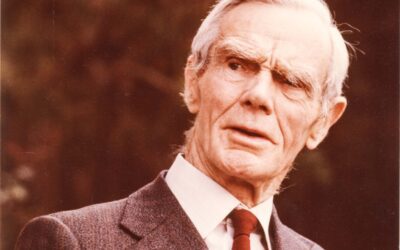
Tim Ingold, a British anthropologist whose work has revolutionized how we think about movement, making, and being human, offers a radical alternative. For Ingold, life is not a series of points connected by lines. Life is the line. We are not beings who travel between destinations; we are becomings whose very existence is the trail we leave behind and the path that opens before us.
This isn’t just philosophy. It’s a profound reframing with immediate clinical implications—one that challenges goal-oriented approaches to therapy, validates the “meandering” path of trauma survivors, and elevates activities like knitting, gardening, and woodworking from mere “hobbies” to ontological necessities.
From Network to Meshwork
The Problem with Networks
Modern psychology loves networks. We speak of neural networks, social networks, family systems, attachment networks. The metaphor is everywhere, and it seems useful: nodes (people, neurons, family members) connected by lines (relationships, synapses, bonds).
But Ingold argues that the network metaphor fundamentally misrepresents how life actually works. In a network:
The nodes are primary—they exist first, then get connected
The lines are mere connectors—channels for transport between pre-existing points
The structure is essentially static—you can map it, diagram it, freeze it in time
Movement is secondary—something that happens between the real things (the nodes)
Think of how we draw a “social network”: circles representing people, lines drawn between them to show connections. The circles come first. The lines are added. The diagram captures a static structure that supposedly underlies dynamic relationships.
Ingold suggests this gets everything backwards. Drawing on the work of philosophers like Gilles Deleuze and Henri Lefebvre, he proposes an alternative: the meshwork.
The Meshwork: Lines All the Way Down
In a meshwork, lines are not connectors between pre-existing points. Lines are primary. The “nodes” or “knots” that appear in a meshwork are not static points but places where multiple lines of movement have become entangled, bound together, knotted.
Consider a spider’s web (one of Ingold’s favorite examples). The web is not a network of points connected by silk threads. The web is silk threads—lines laid down by a spider’s movement through space. Where threads cross and bind, we see what looks like a “node,” but this is just where lines have knotted together. The lines came first.
Or consider a path through a forest. The path wasn’t drawn between two pre-existing points. The path emerged from repeated walking. It is a trace of movement, a line that came into being through the practice of wayfaring. The “destinations” (the village, the stream) are places where many paths have converged—knots in a meshwork of trails.
Ingold writes: “The meshwork is not a network of point-to-point connections. It is an entanglement of lines of life, growth, and movement.”
Why This Matters Psychologically
The shift from network to meshwork isn’t just semantic. It changes what we think a person is.
In the network model, you are a node—a bounded entity with an inside and an outside. Your “connections” to others are relationships that link your container-self to their container-selves. Your identity is located within you; relationships are external additions.
In the meshwork model, you are a line—a trail of becoming that extends through time and space. What looks like “you” is actually a knot where multiple lines have bound together: the line of your ancestry, the lines of your relationships, the lines of your habits and practices, the lines of the places you’ve walked and the things you’ve made. You are not a container; you are a gathering of movements.
This resonates deeply with process-oriented philosophies like that of Henri Bergson, who argued that we are not static beings but continuous becomings—duration made flesh. It also connects to the Jungian concept of individuation as an ongoing process rather than a final state.
Wayfaring vs. Transport
Two Ways of Moving Through the World
Ingold makes a crucial distinction between two modes of movement: transport and wayfaring.
Transport is movement conceived as getting from point A to point B. The journey itself is incidental—a cost to be minimized, a delay to be endured. The only thing that matters is arrival. A package being shipped across the country is in transport mode: it doesn’t experience the journey; it only “exists” at origin and destination.
Wayfaring is movement as a way of being. The wayfarer doesn’t travel between points; they travel along lines. The path is not a means to an end; the path is the life. Every step matters. The journey isn’t what happens between destinations—the journey is the whole thing.
Consider the difference between commuting and walking. The commuter is in transport mode: home and office are the only “real” places; the time spent traveling between them is dead time, wasted time, time subtracted from life. The walker, by contrast, is wayfaring: the walk itself is the experience, rich with encounters, observations, and the gradual transformation that comes from moving through the world.
The Clinical Tragedy of Transport Mode
Modern life pushes us toward transport mode. We conceive of life as a series of destinations: graduate, get a job, get married, have children, get promoted, retire, die. The time “between” these destinations feels like waiting—not yet arrived, not really living.
This breeds a particular kind of suffering that shows up constantly in therapy:
“I’ll be happy when I finish my degree.”
“Life will really start when I meet someone.”
“I’m just trying to get through this difficult period.”
“Once I heal from this trauma, I can finally live.”
Notice the structure: life is located at the destination. The present is just transport—endured, not inhabited. The client is perpetually “not there yet,” waiting for life to start.
This is the psychology of transport mode. And it’s a trap. Because there’s always another destination. Even “healed” becomes just another point on the way to the next goal. The client never arrives because arrival is structurally impossible—life keeps moving, and if you’ve defined life as destination-reaching, you’ll always be in transit.
The Liberation of Wayfaring
Ingold’s wayfaring offers a different orientation. What if there are no destinations—only the continuous path? What if “healing” isn’t a place you arrive at but a way of walking? What if the “difficult period” isn’t dead time to be endured but is itself the life, as real and valid as any other stretch of the line?
This reframe is therapeutically powerful, especially for trauma survivors. Trauma often disrupts the capacity for destination-thinking anyway—the future becomes unimaginable, goals feel meaningless, the life-narrative fractures. Traditional goal-oriented approaches (like CBT) try to restore destination-thinking: set goals, work toward them, measure progress.
But what if the trauma survivor’s difficulty with destinations isn’t a symptom to be fixed? What if it’s an accidental wisdom—a forced recognition that life was never about destinations in the first place?
The wayfaring frame says: You don’t need to know where you’re going. You don’t need to “arrive” anywhere. You just need to keep walking, attending to the path as it unfolds. The walk is the life. Every step counts, not because it gets you closer to a goal, but because it is your life, happening now.
Reframing “Stuckness”
The Knot as Gathering, Not Blockage
Clients often describe feeling “stuck”—unable to move forward, trapped, blocked. In transport mode, stuckness is a catastrophe: you’re supposed to be moving toward a destination, and you’ve stopped. Something is wrong. The blockage must be removed.
But in meshwork thinking, what is a knot? It’s not a blockage. It’s a gathering—a place where multiple lines have come together and bound themselves into something stronger than any single thread.
Consider a literal knot in rope. The knot isn’t where the rope has “failed” to be straight. The knot is where the rope has gathered strength, where multiple passes of the line have interwoven to create holding power. Sailors know that knots are essential—you can’t secure anything with a straight line. The binding is in the knotting.
What if psychological “stuckness” is similar? What if the places where we seem to stop, circle, repeat, and tangle are not blockages but gatherings—places where the lines of our life are binding together into something that will hold?
This reframe is particularly relevant for trauma work. Trauma survivors often circle back to the same themes, the same emotions, the same patterns. In transport mode, this looks like failure to progress—stuck in the past, unable to move on. But in meshwork thinking, this circling might be the psyche doing exactly what it needs to do: binding the lines of experience into a knot strong enough to hold.
As I’ve explored in my work on understanding trauma, the body and psyche have their own wisdom about what they need to process and integrate. The “stuck” places may be where that processing is most actively happening.
Clinical Reframe: From “Getting Unstuck” to “Attending to the Knot”
Traditional therapy often frames the goal as “getting unstuck”—breaking through the blockage, resuming forward movement. Ingold’s framework suggests a different approach: attending to the knot.
What lines are gathering here? What experiences, relationships, memories, and patterns are binding together? What is being made strong through this entanglement?
Instead of trying to untangle and resume linear progress, we might ask:
What does this knot know that straight-line thinking doesn’t?
What would be lost if we simply “cut through” and moved on?
What is being woven together that needs to be woven together?
This is not an argument for endless rumination or wallowing. Knots can become too tight; gatherings can become traps. But the reframe shifts the therapist’s stance from adversary of stuckness to curious companion in the work of binding.
Thinking Through Making—The Craft of the Self
Against Hylomorphism: How Creation Really Works
Ingold’s second major contribution involves rethinking how making works. The dominant Western model of creation—which Ingold calls “hylomorphism”—assumes that a maker imposes a mental form onto passive matter. The sculptor imagines the statue, then forces the marble to conform to that image. Mind shapes matter; form precedes material.
But anyone who actually makes things knows this isn’t how it works. The carpenter must follow the grain of the wood. The potter must respond to the resistance of the clay. The knitter must attend to the tension of the yarn. Making is not imposition—it’s correspondence.
Ingold uses this term deliberately. To correspond is to respond with—to enter into a back-and-forth dialogue with materials and forces. The maker doesn’t dictate to the material; they correspond with it, following its tendencies while gently guiding toward emergent form.
He writes: “The craftsman does not impose form on matter. Rather, he follows the forces and flows of materials, coaxing them to their desired end.”
This resonates with philosophical traditions from Taoist wu-wei to Heidegger’s understanding of techne. True making isn’t about domination; it’s about attunement.
The Hylomorphic Therapist vs. The Corresponding Therapist
Now apply this to therapy.
The Hylomorphic Therapist operates like the sculptor in the traditional model. They have a mental image of what “wellness” or “healing” looks like. They have a treatment plan—a form to be imposed. The client is the material onto which this form will be stamped. When the client resists, it’s seen as a problem with the material: non-compliance, defense mechanisms, treatment resistance.
The Corresponding Therapist operates like Ingold’s craftsman. They attend to the “grain” of the client—their particular patterns, resistances, tendencies, and textures. They don’t try to impose a predetermined form; they follow the forces of the client’s psyche, coaxing and guiding rather than forcing. Resistance isn’t a failure; it’s information—the texture of the material revealing itself.
This distinction transforms how we understand therapeutic resistance. In the hylomorphic model, resistance is obstacle—something to be overcome, broken through, or circumvented. In the correspondence model, resistance is texture—the grain of the wood that tells you which way to cut.
Brainspotting and other somatic approaches often work this way naturally. The therapist follows the client’s body, attending to what emerges rather than imposing a predetermined protocol. The resistance—the places where the body braces, the topics that trigger shutdown—become the map, not the obstacle.
Why Resistance Is the Grain
A skilled woodworker doesn’t resent the grain of the wood. The grain is what makes each piece unique; it’s also what determines what’s possible. You can’t cut across the grain without splintering. But if you follow it, the wood will yield to beautiful forms that work with its nature rather than against it.
Client resistance works the same way. The places where a client resists aren’t flaws to be fixed. They’re the psyche’s grain—the patterns of protection, the structures of survival, the defenses that have kept this particular person alive and somewhat intact.
The question isn’t “How do I overcome this resistance?” The question is “What is this resistance telling me about how this psyche works? What will it yield to if I follow its grain instead of cutting against it?”
This connects to what Donald Kalsched has explored in his work on archetypal defenses in trauma: the protective mechanisms that emerge from wounding are not simply pathology. They are the psyche’s best attempt at survival. Working with them rather than against them is not just more effective—it’s more ethical.
The Ontological Necessity of Craft
Making as Thinking, Making as Being
Ingold argues that making is not a secondary activity—something we do after we’ve finished thinking. Making is thinking. When we engage with materials—clay, wood, yarn, soil—we think through our hands. The thinking emerges in the making, not before it.
This has profound implications for the “coping skills” often recommended in therapy: knitting, gardening, woodworking, cooking, painting. In standard therapeutic discourse, these activities are treated as “hobbies” that provide “distraction” or “relaxation.” They’re secondary—nice additions to the real work of talk therapy and insight.
Ingold’s framework elevates these activities to something far more significant. They are not hobbies; they are ontological necessities. Through making, we don’t just distract ourselves from our problems—we think through our problems. We discover things that could never be discovered through talk alone.
The hands have their own intelligence. The body-brain knows things the cognitive brain doesn’t. As somatic therapy has long recognized, healing often happens below the neck, in the engagement of muscle and movement and material resistance.
What Craft Actually Does
When a trauma survivor knits, something happens that goes beyond relaxation. The repetitive motion of the needles, the correspondence with the tension of yarn, the gradual emergence of form from formlessness—this is the psyche working through material, thinking through making.
When someone tends a garden, they’re not just “getting fresh air.” They’re engaging in an extended dialogue with living things that grow on their own schedule, that resist and yield, that die and regenerate. They’re practicing a relationship with forces beyond their control—a relationship trauma often disrupts.
When someone builds something with wood, they’re encountering the grain—the resistance of material that has its own nature, its own history, its own ways of yielding and refusing. They’re learning to correspond rather than dominate, to follow rather than force.
These aren’t metaphors for therapy. They are therapy—therapeutic processes that happen through hands and materials rather than through words.
The Art Therapy Connection
Art therapy has long intuited what Ingold articulates theoretically. When clients paint, sculpt, or collage, they access modes of knowing that verbal processing can’t reach. But too often, art therapy is treated as a supplement to “real” therapy—useful for clients who struggle to verbalize, but not as rigorous as talk-based approaches.
Ingold provides the theoretical foundation for taking art therapy—and all making—completely seriously. Making isn’t a substitute for thinking; making is thinking. The client who can’t articulate their trauma but can paint it isn’t avoiding the work; they’re doing the work through a different medium. The painting thinks what words cannot.
This elevates “somatic mapping,” sand tray work, and other embodied/material approaches from adjunct techniques to core therapeutic modalities. When we engage with materials, we engage in correspondence—the same kind of attending, following, and coaxing that effective therapy requires.
Practical Applications
Therapeutic Reframes from Ingold’s Framework
On progress:
Traditional: “You need to move forward, reach your goals, make progress toward wellness.”
Ingoldian: “Notice the path you’re walking. Every step is your life, happening now. Where are you curious to go next?”
On stuckness:
Traditional: “You’re stuck. Let’s identify the blockage and work through it.”
Ingoldian: “Something is gathering here. What lines are binding together? What might be getting stronger through this knotting?”
On resistance:
Traditional: “Your defenses are blocking the work. We need to get past them.”
Ingoldian: “Your psyche has a particular grain. I’m trying to understand which way it runs, so I can work with it rather than against it.”
On goals:
Traditional: “Where do you want to be in five years? Let’s set measurable objectives.”
Ingoldian: “What direction interests you? What path feels alive? The walking is what matters, not the destination.”
On coping skills:
Traditional: “Knitting might help you relax when you’re anxious.”
Ingoldian: “Working with materials is a form of thinking. What might you discover through making that you can’t discover through talking?”
Embodied Exercises
Walking meditation (wayfaring practice):
Take a walk without a destination. Don’t walk to somewhere—just walk. Pay attention to the ground under your feet, the air on your skin, what catches your eye. Notice what happens when you’re not trying to arrive anywhere. This is practice for inhabiting the line rather than rushing toward the point.
Grain-following exercise:
Take up a craft that involves material resistance—carving, pottery, knitting, baking bread. Notice when the material yields and when it resists. Practice following its grain rather than forcing your will. Notice what this teaches you about working with rather than against.
Knot contemplation:
When you feel stuck, instead of trying to push through, try asking: “What is gathering here? What lines of my life are binding together at this point? What might be getting stronger through this entanglement?” Journal or draw what emerges.
Connections to Other Traditions
Resonances with Process Philosophy
Ingold’s work resonates with process philosophy, particularly the thought of Alfred North Whitehead and, closer to psychology, Henri Bergson. These thinkers argue that reality is fundamentally dynamic—made of processes rather than substances, becomings rather than beings.
William James, the father of American psychology, developed a “stream of consciousness” model that has meshwork qualities—consciousness as flow rather than a series of discrete states. Ingold extends this from inner experience to embodied life in the world.
Connections to Eastern Philosophy
The wayfaring orientation has deep resonances with Taoist philosophy, where the way (Tao) is precisely not a destination but an ongoing practice of walking in harmony with the nature of things. The craft of correspondence echoes wu-wei—action that flows with rather than against the grain of reality.
Buddhist emphasis on impermanence and the delusional nature of fixed self-concepts also aligns with Ingold’s line-thinking. If we are not bounded entities but trails of becoming, then the Buddhist analysis of the self as process rather than substance gains a new anthropological dimension.
Resonances with Indigenous Knowledge
Ingold draws extensively on indigenous ways of knowing, which often emphasize relationship, movement, and dwelling over bounded property and static identity. The meshwork model of interconnection reflects indigenous understandings of human embeddedness in webs of relationship with land, ancestors, and other-than-human beings.
This is particularly relevant for therapeutic work with clients from indigenous backgrounds, or for anyone trying to recover a more relational, less atomized sense of self. Aztec philosophy, for instance, offers rich resources for understanding self-as-process rather than self-as-substance.
The Anthropology of Therapeutic Becoming
Tim Ingold’s anthropology offers therapists several revolutionary reframes:
Life is a line, not a point. We are not beings contained in bodies, moving between destinations. We are becomings—trails of movement through time and space. Healing isn’t a place we arrive at; it’s a way of walking.
Knots are gatherings, not blockages. When clients feel stuck, something may be binding together—lines of experience weaving into strength. The therapist’s task isn’t always to untangle but sometimes to attend, to witness the knotting, to trust the gathering.
Resistance is grain, not obstacle. The places where clients resist reveal the texture of their psyche. Working with the grain produces beautiful, sustainable transformation. Cutting against it produces splintering.
Making is thinking. Craft activities aren’t distractions from therapeutic work; they are therapeutic work conducted through a different medium. The hands know things the mouth cannot say.
Correspondence, not imposition. The wise therapist doesn’t stamp a predetermined form onto passive client-material. They enter into correspondence—responding with, following forces, coaxing toward emergence.
These insights don’t replace existing therapeutic frameworks; they deepen them. Jungian work with process and individuation, somatic approaches to body wisdom, Brainspotting’s following of the eye—all of these already practice what Ingold articulates. His contribution is to provide the anthropological and philosophical grounding that elevates these practices from “techniques” to ways of understanding what human life actually is.
We are not containers to be fixed. We are lines to be walked, knots to be bound, correspondences to be entered. The craft of the self is exactly that—a craft. And craft, as every maker knows, requires patience, attention, following the grain, and the willingness to let the material guide you toward forms you could not have imagined at the start.
This is wayfaring. This is therapy. This is life.
References and Further Reading
Tim Ingold’s Major Works:
Ingold, Tim. Lines: A Brief History. Routledge, 2007.
Ingold, Tim. The Perception of the Environment: Essays on Livelihood, Dwelling and Skill. Routledge, 2000.
Ingold, Tim. Making: Anthropology, Archaeology, Art and Architecture. Routledge, 2013.
Ingold, Tim. Being Alive: Essays on Movement, Knowledge and Description. Routledge, 2011.
Ingold, Tim. Correspondences. Polity, 2020.
Related Philosophical Sources:
Bergson, Henri. Creative Evolution. 1907.
Deleuze, Gilles and Félix Guattari. A Thousand Plateaus. 1980.
Whitehead, Alfred North. Process and Reality. 1929.
Clinical Resources:
American Journal of Orthopsychiatry
American Art Therapy Association





0 Comments