
The Wizard of Phoenix
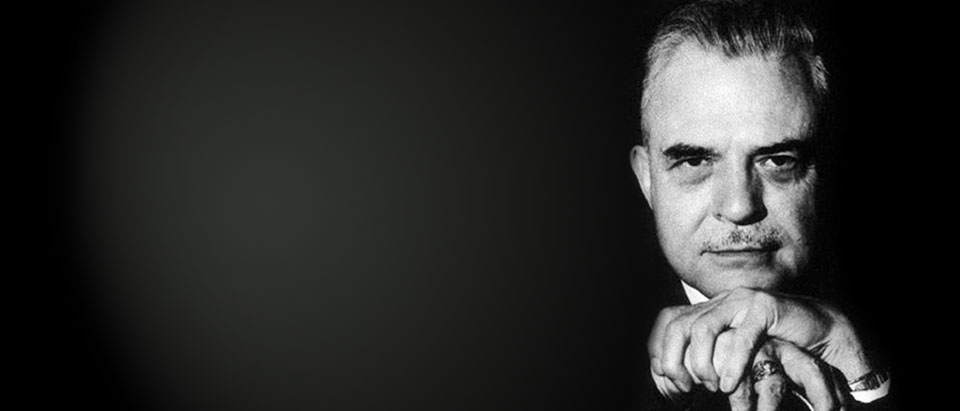
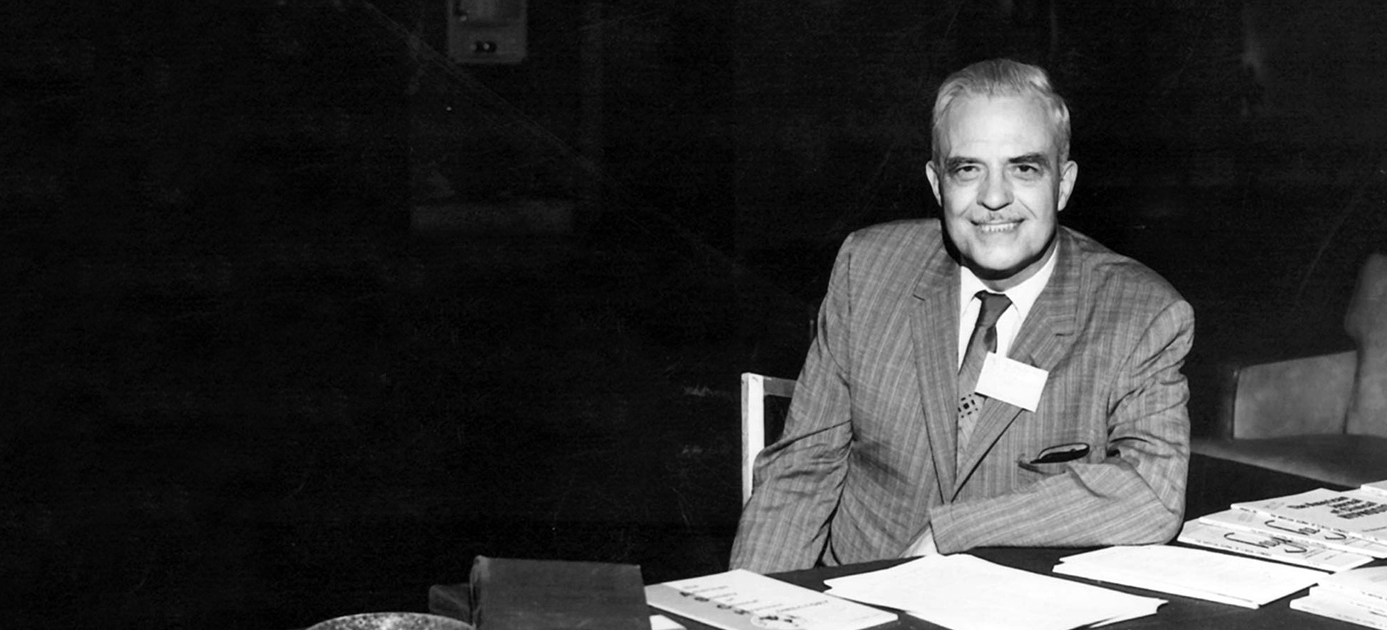
In the history of psychotherapy, there are theorists, and there are healers. Milton H. Erickson (1901–1980) was a healer of such uncanny intuition that he was often called “The Wizard of Phoenix.” While Freud was analyzing the past, Erickson was utilizing the present to create immediate change.
Erickson is the father of modern medical hypnosis and Strategic Therapy. He believed that the unconscious mind is not a dark cellar of repressed urges, but a vast reservoir of resources. His approach was radically tailored to the individual; he never used the same technique twice. He taught us that therapy is not about fitting a client into a theory, but about finding the unique key to unlock their specific problem.
Biography & Timeline: Milton H. Erickson
Born in a mining camp in Nevada, Erickson’s life was defined by overcoming severe disabilities. He was color blind, tone deaf, and dyslexic. At age 17, he contracted polio and was paralyzed, expected to die. Lying in bed, unable to move anything but his eyes, he began to intensely observe human behavior—the minute shifts in muscle tone and breath. He taught himself to walk again by observing his baby sister learn to crawl.
This experience gave him a superpower: he could read non-verbal communication like a book. He became a psychiatrist and eventually settled in Phoenix, Arizona, where he saw clients in his home office (often wearing purple, the only color he could see clearly). He influenced almost every major school of therapy that followed, including NLP, Solution-Focused Therapy, and Family Systems.
Key Milestones in the Life of Milton Erickson
| Year | Event / Publication |
| 1901 | Born in Aurum, Nevada. |
| 1919 | Contracts polio; paralyzed and learns to walk again. |
| 1928 | Receives Medical Degree. |
| 1957 | Founds the American Society of Clinical Hypnosis. |
| 1973 | Publication of Uncommon Therapy by Jay Haley, popularizing Erickson’s work. |
| 1980 | Dies in Phoenix, Arizona. |
Major Concepts: Utilization and the Double Bind
Utilization
Erickson’s core principle was Utilization. Whatever the client brings—resistance, skepticism, a weird symptom—should be used, not fought.
Example: A client who paced anxiously was told to pace specifically to measure the room for the therapist. By taking control of the symptom, the resistance was broken.
The Therapeutic Double Bind
Erickson used “double binds” to force change. A double bind is a choice where both options lead to the therapeutic goal.
Example: “Would you like to go into a trance in this chair or that chair?” The client focuses on the chair choice, while the presupposition (going into a trance) slips past their defenses.
Indirect Suggestion
Direct commands (“Relax!”) often trigger resistance. Indirect suggestions (“I wonder how comfortable your hands will feel as they rest there…”) bypass the conscious mind and speak directly to the unconscious.
The Conceptualization of Trauma: Disrupted Learning
Erickson viewed trauma not as a “wound” but as a “stuckness” in development. The unconscious mind knows how to heal, but the conscious mind gets in the way with fear and rigid thinking.
Confusion Technique
To treat trauma, Erickson often used the Confusion Technique. He would speak in complex, circular, or non-sequitur sentences to overload the client’s conscious mind. When the conscious mind “gave up” trying to understand, the unconscious mind would open up to a new, healing suggestion. This is similar to the “pattern interrupt” used in modern trauma therapies like EMDR.
Legacy: The Unconscious as Ally
Milton Erickson changed the definition of the unconscious. For Freud, it was an enemy; for Erickson, it was a wise friend. He taught therapists to trust their clients’ inner resources.
His legacy is the art of flexibility. He reminds us that “Every person is a unique individual. Hence, psychotherapy should be formulated to meet the uniqueness of the individual’s needs, rather than tailoring the person to fit the Procrustean bed of a hypothetical theory.”
Bibliography
- Haley, J. (1973). Uncommon Therapy: The Psychiatric Techniques of Milton H. Erickson, M.D.. W. W. Norton & Company.
- Erickson, M. H., & Rossi, E. L. (1981). Experiencing Hypnosis: Therapeutic Approaches to Altered States. Irvington.
- Zeig, J. K. (Ed.). (1980). A Teaching Seminar with Milton H. Erickson. Brunner/Mazel.
- Rosen, S. (1982). My Voice Will Go with You: The Teaching Tales of Milton H. Erickson. W. W. Norton & Company.













0 Comments