
I. The Architecture of Magnificent Error
In the intellectual history of the human sciences, there exists a rare and distinctive category of scholarship which might be termed the “magnificent failure.” These are works of sweeping ambition, immense erudition, and seductive narrative power that attempt to systematize the entirety of human cultural or psychological experience into a single, cohesive evolutionary framework. They are characterized by a fearlessness that borders on hubris, proposing grand unified theories of the human mind that, while eventually dismantled by the grind of empirical rigor and methodological advancement, leave an indelible and often foundational mark on the disciplines they sought to revolutionize. Sir James George Frazer’s The Golden Bough (1890–1915) stands as the undisputed archetype of this genre in the field of social anthropology, just as Julian Jaynes’s The Origin of Consciousness in the Breakdown of the Bicameral Mind (1976) does for the field of psychology. Both men were architects of cognitive chronologies that have been largely rejected by the consensus of modern scholarship. Frazer’s teleological progression from the age of Magic to the age of Religion, and finally to the age of Science, is now widely viewed as a colonialist artifact of Victorian evolutionism—a projection of 19th-century rationalism onto the complex tapestry of global cultures. Similarly, Jaynes’s startling assertion that subjective consciousness is a learned cultural behavior less than 3,000 years old, preceded by a millennia-long state of auditory hallucination caused by a “bicameral” brain architecture, is dismissed by mainstream neuroscience as anatomically implausible and historically reductionist. Yet, paradoxically, both works remain intellectually vital and continue to be read, cited, and debated with a fervor rarely accorded to the “correct” but drier textbooks of their respective eras. When stripped of their erroneous historical timelines and neuro-anatomical speculations, The Golden Bough and The Bicameral Mind reveal profound, arguably indispensable truths about the phenomenology of the human experience. They function as “cognitive archaeology”—excavations of mental states that, while perhaps not historical “stages” in the linear sense, represent permanent, latent modalities of the human psyche. This report provides an exhaustive analysis of Frazer’s The Golden Bough, dissecting its methodological flaws and retrieving its enduring insights through the lenses of modern cognitive science, depth psychology, and comparative religion. Furthermore, it executes a rigorous comparative analysis with Julian Jaynes, positing that both figures belong to a specific tradition of “useful fiction” in science: theories that are broadly wrong in their causal explanations but startlingly correct in their descriptive observations of human nature.
II. The Frazerian Architectonic: The Priest, The Magic, and The King
2.1 The Riddle of Nemi
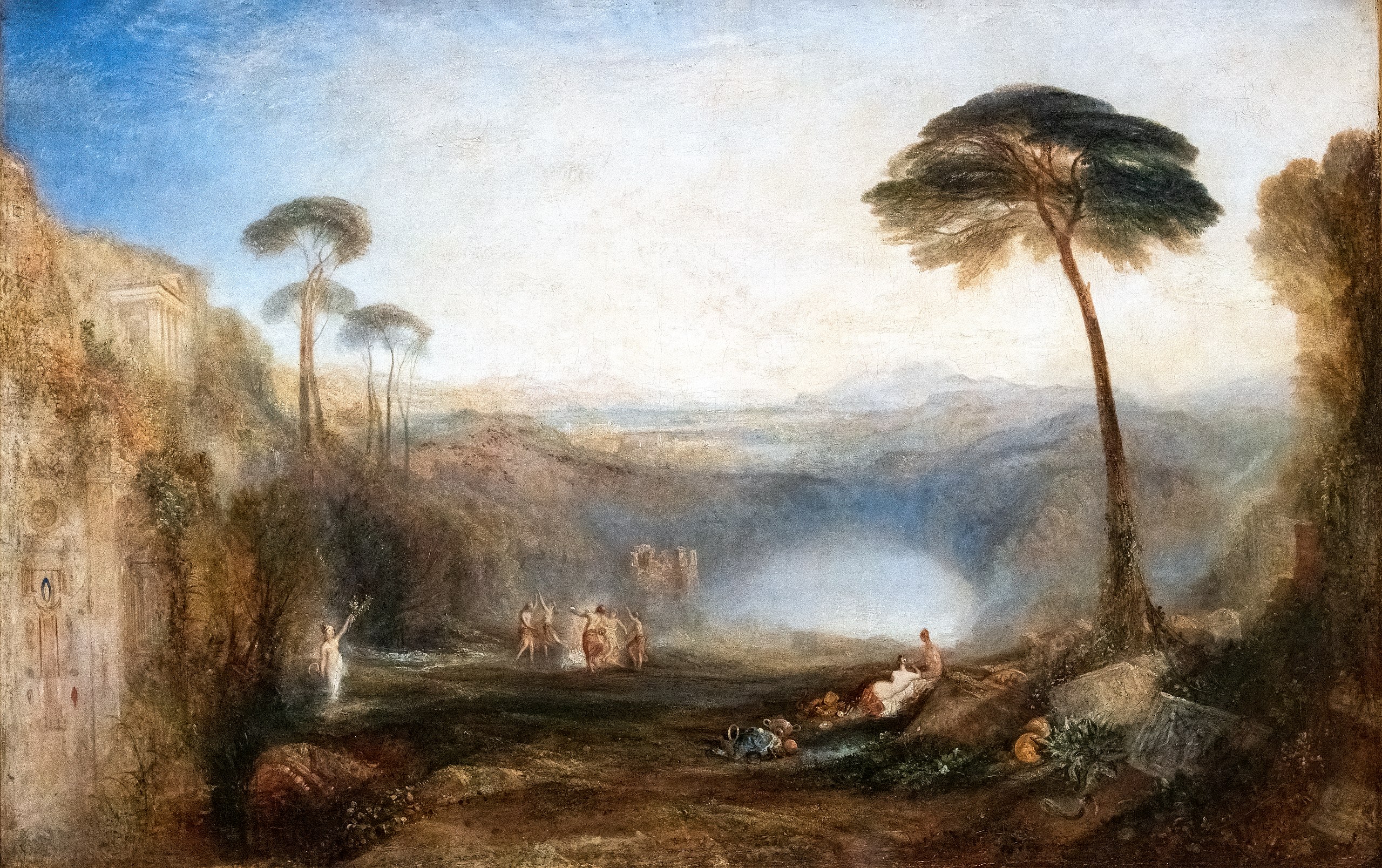
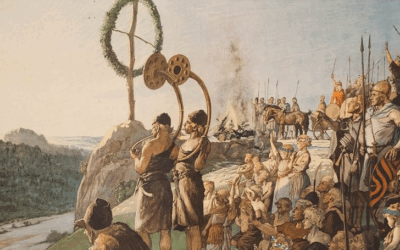
To understand the sheer scale of Frazer’s project, one must begin where he began: in the sacred grove of Diana at Nemi, in the Alban Hills of Italy. It was here, in antiquity, that a grim ritual played out which served as the catalytic question for Frazer’s twelve-volume exploration. The priest of the grove, known as the Rex Nemorensis (King of the Wood), held his office only by the right of the sword. He was a fugitive, a murderer who had slain his predecessor, and who remained priest only as long as he could defend himself against the next challenger. Before the challenger could attack, however, he was required to pluck a “Golden Bough” from a sacred tree within the grove. Why, Frazer asked, was the priest called a King? Why did he have to die? And what was the significance of the Golden Bough? From this localized historical curiosity, Frazer spiraled outward, constructing a colossal comparative framework that sought to link the rude rituals of Italian runaways to the sophisticated mythologies of Egypt, the Levant, and the rituals of peasant Europe. His answer was that the Priest of Nemi was a survival of an ancient, universal system of “Sacred Kingship,” in which the vitality of the King was sympathetically bound to the vitality of the land. To prevent the cosmos from decaying, the King-God had to be ritually slaughtered at the peak of his strength, ensuring the soul of the world was transferred to a fresh, vigorous vessel.
2.2 The Evolutionary Triad: Magic, Religion, Science
Frazer framed his investigation within a positivist evolutionary schema inherited from Auguste Comte and his mentor E.B. Tylor. He posited that human thought has evolved through three distinct, successive stages, a trajectory that mirrors the maturation of the human mind from childhood to adulthood. The Age of Magic: In the earliest stage, human beings attempted to control nature directly. They believed in an impersonal, mechanical universe governed by immutable laws. However, their understanding of these laws was flawed, based on false associations of ideas rather than empirical observation. The magician does not plead with the gods; he compels nature to obey through ritual mechanics. The Age of Religion: When the magician inevitably failed to control the weather or the sun, humanity fell into a state of despair. Recognizing their impotence, they hypothesized the existence of invisible, powerful beings—Gods—who controlled the forces of nature. The magician became the priest; the spell became the prayer. Instead of coercing nature, humanity sought to propitiate it. The Age of Science: Finally, the mature mind recognized that the universe is indeed governed by immutable laws, as the magician thought, but that these laws are physical rather than sympathetic. Science returns to the mechanical view of the cosmos but replaces the false logic of magic with the true logic of physics. This framework was attractive because it placed the Victorian scientist at the pinnacle of human development, looking back with a mixture of pity and condescension at the “savage” past. Yet, nestled within this now-discarded chronology was Frazer’s most durable contribution: his taxonomy of magical thinking.
2.3 The Logic of Sympathetic Magic
Frazer argued that the “savage” mind is not illogical; rather, it is mistakenly logical. It functions like a pre-modern scientist, rigorously applying principles of association that are valid in the mind but invalid in the external world. He defined Sympathetic Magic as a system based on the “misapplication of the association of ideas,” specifically the association of similarity and the association of contiguity. This taxonomy remains standard in anthropological theory and has been validated by modern experimental psychology as an accurate description of human heuristic processing.
Table 1: Frazer’s Taxonomy of Sympathetic Magic
| Branch of Magic | Cognitive Principle | The Frazerian Law | Underlying Mechanism | Ethnographic/Modern Example |
|---|---|---|---|---|
| Homeopathic Magic | Similarity | “Like produces like” | The image equals the object. The simulation of an event causes the event to occur. | Ancient: Pouring water to induce rain; injuring an effigy to harm a specific person (Voodoo doll).
Modern: Reluctance to throw darts at a picture of a loved one’s face. |
| Contagious Magic | Contiguity | “Once in contact, always in contact” | Physical contact creates a permanent transfer of invisible “essence” that persists after separation. | Ancient: Using fingernail clippings or hair to influence a person from a distance; avoiding the weapon that wounded a friend.
Modern: Refusal to wear a sweater previously worn by a murderer; cherishing an autograph. |
For Frazer, magic was “bastard science”—a coherent, logical system based on false premises. This view granted a certain cognitive dignity to indigenous peoples, framing them as rational actors operating with bad data, rather than as irrational mystics. However, it also set the stage for the primary critiques that would later dismantle his reputation.
III. The Collapse of the Victorian Paradigm: What Frazer Got Wrong
While The Golden Bough was a monumental literary success, influencing figures from T.S. Eliot to D.H. Lawrence, its scientific standing began to erode almost immediately upon the rise of professional, fieldwork-based anthropology in the early 20th century. The criticisms leveled against Frazer are not merely nitpicks; they attack the fundamental epistemological basis of his work.
3.1 The “Armchair” and the Contextual Vacuum
Frazer was the ultimate “armchair anthropologist.” He famously never conducted fieldwork, and when asked if he had ever met a “black man,” he reportedly replied, “God forbid!” Instead, he relied on a vast network of correspondence with missionaries, colonial administrators, and travelers, as well as classical texts. The fatal flaw in this methodology was the extraction of rituals from their social and cultural fabric to fit a preconceived evolutionary schema. Frazer practiced what is now disparagingly called “cut-and-paste” ethnography. He would take a rain ritual from Australian Aboriginals, a harvest rite from German peasantry, and a myth from ancient Babylon, and treat them as identical manifestations of the same “magical stage” of development. Modern anthropology, pioneered by Bronislaw Malinowski and Franz Boas, asserts that the meaning of a ritual is entirely dependent on its specific functional context within a living society. A rite that looks like a “fertility spell” to a Scottish Presbyterian might actually be a mechanism for social cohesion, a political inauguration, or a complex status exchange. By flattening the immense diversity of human cultures into a single, uniform “primitive mind,” Frazer engaged in a form of intellectual reductionism that modern scholars reject as scientifically invalid and culturally imperialist.
3.2 The Error of Instrumentalism: Wittgenstein’s Philosophical Critique
Perhaps the most devastating philosophical critique of Frazer came not from an anthropologist, but from the philosopher Ludwig Wittgenstein. In his Remarks on Frazer’s Golden Bough (written c. 1931), Wittgenstein attacked Frazer’s core assumption: that “savages” perform rituals solely for instrumental reasons—that is, as a primitive technology to achieve physical results (e.g., making rain, growing crops). Frazer believed that because these rituals failed to achieve their physical goals, they were errors—”bad science.” Wittgenstein argued that Frazer was projecting his own scientific rationalism onto people who were engaged in something entirely different. He posited that ritual is largely expressive, not instrumental. When a person kisses a picture of a loved one, they do not believe the picture feels the kiss, nor do they believe the action will physically affect the loved one. They are expressing an internal state of love or longing through a symbolic action. Wittgenstein famously noted, “Frazer cannot imagine a priest who is not basically a present-day English Parson with the same stupidity and dullness.” By viewing ritual strictly as a failed attempt at mechanics, Frazer missed the emotional, symbolic, and existential dimensions of religious life. He failed to see that a rain dance might be an expression of community solidarity, a reverence for the natural cycle, or a way of managing anxiety, regardless of whether it precipitates rain. This critique effectively decoupled the value of ritual from its “scientific” efficacy, a move that would define the anthropology of religion for the rest of the century.
3.3 The Dissolution of the “Dying and Rising God”
A central pillar of Frazer’s theory was the archetype of the Dying and Rising God. Frazer grouped deities such as Osiris (Egypt), Adonis (Greece), Tammuz (Mesopotamia), Attis (Phrygia), and Balder (Norse) into a single category of vegetation deities who died with the harvest and were resurrected in the spring. This archetype was implicitly extended to Jesus Christ, suggesting that Christianity was merely the most successful iteration of a universal pagan vegetation cult. In the mid-to-late 20th century, scholars such as Jonathan Z. Smith and Mark S. Smith dismantled this category through rigorous philological analysis. Detailed examination of Near Eastern texts revealed that many of Frazer’s examples were deities who died but did not rise, or whose “return” was a limited ghost-like existence in the netherworld rather than a triumphant resurrection. Osiris: He does not return to the land of the living; he becomes the Lord of the Dead. He is mummified, not resurrected in the Christian sense. Adonis/Tammuz: While there are lamentations for their deaths, the evidence for their resurrection is often late, ambiguous, or nonexistent in the earliest texts. Frazer had cobbled together disparate myths to create a pre-Christian archetype that made the story of Jesus appear to be the culmination of a universal pagan pattern. While this was literarily compelling and profoundly influential on modernist writers like T.S. Eliot (The Waste Land), the rigorous evidence suggests the “universal pattern” was largely a Frazerian construction.
IV. The Cognitive Residue: What Frazer Got Right
Despite the collapse of his historical and ethnographic credibility, Frazer’s work has experienced a surprising resurgence in the fields of cognitive science and evolutionary psychology. While he was wrong about the evolution of the human mind (that magic is a “primitive” stage we outgrow), he was remarkably accurate about the structure of the human mind (that magical thinking is a fundamental cognitive default).
4.1 The Cognitive Science of Sympathetic Magic
Research by psychologist Paul Rozin and colleagues at the University of Pennsylvania has vindicated Frazer’s definitions of Sympathetic Magic, demonstrating that they are not relics of a savage past but active heuristics in modern, educated, Western adults. The Law of Contagion in the Modern Lab: Rozin’s experiments reveal that modern individuals display strong “contagion” responses that defy germ theory. For example, subjects frequently refuse to drink juice that has been in contact with a sterilized cockroach. Despite knowing scientifically that the cockroach is sterile and the juice is physically safe, the feeling of contamination persists. The “essence” of the cockroach is perceived to have transferred to the liquid—a direct application of Frazer’s Law of Contact. Furthermore, this contagion works in reverse (“backward causation”). People feel uneasy if an enemy stabs a photograph of them, or if a cherished personal item is treated with disrespect, mirroring the “voodoo” logic Frazer described. The Law of Similarity and Essence: Similarly, subjects show reluctance to eat high-quality fudge shaped like dog feces, or to throw darts at a picture of a loved one. The “image equals the object” heuristic, which Frazer identified as the basis of homeopathic magic, remains a powerful cognitive constraint. This suggests that “magic” is not a failed cultural software but a permanent feature of human hardware—a byproduct of the brain’s associative architecture. We are, in effect, “cognitive Frazerians,” constantly navigating a world of invisible essences and symbolic connections.
4.2 Essentialism as a Cognitive Universal
Frazer’s intuition that people view objects as containing invisible “essences” aligns with modern findings in developmental psychology. Bruce Hood and others have shown that children and adults are “intuitive essentialists.” We value an original painting over an identical molecular copy because of its causal history (contact with the artist). We recoil from a sweater worn by a murderer (negative contagion) but covet a guitar played by a rock star (positive contagion). Frazer was “right” to identify these laws as the grammar of human thought. His error was merely temporal; he relegated these traits to the “primitive” past, whereas modern science locates them in the “intuitive” present, co-existing alongside scientific rationality.
V. Lessons for Depth Psychology and Comparative Religion
If anthropology rejected Frazer, psychology embraced him. The Golden Bough provided the mythic raw material for the two dominant schools of depth psychology: Freudian and Jungian analysis. The text functioned as a vast repository of symbols that, while historically decontextualized, proved psychologically resonant.
5.1 Freud: The Oedipal Horde and the Primal Crime
Sigmund Freud relied heavily on Frazer’s data on totemism and taboo for his own speculative work, Totem and Taboo (1913). Freud accepted Frazer’s equation of “savages” with “children” and “neurotics,” a parallel that allowed him to project his clinical findings onto human history. Freud utilized Frazer’s description of the “sacred king” and the stringent taboos surrounding the ruler to formulate the concept of the Super-Ego and the universality of the Oedipus Complex. The “slaying of the King” in Frazer became the “slaying of the Primal Father” in Freud—a theoretical psychic event in human prehistory where the sons killed the tyrannical father, leading to the guilt and repression necessary for the formation of civilization. The Lesson: Like Frazer, Freud was historically wrong; there is no evidence of a primal parricide. However, he was psychologically astute: the ambivalence Frazer described toward the Sacred King (revered yet killed, holy yet unclean) perfectly mirrored the emotional ambivalence Freud observed in neurotics toward authority figures. Frazer provided Freud with the external anthropology of the internal neurosis.
5.2 Jung: The Collective Unconscious and Archetypes
Carl Jung was less concerned with the origins of ritual and more with their teleology—where they were leading the psyche. For Jung, Frazer’s “Dying and Rising God” was not an agricultural error, but a manifestation of a universal Archetype emerging from the Collective Unconscious. The Lesson: Jung validated Frazer’s comparative method not as proof of historical migration or diffusion, but as proof of the structural unity of the human mind. The fact that unrelated cultures produced similar myths of death and rebirth suggested a shared psychic structure. Jung interpreted the “Golden Bough” motif—the descent into the underworld to consult the ancestor—as the psychological necessity of confronting the Shadow and the Anima/Animus to achieve individuation. Where Frazer saw a failed attempt to grow wheat, Jung saw a successful attempt to grow the Self.
5.3 Jordan Peterson: The Psychological Utility of the “False” Myth
In the 21st century, the psychologist Jordan Peterson has revitalized the Jungian/Frazerian approach, arguing for the evolutionary and psychological necessity of these myths. Peterson contends that while the “Dying and Rising God” may not be a historical personage (outside of Christian claims), the pattern is an evolutionary adaptation. It represents the psychological capacity to “let a part of oneself die” (e.g., an outdated belief, a bad habit, a childish ego) so that a new, more adapted self can be born. Peterson uses Frazer’s data (often filtered through Jung and Erich Neumann) to argue that these stories are “meta-truths”—narratives that encode behavioral strategies for survival. The “sacrificed king” is the individual who confronts chaos (the dragon, the unknown) and reconstructs order. Peterson’s popularity suggests that Frazer’s “archetypes,” even if historically constructed, possess a “cognitive attraction” that resonates with the modern search for meaning.
VI. Julian Jaynes and the Bicameral Mind: A Comparative Study in Magnificent Error
To fully understand the legacy of “correct observations within incorrect theories,” one must look to the 20th-century counterpart to Frazer: Julian Jaynes. In 1976, Jaynes published The Origin of Consciousness in the Breakdown of the Bicameral Mind, proposing a theory as audacious, controversial, and structurally similar to The Golden Bough.
6.1 The Bicameral Thesis
Jaynes argued that until roughly 3,000 years ago (specifically, before the collapse of the Bronze Age civilizations around 1200 BCE), humans were not “conscious” in the modern sense. They did not possess an introspective “I” space where they narrated their lives, made decisions, or reflected on their past. Instead, they were “bicameral”: the right hemisphere of the brain generated auditory hallucinations (commands), which the left hemisphere obeyed without question. Jaynes relied on textual evidence, particularly the Iliad and the Old Testament. He noted that in the Iliad, characters do not “decide” to act; they are told to act by gods. Achilles does not quell his anger; Athena grabs his hair and tells him to stop. Jaynes claimed these were literal descriptions of auditory hallucinations generated by the right temporal lobe, interpreted as divine voices. Consciousness, he argued, is a learned cultural metaphor (“mind-space”) developed only after the stress of the Bronze Age collapse caused the “voices” to become erratic and fail.
6.2 Comparison with Frazer: The “Just-So” Story
The parallels between Frazer and Jaynes are striking and instructive: Evolutionary Discontinuity: Both posit a radical, discrete break in human cognition. For Frazer, it is the leap from the Age of Magic to the Age of Religion. For Jaynes, it is the leap from the Bicameral Mind to Subjective Consciousness. Both view “modern” thinking as a relatively recent invention that superseded a radically different mental state. Textual Excavation: Both men mined ancient texts as psychological data. Jaynes treated the literary conventions of Homer (gods intervening) as literal neurological reports. Frazer treated the myths of Orestes and Osiris as literal reports of agricultural rituals. Neuro-Historical Error: Just as Frazer’s timeline of “Magic preceding Religion” is ethnographically unsupported (most cultures practice both simultaneously), Jaynes’s timeline is neurobiologically unsupported. There is no evidence that brain architecture or inter-hemispheric communication changed 3,000 years ago. The corpus callosum did not suddenly alter its function in 1000 BCE.
6.3 What Jaynes Got Right: The Phenomenology of Voice and Metaphor
Despite the rejection of his historical timeline, Jaynes, like Frazer, identified profound phenomenological realities that mainstream science had ignored. Auditory Hallucinations as Latent Potential: Jaynes correctly identified that “hearing voices” is not merely a pathology of schizophrenia but a latent potential of the human brain. Modern research confirms that non-psychotic auditory hallucinations are more common than previously thought, particularly under stress or grief. Jaynes correctly intuited that the brain has a mechanism for generating “otherness.” Externalized Agency: Jaynes provided a compelling framework for understanding the phenomenology of religious revelation. Whether or not the ancients were “zombies” (as critics caricature Jaynes), the experience of inspiration often feels external. The “Muse,” the “Holy Spirit,” or the “Daemon” feels like an intrusion from the outside, consistent with Jaynes’s description of right-hemisphere activity intruding on the language centers. Consciousness as Metaphor: Jaynes argued that consciousness is built on language, specifically metaphor. We “see” the point, “grasp” the idea, “approach” the problem. This view is largely supported by modern cognitive linguistics (e.g., George Lakoff and Mark Johnson), which views abstract thought as fundamentally metaphorical. Jaynes was right that the content of consciousness is culturally constructed, even if the capacity is biological.
6.4 The “Useful Fiction” in Science
Both Frazer and Jaynes utilized a “useful fiction”—a grand, possibly erroneous narrative—to force the reader to confront a strange reality. Frazer forces us to see the “magical” logic underlying our rituals; Jaynes forces us to see the “hallucinatory” fragility of our own ego-consciousness. As Wittgenstein noted of Frazer, the error often lies in the explanation, but the value lies in the arrangement of the data. They both highlight the “otherness” of the past and the precariousness of the present rational mind.
VII. Anthropology and the Turn to Mechanism: Girard and Whitehouse
Post-Frazerian anthropology has attempted to solve the riddle of ritual without falling into Frazer’s evolutionist traps. Two modern theorists, René Girard and Harvey Whitehouse, offer frameworks that correct Frazer’s errors while respecting the data he collected.
7.1 René Girard: The Scapegoat Revealed
René Girard’s “Mimetic Theory” is a direct descendent of Frazer’s interest in the Scapegoat and the Sacred King, but with a crucial inversion. Girard acknowledged Frazer as the one who correctly identified the “founding murder” as the central event of primitive religion, but he accused Frazer of misunderstanding why it happened. The Critique of Frazer: Girard argued that Frazer fell for the “myth’s lie.” Frazer read the myths of the dying king (e.g., Oedipus) and believed the accusations: that the King was a source of pollution or a magical vessel that needed renewing. Frazer accepted the persecutors’ perspective. The Girardian Correction: Girard posits that the “Sacred King” is actually an innocent victim chosen to resolve a mimetic crisis. When a society is torn apart by rivalry (everyone desiring the same things, mimicking each other’s desires), violence escalates. To stop the war of all against all, the mob turns on a single victim (the scapegoat). The murder unites the group, producing peace. Because the victim “caused” the peace (by dying), they are retrospectively deified. The Mechanism: Where Frazer saw a magical agricultural ritual to grow crops, Girard sees a sociological mechanism to contain violence. Frazer was “wrong” about the motive (fertility) but “right” about the centrality of the murder. The “Dying God” is not a vegetation spirit; he is the lynched victim whose death founded the culture.
7.2 Harvey Whitehouse: Modes of Religiosity
While Girard tackles the sociological function, the anthropologist Harvey Whitehouse utilizes cognitive science to explain the patterns Frazer observed without resorting to “stages” of evolution. He proposes two Modes of Religiosity based on distinct memory systems.
Table 2: Whitehouse’s Modes of Religiosity vs. Frazer’s Stages
| Mode | Characteristics | Memory System | Frazerian Parallel |
|---|---|---|---|
| Imagistic Mode | High arousal, infrequent, traumatic/intense rituals (initiation, sacrifice, mutilation) | Episodic Memory (Flashbulb memory) | Corresponds to Frazer’s “primitive” or “magical” rites; the violent Nemi priesthood; the “savage” initiation |
| Doctrinal Mode | Low arousal, frequent, repetitive rituals (sermons, liturgy, daily prayer) | Semantic/Procedural Memory | Corresponds to Frazer’s “Religion” (organized priesthoods, theology, scripture) |
Whitehouse validates Frazer’s observation that there are distinct “types” of religious experience, but proves they are not historical stages (one replacing the other) but cognitive “attractor positions” that coexist in most societies. A single religion can have both doctrinal elements (Sunday school) and imagistic elements (passion plays). This solves the “Frazerian error” of chronology while preserving the “Frazerian truth” of the distinct psychological impacts of different rituals.
VIII. The Value of the Golden Bough
James George Frazer got almost everything wrong. He was wrong about the sequence of history; he was wrong about the function of ritual; he was wrong about the resurrection of Near Eastern gods; he was wrong about the relationship between magic and science. He constructed a history of the world from the safety of a Cambridge library, blinded by the prejudices of his empire and the limitations of his sources. And yet, The Golden Bough remains a masterwork of cognitive archaeology. Frazer cataloged the “night side” of the human intellect—the logic of sympathy, the terror of the tabu, the hunger for the scapegoat—with an exhaustiveness that no modern scholar dares attempt. Like Julian Jaynes, Frazer created a “myth of science”—a narrative that, while factually incorrect, provided a new language to describe the subjective experience of humanity. For Anthropology: He posed the questions of universality that Cognitive Anthropology (Henrich, Whitehouse) is finally answering with data rather than speculation. For Psychology: He provided the imagery of the unconscious, allowing Freud and Jung to map the psyche. For the Modern Reader: He (and Jaynes) serves as a reminder that the “rational” mind is a thin veneer over a deep structure of magical association and dialogic hallucination. Frazer’s work teaches us that a theory need not be true to be generative. As Wittgenstein concluded in his remarks on Frazer: “The correct thing to say is that every view is significant for the one who sees it as significant.” Frazer’s error was thinking he was explaining the past; his triumph was that he was describing the eternal present of the human imagination. In the end, the Golden Bough was not a key to the priesthood of Nemi, but a key to the associative architecture of the human mind itself.











0 Comments