

“So different from the Midwest, where the possibilities sprawled bright and endless in every direction… He wondered if people in the Himalayas and Andes were affected similarly. Did they live in the passive voice, as if their lives were not really happening but instead were memories fixed and immutable?”
—Ron Rash, The World Made Straight
I. The Architecture of the Soul
Language is not merely a tool for describing the world; it is the blueprint for creating it. In the field of depth psychology, we understand that the grammar we use dictates the reality we perceive. This concept, known as Linguistic Relativity (or the Sapir-Whorf hypothesis), suggests that a person’s thoughts and behaviors are determined by the language they speak. If you lack a word for a feeling, can you truly feel it? If your language has no future tense, do you experience anxiety differently?
For the modern clinician, understanding the psychology of language is not an academic exercise; it is a diagnostic necessity. A client who speaks in the passive voice (“Mistakes were made”) is psychologically distinct from one who speaks in the active voice (“I made a mistake”). This article explores how ancient and modern languages construct our cognition, emotion, and sense of agency, and how therapy can be a process of “re-languaging” the self.
II. The Phenomenology of Voice: Agency and Passive Construction
The grammatical choice between active and passive voice is often a mirror of the speaker’s internal locus of control. In Ron Rash’s novel The World Made Straight, characters trapped in cycles of poverty and historical trauma default to the passive voice. Life is something that happens to them, not something they do.
This linguistic passivity is a hallmark of learned helplessness. When a client says, “It felt like the anger just took over,” they are linguistically dissociating from their own emotion. They make the anger the subject and themselves the object. Therapeutic intervention often involves a grammatical shift: moving the client from “I was hit by a wave of sadness” to “I felt sad.” This subtle change restores agency and integrates the fragmented psyche.
III. Heideggerian Ontology: Language as the House of Being
The German philosopher Martin Heidegger (1889–1976) famously declared, “Language is the house of being.” For Heidegger, words do not just label objects; they disclose them. A culture that lacks a word for “Depression” might experience low mood as a spiritual state or a somatic illness, fundamentally altering the phenomenology of the suffering.
This aligns with the work of Carl Jung, who viewed the symbolic language of dreams as a compensatory system for the limitations of conscious speech. Dreams speak the “forgotten language” of the instincts. In therapy, we often find that English—with its obsession with nouns and static objects—fails to capture the fluid, dynamic nature of the unconscious. We must turn to metaphor, poetry, and myth to expand the “house” in which the client dwells.
IV. The Divine Syntax: Nahuatl and the Permeation of the Sacred
Western languages tend to secularize the world, separating “God” from “nature.” However, the Aztec language, Nahuatl, encodes the divine into its very grammar. The concept of Teotl is not a noun but a dynamic, self-generating force. In Nahuatl, one does not simply “walk”; one participates in the cosmic motion of Teotl.
This linguistic structure supports a psychology of constant reverence. The world is not dead matter; it is alive and watching. This is crucial for understanding the origins of prehistoric religion. Ancient peoples did not “believe” in animism; their language forced them to perceive it. Recovering a sense of the sacred in modern therapy often requires breaking the “dead” syntax of English and adopting a more animistic way of speaking about the self and the world.
V. Verb-Based Worldviews: Indigenous Languages and Ecology
English is a noun-heavy language. We see a world of things: “tree,” “river,” “cloud.” However, many Indigenous languages, such as Anishinaabemowin or Hopi, are verb-based. In these languages, a “bay” is not a static object but a process: “water being encompassed by land.” A tree is not a thing, but a “tree-ing” event.
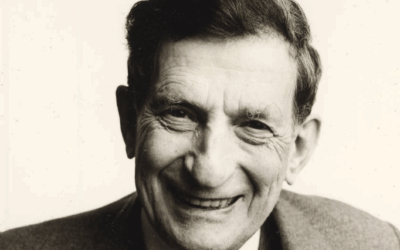
This shift from noun to verb radically alters one’s relationship to nature. If the world is a collection of objects (English), it can be owned and exploited. If the world is a collection of processes (Indigenous), it must be participated in. This informs the work of eco-psychologists like David Abram, who argues that our ecological crisis is partly a crisis of grammar. We treat the living earth as a dead noun.
VI. Temporal Architectures: Greek Cycles vs. Roman Lines
How we speak about time determines how we experience anxiety and destiny.
- Ancient Greek: Emphasized the “aspect” of action (continuous, repeated, or completed) rather than strict linear time. This supported a cyclical worldview where history repeats and fate is unavoidable.
- Latin (Roman): Obsessed with the future perfect tense (“I will have done”). It is a language of law, engineering, and empire. It views time as a line to be conquered.
Modern Western psychology is inherited from the Roman model: linear, goal-oriented, and obsessed with “progress.” However, the unconscious operates on Greek time—cyclical and mythic. Healing trauma often requires stepping out of Roman “linear time” and entering the “dreamtime” of the soul.
VII. The Conceptualization of Trauma: When Words Fail
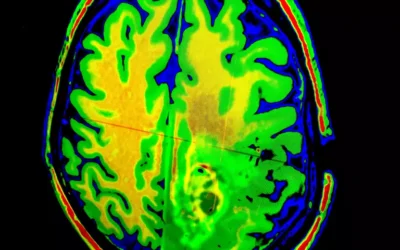
Trauma is often described as “unspeakable.” This is literally true. During a traumatic event, Broca’s area (the speech center of the brain) shuts down. The memory is stored in the right hemisphere as images and sensations, not in the left hemisphere as a verbal narrative.
This creates a linguistic split. The trauma survivor may speak about the event in a detached, reporter-like voice (left brain) while their body is screaming in terror (right brain). Therapy is the process of bridging this gap. We help the client find a language for the sensation, translating the “mute” terror of the body into a coherent story. As Lev Vygotsky noted, inner speech is the mechanism of self-regulation; without words, we cannot regulate the affect.
The Imperative of Linguistic Awareness
We are the prisoners of our grammar, but we are also its architects. By becoming aware of the psychological structures embedded in our language, we can begin to dismantle the walls that confine us. Whether it is moving from the passive to the active voice, or adopting the verb-based worldview of indigenous wisdom, changing our language is the first step in changing our reality.
Bibliography
- Abram, D. (1996). The Spell of the Sensuous: Perception and Language in a More-Than-Human World. Pantheon Books.
- Heidegger, M. (1971). Poetry, Language, Thought. Harper & Row.
- Whorf, B. L. (1956). Language, Thought, and Reality: Selected Writings of Benjamin Lee Whorf. MIT Press.
- Lakoff, G., & Johnson, M. (1980). Metaphors We Live By. University of Chicago Press.
- Boroditsky, L. (2011). “How Language Shapes Thought.” Scientific American, 304(2), 62-65.











0 Comments