Norse Mythology by Neil Gaiman Book Review

by | May 15, 2022 | 0 comments

Chaos, Entropy, and Neil Gaiman: A Therapist’s Take on Norse Mythology

It is rare that I discuss fiction in a professional capacity. My focus is usually squarely on clinical therapy and the mechanics of healing. However, as a clinician who leans toward depth psychology, I find that mythology is inextricably linked to clinical work. The way we view the world, the narratives we construct about our lives, and the way we make meaning out of chaos are all deeply mythological processes.

During a recent break from work, I finally had the time to dive into a stack of books I’d been meaning to read. First on the list was Neil Gaiman’s Norse Mythology.

The Master of Modern Myth

If you aren’t familiar with Neil Gaiman, he is a novelist and comic book writer famous for works like The Sandman and American Gods. His career has largely been defined by fantasy—not necessarily the “high fantasy” of The Lord of the Rings, but rather “deep mythology.” His work consistently explores the lenses through which we make sense of the universe, often taking our personal mythological beliefs to their ultimate conclusions to show us the implications of what we believe.

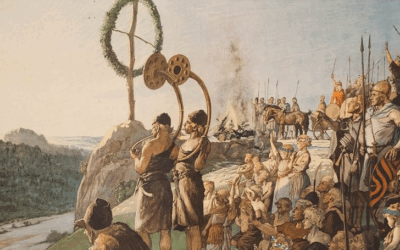
In Norse Mythology, Gaiman isn’t trying to write a dry, didactic academic text. Instead, he provides a narrative retelling of the stories found in the Prose Edda and other primary sources. He creates a bridge for the modern reader, offering context and readability that the ancient sources sometimes lack.

The Texture of the Unknown

One of the most compelling aspects of Norse mythology, which Gaiman captures beautifully, is the presence of “blanks.” In these stories, you can feel the texture of the world, but you don’t always understand the rules.

This stands in stark contrast to Greek mythology. In the Greek pantheon, the hierarchy is clear: you have the big gods, the small gods beneath them, and they all behave with very human motivations. The Greeks famously “made their men gods and their gods men.” The Greek gods are petty, jealous, and silly, while their heroes (like Achilles) are described with god-like reverence. You know the rules of the game in Greek mythology.

Norse mythology offers no such clarity. It is filled with ambiguity and uncomfortable contradictions.

Loki: The God of Entropy

There is no better example of this ambiguity than Loki.

Loki occupies a confusing space in the Norse pantheon. He is counted among the Aesir (the gods), yet he is a frost giant—the sworn enemy of the gods. He is raised by them and allowed to live among them, yet he is constantly plotting against them. Sometimes his tricks are harmless pranks; other times, he kills the gods or their children.

This begs the question: Why is he there? Why do the gods tolerate a being that is essentially their enemy?

If you look at historical Norse sites, you will find towns, mountains, and fjords named after Odin, Thor, and Baldur. But you will find almost nothing named after Loki. In the common mind of the Norse people, he was not a “good” thing to be celebrated.

From a psychological perspective, Loki represents a force of nature. He is inevitability, entropy, and chaos. He represents the variables in life that we cannot get rid of, the decay and disorder that we hate but must learn to live with. He is the shadow in the room that the gods cannot expel because he is a fundamental part of reality.

The Verdict

Gaiman does an excellent job of letting this ambiguity breathe. He doesn’t try to force a canon or a strict set of rules where none exist, which honors the source material.

Initially, I worried this might be a “publisher book”—a project forced on a famous author to sell copies by simply rewriting old myths. It is not. It is clear Gaiman spent years with these stories. It is a short, accessible read, but one that carries the weight of genuine passion.

For anyone interested in the lenses through which humans have historically viewed the chaos of the universe, I highly recommend it.

Explore the Other Articles by Categories on Our Blog 

Hardy Micronutrition is clinically proven to IMPROVE FOCUS and reduce the effects of autism, anxiety, ADHD, and depression in adults and children without drugsWatch Interview With HardyVisit GetHardy.com and use offer code TAPROOT for 15% off

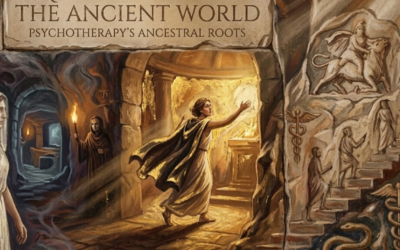
What the Ancient Mysteries Knew About Healing Trauma

What the Ancient Mysteries Knew About Healing Trauma

The Eleusinian, Mithraic, and Dionysian mysteries weren’t religious observances. They were orchestrated psychodramas designed to shatter the ego and rebuild the self. Modern trauma therapy has inadvertently reconstructed their methods.

What is a Diagnosis Anyway: Is the DSM Dying Part 2

What is a Diagnosis Anyway: Is the DSM Dying Part 2

The Archaeology of a Label: What We Forgot About Diagnosis and Why It Matters Now By Joel Blackstock, LICSW-S | Clinical Director, Taproot Therapy Collective Part II of A Critical Investigation into the Document That Defines American Mental Health Contents...

Somatic Reset Techniques You Can do At Home

Somatic Reset Techniques You Can do At Home

Written by the clinical team at Taproot Therapy Collective, a Birmingham psychotherapy practice specializing in somatic and trauma-focused modalities. Our clinicians are trained in body-based approaches including Brainspotting, EMDR, and somatic trauma resolution....

Why We Recommend Hardy Nutritionals: A Clinical Perspective on the Research That Changed How We Think About Treatment Resistance

Why We Recommend Hardy Nutritionals: A Clinical Perspective on the Research That Changed How We Think About Treatment Resistance

Why Taproot Therapy Collective recommends Hardy Nutritionals Daily Essential Nutrients for treatment-resistant mood disorders, ADHD, and emotional dysregulation. Discovered not through advertising but through patients whose bipolar disorder and other conditions finally responded. Over 40 peer-reviewed studies support the NutraTek chelation technology. Use code TAPROOT at gethardy.com for 15% off for life.

The Second Brain Revolution: How Gut Science Is Rewriting Psychiatric Medicine

The Second Brain Revolution: How Gut Science Is Rewriting Psychiatric Medicine

This 2025 strategic report details the shift from theoretical gut-brain models to clinical applications, analyzing the indole-SK2 channel mechanism in anxiety and the efficacy of oral FMT capsules for refractory depression. It evaluates the diagnostic potential of the gut mycobiome and profiles the pharmaceutical pipelines of key industry players like Kallyope and Bloom Science.

The Metabolic Mind: A 2025 Clinical Update on Nutritional Psychiatry

The Metabolic Mind: A 2025 Clinical Update on Nutritional Psychiatry

A 2025 clinical update on nutritional psychiatry for psychotherapists. Explore the latest research on psychobiotics, vitamin D, magnesium, zinc, omega-3s, amino acid therapies, and herbal interventions—including new safety warnings on ashwagandha and evidence that saffron matches SSRI efficacy for mild depression.

Who Is Victor Lamme?

Who Is Victor Lamme?

The Neuroscientist Who Found Consciousness in the Feedback Loops of the Brain When you look at a face, what happens in your brain? The answer turns out to be surprisingly complex. First, visual information streams forward from your eyes through your visual cortex,...

David Grand: From EMDR Trainer to Brainspotting Pioneer Through a Champion Skater’s Frozen Gaze

David Grand: From EMDR Trainer to Brainspotting Pioneer Through a Champion Skater’s Frozen Gaze

David Grand discovered brainspotting in 2003 when a figure skater’s eye wobble revealed where trauma was stored in her brain. By maintaining fixed eye position on that “brainspot” rather than using bilateral movement, processing accelerated dramatically. His development of this approach, now used by 13,000+ therapists worldwide, demonstrates how careful clinical observation combined with willingness to deviate from protocol can produce genuine therapeutic innovation for treating trauma, the yips, and performance blocks.

The Architecture of the Soul and the Machine: A Critical History and Future of Psychotherapy

The Architecture of the Soul and the Machine: A Critical History and Future of Psychotherapy

A critical deep dive into the hidden history of psychotherapy, exploring how the personal traumas of founders like Freud and Jung collided with societal forces to shape modern mental health. Drawing on the works of Adam Curtis, James Hillman, and Sonu Shamdasani, this article traces the shift from the “architecture of the soul” to the “technocratization of care,” exposing the impact of profit motives and algorithmic logic while proposing a metamodern path forward for the profession.

Peter Levine: The Biophysicist Who Taught Trauma to Speak Through the Body

Peter Levine: The Biophysicist Who Taught Trauma to Speak Through the Body

Peter Levine revolutionized trauma treatment through Somatic Experiencing, proving trauma lives in the body’s nervous system. Discover how his work on completing frozen defensive responses, titration, and the SIBAM model provides somatic grounding for Jungian depth psychology and transforms PTSD healing.

0 Comments

Submit a Comment

Your email address will not be published. Required fields are marked *