

Quick Introduction to Jungian Psychology
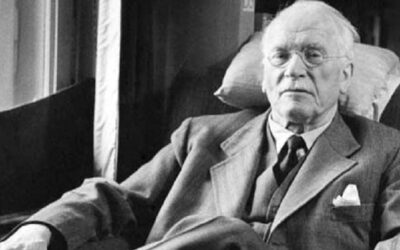
Carl Jung was a Swiss psychiatrist and psychoanalyst who founded the school of analytical psychology in the early 20th century. While Jung began his career as a close associate of Sigmund Freud, he eventually broke away to develop his own theories and approach, which came to be known as Jungian psychology.
At the heart of Jungian thought is the idea that the human psyche is a self-regulating system that strives for wholeness and balance. Jung saw the psyche as composed of various elements – the ego (the conscious self), the personal unconscious (forgotten or repressed personal experiences), and the collective unconscious (a universal repository of ancestral memories and archetypal patterns).
For Jung, psychological growth involved integrating these disparate parts of the psyche into a cohesive whole through a process he called individuation. This lifelong journey of self-discovery required facing and assimilating the hidden, inferior, or disowned aspects of the personality, which Jung termed the shadow.
Let’s explore some of the key concepts of Jungian psychology in more depth:
The Collective Unconscious and Archetypes
One of Jung’s most influential ideas was the notion of the collective unconscious – a part of the unconscious mind that is universal and impersonal, as opposed to the personal unconscious which contains an individual’s unique life experiences.
Jung proposed that the collective unconscious was populated by archetypes – innate, universal prototypes or categories for ideas and images. These primordial patterns manifest in the psyche as images, symbols, and motifs that appear in dreams, myths, and religious iconography across cultures.
Some key Jungian archetypes include:
The Persona:
The social mask we wear to make a favorable impression on others and conceal our true nature.
The Shadow:
The unconscious collection of repressed ideas, weaknesses, desires, instincts, and shortcomings. The shadow often appears in dreams and myths as a villain, monster, or antagonist.
The Anima/Animus:
The unconscious feminine image in a man’s psyche and masculine image in a woman’s psyche. It represents the true self, in contrast with the persona.
The Self:
The central overarching concept that represents the coherent whole, unifying both the conscious and unconscious mind of a person. Jung often represented the self as a mandala, a circular symbol representing wholeness.
Jung believed that psychological issues arose when these archetypes weren’t adequately integrated into conscious awareness. For instance, if an individual over-identifies with their persona at the expense of their authentic self, they may experience feelings of emptiness, falseness, or neurosis. If they deny and project their shadow, they may struggle with emotional volatility, poor self-esteem, and judgmental attitudes.
Symbols and the Language of the Psyche
For Jung, symbols were the essential language of the unconscious mind. He differentiated a symbol from a sign – whereas a sign has a clear, designated meaning (like a red octagon signifying “stop”), a symbol points to a meaning beyond itself that can never be fully explained or exhausted.
Jung observed that symbols often manifest as images in dreams, fantasies, and creative works of art. He believed that engaging with the symbolic language of the psyche was crucial to the individuation process. By bringing unconscious symbolic content into dialogue with the conscious mind, one could facilitate the integration of the personality.
Jung encouraged his patients to pay attention to their dreams, to engage in creative activities like drawing or writing, and to study comparative mythology and religion as methods of engaging the symbolic realm. He developed the technique of active imagination as a way to bridge the conscious and unconscious minds through symbolic expression.
The Process of Individuation
Individuation was the term Jung used to describe the innate drive of the psyche towards wholeness and self-realization. He saw this as a continuous, circuitous process of psychological differentiation, by which the individual becomes increasingly aware of their unique psychological reality, including strengths and limitations, and establishes themselves as a separate identity from the collective.
The individuation journey often follows an archetypal pattern, which Jung related to the hero’s quest in mythology. It begins with a call to adventure, a beckoning from the unconscious to venture into the unknown depths of the psyche. This may come in the form of dreams, visions, or outer life crises that upset the status quo.
As in the hero’s journey, the individual must then cross a threshold, leaving behind the familiar world of the ego and persona, to confront the shadowy, unconscious realm. Here they face tests and challenges, battling metaphorical dragons and demons, which represent the unintegrated aspects of the self.
A key stage in the journey is the encounter with the anima/animus – the inner contrasexual image that represents the individual’s true self beyond the conditioned roles and expectations of the persona. Integrating this inner masculine or feminine often involves reconciling with qualities and impulses that have been neglected or devalued.
The apex of the individuation journey is the confrontation with the Self – the central, unifying archetype of wholeness. This is often experienced as a profound religious or mystical experience, a moment of ego-transcendence in which the individual realizes their fundamental identity with the vastness of the cosmos.
Having attained this expansive awareness, the individual then returns to the ordinary world, seeking to integrate and embody their psychological insights. They strive to live more authentically and consciously, in alignment with their true self, while also contributing their unique gifts to the collective.
Jung cautioned that individuation was a constant, ongoing process, never a once-and-for-all achievement. The psyche remains a living, dynamic system that requires continual tending and balancing. But engaging this process wholeheartedly was, for Jung, the key to a meaningful and fulfilling life.
Jungian Psychology in Practice
As a practicing clinician, Jung sought to help his patients achieve greater wholeness and self-realization by facilitating the individuation process. A Jungian approach to psychotherapy tends to be less focused on symptom reduction and more oriented towards deep self-exploration, dream analysis, and creative expression as means to engage the unconscious and integrate the personality.
Some key aspects of Jungian therapy include:
Dream interpretation:
Jung saw dreams as direct expressions of the unconscious mind. He encouraged his patients to record their dreams and to engage with the symbolic images therein. Jungian dream analysis seeks to unpack the personal and archetypal meanings of dream content in a way that promotes psychological growth.
Active imagination:
Developed by Jung, active imagination is a method of engaging the unconscious through creative expression. In this technique, the patient is asked to focus on an emotionally charged image, mood, or piece of dream content, then allow their imagination to flow freely and spontaneously around it, without conscious directing. This may take the form of writing, drawing, painting, sculpting, dancing, or any other creative activity. The key is to let the unconscious lead and to interact with whatever images or characters emerge, as in a dialogue. Active imagination aims to bridge the conscious and unconscious minds, facilitating the integration of previously unrealized aspects of the self.
Amplification:
Jung often made use of mythological, historical, and cultural references to enrich and deepen the personal meaning of his patients’ experiences. By connecting an individual’s dreams, conflicts, and life stories to larger archetypal patterns, Jung sought to provide a broader context of meaning that could help the patient feel less isolated in their suffering. This practice of drawing parallels between personal and universal symbols is known as amplification.
Individuation:
The overarching goal of Jungian therapy is to support the patient’s innate drive towards wholeness and self-realization. This involves helping the individual to differentiate their true self from the masks and roles they have adopted to fit in with familial and societal expectations. It also requires confronting and integrating the disowned or underdeveloped parts of the personality, including the shadow. Jungian therapy aims to create a safe, non-judgmental space for this kind of deep self-exploration, gently guiding and interpreting without imposing a pre-determined agenda.
While classical Jungian analysis is a distinct tradition, Jung’s ideas have influenced a wide range of psychological disciplines and therapeutic approaches. Many contemporary practitioners incorporate Jungian concepts like the collective unconscious, archetypes, and the individuation process into their work in an eclectic way, combining them with other theoretical perspectives and modalities.
Jung’s legacy extends beyond the clinical realm as well. His ideas about the power of symbols, the universality of certain mythic patterns, and the drive towards self-realization have had a profound impact on fields as diverse as literature, anthropology, religious studies, and pop culture. Jungian concepts frequently appear in creative works, from films to novels to video games, attesting to their enduring resonance in the collective imagination.
Critiques and Limitations
As with any influential thinker, Jung’s work has drawn its share of criticism over the years. Some common critiques include:
- Mysticism: Jung’s ideas about the collective unconscious, synchronicity, and the psychological significance of occult phenomena like alchemy have led some to accuse him of mysticism and pseudoscience. Critics argue that these concepts are not empirically falsifiable and thus fall outside the bounds of scientific psychology.
- Universalism: Jung’s theory of archetypes posits universal, inherited patterns of symbolism and behavior. Some critics argue that this idea minimizes the role of culture and individual experience in shaping psychological life. Post-modern and social constructionist thinkers tend to be skeptical of any claims to universal psychological structures.
- Gender essentialism: Jung’s ideas about anima and animus have been critiqued as promoting essentialist, binary views of gender. Feminist thinkers have argued that Jung’s theory reinforces stereotypical gender roles and fails to account for the diversity and fluidity of gender identity.
- Lack of systemization: Unlike Freud, Jung did not leave behind a highly structured, systematic theory. His ideas evolved over time and he was known for his exploratory, sometimes contradictory style of thinking. This has led some to question the coherence and consistency of Jungian psychology as a theoretical framework.
Despite these critiques, Jung’s influence on modern psychology is undeniable. His emphasis on the creative, symbolic, and spiritual dimensions of the psyche provides a valuable counterpoint to reductionistic and purely pathology-based approaches. His vision of the self as a dynamic, evolving system with an innate drive towards wholeness continues to inspire therapists, artists, and seekers of all stripes.
In many ways, Jung’s legacy lies in the richness and open-endedness of his ideas. Rather than a dogmatic system, Jungian psychology offers a set of perspectives and practices for exploring the depths of the psyche and engaging the big questions of human existence. It invites us to turn inward, to befriend our inner multiplicity, and to discover our own unique path towards wholeness. In this sense, Jung’s work remains a vital and generative resource for anyone seeking a deeper understanding of themselves and the world.
Conclusion The field of Jungian psychology, founded by Carl Jung over a century ago, offers a rich and multifaceted approach to understanding the human psyche. At its core is a vision of psychological growth as a lifelong journey towards wholeness and self-realization, which Jung termed individuation.
This journey requires confronting and integrating the hidden aspects of the self, including the shadow – those disowned or inferior parts we prefer to deny. It involves engaging with the language of the unconscious – the symbols, images, and archetypes that populate our dreams, creative works, and cultural myths. And it calls us to differentiate our authentic self from the personas and roles we adopt to fit in.
Jungian therapy aims to facilitate this process of inner exploration and integration, through practices like dream analysis, active imagination, and amplification. By providing a safe space for deep self-reflection and helping to interpret the messages of the unconscious, Jungian analysts serve as guides and mentors on the individuation journey.
But Jung’s influence extends far beyond the consulting room. His ideas about the collective unconscious, the universality of archetypal patterns, and the power of symbols have shaped fields as diverse as anthropology, religious studies, literature, and popular culture. Jungian concepts offer a lens for finding personal meaning in the great myths and stories of human history.
While not without its critics, Jungian psychology endures as a vital perspective in the contemporary understanding of the psyche. Its emphasis on creativity, spirituality, and the quest for wholeness provides an important counterbalance to reductionistic and pathologizing approaches.
More than a rigid system, Jung’s work offers a rich set of ideas and practices for psychological exploration and growth. It invites us to venture into the uncharted territories of the soul, to befriend our inner diversity, and to find our own path towards realizing our fullest potential. In this way, Jungian psychology continues to inspire therapists, artists, and seekers of all kinds in the ongoing adventure of self-discovery.










0 Comments