
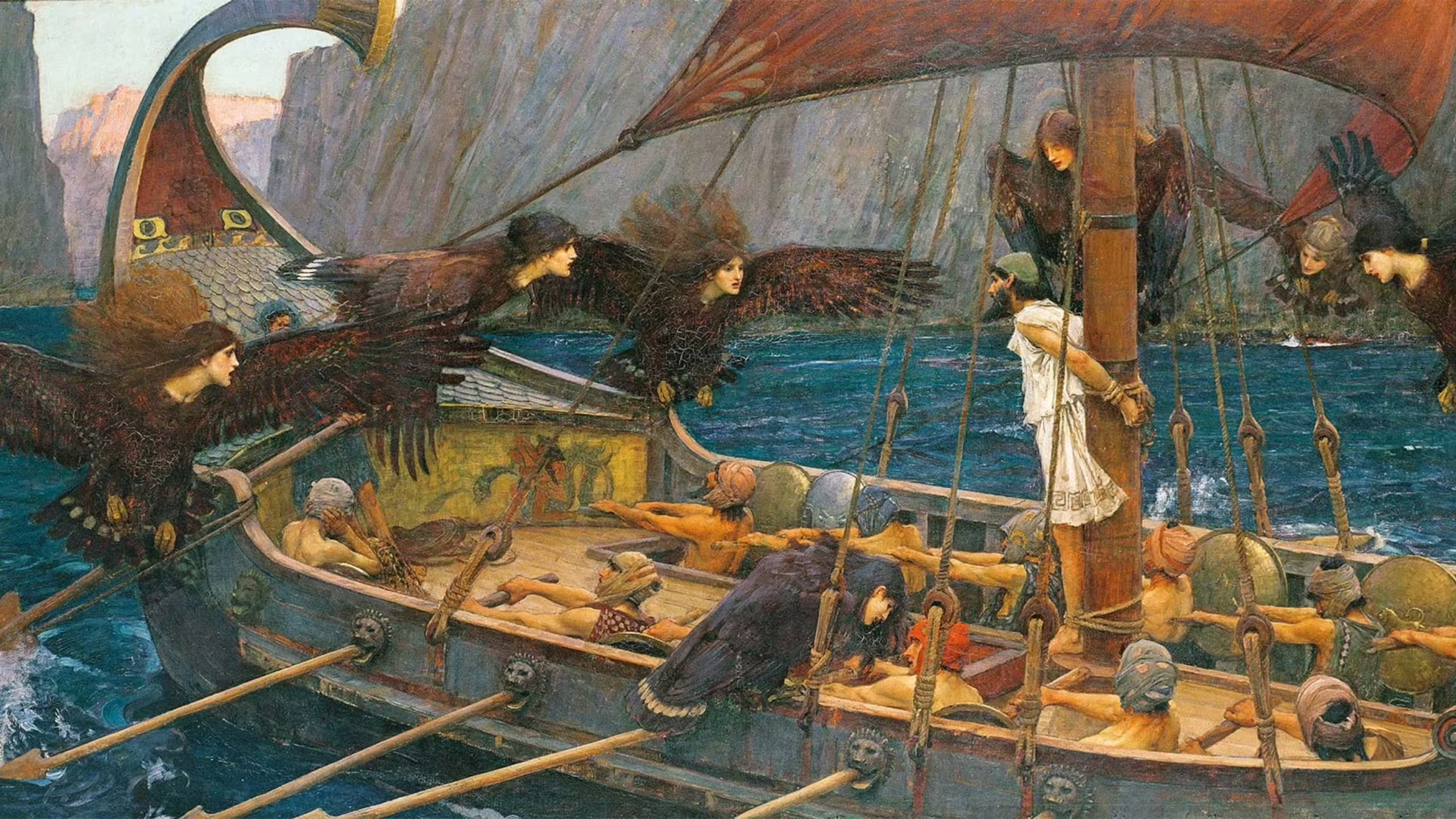
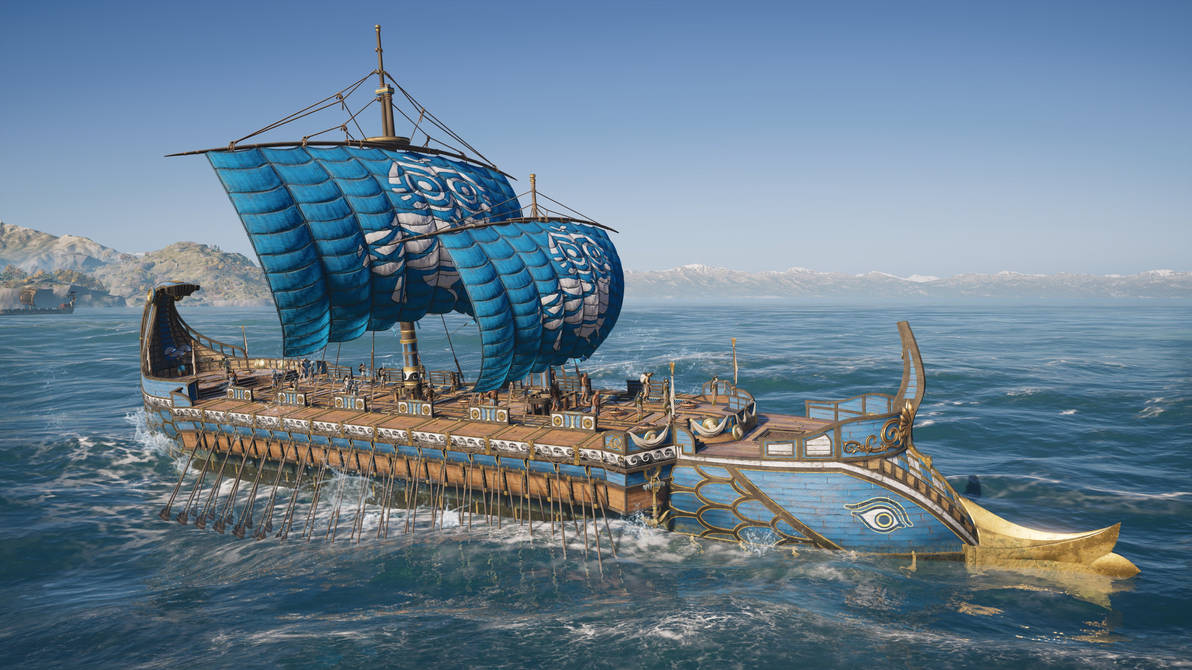
Homer’s Odyssey is a Greek epic of about 12,000 lines, composed around the late eighth or seventh century BCE, about Odysseus’s ten-year struggle to get home to Ithaca after the Trojan War. Its surprises include a hero absent for four books, a disputed ending, a lost sequel and a plant that erases the wish for home. Psychologically, it is the founding story of nostos, the homecoming that trauma makes hard.
Key takeaways
- The Odyssey’s 24 books are named by the letters of the Greek alphabet, a division usually credited to Alexandrian scholars, though some argue it goes back to earlier performance.
- Odysseus does not appear in person until Book 5; Books 1 to 4 follow his son Telemachus, and most of the wanderings are told in flashback in Books 9 to 12.
- Ancient editors Aristophanes and Aristarchus placed the poem’s end at Book 23, line 296, but many modern scholars defend Book 24 as part of the design.
- The lost Telegony, known from Proclus’s summary, tells how Telegonus, Odysseus’s son by Circe, unknowingly killed his father.
- The poem is the founding story of nostos, homecoming, and psychiatrist Jonathan Shay read it as a map of the combat veteran’s difficult return.
Even readers who know the Cyclops and the Sirens are often surprised by how strange and carefully built the poem is. Many details that look like trivia turn out to say something about memory, identity and what it costs a person to come back from a war. Many therapists use mythological insights in their work, and we use them too at our therapy practice in Birmingham, Alabama. The ten facts that follow come from the poem’s own episodes, and each can be found in any good translation.1
What was the lotus the Lotus Eaters ate?
The Lotus Eaters appear in Book 9, in the long story Odysseus tells at the court of the Phaeacians. Blown off course for nine days, his ships land among a people who eat the “honey-sweet” fruit of the lotus. Odysseus sends two men and a herald inland. The locals mean them no harm and simply offer them the fruit, and whoever eats it no longer wants to report back or go home: they want to stay, eat lotus and forget their homecoming. Odysseus drags them weeping to the ships and ties them under the rowing benches.1
Homer never describes the plant, so its identity has been argued over since antiquity. The historian Herodotus, writing in the fifth century BCE, placed the Lotophagi on the coast of Libya and said their fruit was about the size of a mastic berry and as sweet as a date, and that they also made wine from it. That description fits the jujube, Ziziphus lotus, a thorny shrub of North Africa, and it is the identification most classicists favour. Linnaeus later gave the name Diospyros lotus, the date-plum, a small relative of the persimmon, to another candidate, which is where the persimmon theory comes from.
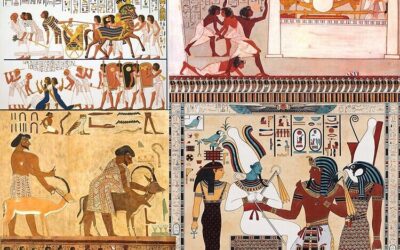
Two other plants are popular with modern readers. The blue water lily of Egypt, Nymphaea caerulea, appears constantly in Egyptian art and was used in ritual; its psychoactive effects are attributed to the alkaloids apomorphine and nuciferine, and it is still drunk as a tea for relaxation.8 The opium poppy, grown around the eastern Mediterranean since the Bronze Age, is the third favourite, because the crew’s state reads so much like the warm detachment of opiates. Homer does not settle the question. What he gives us is the effect, which is the part that matters for the poem.
Do the 24 books match the 24 letters of the Greek alphabet?
Yes. The Odyssey, like the Iliad, is divided into 24 books, and each book is named by a letter of the Greek alphabet, from alpha to omega. Book 9, the Cyclops book, is iota. By convention the Iliad’s books are labelled with capital letters and the Odyssey’s with lower-case ones.
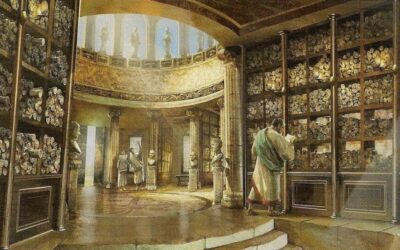
When and why that division was made is a real scholarly puzzle. Ancient tradition, followed by most modern editors, credits it to the scholars of the Library of Alexandria in the third or second century BCE, centuries after the poems took shape in oral performance. Minna Skafte Jensen argued instead that the 24 “songs” go back to an earlier performance and recording of the poems in sixth-century Athens, and her article set off a long published debate.3 Bruce Heiden showed that the book breaks in the Odyssey tend to fall at meaningful points in the story rather than at arbitrary lengths, which suggests they reflect the poem’s own design.4
The poem’s oral roots are not in doubt. Homeric verse is built from formulas, repeated phrases such as “rosy-fingered Dawn” and whole repeated scenes of arrival, feasting and sacrifice, which helped singers compose and remember a poem this size. The Odyssey even shows singers at work: Phemius in Ithaca and the blind bard Demodocus among the Phaeacians, who take requests from their audience. So the picture of listeners asking for a favourite episode is true to the poem, even if the alphabet labels came later.
Why is Odysseus called a trickster?
The first line of the Odyssey calls its hero polytropos, “of many turns,” a word that means both much-travelled and many-sided. His standing epithet is polymētis, full of mētis. Mētis is the Greek word for cunning intelligence: the practical, shifting cleverness that wins by disguise, timing and deception rather than force. Marcel Detienne and Jean-Pierre Vernant showed how central this kind of intelligence was in Greek culture, and Odysseus is their main human example.5
Achilles, the hero of the Iliad, wins glory by strength and speed, and Heracles by labours of raw power. Odysseus is already the clever one in the Iliad, where he goes on the night raid of Book 10 and leads the embassy to Achilles in Book 9, but the Odyssey makes that cleverness the whole point. Homer even gives him a trickster pedigree: his maternal grandfather Autolycus, who named him, surpassed all men in theft and in sly oaths, a gift from the god Hermes (Book 19).1 That makes him a clear early example of the trickster archetype, the figure who survives by wit and crosses boundaries others respect.
The Cyclops episode in Book 9 shows how it works. Trapped in Polyphemus’s cave, Odysseus gets him drunk on strong wine, tells him his name is Outis, “Nobody,” and blinds him with a sharpened olive-wood stake hardened in the fire. When the other Cyclopes ask whether anyone is hurting him, Polyphemus shouts that Nobody is, and they leave. Homer adds a pun: their phrase “if no one,” mē tis, sounds like mētis. The trick has a cost. Sailing away, Odysseus cannot resist shouting his real name, and Polyphemus prays to his father Poseidon, whose anger keeps Odysseus from home for years. For a closer reading of these episodes, see our post on Odysseus relying on tricks in Jungian terms.
The disguises continue in Ithaca, where Athena changes him into an old beggar and he tells a run of false life stories. Even the final recognition with Penelope turns on a test of wits, and she is the one who sets it.
Why does Odysseus not appear until Book 5?
Odysseus is talked about in Book 1, when the gods decide on Mount Olympus that he should finally go home, but he does not appear in person until Book 5. There we first see him on Calypso’s island, Ogygia, where he has been held for seven years, sitting on the shore and weeping for home.1 The Roman poet Horace later praised Homer for plunging his listener in medias res, “into the middle of things,” instead of starting at the beginning. Most of the wanderings, from the Cyclops to the underworld, are told in flashback by Odysseus himself in Books 9 to 12.
Books 1 to 4, often called the Telemachy, belong to his son. Telemachus was a baby when his father left and is now about twenty. Over a hundred suitors have taken over the house, eating through its wealth and pressing his mother Penelope to remarry. The goddess Athena, disguised first as a family friend called Mentes and then as Mentor, stirs him to call an assembly and to sail to Pylos and Sparta for news, where the old king Nestor and then Menelaus and Helen tell him what they know of his father.
The delay builds suspense and shows the stakes of the return, and it gives us a second story about growing up in a father’s absence. Telemachus has to find a father he cannot remember before he can stand beside him, a theme we explore in how the father wound creates a crisis of authority. The poem treats his search and his father’s journey as two halves of one homecoming.
What does the marriage bed symbolize in the Odyssey?
The bed scene comes in Book 23, after the suitors are dead. Penelope still will not accept that the stranger is her husband. She tells the old nurse Eurycleia to carry the bed out of the bedroom for him. Odysseus explodes: nobody could move that bed, because he built it himself around the trunk of a living olive tree, made the trunk into a bedpost and built the bedroom around it. Only the two of them and one servant knew. At that “sign,” Penelope’s knees give way and she runs to him.1
The bed is rooted, literally, in the ground of Ithaca, and it stands for a marriage that twenty years apart, ten at war and ten wandering, could not move. The olive is Athena’s tree, the tree of the patron goddess of mētis, so even the symbol of steadfastness carries the couple’s shared cleverness. Penelope has been a match for her husband all along: for three years she held off the suitors by weaving a shroud for Odysseus’s father Laertes by day and unpicking it by night. Odysseus once told the princess Nausicaa that nothing is better than a husband and wife who share one mind, and the bed test is that shared mind in action.
Set against his years at sea, where everything shifts and every island is a test, the bed is the fixed point he has been sailing toward. The way archetypes of union and fidelity play out in couples is the subject of our post on how archetypes show up in relationships.
Did another poet write Book 24?
The doubt is old and specific. Two of the great Alexandrian editors, Aristophanes of Byzantium and Aristarchus, said that the “end” of the Odyssey came at Book 23, line 296, where Odysseus and Penelope go to bed together. Everything after that, the rest of Book 23 and all of Book 24, has been called the Continuation, and later critics added complaints about its language and its loose joins.2
It helps to know what is actually in Book 24. The slaughter of the suitors happens in Book 22 and the reunion of husband and wife in Book 23. Book 24 opens with Hermes leading the suitors’ shades down to Hades. Odysseus then goes to his father Laertes’s farm and, painfully, tests the grieving old man with a false story before revealing himself. Finally the suitors’ families, led by Eupeithes, the father of the chief suitor Antinous, come to take revenge. Laertes kills Eupeithes with a spear, and Athena, with a thunderbolt from Zeus, stops the fighting and imposes a peace.1
Many scholars now defend the ending as part of the poem’s plan. In the standard Oxford commentary, Alfred Heubeck argues that the Continuation answers questions the poem itself raises, above all what happens when a man kills over a hundred young nobles of his own island, and that without it the story would stop short of real resolution.2 The question of who composed the Homeric poems, and how, is still open, but the case that Book 24 belongs to the Odyssey is strong.
What happened in the lost sequel, the Telegony?
The Odyssey belonged to the Epic Cycle, a group of early Greek epics that together told the whole Trojan story. The last of them was the Telegony, a poem in two books attributed to Eugammon of Cyrene in the sixth century BCE. Almost nothing of its text survives. We know its plot mainly from a prose summary in the Chrestomathy of Proclus, preserved in later Byzantine manuscripts.67
According to that summary, the Telegony begins where the Odyssey ends: the suitors are buried by their families. Odysseus travels to Elis and then to Thesprotia in northwestern Greece, where he marries the queen, Callidice, and has a son, Polypoetes. After her death he returns to Ithaca. Meanwhile Telegonus, his son by the enchantress Circe, conceived during the year Odysseus spent on her island in Odyssey Book 10, sails in search of his father. He raids Ithaca without knowing whose island it is, and when Odysseus comes out to defend it, Telegonus kills him. Later accounts say the spear was tipped with the spine of a stingray, a death “from the sea.”6
Telegonus then takes his father’s body, Penelope and Telemachus to Circe, who makes them immortal. Telegonus marries Penelope and Telemachus marries Circe. The ending sounds odd to us, but it ties up the hero’s two families. It also echoes a prophecy in the Odyssey itself: in the underworld, the seer Tiresias tells Odysseus that death will come to him ex halos, a phrase that can mean “away from the sea” or “out of the sea,” gently, in a rich old age.1 The poets of the Cycle took the darker reading. The figure of Circe and her island also runs through our history of the witch archetype.
What does the Lotus Eaters episode mean?
The Lotus Eaters episode is only about a dozen lines long, but it names the danger behind every later trap in the poem. The Greek says the men who eat the fruit want to “forget their homecoming,” nostou lathesthai. Forgetting is the threat throughout: Circe’s drugs turn men into pigs and make them forget their country, Calypso offers immortality if Odysseus will stay, and the Sirens promise knowledge to anyone who stops rowing.1
The usual reading treats the lotus as easy pleasure that dissolves duty and ambition, and that reading holds up. Odysseus, the clear-headed leader, has to force his men back onto the harder path. But the scene is more than a moral lesson about laziness. The men are not bad. They are exhausted veterans of a ten-year war who have found something that makes the longing stop. The pain they escape is homesickness itself, and the cost of escaping it is that they stop being people with a home.
That is why the episode reads so clearly to anyone who works with addiction. A substance can quiet a longing so well that the longing, and the life it points toward, both fade. Our post on how Jungian psychology approaches addiction recovery takes up the idea that the craving often hides a real need for meaning and belonging. Odysseus’s happiness depends on reaching his wife, son and land, and the poem treats that harder happiness as the one worth having.
How is the Odyssey connected to the Iliad?
The two poems share a world and many characters, and the Odyssey keeps looking back at the war. It does so most directly in two visits to the dead. In Book 11, Odysseus himself goes to the edge of the underworld. He meets Agamemnon, murdered on his return by his wife Clytemnestra and her lover, a homecoming that hangs over the whole poem as the opposite of Odysseus’s own. He meets Achilles, who says he would rather be a hired labourer for a poor man on earth than king over all the dead. And he meets Ajax, who still will not speak to him because Odysseus won the arms of Achilles.1
The second visit opens Book 24. The shades of Achilles and Agamemnon are already talking when the suitors arrive. Agamemnon describes Achilles’ funeral at Troy, the mourning of the sea-goddess Thetis and the Muses and the seventeen days of lament. Then he hears the suitors’ story and praises Penelope’s faithfulness, setting her against Clytemnestra. The house of Agamemnon is the subject of our reading of the Oresteia.
The Iliad does not end with the Trojan horse. It ends before Troy falls, with the funeral of Hector. The horse, Odysseus’s most famous trick, is told only in the Odyssey: by Helen and Menelaus in Book 4, by Odysseus to Achilles’ shade in Book 11, and by Demodocus in Book 8. When Demodocus sings of the horse, Odysseus weeps, and Homer compares him to a woman clinging to her husband’s body on a fallen city’s walls as the enemy drives her into slavery.1 The victor weeps like the victim. The Odyssey is, in that sense, a sequel about what the war left in the men who won it, which is why the specters of war are never far behind him.
How has the Odyssey influenced modern storytelling?
The Odyssey’s basic shape, a long, strange journey home, has been retold in almost every medium. The pattern of departure, ordeals and return is also one of the main sources for Joseph Campbell‘s monomyth, which we trace in the hero’s journey from Gilgamesh to Greek tragedy.
James Joyce’s Ulysses, published in Paris in 1922, maps its 18 episodes onto the Odyssey and follows an ordinary Dublin advertising canvasser, Leopold Bloom, through a single day, 16 June 1904, as he wanders the city and makes his way home to his wife Molly.12 The Coen brothers’ 2000 film O Brother, Where Art Thou? sets the story in Depression-era Mississippi, with three escaped convicts led by Ulysses Everett McGill, a one-eyed Bible salesman for a Cyclops and three women at a river for the Sirens. The original Battlestar Galactica series of 1978, with its fleet wandering in search of the lost colony of Earth, has often been compared to the Odyssey. In 2017 Emily Wilson’s translation became the first English version of the poem published by a woman, and in July 2026 Universal released Christopher Nolan’s film adaptation.1
These retellings keep returning because the poem is about identity, belonging and perseverance: what it takes to stay yourself through years of loss and to be recognised when you come back. That is also why the Odyssey is still taught in schools and universities alongside much newer classics.
What does the Odyssey teach therapists about trauma and homecoming?
The Greek word nostos means homecoming. In 1688 the Swiss physician Johannes Hofer combined it with algos, pain, to coin “nostalgia,” a medical name for the homesickness that could make soldiers far from home seriously ill. Modern research treats nostalgia not as a disease but as a common emotion that can lift mood and strengthen a sense of meaning and connection.11 The Odyssey holds both sides: the longing that keeps Odysseus alive and the pain of a return that is far harder than leaving.
The psychiatrist Jonathan Shay, who worked for years with Vietnam veterans at a Boston clinic, read the Iliad and the Odyssey as accounts of combat trauma. In Achilles in Vietnam he described how war can wreck character, and his work on betrayal of “what’s right” helped give us the idea of moral injury.10 In Odysseus in America he read the wanderings as a map of the veteran’s return: mistrust of everyone, constant deception, the loss of every comrade, explosive violence at home and the long work of being recognised again by family.9
The body remembers before the mind
Odysseus does not decide to weep when Demodocus sings of Troy. The song reaches him before he can manage it, and he hides his face in his cloak. Anyone who has lived with what PTSD feels like knows this: a sound, a smell or a story brings back the whole body state of the original event. At Taproot we work with that response directly. In Brainspotting, developed by David Grand, the therapist helps the client find an eye position linked to the activated feeling and stays with what the body is holding until it can settle and reorganise.14
Many sides of one person
Polytropos, “of many turns,” describes a man who is a beggar, a king, a liar, a lover and a grieving son in a single poem. Parts work treats the psyche in the same way, as a family of sub-personalities, some protective and some carrying old pain. In IFS therapy, a client might meet the part that, like Odysseus shouting his name at the Cyclops, cannot stop proving itself even when it brings disaster, and come to understand what it is protecting.
The descent and the return
Jung, following the ethnologist Leo Frobenius, described the “night sea journey,” the hero’s passage through darkness and water before rebirth, as one of the basic images of psychological transformation.13 Odysseus’s visit to the dead fits that pattern. He has to hear from his mother, his comrades and the seer before he can find his way home. Clients often arrive at a similar point, stuck between a past they cannot leave and a home that no longer feels like theirs. Working with the story’s images, a method we describe in lessons and exercises from Greek myths, gives people language for where they are on that journey.
The Odyssey ends with a man and a woman testing each other, a son finding his father and a father finding his own old father in the orchard. Homecoming, in the poem, is not a place but a set of relationships restored. That is the work of Jungian depth therapy at Taproot as well: helping people return to themselves and to the people they love after the long war of trauma, grief or addiction.
Frequently asked questions
What is the Odyssey about?
The Odyssey is Homer’s Greek epic about Odysseus, king of Ithaca, and his ten-year struggle to return home after the Trojan War. It interweaves his wanderings, from the Cyclops to the underworld, with the story of his son Telemachus and his wife Penelope, who hold out against the suitors occupying their house, and it ends with revenge, recognition and peace.
What plant did the Lotus Eaters eat in the Odyssey?
Homer never identifies the lotus. Herodotus described the Lotus Eaters’ fruit as date-sweet and placed them in Libya, which most classicists read as the jujube, Ziziphus lotus. Other suggestions include the date-plum, a persimmon relative, the Egyptian blue water lily, Nymphaea caerulea, and the opium poppy. In the Odyssey the point is the effect: eating it makes men forget their homecoming.
Who killed Odysseus?
In the Odyssey itself Odysseus survives, and the seer Tiresias promises him a gentle death in old age. In the lost epic called the Telegony, attributed to Eugammon of Cyrene, he is killed by Telegonus, his son by Circe, who raids Ithaca without knowing it is his father’s island. Later sources say the spear was tipped with a stingray spine.
Why are there 24 books in the Odyssey?
The Odyssey, like the Iliad, is divided into 24 books, each named by one of the 24 letters of the Greek alphabet. Most scholars credit the division to the editors of the Library of Alexandria, but Minna Skafte Jensen argued it reflects an earlier Athenian performance, and Bruce Heiden showed the breaks fall at meaningful points in the story.
What does nostos mean and how is it connected to nostalgia?
Nostos is the Greek word for homecoming, the central theme of the Odyssey. In 1688 the Swiss physician Johannes Hofer joined nostos with algos, pain, to coin nostalgia as a medical term for severe homesickness. Today psychologists study nostalgia as a common emotion that can support meaning and connection, and therapists read the Odyssey as a story about returning home after trauma.
Related reading
- St. Augustine and the Foundations of Depth Psychology: How a Fourth-Century Bishop Became a Forefather of Modern Psychotherapy
- Ludwig Mies van der Rohe: Architect of the Modern Age
- Rise and Fall of the Empire and The Ego: Ancient Rome as a Therapy Case Study
- The Epic of Gilgamesh: A Depth Psychological Reading
- The Hero’s Final Journey: A Depth Psychological Analysis of Sophocles’ Oedipus at Colonus
- Iphigenia in Aulis: A Depth Psychological Perspective
References
- Homer. (2017). The odyssey (E. Wilson, Trans.). W. W. Norton.
- Russo, J., Fernández-Galiano, M., & Heubeck, A. (1992). A commentary on Homer’s Odyssey: Vol. 3. Books XVII-XXIV. Clarendon Press.
- Jensen, M. S. (1999). Dividing Homer: When and how were the Iliad and the Odyssey divided into songs? Symbolae Osloenses, 74(1), 5-35. https://doi.org/10.1080/00397679908590953
- Heiden, B. (2000). The placement of “book divisions” in the Odyssey. Classical Philology, 95(3), 247-259. https://doi.org/10.1086/449496
- Detienne, M., & Vernant, J.-P. (1978). Cunning intelligence in Greek culture and society (J. Lloyd, Trans.). Harvester Press.
- West, M. L. (Ed. & Trans.). (2003). Greek epic fragments: From the seventh to the fifth centuries BC. Harvard University Press.
- West, M. L. (2013). The Epic Cycle: A commentary on the lost Troy epics. Oxford University Press. https://doi.org/10.1093/acprof:oso/9780199662258.001.0001
- Dosoky, N. S., Shah, S. A., Dawson, J. T., Banjara, S. S., Poudel, A., Bascoul, C., & Satyal, P. (2023). Chemical composition, market survey, and safety assessment of blue lotus (Nymphaea caerulea Savigny) extracts. Molecules, 28(20), 7014. https://doi.org/10.3390/molecules28207014
- Shay, J. (2002). Odysseus in America: Combat trauma and the trials of homecoming. Scribner.
- Shay, J. (1994). Achilles in Vietnam: Combat trauma and the undoing of character. Atheneum.
- Sedikides, C., Wildschut, T., Arndt, J., & Routledge, C. (2008). Nostalgia: Past, present, and future. Current Directions in Psychological Science, 17(5), 304-307. https://doi.org/10.1111/j.1467-8721.2008.00595.x
- Joyce, J. (1922). Ulysses. Shakespeare and Company.
- Jung, C. G. (1967). Symbols of transformation (R. F. C. Hull, Trans.; 2nd ed., Collected Works Vol. 5). Princeton University Press.
- Grand, D. (2013). Brainspotting: The revolutionary new therapy for rapid and effective change. Sounds True.









0 Comments