
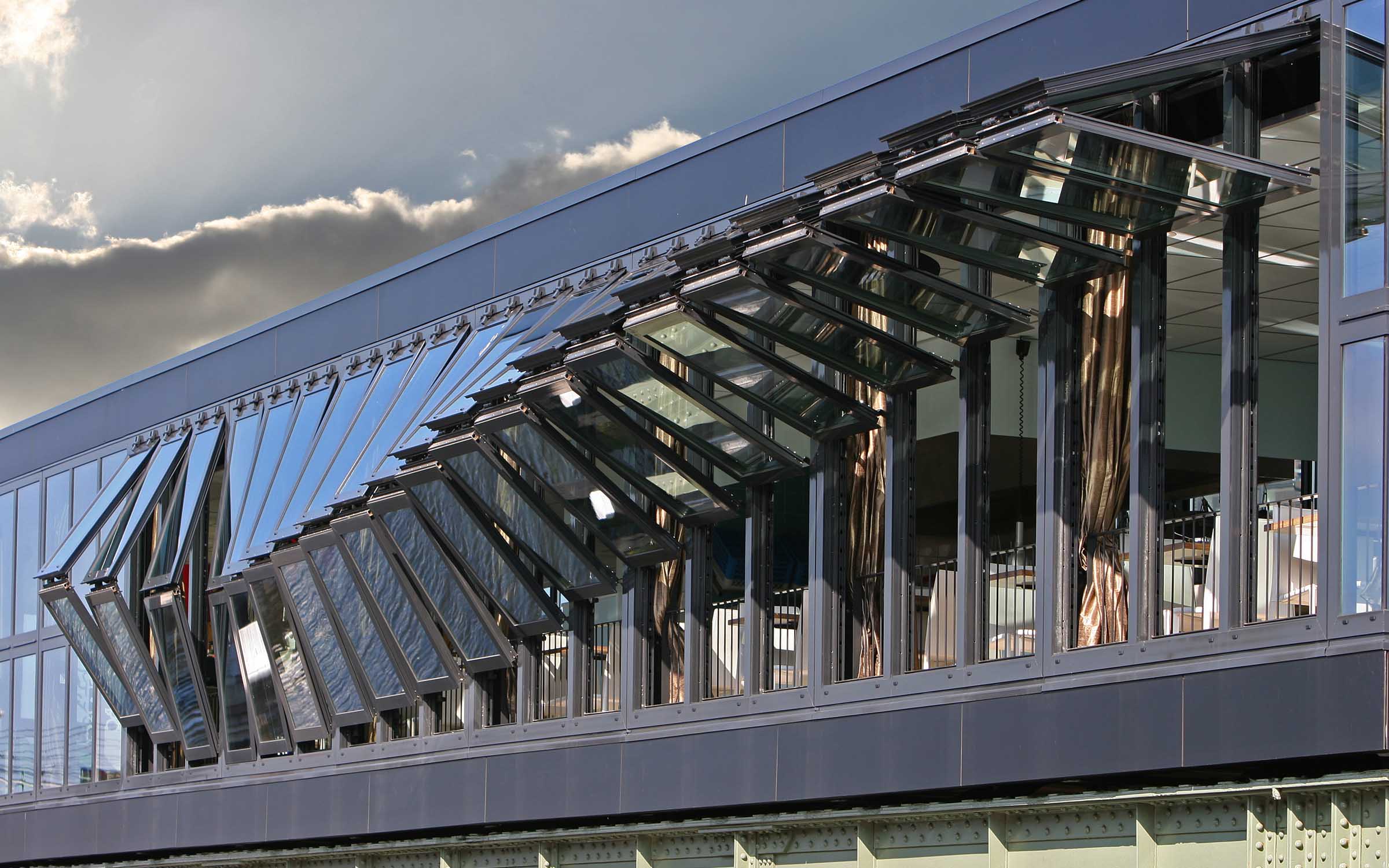
Adaptive Architecture: The Psychology of Living Buildings and Eco-Anxiety
For thousands of years, the fundamental psychological premise of a building was its permanence. Architecture was designed to be a static fortress, a heavy, unmoving monument that protected fragile human bodies from a chaotic and hostile natural world. Whether it was a medieval castle or a mid-century modernist glass skyscraper, the paradigm remained the same: the environment changes, but the building stands still. Adaptive Architecture represents a radical, terrifying, and deeply necessary psychological rebellion against this paradigm. It is an emerging field that combines architectural design, sensor technology, artificial intelligence, and mechatronics to create structures that continuously change, breathe, and optimize themselves over time. We are no longer building static shelters; we are attempting to build living, robotic organisms that can react to the world just as a biological creature would.
The Material Conditions of Eco-Anxiety and Technological Rebellion
The rise of Adaptive Architecture is a direct material response to two colliding realities: the existential threat of rapid climate change and the explosion of cheap, ubiquitous digital technology. In the 20th century, architects responded to nature by trying to overpower it with brute force—pumping massive amounts of fossil fuels into static buildings to keep them artificially heated or cooled. But as we learned during the 1973 oil crisis and the subsequent passive solar movement, this illusion of infinite energy was a dangerous psychological fantasy. Today, the cultural psychology is dominated by deep eco-anxiety. We are acutely aware that the weather is becoming more volatile, energy grids are fragile, and static buildings are rapidly becoming obsolete.
Simultaneously, the material conditions of construction have shifted. The miniaturization of sensors, the integration of the Internet of Things (IoT), and the leap in computational and algorithmic design have made it financially and physically possible to embed intelligence into our walls. Adaptive Architecture rebels against the arrogance of the static monument. It asserts that a building is not “finished” when the scaffolding comes down; rather, it is a continuous, behavioral system that must learn and adjust to solar heat gain, occupancy levels, and changing environmental stressors in real-time.
Jungian Depth Psychology: The Shapeshifter and the Silicon Caregiver
When analyzing the psychological forces that move our buildings, Adaptive Architecture can be seen as a profound manifestation of the Shapeshifter archetype. We are projecting our own evolutionary need to adapt onto our built environment. A static building represents a rigid Ego—unyielding, stubborn, and ultimately brittle in the face of change. An adaptive building represents a fluid, integrated Self, capable of sensing its surroundings and modifying its form to maintain equilibrium.
Furthermore, there is a deep, unconscious desire for the building to act as a Caregiver. In an unpredictable world, we are designing structures that monitor our biometric data, track our movements, and adjust the lighting and temperature to soothe our nervous systems. We are merging the cold, logical Animus of artificial intelligence with the intuitive, nurturing Anima of human experience. This blurs the line between biology and technology, drawing heavily on the principles of Biophilic Design, but substituting actual nature with highly sophisticated, biomimetic machinery that breathes, opens, and closes like a living lung.
Innovators Bridging the Gap Between Machine and Environment
The architects driving this movement are functioning less like traditional builders and more like systems engineers. Innovators like Carlo Ratti at the MIT Senseable City Lab are exploring how the vast amounts of data generated by human smartphones can be used to make entire urban grids react and adapt to the flow of human life. This data-driven responsiveness is a radical departure from the rigid, top-down approach of traditional city planning.
In practice, we see this in kinetic masterpieces like the Al Bahr Towers in Abu Dhabi, designed by Aedas. The towers feature a massive, computerized facade inspired by the traditional Islamic “mashrabiya.” The facade consists of thousands of dynamic geometric panels that open and close in real-time, tracking the path of the sun to reduce solar glare and cooling loads by massive margins without relying on dark, tinted glass. Similarly, visionary architect Philip Beesley creates immersive, interactive installations that use AI and kinetic fronds to react to the presence of human bodies, proving that New Materialism in architecture can yield environments that literally gesture and respond to our psychological states.
The Insecurities of the Smart Building: Surveillance and Obsolescence
Despite its utopian promises, the psychology of Adaptive Architecture is fraught with modern cultural insecurities. By handing over the control of our environment to artificial intelligence and automated sensors, we are sacrificing our own agency. The movement reflects a deep-seated anxiety that humans are no longer capable of managing the complexity of the modern world without algorithmic assistance. When a building “knows” exactly where you are, what the temperature of your skin is, and how much oxygen you are consuming, the line between a highly efficient Caregiver and a dystopian surveillance state becomes uncomfortably thin.
There is also the profound anxiety of technological obsolescence. A traditional brick wall can last for five hundred years with minimal maintenance, a concept championed by adaptive reuse projects that breathe new life into ancient structures. But an adaptive building relies on servo motors, software updates, and proprietary code. What happens to a “smart” building when its operating system is no longer supported by the tech company that designed it? A building that relies on an algorithm to regulate its temperature could become entirely uninhabitable if a server crashes.
Ultimately, Adaptive Architecture is the logical, albeit anxious, conclusion of the digital paradigm of Parametricism. It is a brilliant, desperate attempt to create a built environment that can survive the Anthropocene by out-thinking the climate crisis. It forces us to confront a future where our buildings are no longer silent witnesses to human history, but active, data-gathering participants in our daily psychological survival.














0 Comments