
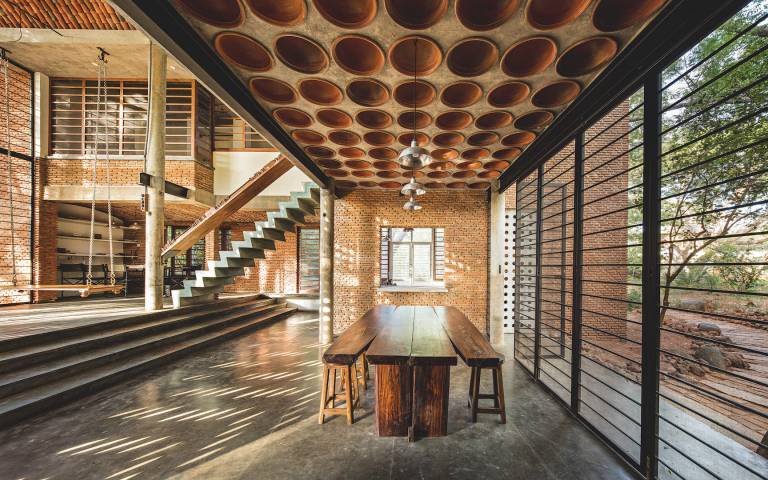
New Materialism: The Psychology of Material Agency and the Death of Human Hubris
For centuries, the fundamental psychological assumption of architecture was that human beings were the active masters, and building materials were dead, passive subjects. We extracted stone, smelted iron, and poured concrete, forcing inert matter into shapes dictated entirely by the human Ego. New Materialism is a radical, 21st-century architectural and philosophical movement that completely detonates this anthropocentric worldview. It argues that matter is not dead, but vibrant, active, and possessed of its own agency. Rooted in political theorist Jane Bennett’s groundbreaking philosophical text Vibrant Matter, this architectural shift demands that we stop commanding materials to obey our blueprints, and instead begin entering into a collaborative dialogue with them. New Materialism is not simply a sustainable building trend; it is a profound psychological surrender. It marks the precise historical moment when architects realized that our obsession with dominating nature has pushed us to the brink of extinction, forcing us to ask the materials themselves how we might survive.
The Material Conditions of the Anthropocene
To understand why New Materialism emerged when it did, we must look at the devastating material conditions of the modern era. We are living in the Anthropocene, a geological epoch defined by human-caused planetary destruction. The global supply chain of standard construction materials—specifically the manufacturing of steel and Portland cement—is responsible for a staggering percentage of global carbon emissions. The hyper-industrial architecture of the 20th century treated the earth as an infinite quarry and an infinite landfill. Just as the passive solar movement was violently birthed by the material scarcities of the 1970s oil crisis, New Materialism was birthed by the undeniable reality of climate collapse.
In response to this existential threat, architects began turning to bio-fabrication, material computation, and synthetic biology. Instead of forging steel, they are growing bricks out of fungal mycelium. Instead of pouring concrete, they are utilizing 3D-printed biopolymers that respond to humidity. We are shifting from an extractive economy to a cultivated one. However, this is not merely an engineering shift; it is a profound philosophical alignment with the ethics of Posthumanism, which strips the human being of its privileged status at the center of the universe and forces us to recognize our absolute reliance on non-human actors.
Jungian Depth Psychology: Surrendering the Animus
When analyzing the psychological forces that move our buildings, the transition to New Materialism represents a massive psychic restructuring of the collective unconscious. Traditional architectural practice is a pure manifestation of the patriarchal Animus—the drive to divide, conquer, penetrate, and impose rigid logical structures upon the world. The skyscraper, a massive spike of steel driven into the earth, is the ultimate monument to this dominating Ego. New Materialism, however, requires a deep integration of the Anima. It requires receptivity, intuition, and a willingness to yield control to the organic behaviors of the materials themselves.
As we see in the study of Leon Krier and the architecture of the archetype, buildings are physical mirrors of our psychic state. By embracing material agency, we are desperately trying to integrate the Self with the broader ecological web. We are confronting the deep psychological guilt of our environmental destruction—a cultural trauma that echoes the theories explored in our analysis of the Frankfurt School and the architecture of modern trauma. New Materialism is an attempt at global psychotherapy through construction, soothing our eco-anxiety by proving that we can exist on this planet without acting as a parasitical infection.
Living Architecture: Innovations and Co-Design
The practitioners of New Materialism do not build; they cultivate. A prime example is the work of architect David Benjamin and his firm The Living. In 2014, they constructed Hy-Fi at MoMA PS1, a massive, swirling tower constructed entirely of organic bricks grown from agricultural waste and fungal mycelium. The structure was completely biodegradable; when the exhibition ended, the building was composted and returned to the earth. This completely subverts the psychological need for architecture to act as a permanent monument to human immortality.
At the cutting edge of this movement is Neri Oxman, founder of the Mediated Matter Group at the MIT Media Lab. Oxman’s work seamlessly blends the algorithmic complexity of Parametricism with living biology. In her famous Silk Pavilion project, a robotic arm spun a foundational geometric scaffold, but the actual structure was completed by 6,500 live silkworms acting as biological co-designers. The worms were not exploited; the architecture was designed around their natural behavioral patterns. This radical approach goes far beyond the visual aesthetics of Biophilic Design. It relies on the rigorous scientific principles of the Biomimicry Institute, demanding that our structures function exactly like living organisms within a localized ecosystem.
The Insecurities of the Uncontrollable Material
Despite its visionary ethical framework, New Materialism triggers profound cultural insecurities. Relinquishing the Ego’s control is terrifying. When an architect relies on a material that grows, shrinks, decays, or acts unpredictably, the traditional guarantees of structural engineering are thrown into chaos. Research institutes like the Institute for Computational Design and Construction (ICD) at the University of Stuttgart are spending millions developing robotic fabrication techniques simply to manage the unpredictable behavioral variances of natural wood and bio-polymers.
There is a deep-seated anxiety that if we admit materials have their own agency, we must confront the uncomfortable reality of our own fragility and potential obsolescence. If a building can grow, heal, and decompose itself, the human architect is no longer a master, but merely a gardener. Yet, this humbling realization is entirely necessary. While adaptive reuse attempts to salvage the ruins of our industrial past, New Materialism looks toward a future where our buildings are born, live, and die in harmony with the earth. It is a terrifying abdication of human power, but it may be the only psychological and material path to our survival.













0 Comments