
Biophilic Design: The Psychology of Nature, Architecture, and the Digital Longing
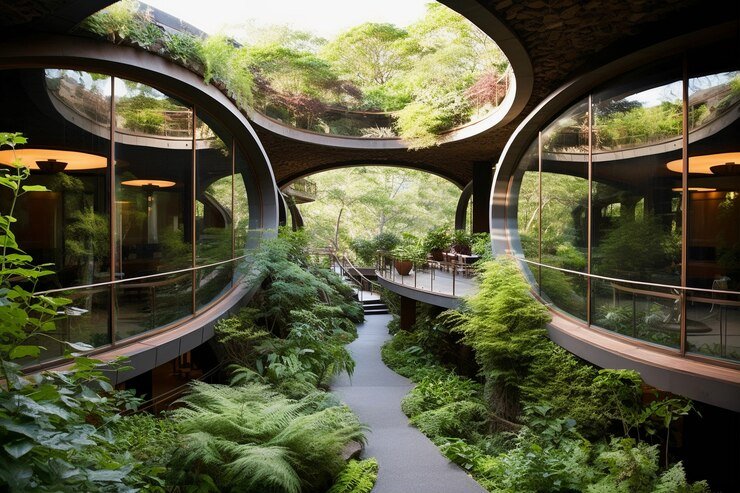
For most of human history, architecture was designed to protect us from the terrifying, unpredictable forces of nature. We built thick walls to keep out the cold, the predators, and the storms. However, as the industrial revolution gave way to the hyper-rationalism of the 20th century, we became entirely too successful at this separation. We constructed hermetically sealed, climate-controlled concrete boxes that entirely severed the human nervous system from circadian rhythms, natural light, and organic textures. The resulting psychological alienation birthed “Sick Building Syndrome” and a profound cultural depression. Biophilic Design emerged not merely as a decorative trend of adding potted plants to an office desk, but as a desperate, biological imperative to heal this psychological rupture. Coined by psychoanalyst Erich Fromm in the 1970s and later popularized by biologist E.O. Wilson, “biophilia” describes the innate, genetically hardwired human need to affiliate with other forms of life. In architecture, it is the radical attempt to reverse-engineer our built environments to satisfy this deep evolutionary craving.
The Material Conditions of Alienation and the Return to Biology
The rise of Biophilic Design is a direct response to the brutal material conditions of modern urbanization. As populations crammed into dense, hyper-capitalist city centers, the psychological toll of existing in environments devoid of organic complexity became undeniable. Just as the passive solar movement was forced into existence by the energy scarcities of the 1970s, Biophilic Design was forced into the mainstream by a crisis of public health and mental well-being. Today, architects utilize advanced materials and technologies to integrate natural elements directly into the structural DNA of buildings. This involves engineering massive living green walls, designing dynamic circadian lighting systems that mimic the passing of the sun, and utilizing natural ventilation to allow the building to “breathe.” It moves beyond mere visual aesthetics; true biophilic design engages all the senses, incorporating the sound of flowing water, the tactile variation of raw timber and stone, and the subtle, chaotic geometry of fractal patterns found in leaves and coastlines.
Virtual Biophilia: The Architecture of Myst
Interestingly, long before structural engineers perfected the technology to build living forests into skyscrapers, this deep psychological craving for natural integration manifested powerfully in our digital worlds. When analyzing the architecture of Myst, the groundbreaking 1993 video game, we can observe a profound, early expression of virtual biophilia. The surreal, solitary environments of the game captivated millions because they offered a digital synthesis of human construction and raw nature that our physical cities lacked. In the Channelwood Age, players explored a towering network of wooden pathways integrated seamlessly into the canopy of giant trees, while the Stoneship Age featured living spaces carved directly into ocean-battered rocks. The architecture of Myst represented a deeply romanticized psychological ideal: a world where complex machinery and human intellect did not conquer the organic world, but nested peacefully within it. The game provided deep psychological relief by allowing players to inhabit a meticulously designed environment that honored the biological matrix, predicting the post-digital architectural desire to blend the virtual and physical realms in pursuit of emotional resonance.
Jungian Depth Psychology: The Great Mother and the Anima
When we look at this movement through the lens of analytical psychology, Biophilic Design is a massive cultural attempt to reconnect with the Great Mother archetype. Modernist architecture, with its rigid grids, exposed steel, and obsession with efficiency, was a pure manifestation of the patriarchal Animus—a drive to dominate, categorize, and control the environment. By contrast, Biophilic Design reaches for the Anima. It seeks to integrate intuition, nurturing, and organic fluidity back into the spaces where we spend our lives. As explored in the psychological forces that move our buildings, human beings cannot achieve individuation—the Jungian concept of psychological wholeness—if they are entirely cut off from the natural world that forged their unconscious minds. By creating buildings that mimic the savanna or the forest canopy, architects are attempting to soothe the nervous system, reducing cortisol levels and anxiety by signaling to our primitive brains that we are in a safe, resource-rich habitat.
Innovators Bridging the Concrete and the Canopy
The transition from theory to physical reality has been championed by a specific class of innovators who view architecture through an ecological lens. The late social ecologist Stephen R. Kellert laid the academic groundwork, outlining how deeply our physical health is tied to our sensory contact with nature. This philosophy was translated into actionable architectural frameworks by consulting firms like Terrapin Bright Green, which developed the 14 Patterns of Biophilic Design to guide modern construction. We see the stunning realization of these principles in the work of WOHA, a Singaporean architectural practice that designs high-density urban skyscrapers dripping with lush, integrated vegetation, effectively creating vertical ecosystems. A pioneering example in the healthcare sector is the Khoo Teck Puat Hospital by RMJM, which utilizes extensive gardens, cascading water features, and naturally ventilated courtyards to actively accelerate patient healing, proving that biological connection is a measurable medical intervention, not just a luxury aesthetic.
Ego, Insecurity, and the Threat of Greenwashing
Despite its noble intentions, the Biophilic Design movement reveals deep cultural insecurities and the desperate machinations of the modern Ego. There is a profound cultural anxiety that we have irreparably damaged the planet, and slapping a living green wall onto the lobby of a multinational oil conglomerate’s headquarters is often utilized as architectural greenwashing. It is an attempt by the corporate Ego to assert that it is healthy and sustainable, masking the underlying ecological destruction inherent in modern capitalism. Furthermore, relying on highly complex, expensive technology to artificially simulate a natural breeze or circadian daylight highlights the absurd tragedy of the modern condition: we have to spend millions of dollars to synthetically recreate the natural environment we destroyed to build the city in the first place.
However, when executed with structural sincerity, Biophilic Design represents one of the most hopeful developments in contemporary construction. It aligns closely with the ethos of New Materialism, recognizing that the materials we build with are not dead objects, but active participants in our psychological and biological survival. As urbanization accelerates and climate change induces widespread eco-anxiety, Biophilic Design offers a vital path forward. It demands that we stop building fortresses to hide from nature, and start building habitats that allow us to live within it once again.











0 Comments