

Sophocles’ Antigone, first staged in Athens around 442 BCE, turns on one act: a young woman buries her brother against the king’s decree and is condemned to die for it. Most analyses ask who is right. On the burial itself, the play’s gods side with Antigone. Its harder lesson is psychological: being right does not make a conscience flexible.
That is the thesis this article argues. Creon and Antigone each hold a real obligation, one to the city and one to the family dead, and each turns it into the only obligation there is. Once that happens neither can hear anyone else, and the people who try to reach them, Ismene, Haemon and the prophet Tiresias, are pushed aside or destroyed.1 Therapists meet the same structure whenever a true value hardens into a rule that cannot bend.
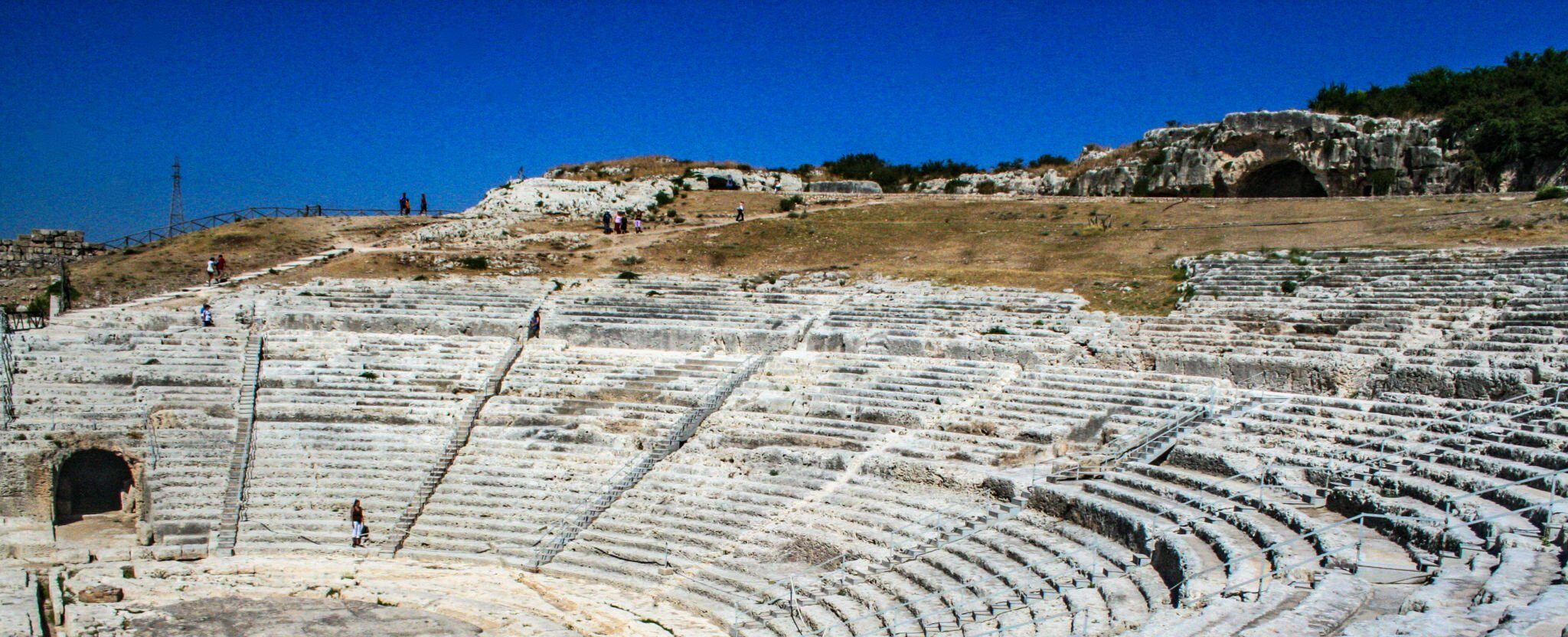
What happens in Antigone
The play opens the morning after the battle told in Aeschylus’ Seven Against Thebes. Oedipus’s sons Eteocles and Polyneices have killed each other, and the Argive army Polyneices led against his own city has fled. Their uncle Creon, now king, orders Eteocles buried with honor and Polyneices left “unburied, a corpse for birds and dogs to eat, a ghastly sight of shame” (lines 203–206). Anyone who performs the rites will be stoned to death (35–36).1
Ismene refuses to help her sister: “to defy the State,—I have no strength for that” (78–79). Antigone buries him alone, is caught, and defends herself to Creon’s face. When Ismene later asks to share her fate, Antigone refuses: “Thy choice was to live; mine, to die” (555). Haemon, Creon’s son and Antigone’s betrothed, pleads with his father and storms out. Antigone is shut alive in a rocky tomb she calls her “bridal-chamber” (891).1
The blind prophet Tiresias then reports that birds and dogs have carried carrion from the corpse to the city’s altars, and the gods refuse its sacrifices (1015–1022). Creon, he warns, will pay with a son: “a corpse for corpses” (1064–1067). Creon yields, buries Polyneices, and only then goes to the tomb. Antigone is already dead by her own hand. Haemon spits in his father’s face, lunges at him and misses, then kills himself. Creon’s wife Eurydice takes her own life, cursing him as “the slayer of thy sons” (1304–1305). Creon is left to say it himself: “I, even I, was thy slayer” (1319).1
Two rights, or one? Hegel and his critics
The most influential reading is Hegel’s, and it is much of why Antigone anchors arguments about what Greek tragedy can teach. His lectures on fine art put it this way: “Antigone reverences the ties of blood-relationship, the gods of the nether world. Creon alone recognizes Zeus, the paramount Power of public life and the commonwealth.” For Hegel each is bound by what he or she attacks. Antigone is Creon’s subject and his son’s betrothed; Creon is a father and husband who owes respect to kinship. So both “are seized and broken by that very bond which is rooted in the compass of their own social existence.” Hegel ranked it, “from this point of view,” above every other work of the ancient and modern world he knew: “the most excellent and satisfying work of art.”2 An earlier version of this post had him calling it the “perfect tragedy.” The phrase is not his; the praise is just as high, but he ties it to that one point of view.
The classicist Richard Jebb, whose edition of the play first appeared in 1888, quoted Hegel’s verdict that “both were wrong, because they were onesided; but at the same time both were right,” and rejected it. Sophocles lets Creon argue well, Jebb wrote, “but none the less does he mean us to feel that, in this controversy, the right is wholly with her, and the wrong wholly with her judge.”3 Much of his case rests on the chorus. The Theban elders divide the blame at first, but after Tiresias speaks they tell Creon to free the maiden and “make a tomb for the unburied dead” (1100–1101), and it is at their urging that he yields.1, 3
History complicates the edict without rescuing it. Athenian law, as Xenophon quotes it, said that a man convicted of treason “shall not be buried in Attica.”4 So the earlier claim that “cosmic law” demanded burial for everyone is too simple. But leaving a body to the dogs was another matter, and Jebb argued the first audience would have seen it as “a shocking breach of that common piety which even the most exasperated belligerents regularly respected.”3
On the burial, the gods’ signs leave little doubt. But Sophocles also cares how his people hold their positions, and the chorus does not flatter Antigone: “The maid shows herself passionate child of passionate sire, and knows not how to bend before troubles” (471–472); “Thy self-willed temper hath wrought thy ruin” (875).1 Martha Nussbaum titled her chapter on the play “conflict, vision, and simplification.” Its subject is the hope of escaping painful moral conflict by simplifying one’s commitments so they can never collide.5 Hegel’s symmetry is wrong about who is right. It is close to the truth about rigidity.
Creon: order that can no longer listen
Creon is not a cartoon tyrant. He takes power the day after a civil war, and his first speech is a coherent political philosophy: “our country is the ship that bears us safe” (189). Jebb read him as entirely sincere: anarchy is the worst evil a state can suffer, so obedience must be absolute.3 What undoes him is the way he holds the principle. Every challenge becomes a contest of dominance: “Now verily I am no man, she is the man, if this victory shall rest with her” (484–485); “While I live, no woman shall rule me” (525). He even supplies the image of his own end without noticing: “’tis the stiffest iron, baked to hardness in the fire, that thou shalt oftenest see snapped and shivered” (474–476).1
Haemon’s speech is the play’s clearest case for psychological flexibility, made to the man least able to hear it. “Wear not, then, one mood only in thyself; think not that thy word, and thine alone, must be right” (705–706). Then the image: “the trees that yield to it save every twig, while the stiff-necked perish root and branch” (712–714). He also reports what no one else dares to say: “the dread of thy frown forbids the citizen to speak such words as would offend thine ear” (690–691). Rigidity silences the feedback it most needs. When Creon asks whether the city is not the ruler’s, Haemon answers, “Thou wouldst make a good monarch of a desert” (739).1
Jung used the word enantiodromia “to describe the emergence of the unconscious opposite,” which “occurs almost universally wherever an extreme, onesided tendency dominates the conscious life.”6 Creon’s drive for order ends in a house of corpses. When he finally gives way he swings to the other pole: “My heart misgives me, ’tis best to keep the established laws, even to life’s end” (1113–1114). The chorus answers his grief in one line: “Ah me, how all too late thou seemest to see the right!” (1270).1
Antigone: a conscience that cannot be shared
Antigone’s defense is the center of the play: “it was not Zeus that had published me that edict … nor deemed I that thy decrees were of such force, that a mortal could override the unwritten and unfailing statutes of heaven. For their life is not of to-day or yesterday, but from all time, and no man knows when they were first put forth” (450–457).1 An earlier version of this post said she appeals to laws “that existed before the gods.” She does not. The unwritten laws are the gods’ own statutes; what no one knows is when they were first put forth.
She also speaks the play’s most generous line. When Creon says, “A foe is never a friend—not even in death,” she answers, “‘Tis not my nature to join in hating, but in loving” (522–523). Yet she cannot share her cause with the one sibling she has left. She tells Ismene she would not welcome her help even if Ismene changed her mind (69–71), and later refuses to let her die beside her. Ismene gives the kindest summary of her anyone offers: “though thine errand is foolish, to thy dear ones thou art truly dear” (98–99).1
On the way to the tomb she says she would not have defied the city for a husband or a child, since either could be replaced, “but, father and mother hidden with Hades, no brother’s life could ever bloom for me again” (911–912). Jebb, after “long thought,” could not believe Sophocles wrote the passage, while granting that Aristotle quotes these lines in the Rhetoric and “certainly had the whole passage in his text.”3 Whoever wrote it, the logic is familiar from clinical work: the bond that can never be replaced can command the most absolute loyalty.
Her certainty wavers at the end: “Why, hapless one, should I look to the gods any more … when by piety I have earned the name of impious?” (922–924).1 Jebb saw that wavering as a mark of Sophocles’ psychological skill, not a flaw in the heroine.3 Sophocles’ Electra repeats the pattern: a daughter loyal to a dead father beside a sister, Chrysothemis, who makes her peace with those in power. Judith Butler’s Antigone’s Claim (2000) treats Antigone as a more ambivalent heroine than feminist readers had allowed, partly because the defiance she models ends in her death.7
What Simone Weil actually wrote about Antigone
An earlier version of this post said Simone Weil saw Antigone as a “pre-Christian saint,” as “Grace” standing against the “Force” of the state, and as a figure of “decreation.” She did write about the play, and two texts matter here. The translations from the French below are mine.
In May 1936 she published a retelling called “Antigone” in Entre nous, the small bulletin of a factory at Rosières, near Bourges, as the first step in a project to make the masterpieces of Greek poetry accessible to working people. She tells it as the story of a human being who, entirely alone, sets herself against her country, its laws and its head of state, choosing “between two duties of fidelity, fidelity to her defeated brother and fidelity to her victorious country.” She also noticed that at the threshold of death “the pride that sustained her breaks. She weeps.”8
The second text is “La Personne et le sacré,” written in London in 1943 and known in English as “Human Personality.” There Weil calls it “a singular confusion” to equate Antigone’s unwritten law with natural right. With deliberate irony she takes Creon’s side, since we moderns think and act “exactly like him,” calling his objection “perfectly reasonable” and Antigone a “little simpleton.” Then she turns: the law this “little girl” obeyed “was nothing other than the extreme, absurd love that drove Christ to the Cross. Justice, companion of the gods of the other world, prescribes this excess of love. No right would prescribe it.” Her target is the language of rights. Phrases like “I have the right to” and “you have no right to,” she writes, “contain a latent war and awaken a spirit of war.”9
So Weil does tie Antigone to Christian love, the grain of truth in the “saint” line. The same essay’s central claim, that “what is sacred, far from being the person, is what is impersonal in a human being,” is the likely source of the earlier post’s talk of “impersonal” justice. The vocabulary of force and grace is hers as well, and it frames the passage: a page earlier she argues that right “is by nature dependent on force” and invokes “the supernatural operation of grace.”9 What she does not do is label Creon as gravity or Antigone as grace or “decreation”; those labels were the earlier post’s. Nor does her reading make Antigone flexible. It honors the excess on purpose. A therapist has to ask, as well, what the excess costs and who pays for it.
The unburied brother and grief that is not allowed
Tiresias states the play’s central image: Creon has “ruthlessly lodged a living soul in the grave,” while keeping “in this world one who belongs to the gods infernal, a corpse unburied, unhonoured, all unhallowed” (1069–1071).1 The earlier version of this post said the body brought a plague on Thebes. Tiresias does say Creon’s counsel has brought “this sickness on our State” (1015), but the sickness he describes is pollution of the altars, not an epidemic. The plague belongs to Oedipus Rex. As a metaphor it still holds: what is refused its rites does not go away; it fouls the places where a community makes meaning.
Kenneth Doka named the human version in a 1989 book he edited: disenfranchised grief, a loss that is not openly acknowledged, or a mourning that the people around the mourner do not recognize.10, 11 Antigone mourns the brother her city has declared unmournable. Modern families have their versions: the brother who died of an overdose, the abusive parent, the relative who died by suicide. In a UK survey of 3,432 young adults bereaved by a sudden death, those bereaved by suicide reported more perceived stigma, shame, responsibility and guilt than those bereaved by sudden natural or unnatural deaths.12 A systematic review of eight studies of families bereaved by drug-related deaths found stigmatization and a lack of understanding from others among the main themes.13
Therapy can offer something like the rite Creon forbade: a room where that grief, including its anger and shame, is allowed in full. Taproot offers grief counseling in Hoover for losses other people find hard to acknowledge. If you are grieving a suicide or thinking about suicide yourself, the 988 Suicide and Crisis Lifeline takes calls and texts at 988, day or night.
What this looks like in therapy
Moral rigidity rarely arrives with that label. More often someone is worn out by a conflict they are sure they are right about, and often they are. Two shapes recur.
The Creon pattern. Someone who once brought order to a chaotic family, business or marriage keeps running everything as if the storm were still on. Disagreement feels like mutiny, and the people nearby stop saying what they think. The work is not to argue them out of their values but to notice when a principle stops serving the people it was meant to protect, and to tolerate the fear of loosening one’s grip.
The Antigone pattern. Someone carries a loyalty no one else will share, often to a person the family has written off, and treats anyone who steps back as a traitor. They are frequently right about the loyalty and wrong about the isolation. Sophocles knew love can destroy what it means to keep: in The Women of Trachis, the charm Deianeira sends to win back her husband is what kills him.
Moral rigidity also has a clinical form that differs from both patterns. Scrupulosity is what Chris Miller and Dawson Hedges describe as pathological guilt or obsession about moral or religious issues, often with compulsive moral or religious observance. They note it can be hard to treat and argue it may merit its own diagnosis.14 It overlaps heavily with obsessive-compulsive disorder. Most rigid consciences are not scrupulosity.
The research term for what Haemon recommends is psychological flexibility. In a review of the literature, Todd Kashdan and Jonathan Rottenberg describe it as the ability to adapt to changing demands, shift mindset or behavior when a strategy is undermining personal or social functioning, keep balance among important parts of life, and stay committed to behavior that fits deeply held values. “In many forms of psychopathology,” they write, “these flexibility processes are absent.”15 Flexibility is not the absence of conviction. Haemon’s trees keep their roots; what they give up is the demand that the torrent stop.
In Jungian therapy and parts-based work, we usually do not pick a winner between the inner Creon and the inner Antigone. One guards order and safety, the other love and loyalty to what was lost, and the frightened Ismene and go-between Haemon have their own knowledge. The aim is to let each be heard long enough that a person can act from more than one of them. Tiresias names the stance: “that man is no longer witless or unblest who heals the ill into which he hath fallen, and remains not stubborn” (1025–1027).1
If you recognize yourself in either of them, right about something and losing people over it, that is a reasonable thing to bring to therapy. Taproot Therapy Collective works with conflicts like these in person in Hoover and by teletherapy across Alabama. You can contact us to ask whether it would be a good fit.
References
- Sophocles. (1917). The tragedies of Sophocles (R. C. Jebb, Trans.). Cambridge University Press. Antigone, cited by line number. https://en.wikisource.org/wiki/Tragedies_of_Sophocles_(Jebb_1917)/Antigone
- Hegel, G. W. F. (1920). The philosophy of fine art (F. P. B. Osmaston, Trans.; Vol. 4, pp. 318, 324). G. Bell and Sons. https://archive.org/details/philosophyoffine04hege
- Jebb, R. C. (1900). Sophocles: The plays and fragments. Part III: The Antigone. Cambridge University Press. Introduction, sections 7–15, and note on lines 904–920. https://www.perseus.tufts.edu/hopper/text?doc=Perseus:text:1999.04.0023
- Xenophon. (1918). Hellenica (C. L. Brownson, Trans.), 1.7.22. In Xenophon in seven volumes (Vol. 1). Harvard University Press. https://www.perseus.tufts.edu/hopper/text?doc=Perseus:text:1999.01.0206:book=1:chapter=7:section=22
- Nussbaum, M. C. (2001). Sophocles’ Antigone: Conflict, vision, and simplification. In The fragility of goodness: Luck and ethics in Greek tragedy and philosophy (Rev. ed., pp. 51–82). Cambridge University Press. (Original work published 1986) https://doi.org/10.1017/CBO9780511817915.006
- Jung, C. G. (1933). Psychological types; or, The psychology of individuation (H. G. Baynes, Trans.; p. 542). Harcourt, Brace. https://archive.org/details/psychologicaltyp00jung_1
- Butler, J. (2000). Antigone’s claim: Kinship between life and death. Columbia University Press.
- Weil, S. (1953). Antigone. In La source grecque (pp. 57–62). Gallimard. (Original work published 1936 in Entre nous, chronique de Rosières) https://fr.wikisource.org/wiki/La_Source_grecque
- Weil, S. (1957). La personne et le sacré. In Écrits de Londres et dernières lettres (pp. 9–44). Gallimard. https://fr.wikisource.org/wiki/Écrits_de_Londres_et_dernières_lettres/Écrits_de_Londres/01
- Doka, K. J. (Ed.). (1989). Disenfranchised grief: Recognizing hidden sorrow. Lexington Books.
- Cesur-Soysal, G., & Arı, E. (2024). How we disenfranchise grief for self and other: An empirical study. OMEGA: Journal of Death and Dying, 89(2), 530–549. https://doi.org/10.1177/00302228221075203
- Pitman, A. L., Osborn, D. P. J., Rantell, K., & King, M. B. (2016). The stigma perceived by people bereaved by suicide and other sudden deaths: A cross-sectional UK study of 3432 bereaved adults. Journal of Psychosomatic Research, 87, 22–29. https://doi.org/10.1016/j.jpsychores.2016.05.009
- Titlestad, K. B., Lindeman, S. K., Lund, H., & Dyregrov, K. (2021). How do family members experience drug death bereavement? A systematic review of the literature. Death Studies, 45(7), 508–521. https://doi.org/10.1080/07481187.2019.1649085
- Miller, C. H., & Hedges, D. W. (2008). Scrupulosity disorder: An overview and introductory analysis. Journal of Anxiety Disorders, 22(6), 1042–1058. https://doi.org/10.1016/j.janxdis.2007.11.004
- Kashdan, T. B., & Rottenberg, J. (2010). Psychological flexibility as a fundamental aspect of health. Clinical Psychology Review, 30(7), 865–878. https://doi.org/10.1016/j.cpr.2010.03.001










0 Comments