

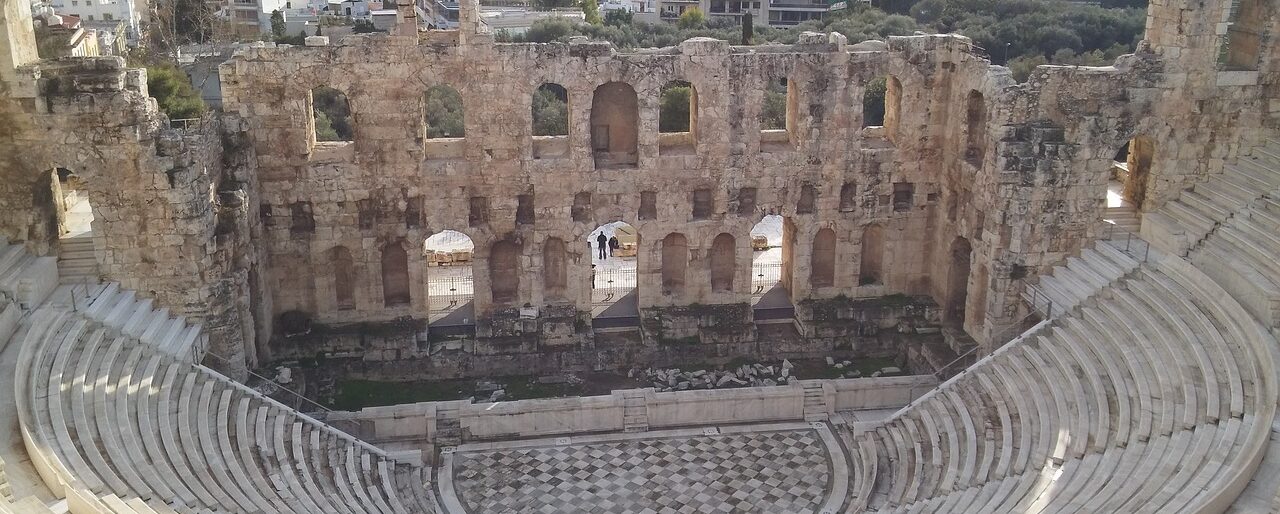
Sophocles’ Electra, a Greek tragedy from the late fifth century BCE, follows a daughter who has spent years mourning her murdered father Agamemnon and hating the mother who killed him. Read through depth psychology, it is a study of grief that cannot move: loyalty to the dead, rage used against sorrow, and a self built around a wound.
Key takeaways
- Sophocles’ Electra shows a daughter whose years of mourning for her murdered father have frozen her life at the moment of loss.
- Carl Jung coined the term Electra complex in 1913 for a daughter’s attachment to her father and rivalry with her mother; Freud rejected the name.
- Jungian readings cast Clytemnestra as the Terrible Mother, Orestes as Electra’s externalized animus and Chrysothemis as her shadow sister.
- The urn scene pictures complicated grief: Electra weeps over a false container because she believes that without her pain she is nothing.
- In therapy, the Electra pattern points to rage used as a defence against grief, and to the work of letting the dead be dead.
What happens in Sophocles’ Electra?
Sophocles’ Electra is usually dated to the last two decades of the fifth century BCE, most often somewhere around 420 to 410 BCE, though no firm date survives.12 It is a play about a woman who has been crying out for most of her adult life. Unlike Sophocles’ Antigone, who acts once and dies for it, Electra waits. Her mourning has become a way of life, and that is what gives the play its psychological weight: it shows a psyche stuck at the moment of loss.
The action begins years after Clytemnestra and her lover Aegisthus killed King Agamemnon on his return from Troy. Time has moved on for everyone except Electra. The plot runs in five movements.
- The stagnation. Electra still lives in her father’s house, but as something close to a servant: poorly dressed, fed at a bare table, insulted by her mother and by Aegisthus. She tells the chorus that she is unmarried and childless and that her youth is wasting away. She keeps up a public lament for Agamemnon every day, a living monument to him. Her sister Chrysothemis has made peace with the new household, and Electra treats that as betrayal.
- The nightmare. Chrysothemis reports a dream Clytemnestra has had: Agamemnon came back to the light, took the sceptre that Aegisthus now carries and planted it at the hearth, where it put out a branch that overshadowed all of Mycenae. Frightened, Clytemnestra sends offerings to his tomb.
- The false death. Orestes, the exiled brother, has come home in secret. His old tutor arrives first, posing as a messenger, and tells a long and vivid story of Orestes dying in a chariot crash at the Pythian games. Later Orestes himself, disguised as a stranger from Phocis, puts into Electra’s hands a bronze urn that is said to hold his ashes.
- The lament. Holding the urn, Electra delivers one of the great laments in Greek drama. She mourns the brother she nursed as a baby, and she mourns herself: with him gone, she says, she is nothing, and the hope that kept her going is ashes too.
- The recognition and the revenge. Orestes cannot keep up the deception. He reveals himself, proving it with his father’s signet ring, and Electra’s grief turns at once to joy and then to fierce purpose. Orestes goes inside and kills Clytemnestra. When her mother cries out, Electra calls to her brother to strike a second time if he has the strength. Aegisthus then returns, is shown a covered body he takes for Orestes, uncovers his dead wife, and is driven into the house to be killed where Agamemnon died.1
The story belongs to the cursed House of Atreus, the same family whose earlier history begins with the sacrifice of Iphigenia. Karl Kerényi‘s retelling of the hero myths gives the wider family background that Sophocles’ audience already knew.11
Where does the name “Electra complex” come from?
The term belongs to Carl Jung, not Freud. Jung proposed it in “The Theory of Psychoanalysis,” the lectures he gave at Fordham University in 1912 and published in 1913, as a name for a girl’s attachment to her father and rivalry with her mother.3 He meant it as the daughter’s counterpart to the Oedipus complex, the pattern Freud had named after Sophocles’ Oedipus Rex.
Context matters here. Jung was still working inside Freud’s theory when he wrote it, and the break between the two men came soon after. Freud never accepted the name: in his 1931 paper “Female Sexuality” he rejected it because it stressed a parallel between girls’ and boys’ development that he did not accept.4 Jung himself did little with the term later. His mature psychology looked less at a family triangle and more at the parental images, the archetypes of father and mother, that a child’s real parents carry and that the adult keeps meeting in the psyche.
Literary scholars have shown how the name took on a life of its own in twentieth-century culture, from Hofmannsthal and Strauss to modern theatre, so that Electra became the emblem of the daughter fixed on her father.4 In the play, the complex shows as Electra’s idealization of the dead Agamemnon. He was a man who sacrificed his own daughter, yet in Electra’s mind he is beyond question.
Why do Jungians read Electra through the Negative Mother complex?
A complex, in Jung’s sense, is a cluster of feeling-toned memories and images organized around an archetypal core. A negative mother complex forms when the experience of mothering has been cold, hostile or dangerous, so that the inner image of “mother” becomes something to fight or flee.5
From that angle, Electra hates Clytemnestra not only for the murder. Clytemnestra is also the sexual, active and dominant feminine power that Electra fears in herself. She took a lover, seized a throne and acted on her anger. To avoid becoming her mother, Electra refuses everything her mother stands for, including adult desire, and stays frozen in the role of grieving child.
Jungians call this pattern the puella aeterna, the eternal girl, the feminine form of the puer aeternus that Marie-Louise von Franz described: a life held in provisional suspense, unable to commit to ordinary adult existence.9 Linda Schierse Leonard used the term for women whose relationship with their father left them either stuck in girlhood or armoured against feeling.7 Electra is a severe version: she is frozen in the moment of her father’s death.
Electra: the father’s daughter
Electra fits the figure Jungian writers call the father’s daughter. Marion Woodman described women whose identity was organized around the father’s values and approval, often at the cost of their own bodies and feelings.8 Electra’s identity comes almost entirely from Agamemnon. In Jungian language she is possessed by the image of the dead father: it lives through her and crowds out her own life.
Her one great hope is that Orestes will return and avenge Agamemnon. For most of the play she waits for a man to do the act she wants done. That dependency cripples her. She is unmarried and childless, as she says herself, and in psychological terms all her libido, her life energy, is invested in the dead parent.
Sophocles complicates the picture in one telling scene. When she believes Orestes is dead, Electra turns to Chrysothemis and proposes that the two sisters kill Aegisthus themselves. Chrysothemis refuses, and Electra declares she will do it alone. The capacity to act is in her. What she has not done in all those years is turn it against her mother, and that is the act she leaves, in the end, to her brother. Today this pattern would often be described as a father wound: a life organized around a father who is absent, idealized and gone.
Clytemnestra: the Terrible Mother
Clytemnestra carries the archetype Jung and Erich Neumann called the Terrible Mother, the destructive face of the Great Mother that myth pictures in goddesses such as Kali and Hecate.56 In this reading she stands for the devouring side of the unconscious, which threatens to swallow the young ego before it can stand on its own. She killed her husband and lives openly with Aegisthus, and she treats her surviving daughter as an enemy.
Yet Sophocles makes her human. In her debate with Electra she argues that she killed Agamemnon because he sacrificed their daughter Iphigenia to win a fair wind for Troy. Electra answers with a counter-argument about Artemis and the sacrifice, but she does not let her mother’s grief touch her. To the fixated child, the mother must stay a monster, because a monster justifies the child’s rage. A mother who also lost a daughter would make that rage much harder to hold. Readers interested in the inner side of this dynamic can go further with the mother wound.
Orestes: the externalized animus
In Jung’s model the animus is the inner masculine figure in a woman’s psyche, connected with will, decision and action. Orestes plays that role for Electra. She has split off her capacity to act against the mother and projected it onto her brother. When he returns, she comes alive.
This is the dynamic Jungians describe as animus possession in its passive form: a woman feels powerless until a man arrives to carry her aggression for her, and then she identifies with his deed. The tragedy is that Orestes is largely an instrument. Sophocles gives him a plan and a mission from Apollo’s oracle, but little inner life and none of his sister’s anguish. He does the killing; Electra feels it.
What does the urn scene mean?
The scene with the urn is the psychological turning point of the play. Electra holds a small bronze vessel she believes contains her brother’s remains, and with them her whole future. The urn is a stage prop in a lie: whatever it holds, it does not hold Orestes. She is weeping over something false.
Clinically, the scene is a picture of complicated grief. The urn works like what Winnicott would call a false self, a container for an identity built around loss. Electra clutches it because she believes that without her pain she is nothing. Her lament says exactly that. When she learns that Orestes is alive, she has to drop the role of mourner in a moment, and she moves straight into the role of accomplice to murder. She swings from collapse into fierce excitement, passing over the middle ground where grief could actually be felt and finished.
Chrysothemis: the shadow sister
Chrysothemis is Electra’s foil. She agrees in private that their father was wronged, but she obeys her mother, keeps quiet and lives a comfortable life. Electra despises her for it.
Why so much contempt? Because Chrysothemis carries Electra’s shadow, the disowned part of the self. In this case the shadow is not something dark but something ordinary: the part of Electra that wants to survive, eat, sleep and be comfortable. Electra sacrifices her physical well-being to keep her spiritual rage alive. She projects her self-hatred onto her sister and calls her a coward, when what frightens her is the prospect of a normal life.
What does Clytemnestra’s dream reveal?
Jung held that dreams often compensate for the one-sided attitude of the conscious mind, bringing up what the dreamer has pushed away.5 Clytemnestra’s dream works this way. By day she is secure on her stolen throne. By night the dead king returns, plants his sceptre in the hearth, the centre of the household, and it grows into a tree that overshadows the land.
Read as a compensatory dream, the image warns that the repressed masculine energy of the house, the son Orestes, is about to return and take root. Clytemnestra answers the dream the way many people answer a frightening dream: she tries to appease it with offerings rather than listen to it. Electra persuades Chrysothemis to throw the offerings away and lay their own at the tomb instead.
Does the revenge bring justice?
The play ends in blood, but it is hard to call it justice. In Aeschylus’ version, The Libation Bearers, the Furies appear to Orestes as soon as he has killed his mother, and only a trial in Athens in The Eumenides breaks the cycle. Sophocles gives no Furies and no trial. His play stops as Aegisthus is driven inside to die, with the chorus saying the house of Atreus has come through to freedom.
That abrupt ending invites a darker reading. Freud called the urge to relive old pain the repetition compulsion, and he saw it in people who return again and again to the same injury.10 Electra’s revenge repeats the crime that started her mourning: a family member killed inside the house. It does not heal her; it empties the house. Her father is still dead, her mother is now dead too, and the purpose that held her life together is used up.
The wider tradition of Greek tragedy and its influence on Jung treats such endings as the place where an audience is left to feel what the characters cannot. The same family pattern, of a parent’s violence passed down and turned back on the parent, drives Medea in reverse, where a mother kills her children.
How does the Electra pattern show up in therapy?
The Electra complex in the therapy room
We see an Electra pattern in people who stay fiercely loyal to a distant or dead father while remaining hostile toward their mother. They often struggle in romantic relationships, because no partner can measure up to the idealized father. In Woodman’s language they remain psychologically virgin: unwed to reality, wedded to a ghost.8 The work involves helping them withdraw the projection from the father, see both parents as real people, and find their own inner authority.
Rage as a defence against grief
Electra is angry partly because she cannot bear to be sad. If she stops crying out, she might have to feel the void underneath. This is a common defence. Anger is energizing; grief is depleting. Many people hold onto grudges for decades because letting go feels like a small death, and some find that getting over grief when no one asks for forgiveness is the hardest part. Electra chooses the energy of hate over the stillness of acceptance. In therapy, we try to make room for the sadness the anger is guarding, without asking anyone to give up a justified sense of wrong.
When grief stops moving
Modern grief research gives a name to what Electra lives through. Complicated grief, now recognized as prolonged grief disorder in ICD-11 and DSM-5-TR, describes intense yearning and preoccupation with the dead that persist long after the loss, with a sense that life has no meaning or that part of oneself has died.1213 Shear describes how the normal process of adapting to a loss gets derailed, often by avoidance, self-blame or anger about how the death happened.12 A violent death, an unpunished wrong and a household that pretends nothing happened are exactly the conditions Sophocles gives Electra.
How we work with it at Taproot
At Taproot we approach this kind of grief from more than one direction. Jungian therapy works with the images that carry the loss, the idealized father, the monstrous mother, the sister who seems to have it easy, and with the dreams that bring them up. Because stuck grief and old rage live in the body as much as in thought, we also use Brainspotting for trauma, which lets a person stay with the felt sense of the loss until it begins to shift. The aim is not to make anyone stop loving the dead, but to let the dead be dead, so that the living person can come back into their own life.
What does Electra ask of the modern reader?
Electra is a study in the dark side of loyalty. It asks how much of your life you are willing to give to the dead. Electra wins her vengeance, and she loses the self she might have had. She becomes part of what she hated, a partner in the killing of kin. For a modern reader the play is a warning to bury the dead before they bury you.
For anyone who sees something of Electra in their own grief or anger, that warning can become a starting point. At Taproot, our depth-oriented work treats the old loyalty with respect while helping the person find the life it has been holding back. You can contact Taproot Therapy Collective to ask about starting.
Frequently asked questions
Who coined the term Electra complex?
Carl Jung introduced the term Electra complex in his 1913 work The Theory of Psychoanalysis, based on lectures given at Fordham University in 1912. He used it for a girl’s attachment to her father and rivalry with her mother, as a counterpart to the Oedipus complex. Freud rejected the name in his 1931 paper Female Sexuality.
What is the plot of Sophocles’ Electra?
In Sophocles’ Electra, the daughter of Agamemnon has mourned her murdered father for years while living as a near servant in the house of her mother Clytemnestra and Aegisthus. A false report says her brother Orestes is dead, and she laments over an urn said to hold his ashes. Orestes then reveals himself and kills Clytemnestra and Aegisthus.
What does the urn symbolize in Electra?
In Sophocles’ Electra, the urn Orestes hands his sister is part of a deception: it does not hold his remains. Depth psychologists read Electra’s lament over it as an image of complicated grief, a person clinging to a container of loss because her identity has been built around the wound rather than around her own life.
Why does Electra hate her sister Chrysothemis?
Chrysothemis agrees that their father was wronged but obeys her mother and lives comfortably. In a Jungian reading of Sophocles’ Electra, she carries Electra’s shadow: the ordinary wish to eat, sleep, survive and be at ease. Electra’s contempt for her sister is contempt for that disowned part of herself.
Is the Electra complex a real diagnosis?
The Electra complex is not a psychiatric diagnosis. It is a psychoanalytic idea from Carl Jung describing a daughter’s idealized bond with her father and hostility toward her mother. Therapists use it as a way of understanding a pattern, alongside clinical descriptions such as prolonged grief disorder when mourning a parent stops moving.
Related reading
- Cognitive Distortions: Identifying and Challenging Negative Thinking Patterns
- Attachment Theory: Understanding Relationship Patterns and Dynamics
- Want to Be a Better Therapist? Learn How to Do an Exit Interview
- Anima and Animus in the The Bacchae: A Depth Psychological Perspective
- The Philoctetes of Sophocles: A Depth Psychological Perspective
- A Depth Psychological Analysis of Sophocles’ The Women of Trachis
References
- Finglass, P. J. (Ed.). (2007). Sophocles: Electra. Cambridge University Press.
- Finglass, P. J. (2017). Sophocles’ Electra. In Oxford Bibliographies in Classics. Oxford University Press. https://doi.org/10.1093/obo/9780195389661-0270
- Jung, C. G. (1961). The theory of psychoanalysis. In Freud and psychoanalysis (R. F. C. Hull, Trans.; Collected Works, Vol. 4). Princeton University Press. (Original work published 1913)
- Scott, J. (2005). Electra after Freud: Myth and culture. Cornell University Press.
- Jung, C. G. (1956). Symbols of transformation (R. F. C. Hull, Trans.; Collected Works, Vol. 5). Princeton University Press.
- Neumann, E. (1955). The Great Mother: An analysis of the archetype (R. Manheim, Trans.). Princeton University Press.
- Leonard, L. S. (1982). The wounded woman: Healing the father-daughter relationship. Swallow Press.
- Woodman, M. (1982). Addiction to perfection: The still unravished bride. Inner City Books.
- von Franz, M.-L. (2000). The problem of the puer aeternus. Inner City Books. (Original work published 1970)
- Freud, S. (1961). Beyond the pleasure principle (J. Strachey, Trans.). W. W. Norton. (Original work published 1920)
- Kerényi, K. (1959). The heroes of the Greeks (H. J. Rose, Trans.). Thames and Hudson.
- Shear, M. K. (2015). Complicated grief. New England Journal of Medicine, 372(2), 153-160. https://doi.org/10.1056/NEJMcp1315618
- Prigerson, H. G., Horowitz, M. J., Jacobs, S. C., Parkes, C. M., Aslan, M., Goodkin, K., Raphael, B., Marwit, S. J., Wortman, C., Neimeyer, R. A., Bonanno, G. A., Block, S. D., Kissane, D., Boelen, P., Maercker, A., Litz, B. T., Johnson, J. G., First, M. B., & Maciejewski, P. K. (2009). Prolonged grief disorder: Psychometric validation of criteria proposed for DSM-V and ICD-11. PLoS Medicine, 6(8), e1000121. https://doi.org/10.1371/journal.pmed.1000121









0 Comments