
The neuroscience of trauma studies how overwhelming events change the brain’s threat learning and memory. In people with PTSD, brain imaging on average shows a more reactive amygdala and insula, a quieter medial prefrontal cortex, a slightly smaller hippocampus, and a threat-detecting salience network that is more strongly connected while the self-reflective default mode network is less so. These are group averages. No scan diagnoses PTSD in one person.
My argument here is that trauma is best understood as threat learning that never got updated. That learning is spread across several memory systems and coordinated by large-scale brain networks. The difference matters for treatment. The best-supported trauma therapies share one structure: they bring the old learning back online and give it information it did not have, while the person stays present enough to take that information in. Body-based methods such as Somatic Experiencing and Brainspotting are plausibly other routes to the same update. Some people may find those routes easier to tolerate, but their evidence is thinner, and the claim that only they reach “implicit” memory does not hold up.

Why the reptile brain is the wrong map
The neuroscientist Paul MacLean described a “visceral brain” in 1949 and was calling it the limbic system by 1952.1, 2 In the 1960s he built it into the triune brain, which he set out at full length in The Triune Brain in Evolution (1990).3 The model stacks three brains in supposed evolutionary order. The “reptilian complex” was MacLean’s name for the basal ganglia, not the brainstem that popular versions describe. The “paleomammalian” limbic system handles emotion, and the “neomammalian” neocortex handles reason and language. Each newer layer is supposed to sit on top of the older one and govern it. Carl Sagan’s 1977 book The Dragons of Eden carried the idea to a general audience.
Comparative neuroanatomy abandoned this picture long ago. In 2020 Joseph Cesario, David Johnson and Heather Eisthen wrote that the belief that newer brain structures were layered over older ones as vertebrates evolved “has long been discredited among neurobiologists.”4 Basal ganglia are found in fish and amphibians, not only reptiles. The neuroscientist Joseph LeDoux cites evidence that reptiles and birds have amygdala circuitry homologous to that of mammals, so the “limbic” machinery for detecting threat was not a mammalian addition.5
The model survives because it is a useful story. Telling someone that their freeze response came from an ancient part of the brain can ease shame. But the story points therapy at the wrong target. It implies that the job is for the cortex to override a primitive brain. In fact the medial prefrontal cortex, the amygdala and the hippocampus work as one system for learning and unlearning threat.6 And in the dissociative form of PTSD the problem runs the other way: midline prefrontal regions over-inhibit emotional ones, so people go numb and distant instead of flooded.7 No lizard is in charge in either case.
What trauma does to threat learning and memory
LeDoux’s own fear-conditioning research, done mostly in rats, identified the amygdala as an important part of the system that acquires, stores and expresses learned fear.8 In The Emotional Brain (1996) he described a fast “low road” from the thalamus to the amygdala that can set off a defensive response before the cortex has finished working out what the danger is.9 The lesson holds: a body can react to a reminder the person cannot consciously place.
LeDoux has since revised his own vocabulary. He now separates defensive “survival circuits,” which detect threat and drive the body’s responses, from the conscious feeling of fear. He argues the feeling is assembled by the same general cortical networks that produce other conscious experience, with subcortical circuits supplying nonconscious input.5, 10 With Daniel Pine he argued that blurring these two systems has held back treatment research for anxiety disorders.11 Clinically, a person can show a strong startle and a racing heart without reporting fear, or report dread with little measurable arousal. Both are real, and they may need different work. I go further into his career in Joseph LeDoux and what his research means for trauma therapy.
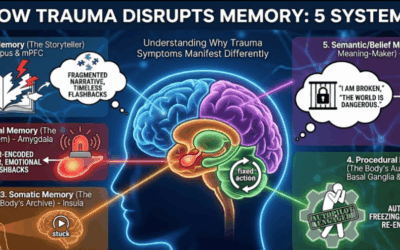
Memory is not one thing either. Larry Squire’s history of the field traces how evidence from amnesic patients, healthy volunteers and animals converged on the view that the brain runs several memory systems, some open to conscious recall and some not.12 Chris Brewin’s dual representation theory applies this to PTSD. It proposes that a trauma can be held as an inflexible, sensory-bound representation of images, sounds and body states that is poorly tied to a flexible, contextual representation of when and where it happened.13 In this model a flashback is the sensory trace firing without its time stamp. Brewin’s 2014 review reports strong evidence for enhanced perceptual memory and impaired episodic memory in PTSD.14 Not everyone agrees. David Rubin and colleagues argue that trauma memories follow ordinary memory rules and that no special mechanism is needed to explain PTSD; in their model the current memory of an event, not the event itself, drives symptoms.15 Either way, the memory as it exists now is where therapy has leverage.
The structural findings are smaller than the popular account suggests. A large pooled study from the ENIGMA-PGC PTSD working group, the largest PTSD imaging study when it was published in 2018, analyzed scans of 1,868 people from 16 cohorts and found smaller hippocampi in current PTSD than in trauma-exposed controls, with an effect size of d = −0.17.16 That is a small difference. A twin study led by Mark Gilbertson found that the trauma-unexposed identical twins of people with severe PTSD also had smaller hippocampi, which suggests that a smaller hippocampus can be a pre-existing risk factor and not only damage done by the trauma.17
The most hopeful finding in this literature is that a recalled memory can change. In 2000 Karim Nader, Glenn Schafe and LeDoux showed that a consolidated fear memory in rats, once reactivated, became unstable again and needed new protein synthesis in the amygdala to be stored; blocking that synthesis right after recall produced amnesia for the learned fear.18 Daniela Schiller’s team then reported that in healthy volunteers, extinction training given shortly after a reminder prevented the return of fear for at least a year.19 Merel Kindt and Marieke Soeter tested a similar procedure with fear-relevant stimuli and several measures of fear and did not find the effect.20 A 2018 review from Kindt’s group concluded that reconsolidation remains “a viable but hotly contested explanation” for some observed changes in memory.21 Memories can be modified after recall; whether reconsolidation is the mechanism in therapy is still open.
The network view: salience, default mode and executive control
Psychiatric neuroscience has shifted from single structures toward large-scale networks. Vinod Menon’s triple network model names three that matter across disorders: the salience network, anchored in the anterior insula and dorsal anterior cingulate, which flags what deserves attention; the default mode network, which supports self-referential thought and autobiographical memory; and the central executive network, which holds goals in mind and directs focused thinking.22
PTSD fits this frame. A 2007 meta-analysis by Amit Etkin and Tor Wager found amygdala and insula hyperactivity across PTSD, social anxiety and specific phobia, and hypoactivity in the dorsal and rostral anterior cingulate and ventromedial prefrontal cortex that was specific to PTSD.23 A 2012 meta-analysis found that PTSD alterations largely overlapped the salience, central executive and default networks, while noting substantial heterogeneity across studies.24 A 2016 meta-analysis and systematic review of resting-state studies reported stronger salience-network connectivity and weaker default-mode connectivity, which the authors read as hypervigilance “at the cost of awareness of internal thoughts and autobiographical memory.”25
Ruth Lanius and colleagues have proposed tying each network to a cluster of symptoms: the executive network to trouble thinking and concentrating, the salience network to arousal and body awareness that run too high or too low, and the default network to an altered sense of self.26 Hypervigilance looks like a salience system that will not stand down. “I don’t know who I am anymore” sounds like a default network that has lost its hold on autobiographical continuity. The dissociative pattern is different again, which is why the neuroscience of dissociation deserves its own discussion.
A second current framework treats the brain as a prediction machine. Lisa Feldman Barrett’s theory of constructed emotion describes the brain as continually predicting the state of the body and categorizing those sensations using past experience; an emotion is one such categorized prediction.27 This is a theory, not a finding. It is useful clinically because it describes trauma from the inside: the body braces for a danger the person cannot see because the brain is still predicting it. How some of that processing becomes conscious and reportable is the question that Bernard Baars’s global workspace theory tries to answer.
One caution applies to all of this. In 2022 Scott Marek and colleagues used data from about 50,000 people to show that studies linking individual differences in brain structure or function to traits and symptoms need thousands of participants to replicate; at the typical neuroimaging sample of about 25, effects are inflated and replications fail.28 Much of the PTSD imaging literature is built from small samples, so the network picture should rest on meta-analyses, and even those describe averages across very different people.
Split brains, the right hemisphere and the interpreter
Gazzaniga’s split-brain research to suggest that the right hemisphere encodes and stores traumatic memories. That research does not show this. Gazzaniga studied people whose hemispheres had been surgically disconnected, and his 2000 review of four decades of that work in Brain describes a left hemisphere specialized for language, speech and major problem-solving, and a right hemisphere specialized for tasks such as face recognition and attentional monitoring.29 It does not address where traumatic memories are kept.
The right-brain idea came from somewhere else. In 1996 Scott Rauch, Bessel van der Kolk and colleagues scanned eight people with PTSD while they listened to audiotaped scripts describing their traumas. Blood flow rose in right-sided limbic, paralimbic and visual areas and fell in the left inferior frontal cortex, the region of Broca’s speech area, and in the left middle temporal cortex.30 Van der Kolk later presented the finding in The Body Keeps the Score as evidence that trauma can take speech offline,31 and Allan Schore built a right-hemisphere account of psychotherapy.32 Eight participants is a pilot sample. The meta-analyses described above, which pool dozens of studies, characterize PTSD by the amygdala, insula, medial prefrontal cortex and large-scale networks, not as a disorder of one hemisphere.23, 24
Gazzaniga’s work does offer something useful for trauma. Split-brain studies revealed what he calls the left hemisphere’s interpreter, “a device that allows us to construct theories about the relationship between perceived events, actions and feelings.”29 Trauma survivors use theirs constantly. “I’m just jumpy.” “I’m bad with crowds.” “I overreact.” These are interpreter stories about responses produced by threat learning the person cannot observe directly, and therapy often starts by treating them as hypotheses rather than character verdicts. LeDoux, it is worth knowing, worked with Gazzaniga on split-brain research before he turned to the amygdala. The two co-wrote The Integrated Mind (1978), whose first chapter is titled “The Split Brain and the Integrated Mind.”33
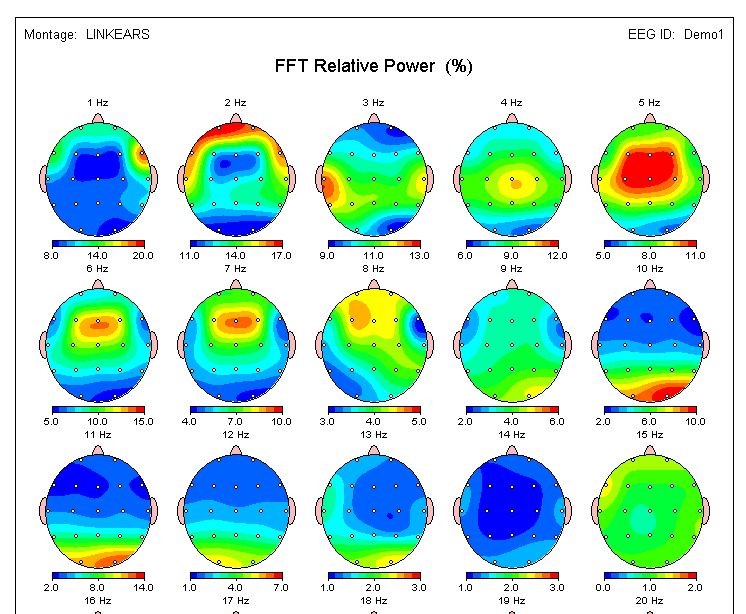
What a qEEG brain map can and cannot tell you
The research base is modest. A 1997 assessment by the American Academy of Neurology and the American Clinical Neurophysiology Society, since marked as retired, judged qEEG investigational for depression, attention disorders, learning disability and head injury, and warned of a “very substantial risk of erroneous interpretations.”34 A 2019 review of EEG in PTSD found group differences worth pursuing, the most promising being an asymmetry in parietal alpha power and exaggerated responses to distracting stimuli, and recommended future research on whether they could serve as diagnostic markers.35 That is roughly where the field stands: interesting averages, no validated test for an individual.
Taproot offers qEEG brain mapping, so I have a stake in saying this plainly. A map describes how one person’s EEG differs from a database average, and clinicians use it to choose neurofeedback protocols. Neurofeedback for PTSD showed a moderate benefit in a 2023 meta-analysis of seven randomized trials that were mostly small and of varied quality.36 A map is not a diagnosis, a personality profile or a picture of a trauma. I cover the wider set of tools in a clinician’s guide to neurotechnology in the therapy room, and the neurofeedback trials in more detail in what the evidence shows for newer trauma therapies.
How trauma therapies reach the memory
Exposure therapy works through extinction learning, and extinction research maps that learning onto the same amygdala, prefrontal and hippocampal circuitry that fear conditioning research identified.6, 37 Michelle Craske’s inhibitory learning model treats exposure as building a new safety memory that competes with the old threat memory, and recommends techniques such as violating the expectation of harm and practicing in multiple contexts.37
Edna Foa and Michael Kozak’s emotional processing theory, the basis for prolonged exposure, held in 1986 that a fear structure has to be activated and then given corrective information.38 A 1998 study of 37 women treated with imaginal exposure after assault found that those who engaged emotionally at the start and then habituated across sessions improved most.39 In this model, talking about a trauma from a safe intellectual distance does little. Talking while the memory is emotionally live does the work.
Richard Lane and colleagues pushed this further in 2015. They argued that change in behavioral, cognitive-behavioral, emotion-focused and psychodynamic therapy alike comes from updating prior emotional memories through reconsolidation, by bringing in new emotional experience, and that emotional arousal is a key ingredient across modalities.40 Given how contested human reconsolidation research is, I read that as a strong hypothesis rather than a finding. It is also the organizing idea of coherence therapy’s approach to the emotional brain.
Exposure and trauma-focused cognitive therapies have the strongest evidence. The American Psychological Association’s 2019 PTSD guideline strongly recommends cognitive behavioral therapy, cognitive processing therapy, cognitive therapy and prolonged exposure, and conditionally recommends EMDR, brief eclectic psychotherapy and narrative exposure therapy.41 A 2020 meta-analysis of 114 randomized trials with 8,171 participants found robust, clinically important effects for trauma-focused CBT and for EMDR.42
EMDR is often explained as bilateral stimulation reaching subcortical networks. The mechanism with the most experimental support is plainer. Marcel van den Hout and Iris Engelhard’s laboratory found that vertical eye movements work as well as horizontal ones, that tasks with no eye movement can have the same effect, and that what matters is a second task that taxes working memory while the memory is held in mind.43 A 2013 meta-analysis found that eye movements add a moderate effect in EMDR treatment studies (d = 0.41) and a larger one in laboratory studies, where the biggest change was in how vivid the memory felt.44 Taxing working memory during recall seems to leave the memory less vivid and less charged. That is an update, not the taming of a reptile brain. Taproot offers EMDR therapy in Hoover.
Brainspotting, developed by David Grand, holds the eyes still on a point that seems to line up with felt activation instead of moving them. Frank Corrigan and Grand proposed in Medical Hypotheses that it works through midbrain structures such as the superior colliculus and periaqueductal gray, and they framed that as a set of testable hypotheses.45 The main clinical outcome study, co-authored by Grand, treated 76 adults with three sessions of either Brainspotting or EMDR; both groups improved, the effect sizes were larger for EMDR, and the abstract does not describe random assignment.46 Brainspotting is plausible, widely used and lightly tested.
Somatic Experiencing, developed by Peter Levine, guides attention to interoceptive, proprioceptive and kinesthetic sensation and aims to complete thwarted defensive responses and discharge excess autonomic arousal.47 “Trapped energy,”, is a clinical metaphor for that process, not a measured quantity. The first known randomized trial, with 63 people, found large improvements in PTSD symptoms after 15 weekly sessions compared with a waitlist,48 and a 2021 scoping review found preliminary positive evidence from studies of mixed quality.49 Many somatic trainings explain themselves with Stephen Porges’s polyvagal theory,50 whose basic physiological premises Paul Grossman argues are “either untenable or highly implausible.”51 A method can help even when the theory attached to it is wrong.
Internal Family Systems, which works with “parts” of the personality, has a different evidence profile. An uncontrolled pilot with 17 adults who had survived multiple childhood traumas reported large drops in PTSD symptoms over sixteen 90-minute sessions.52 A randomized trial published in 2026, designed mainly to test feasibility, assigned 60 patients with PTSD to an online group IFS program or a well-matched active control. Both groups improved significantly, with no significant difference between them.53 That is what careful testing often looks like: real improvement, and no proof yet that the specific method beats a credible alternative.
Put together, the bottom-up versus top-down split does not sort therapies into those that reach implicit memory and those that do not. Prolonged exposure reaches the threat memory through words and images held while arousal is high. Somatic Experiencing reaches it through sensation. EMDR and Brainspotting reach it through directed attention while the memory is active. On my reading, what the effective versions share is activation within limits plus information the old memory lacked. The route matters, because people differ in which one they can tolerate and use, but the destination is the same.
What this looks like in therapy
In practice the neuroscience changes the order and texture of the work more than it changes the techniques.
Assessment comes first. A good trauma assessment asks about intrusions, avoidance, mood and arousal, and asks specifically about dissociation: losing time, feeling unreal, going numb. Lanius and colleagues argue that patients with PTSD should be assessed for the dissociative subtype and that its symptoms belong inside a stage-oriented treatment.7 Someone whose system overcontrols emotion needs a different first phase from someone who is flooded. A standard checklist such as the PCL-5 gives a baseline to measure change against.54
Stabilization comes before processing. Judith Herman’s Trauma and Recovery (1992) laid out a staged recovery that begins with establishing safety, moves to remembrance and mourning, and ends in reconnection with ordinary life.55 Daniel Siegel’s phrase “window of tolerance” names the range of arousal in which a person can feel something without being flooded or shutting down.56 Processing happens inside that window.
Processing means activation plus new information. The therapist helps the person bring the memory up enough to feel it while keeping one foot in the room. Then something the memory did not contain gets added: that it ended, that the person survived, that the body can move now, that the shame belonged to someone else. In EMDR the vehicle is a dual-attention task. In exposure it is staying with the memory until the expected catastrophe fails to arrive. In somatic work it is letting a braced movement finish. In parts work it is a younger part getting what it needed. The clinician watches for signs that activation has gone past useful, such as a glazed look or a flattened voice, and slows down.
The relationship is part of the mechanism. People in therapy read the therapist’s face, voice and pacing for signs of safety, which is the subject of how we read each other’s emotions before anyone speaks. Depth-oriented work adds attention to images, dreams and meaning, which I take up in an essay connecting depth psychology, somatic work and computational neuroscience.
Progress is measured, not assumed. Repeating the same symptom measure every few weeks shows whether the work is moving. If it is not, try a different route.
If you are in the Birmingham area and want trauma therapy that takes both the memory and the body seriously, you can contact Taproot Therapy Collective in Hoover to talk through which approach might fit you.
References
- MacLean, P. D. (1949). Psychosomatic disease and the “visceral brain”: Recent developments bearing on the Papez theory of emotion. Psychosomatic Medicine, 11(6), 338–353. https://doi.org/10.1097/00006842-194911000-00003
- MacLean, P. D. (1952). Some psychiatric implications of physiological studies on frontotemporal portion of limbic system (visceral brain). Electroencephalography and Clinical Neurophysiology, 4(4), 407–418. https://doi.org/10.1016/0013-4694(52)90073-4
- MacLean, P. D. (1990). The triune brain in evolution: Role in paleocerebral functions. Plenum Press. ISBN 9780306431685.
- Cesario, J., Johnson, D. J., & Eisthen, H. L. (2020). Your brain is not an onion with a tiny reptile inside. Current Directions in Psychological Science, 29(3), 255–260. https://doi.org/10.1177/0963721420917687
- LeDoux, J. (2012). Rethinking the emotional brain. Neuron, 73(4), 653–676. https://doi.org/10.1016/j.neuron.2012.02.004
- Milad, M. R., & Quirk, G. J. (2012). Fear extinction as a model for translational neuroscience: Ten years of progress. Annual Review of Psychology, 63, 129–151. https://doi.org/10.1146/annurev.psych.121208.131631
- Lanius, R. A., Vermetten, E., Loewenstein, R. J., Brand, B., Schmahl, C., Bremner, J. D., & Spiegel, D. (2010). Emotion modulation in PTSD: Clinical and neurobiological evidence for a dissociative subtype. American Journal of Psychiatry, 167(6), 640–647. https://doi.org/10.1176/appi.ajp.2009.09081168
- LeDoux, J. E. (2000). Emotion circuits in the brain. Annual Review of Neuroscience, 23, 155–184. https://doi.org/10.1146/annurev.neuro.23.1.155
- LeDoux, J. E. (1996). The emotional brain: The mysterious underpinnings of emotional life. Simon & Schuster. ISBN 9780684803821.
- LeDoux, J. E., & Brown, R. (2017). A higher-order theory of emotional consciousness. Proceedings of the National Academy of Sciences, 114(10), E2016–E2025. https://doi.org/10.1073/pnas.1619316114
- LeDoux, J. E., & Pine, D. S. (2016). Using neuroscience to help understand fear and anxiety: A two-system framework. American Journal of Psychiatry, 173(11), 1083–1093. https://doi.org/10.1176/appi.ajp.2016.16030353
- Squire, L. R. (2004). Memory systems of the brain: A brief history and current perspective. Neurobiology of Learning and Memory, 82(3), 171–177. https://doi.org/10.1016/j.nlm.2004.06.005
- Brewin, C. R., Gregory, J. D., Lipton, M., & Burgess, N. (2010). Intrusive images in psychological disorders: Characteristics, neural mechanisms, and treatment implications. Psychological Review, 117(1), 210–232. https://doi.org/10.1037/a0018113
- Brewin, C. R. (2014). Episodic memory, perceptual memory, and their interaction: Foundations for a theory of posttraumatic stress disorder. Psychological Bulletin, 140(1), 69–97. https://doi.org/10.1037/a0033722
- Rubin, D. C., Berntsen, D., & Bohni, M. K. (2008). A memory-based model of posttraumatic stress disorder: Evaluating basic assumptions underlying the PTSD diagnosis. Psychological Review, 115(4), 985–1011. https://doi.org/10.1037/a0013397
- Logue, M. W., van Rooij, S. J. H., Dennis, E. L., Davis, S. L., Hayes, J. P., Stevens, J. S., Densmore, M., Haswell, C. C., Ipser, J., Koch, S. B. J., Korgaonkar, M., Lebois, L. A. M., Peverill, M., Baker, J. T., Boedhoe, P. S. W., Frijling, J. L., Gruber, S. A., Harpaz-Rotem, I., Jahanshad, N., . . . Morey, R. A. (2018). Smaller hippocampal volume in posttraumatic stress disorder: A multisite ENIGMA-PGC study: Subcortical volumetry results from posttraumatic stress disorder consortia. Biological Psychiatry, 83(3), 244–253. https://doi.org/10.1016/j.biopsych.2017.09.006
- Gilbertson, M. W., Shenton, M. E., Ciszewski, A., Kasai, K., Lasko, N. B., Orr, S. P., & Pitman, R. K. (2002). Smaller hippocampal volume predicts pathologic vulnerability to psychological trauma. Nature Neuroscience, 5(11), 1242–1247. https://doi.org/10.1038/nn958
- Nader, K., Schafe, G. E., & LeDoux, J. E. (2000). Fear memories require protein synthesis in the amygdala for reconsolidation after retrieval. Nature, 406(6797), 722–726. https://doi.org/10.1038/35021052
- Schiller, D., Monfils, M.-H., Raio, C. M., Johnson, D. C., LeDoux, J. E., & Phelps, E. A. (2010). Preventing the return of fear in humans using reconsolidation update mechanisms. Nature, 463(7277), 49–53. https://doi.org/10.1038/nature08637
- Kindt, M., & Soeter, M. (2013). Reconsolidation in a human fear conditioning study: A test of extinction as updating mechanism. Biological Psychology, 92(1), 43–50. https://doi.org/10.1016/j.biopsycho.2011.09.016
- Elsey, J. W. B., Van Ast, V. A., & Kindt, M. (2018). Human memory reconsolidation: A guiding framework and critical review of the evidence. Psychological Bulletin, 144(8), 797–848. https://doi.org/10.1037/bul0000152
- Menon, V. (2011). Large-scale brain networks and psychopathology: A unifying triple network model. Trends in Cognitive Sciences, 15(10), 483–506. https://doi.org/10.1016/j.tics.2011.08.003
- Etkin, A., & Wager, T. D. (2007). Functional neuroimaging of anxiety: A meta-analysis of emotional processing in PTSD, social anxiety disorder, and specific phobia. American Journal of Psychiatry, 164(10), 1476–1488. https://doi.org/10.1176/appi.ajp.2007.07030504
- Patel, R., Spreng, R. N., Shin, L. M., & Girard, T. A. (2012). Neurocircuitry models of posttraumatic stress disorder and beyond: A meta-analysis of functional neuroimaging studies. Neuroscience & Biobehavioral Reviews, 36(9), 2130–2142. https://doi.org/10.1016/j.neubiorev.2012.06.003
- Koch, S. B. J., van Zuiden, M., Nawijn, L., Frijling, J. L., Veltman, D. J., & Olff, M. (2016). Aberrant resting-state brain activity in posttraumatic stress disorder: A meta-analysis and systematic review. Depression and Anxiety, 33(7), 592–605. https://doi.org/10.1002/da.22478
- Lanius, R. A., Frewen, P. A., Tursich, M., Jetly, R., & McKinnon, M. C. (2015). Restoring large-scale brain networks in PTSD and related disorders: A proposal for neuroscientifically-informed treatment interventions. European Journal of Psychotraumatology, 6, 27313. https://doi.org/10.3402/ejpt.v6.27313
- Barrett, L. F. (2017). The theory of constructed emotion: An active inference account of interoception and categorization. Social Cognitive and Affective Neuroscience, 12(1), 1–23. https://doi.org/10.1093/scan/nsw154
- Marek, S., Tervo-Clemmens, B., Calabro, F. J., Montez, D. F., Kay, B. P., Hatoum, A. S., Donohue, M. R., Foran, W., Miller, R. L., Hendrickson, T. J., Malone, S. M., Kandala, S., Feczko, E., Miranda-Dominguez, O., Graham, A. M., Earl, E. A., Perrone, A. J., Cordova, M., Doyle, O., . . . Dosenbach, N. U. F. (2022). Reproducible brain-wide association studies require thousands of individuals. Nature, 603(7902), 654–660. https://doi.org/10.1038/s41586-022-04492-9
- Gazzaniga, M. S. (2000). Cerebral specialization and interhemispheric communication: Does the corpus callosum enable the human condition? Brain, 123(7), 1293–1326. https://doi.org/10.1093/brain/123.7.1293
- Rauch, S. L., van der Kolk, B. A., Fisler, R. E., Alpert, N. M., Orr, S. P., Savage, C. R., Fischman, A. J., Jenike, M. A., & Pitman, R. K. (1996). A symptom provocation study of posttraumatic stress disorder using positron emission tomography and script-driven imagery. Archives of General Psychiatry, 53(5), 380–387. https://doi.org/10.1001/archpsyc.1996.01830050014003
- van der Kolk, B. A. (2014). The body keeps the score: Brain, mind, and body in the healing of trauma. Viking. ISBN 9780670785933.
- Schore, A. N. (2012). The science of the art of psychotherapy. W. W. Norton. ISBN 9780393706642.
- Gazzaniga, M. S., & LeDoux, J. E. (1978). The integrated mind. Plenum Press. https://doi.org/10.1007/978-1-4899-2206-9
- Nuwer, M. (1997). Assessment of digital EEG, quantitative EEG, and EEG brain mapping: Report of the American Academy of Neurology and the American Clinical Neurophysiology Society. Neurology, 49(1), 277–292. (Since marked retired.) https://doi.org/10.1212/WNL.49.1.277
- Butt, M., Espinal, E., Aupperle, R. L., Nikulina, V., & Stewart, J. L. (2019). The electrical aftermath: Brain signals of posttraumatic stress disorder filtered through a clinical lens. Frontiers in Psychiatry, 10, 368. https://doi.org/10.3389/fpsyt.2019.00368
- Askovic, M., Soh, N., Elhindi, J., & Harris, A. W. F. (2023). Neurofeedback for post-traumatic stress disorder: Systematic review and meta-analysis of clinical and neurophysiological outcomes. European Journal of Psychotraumatology, 14(2), 2257435. https://doi.org/10.1080/20008066.2023.2257435
- Craske, M. G., Treanor, M., Conway, C. C., Zbozinek, T., & Vervliet, B. (2014). Maximizing exposure therapy: An inhibitory learning approach. Behaviour Research and Therapy, 58, 10–23. https://doi.org/10.1016/j.brat.2014.04.006
- Foa, E. B., & Kozak, M. J. (1986). Emotional processing of fear: Exposure to corrective information. Psychological Bulletin, 99(1), 20–35. https://doi.org/10.1037/0033-2909.99.1.20
- Jaycox, L. H., Foa, E. B., & Morral, A. R. (1998). Influence of emotional engagement and habituation on exposure therapy for PTSD. Journal of Consulting and Clinical Psychology, 66(1), 185–192. https://doi.org/10.1037/0022-006X.66.1.185
- Lane, R. D., Ryan, L., Nadel, L., & Greenberg, L. (2015). Memory reconsolidation, emotional arousal, and the process of change in psychotherapy: New insights from brain science. Behavioral and Brain Sciences, 38, e1. https://doi.org/10.1017/S0140525X14000041
- Guideline Development Panel for the Treatment of PTSD in Adults, American Psychological Association. (2019). Summary of the clinical practice guideline for the treatment of posttraumatic stress disorder (PTSD) in adults. American Psychologist, 74(5), 596–607. https://doi.org/10.1037/amp0000473
- Lewis, C., Roberts, N. P., Andrew, M., Starling, E., & Bisson, J. I. (2020). Psychological therapies for post-traumatic stress disorder in adults: Systematic review and meta-analysis. European Journal of Psychotraumatology, 11(1), 1729633. https://doi.org/10.1080/20008198.2020.1729633
- van den Hout, M. A., & Engelhard, I. M. (2012). How does EMDR work? Journal of Experimental Psychopathology, 3(5), 724–738. https://doi.org/10.5127/jep.028212
- Lee, C. W., & Cuijpers, P. (2013). A meta-analysis of the contribution of eye movements in processing emotional memories. Journal of Behavior Therapy and Experimental Psychiatry, 44(2), 231–239. https://doi.org/10.1016/j.jbtep.2012.11.001
- Corrigan, F., & Grand, D. (2013). Brainspotting: Recruiting the midbrain for accessing and healing sensorimotor memories of traumatic activation. Medical Hypotheses, 80(6), 759–766. https://doi.org/10.1016/j.mehy.2013.03.005
- Hildebrand, A., Grand, D., & Stemmler, M. (2017). Brainspotting: The efficacy of a new therapy approach for the treatment of posttraumatic stress disorder in comparison to eye movement desensitization and reprocessing. Mediterranean Journal of Clinical Psychology, 5(1). https://doi.org/10.6092/2282-1619/2017.5.1376
- Payne, P., Levine, P. A., & Crane-Godreau, M. A. (2015). Somatic experiencing: Using interoception and proprioception as core elements of trauma therapy. Frontiers in Psychology, 6, 93. https://doi.org/10.3389/fpsyg.2015.00093
- Brom, D., Stokar, Y., Lawi, C., Nuriel-Porat, V., Ziv, Y., Lerner, K., & Ross, G. (2017). Somatic experiencing for posttraumatic stress disorder: A randomized controlled outcome study. Journal of Traumatic Stress, 30(3), 304–312. https://doi.org/10.1002/jts.22189
- Kuhfuß, M., Maldei, T., Hetmanek, A., & Baumann, N. (2021). Somatic experiencing: Effectiveness and key factors of a body-oriented trauma therapy: A scoping literature review. European Journal of Psychotraumatology, 12(1), 1929023. https://doi.org/10.1080/20008198.2021.1929023
- Porges, S. W. (2011). The polyvagal theory: Neurophysiological foundations of emotions, attachment, communication, and self-regulation. W. W. Norton. ISBN 9780393707007.
- Grossman, P. (2023). Fundamental challenges and likely refutations of the five basic premises of the polyvagal theory. Biological Psychology, 180, 108589. https://doi.org/10.1016/j.biopsycho.2023.108589
- Hodgdon, H. B., Anderson, F. G., Southwell, E., Hrubec, W., & Schwartz, R. (2022). Internal family systems (IFS) therapy for posttraumatic stress disorder (PTSD) among survivors of multiple childhood trauma: A pilot effectiveness study. Journal of Aggression, Maltreatment & Trauma, 31(1), 22–43. https://doi.org/10.1080/10926771.2021.2013375
- Joss, D., Comeau, A., Chevannes, R., Parry, G., Rea, H. S., Barria, J., Bumpus, C., Rector, A., Rajan, A., Rosansky, J., Rice, F. K., Ward, M. C., Tobiasz Veltz, L., Ally, D., Rosenberg, L. G., Sweezy, M., Lovas, D., & Schuman-Olivier, Z. (2026). A randomized controlled trial of an online group-based internal family systems treatment for posttraumatic stress disorder: The Program for Alleviating and Resolving Trauma and Stress (PARTS) study. Psychological Trauma: Theory, Research, Practice, and Policy. Advance online publication. https://doi.org/10.1037/tra0002089
- Blevins, C. A., Weathers, F. W., Davis, M. T., Witte, T. K., & Domino, J. L. (2015). The posttraumatic stress disorder checklist for DSM-5 (PCL-5): Development and initial psychometric evaluation. Journal of Traumatic Stress, 28(6), 489–498. https://doi.org/10.1002/jts.22059
- Herman, J. L. (1992). Trauma and recovery: The aftermath of violence, from domestic abuse to political terror. Basic Books. ISBN 9780465087655.
- Siegel, D. J. (1999). The developing mind: Toward a neurobiology of interpersonal experience. Guilford Press. ISBN 9781572304536.
















0 Comments