
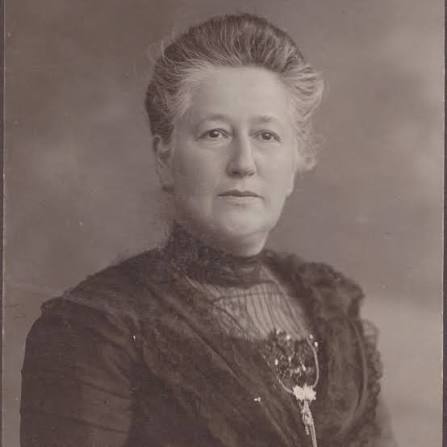
There is a sentence Frieda Fromm-Reichmann wrote that has outlived almost everything else she believed. “The patient is in need of an experience, not an explanation.” It has been quoted so often, and so loosely, that it now reads like a platitude about warmth. It was not a platitude. It was a technical claim about what interpretation can and cannot do to a mind that has stopped trusting other minds, and it was made by a physician who had spent her career with the patients everyone else had given up on.
Fromm-Reichmann directed psychotherapy at Chestnut Lodge in Rockville, Maryland for twenty-two years, from 1935 until her death in 1957. Chestnut Lodge treated people whom the psychiatry of the period considered permanently unreachable: florid, chronic, institutionalized psychosis. The dominant Freudian position held that these patients could not be analyzed at all. Fromm-Reichmann’s counterclaim was not that analysis worked better than everyone thought. It was that the thing which heals is not the content of what the therapist says. It is what happens between two people in a room, over years, when one of them refuses to leave.
The Catastrophic Reaction
The idea did not begin in a psychoanalytic consulting room. It began in a military hospital.
During the First World War, Fromm-Reichmann served as a major in the Prussian Army and directed a hospital for brain-injured soldiers, working alongside the holistic neurologist Kurt Goldstein. Goldstein had described what he called the catastrophic reaction: the flooding panic, disorganization, and collapse that a brain-injured patient falls into when handed a task that exceeds what his damaged nervous system can perform. Ask a man with an aphasia to name an object he cannot name, and you do not get a wrong answer. You get terror.
Fromm-Reichmann watched this happen in men who had been ordinary and healthy a year earlier, and she recognized something. The panic of the injured soldier and the panic of the psychotic patient looked the same from the outside. Both were the response of an organism to a demand it could not meet. Both were preceded by an unbearable exposure. Neither was random noise from a broken machine.
Two conclusions came out of that ward and never left her work. The first is that the nervous system reorganizes itself after injury with startling ingenuity, which means that adaptation continues even inside catastrophe. The second is that a clinician has to distinguish between the deficit itself and the anxiety generated by the deficit, because they require completely different responses. Almost everything she later did with schizophrenia is an application of that second principle. The symptom is often not the injury. The symptom is what the person is doing about the injury.
Her 1913 dissertation had already studied pupillary changes in dementia praecox, so she came to the war with the question of severe mental illness in hand. What the war gave her was a model of psychosis as a defensive act rather than a decay.
What Freud Had Ruled Out
The obstacle was doctrinal. In On Narcissism and the Introductory Lectures, Freud separated the transference neuroses, hysteria and obsessional illness, from what he called the narcissistic neuroses, meaning paranoia and schizophrenia. His argument was that the psychotic patient withdraws libido from the world entirely and reinvests it in the self. With nothing directed outward, no transference to the analyst can form. With no transference, there is nothing for analysis to work on. Psychoanalysis was therefore contraindicated, and for two generations that ruling functioned as a closed door.
Fromm-Reichmann’s rejection of it came from sitting in rooms with these patients for years and observing what actually happened. She found the opposite of indifference. She found people who were unbearably sensitive to relationship, who tracked her mood with forensic accuracy, who responded to the smallest shift in her attention. The withdrawal was not an absence of attachment. It was the management of attachment by someone for whom attachment had once been catastrophic.
Her formulation was that the patient had suffered severe early rejection or relational warp, and had concluded, reasonably enough given the evidence available in childhood, that closeness ends in destruction. She also described the private terror many of these patients carried about their own hostility, a conviction that their rage was literally powerful enough to annihilate other people. That belief produces its own quarantine. If you think you are dangerous, isolation is an ethical act.
So transference does form. It forms with extreme vigilance, suspicion, and ambivalence, and it does not announce itself. The therapist’s job is to survive being tested by it without either fleeing or forcing closeness.
Why the Explanation Fails
This is the point where the famous maxim becomes technical rather than sentimental.
A correct interpretation delivered to a patient in a state of relational terror is not received as understanding. It is received as a demand. It asks the patient to perform a mental operation, to accept an account of their own interior authored by someone else, at exactly the moment their capacity to tolerate another mind’s authority is at its lowest. The catastrophic reaction applies here as directly as it did on the neurology ward. The therapist hands over a task the patient cannot perform, and the result is not insight but flooding.
There is a second problem. Insight-oriented work assumes an intact alliance as its precondition. It assumes that the patient believes, at some baseline level, that the other person in the room is on their side. For the population Fromm-Reichmann treated, that assumption was precisely what had been destroyed. You cannot build on a foundation that is the thing you are trying to repair.
What remains is the encounter itself. Not what the therapist knows about the patient, but what the patient experiences the therapist to be, repeatedly, under pressure, over a long period. The corrective is not information. It is the accumulated evidence, gathered in real time, that this particular relationship does not do what the earlier ones did.
What She Actually Changed in the Room
The methodology in Principles of Intensive Psychotherapy, published in 1950 and taught for decades afterward in psychiatry, psychology, and social work programs, is a series of concrete adjustments that follow from this.
She got rid of the couch. Sessions were conducted face to face, because patients prone to dissociation and hallucination need a continuous visual anchor to a real person in a real room. The blank screen was abandoned along with it. The therapist was to be attentive, genuine, and visibly present.
She was equally strict about the opposite error. She warned against oversolicitude and against verbal reassurance, and her reasoning is worth stating precisely: a paranoid patient reads effusive reassurance as bribery, as manipulation of their dependency, or as an intrusion across a boundary they have every reason to defend. Reassurance mobilizes the defenses it was meant to lower. What she offered instead was steadiness. She respected the patient’s caution, and she let the patient set the pace of intimacy.
She also revised the frame in ways her orthodox colleagues found scandalous. Freud’s rule was that patients pay for missed appointments. Fromm-Reichmann refused it, on the grounds that a psychiatrist is not exempt from the ordinary cultural understanding that you are not paid for services you did not render. This looks like a small administrative matter. It is not. For a patient organized around the expectation of exploitation, the billing policy is data. Every parameter of the frame is data.
The architecture of her cottage on the Chestnut Lodge grounds says the same thing in physical form. Dexter Bullard built it for her to keep her at the hospital. Patients entered by a private side door, waited in an anteroom, and passed through soundproof double doors into her office, because people whose paranoia is organized around being overheard require actual, verifiable privacy rather than assurances about confidentiality. Alarm bells connected the cottage to the main building. The kitchen was deliberately tiny, because she had no intention of cooking and had her meals sent over, which freed the hours for patients and writing. She built a house that made the work possible and made almost nothing else possible.
The Encounter With Something
The clearest illustration of what she meant by experience is a case she described of a professional man tormented at night by persecutors of various nationalities, whom he addressed sequentially in the corresponding languages.
Two obvious moves were available. She could have interpreted the delusion, which would have been an explanation and would have been received as an assault on the only account of reality he currently had. She could have contradicted it, which amounts to informing a terrified person that his terror is fictitious, an argument no one has ever won. Or she could have suppressed the whole thing chemically.
What she did instead was stand beside him and speak into the empty corners of the room, in each language, one after another. She told him plainly that she could not see his persecutors, and that she would try to protect him from them.
The structure of that intervention deserves attention. She did not lie and claim to see what she did not see, which would have forfeited her usefulness as a reality anchor. She did not demand that he abandon his perception in order to keep her company. She took a position beside him, facing the same direction, and acted. He quieted, and he slept. In the days that followed, that shared night became the thing she could refer back to, the piece of common history that made interpretive work possible for the first time.
That is the encounter. Not agreement, not correction, and not warmth in the greeting-card sense. It is the experience of being accompanied into the place you have been alone.
Countertransference as an Instrument
Fromm-Reichmann was unusually direct about the therapist’s own state, at a time when the profession preferred to imagine the analyst as an instrument with no readings of its own.
Working with severe psychosis produces fear, despair, helplessness, and anger in the clinician. Her position was that a mild degree of anxiety in the therapist is useful, functioning as a sensory organ that registers the patient’s terror before it can be articulated. The danger is escalation. Once the therapist’s anxiety is high enough to mobilize the therapist’s own defenses, and it shows up as withdrawal, intellectualization, premature interpretation, or irritation, the work has been contaminated and the patient will detect it immediately.
She argued that a relatively unanxious therapist gets the most collaboration from a psychotic patient, partly because the therapist’s calm is direct evidence against the patient’s belief that their hostility is annihilating. If your rage were as destructive as you fear, this person would be showing damage. She is not. That is an experience, and it does something no reassurance can do.
Her corollary was an obligation rather than a suggestion. When a therapist’s anxiety becomes unmanageable, the therapist seeks consultation and supervision, and does not process it on the patient’s time.
The Symptom as a Language
The other half of the method is that psychotic communication is decipherable if the clinician is willing to learn the dialect. Fromm-Reichmann treated delusions and disorganized speech as metaphor, as screen, as compressed statement about intolerable material, and she was blunt about the cost of removing symptoms without understanding them. Strip the symptom and you may have taken away the only channel the person had, along with whatever meaning they had managed to construct.
Joanne Greenberg dramatized this better than any clinical paper, in the 1964 novel I Never Promised You a Rose Garden, written under the name Hannah Green. The hospital is Chestnut Lodge, and Dr. Fried is Fromm-Reichmann. The novel’s protagonist has built an entire private world with its own language and script, and at one point writes on the bathroom walls in her own blood. The ward staff read this as deterioration. Dr. Fried reads it as health: an eruption of real feeling from someone who had not been able to produce real feeling, and a communication addressed to someone.
The title comes from the moment the patient balks at recovery, having understood that giving up her private world means returning to a real one that contains bigotry, pain, and injustice. Dr. Fried tells her she was never promised a rose garden, never promised justice or peace, only the freedom to fight for them. It is an unusually honest description of what psychotherapy actually offers, and it is the opposite of a therapeutic sales pitch.
The novel became a cultural counterweight during the anti-psychiatry years. Where One Flew Over the Cuckoo’s Nest showed the hospital as a machine of control, Rose Garden showed what a therapeutic community could be when it was anchored by someone with the patience Fromm-Reichmann had. Later commentators have argued about Greenberg’s real diagnosis and whether it was schizophrenia at all. The argument does not touch what the book documents about method.
The Part She Got Wrong
Any honest account has to include the schizophrenogenic mother.
In 1948 Fromm-Reichmann proposed that schizophrenia arises from severe early rejection, typically by a cold, dominating, unconsciously rejecting mother. Modern psychiatry has abandoned this entirely in favor of biopsychosocial and neurodevelopmental models, and the sociological damage the idea caused was severe. It licensed decades of blame directed at parents who were already carrying an unbearable situation.
Two things are true at once. The theory was wrong and it hurt people. It also came from an attempt to locate the origin of psychosis in lived human experience rather than in hereditary degeneracy, at a time when the alternative on offer was the claim that these patients were constitutionally defective and beyond help. Gail Hornstein, her biographer, argues that Fromm-Reichmann was describing a relational pattern rather than assigning guilt to individual women, which is probably accurate and did nothing to stop what the concept became once it left her hands.
What is worth borrowing is what she did next. Late in her life she moved away from the picture of the patient as a passive casualty of a toxic environment, toward an interactional account that included the patient’s own constitution, contributions, and responsibility inside the therapeutic relationship. She revised in response to evidence. That habit is rarer in this field than any particular theory.
Trying to Make the Encounter Empirical
The strongest argument against reading “an experience, not an explanation” as mysticism is what she did with her fellowship year.
In 1955 Fromm-Reichmann went to the Center for Advanced Study in the Behavioral Sciences at Stanford with a specific question: what exactly is happening in the seconds of a session when a patient gains something useful? She wanted to take psychiatric intuition apart and find out what it was made of.
The result was the Natural History of an Interview project, for which she assembled linguists Norman McQuown and Charles Hockett, the anthropologist and cyberneticist Gregory Bateson, the kinesics pioneer Ray Birdwhistell, and the psychiatrist Henry Brosin. The group performed frame-by-frame analysis of filmed interviews, principally an interview Bateson conducted with a mother in Palo Alto in 1956 that became known as the Doris film. They watched it over and over in a process they called soaking, mapping utterance against intonation against minute shifts in posture and gesture, on the assumption that communication is holistic and that whatever the therapeutic experience consists of is encoded in interactional rhythm below the level of content.
The manuscript circulated in drafts and was not made public until McQuown released it in 1971. The project effectively founded multimodal discourse analysis and still shapes how sociology and communication studies handle face-to-face interaction. Its relevance here is simpler. The woman who said the patient needs an experience rather than an explanation spent her last productive years trying to specify, in measurable units, what an experience is.
Loneliness
Her final theoretical contribution was the essay “On Loneliness,” published posthumously in Psychiatry in 1959.
Fromm-Reichmann noted that psychiatry had almost entirely ignored loneliness, and she attributed the omission to the fact that the subject frightened clinicians. She then produced the first serious taxonomy of it: solitude, which is chosen and often generative; transient situational loneliness, which is the ordinary response to loss; and what she called real loneliness, which is persistent, disintegrative, and, crucially, uncommunicable. The person suffering it cannot describe it, which means no one can meet them inside it, which deepens it.
She placed real loneliness near the center of severe psychopathology, and she drew the distinction that has organized the field since: objective isolation and subjective loneliness are different things, and a person can be entirely alone in the middle of a crowd, because the deficit is in the quality of contact rather than the presence of bodies. Hannah Arendt drew on this work directly, using the term Verlassenheit for the metaphysical abandonment that she argued prepares populations for totalitarianism.
The loneliness essay and the maxim about experience are the same idea approached from opposite ends. If the core injury is a state that cannot be put into words, then no arrangement of words is going to reach it. Only presence reaches it, and only presence sustained long enough to be believed.
What Happened, and What Came Back
The model did not survive the 1960s intact. Studies by May and by Grinspoon, Ewalt, and Shader reported that psychotherapy compared poorly with the new antipsychotics. Neuroleptics arrived, managed care declined to reimburse open-ended intensive treatment, and the institutional structure Fromm-Reichmann had built was dismantled with remarkable speed. Chestnut Lodge went bankrupt and was auctioned in 2001. Her cottage was designated a National Historic Landmark in 2021, which is roughly the sequence in which American institutions handle things they have decided to stop funding.
Her clinical line continued through the people she trained and influenced: Harold Searles, who kept an office in her cottage after her death and wrote more extensively than anyone on intensive work with psychotic and borderline patients, along with Otto Allen Will Jr. and Theodore Lidz. The International Society for Psychological and Social Approaches to Psychosis carries the relational argument internationally.
The revival is being driven less by loyalty than by the limits of the alternative. High relapse rates, significant side effect burdens, non-compliance, and persistent social isolation among people diagnosed with schizophrenia have created room for approaches that look a great deal like hers. Open Dialogue, developed in Finland, mobilizes the person’s immediate social network, prioritizes shared meaning-making, and minimizes early reliance on neuroleptics, with outcomes that have been difficult for the field to dismiss. Cognitive Behavioral Therapy for Psychosis treats delusional content as material to be worked with rather than noise to be silenced. Gerard Hogarty’s Personal Therapy and Cognitive Enhancement Therapy focus on emotional regulation and the reconstruction of meaning. None of these are Fromm-Reichmann’s method. All of them rest on her premise, which is that psychotic experience contains decipherable personal meaning and that meaning is addressed between people.
The Last Detail
Fromm-Reichmann’s parents both went deaf, and the isolation that produced inside the family was part of what her father’s suicide in 1925 grew out of. She inherited the same hereditary deafness. By the end of her life she could no longer reliably hear her patients.
She did not retire. She had her sessions transcribed and worked from the written record, which is an almost absurd accommodation for a clinician whose entire theory rested on tone, timing, and the micro-rhythms of live interaction, and who had spent a fellowship year studying exactly those rhythms frame by frame. She lost the channel and kept the encounter.
That is the whole argument in one biographical fact. The therapeutic action was never located in what she understood or in what she said back. It was located in the fact of her continued presence with people who had been left, and in her refusal to leave. She died in her cottage on the hospital grounds in April 1957, still working.
Most of what any clinician offers a person in extremity is not an account of their suffering. It is the demonstration, week after week, that the suffering can be brought into a room and met by someone who does not flinch, does not correct, does not manage, and does not go away. Everything technical is downstream of that.


0 Comments