Emmy van Deurzen: Existential Therapy Across Four Dimensions

by | Mar 31, 2025 | 0 comments

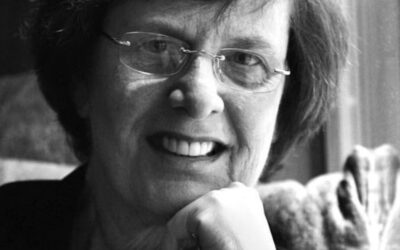
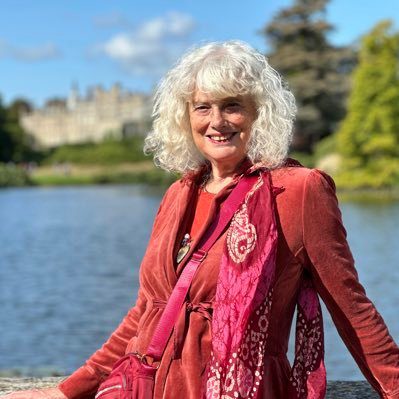
Emmy van Deurzen is a leading contemporary existential therapist and philosopher based in Britain. Born in the Netherlands, she has been instrumental in developing the existential approach to psychotherapy and making it accessible to a wide audience.

Key Ideas and Contributions

Four Dimensions of Existence

Central to van Deurzen’s approach is the idea that human existence plays out across four dimensions:

  1. Physical Dimension: Encompassing the natural world and our bodily reality. It involves grappling with the basic facts of our physical existence – that we are embodied beings subject to the forces of nature and the inevitability of death.
  2. Social Dimension: Our being-in-the-world-with-others. It includes our relationships, social roles and identities. Key existential themes here are love, belonging, isolation, and authenticity in relation to others.
  3. Personal Dimension: The realm of our inner world – our thoughts, feelings, values and sense of personal identity. The challenge in this dimension is to establish a coherent and meaningful sense of self.
  4. Spiritual Dimension: Relating to meaning, values and purpose beyond the self. It’s about our connection to something greater, whether that be God, nature, or ideals like truth and beauty.

For van Deurzen, mental health difficulties often arise when there are conflicts or incongruities between these dimensions. The task of therapy is to help clients face the challenges of each realm and establish a more authentic and integrated way of being.

Emotional Honesty and Acceptance

Van Deurzen emphasizes the importance of helping clients come to terms with the inevitable paradoxes and difficulties of existence, rather than seeking to eliminate or avoid distress. This involves fostering an attitude of emotional honesty, where clients learn to accept and stay with challenging feelings.

She sees psychological defense mechanisms as ways we try to evade the realities of existence, and argues that over-reliance on them diminishes our vitality and authenticity. The aim of therapy is to build the capacity to live with greater openness and courage in the face of life’s uncertainties.

Meaning and Values

Existential therapy as practiced by van Deurzen places a strong emphasis on helping clients clarify their values and construct a sense of meaning in their lives. This involves deep reflection on one’s choices, commitments and guiding principles.

Van Deurzen sees this quest for meaning as an inherently philosophical endeavor. She encourages a Socratic stance of curiosity and questioning to help clients examine their underlying assumptions about life and develop a more considered, intentional way of being.

Phenomenological Exploration

Van Deurzen advocates a phenomenological method in therapy, where the focus is on deeply exploring and describing the client’s lived experience across the four dimensions. The therapist aims to set aside their preconceptions and meet the client’s reality with fresh eyes.

This involves attending closely to the client’s actual words and felt sense, and helping them articulate the nuances and textures of their inner world. The therapist acts as a fellow explorer, accompanying the client into the depths of their experience.

Impact and Legacy

Through her extensive writings, teachings and leadership roles in existential therapy organizations, van Deurzen has played a pivotal part in advancing the existential approach. She has helped define its theoretical foundations and provide practical guidance for therapists.

Her dimensional model offers a clear conceptual map for navigating the existential terrain. It provides a framework for exploring clients’ worlds in a systematic yet flexible way, and identifying realms of challenge and potential growth.

At the same time, van Deurzen’s emphasis on philosophy as a pathway to self-understanding has renewed the ancient links between therapy and the examined life. She has shown how the great existential thinkers can illuminate the dilemmas of modern living, and serve as guides in our quest for meaning.

Perhaps most importantly, van Deurzen’s work carries a deep ethical commitment to helping people live with greater integrity, vitality and courage. She challenges both clients and therapists to confront existential realities head-on, and to take responsibility for shaping an authentic life within the constraints we are given.

In an era of quick fixes and surface solutions, van Deurzen’s existential approach represents a clarion call to dive deeper – to have the difficult conversations, ask the hard questions and do the soul work required to forge a life of substance and purpose. Her legacy invites us to embrace the adventure of existence in all its uncertainty, mystery and potential for meaning.

Explore the Other Articles by Categories on Our Blog 

Hardy Micronutrition is clinically proven to IMPROVE FOCUS and reduce the effects of autism, anxiety, ADHD, and depression in adults and children without drugsWatch Interview With HardyVisit GetHardy.com and use offer code TAPROOT for 15% off

Bill O’Hanlon: The Therapist Who Asked “How Do People Get Happy?”

Bill O’Hanlon: The Therapist Who Asked “How Do People Get Happy?”

Bill O’Hanlon, MS, LMFT, studied with Milton Erickson as his only work/study student (serving as Erickson’s gardener) before co-founding Solution-Oriented/Possibility Therapy in the 1980s. Author of nearly 40 books including the Oprah-featured “Do One Thing Different” and foundational “In Search of Solutions” with Michele Weiner-Davis, O’Hanlon delivered over 3,700 presentations worldwide teaching his collaborative, non-pathologizing approach asking “How do people get happy?” rather than “What’s wrong?” He retired from clinical practice in 2020 to pursue professional songwriting from Santa Fe, New Mexico.

Diane Poole Heller: From Trauma Survivor to Pioneer of Attachment Healing

Diane Poole Heller: From Trauma Survivor to Pioneer of Attachment Healing

Diane Poole Heller, PhD, transformed her own 1988 traumatic car accident into a pioneering career developing DARe (Dynamic Attachment Re-patterning experience), a somatic approach integrating attachment theory and trauma resolution now taught worldwide. After 25 years as Senior Faculty for Peter Levine’s Somatic Experiencing Institute, she created Trauma Solutions and authored The Power of Attachment, teaching that regardless of childhood history, people can develop Secure Attachment Skills through attuned relationships, body-based interventions, and recognizing we’re all biologically hardwired for connection and healing.

Laurence Heller: The Clinical Psychologist Who Mapped How Developmental Trauma Distorts Identity

Laurence Heller: The Clinical Psychologist Who Mapped How Developmental Trauma Distorts Identity

Laurence Heller, PhD, spent over 40 years in private practice recognizing that developmental trauma creates not just nervous system dysregulation but fundamental identity distortions—pervasive shame, self-judgment, and disconnection from authentic self. He developed the NeuroAffective Relational Model (NARM), now taught worldwide, mapping five adaptive survival styles arising from disrupted developmental needs (Connection, Attunement, Trust, Autonomy, Love-Sexuality) and providing framework for healing through disidentification from survival-based identities while working simultaneously with psychology and physiology within attuned therapeutic relationships.

Bruce Perry: From Branch Davidian Waco to “What Happened to You?” – Three Decades Translating Neuroscience into Healing for Maltreated Children

Bruce Perry: From Branch Davidian Waco to “What Happened to You?” – Three Decades Translating Neuroscience into Healing for Maltreated Children

Bruce Perry developed the Neurosequential Model after treating children who survived the 1993 Branch Davidian siege in Waco. His three decades translating neuroscience into practical trauma treatment culminated in the #1 bestseller What Happened to You? with Oprah Winfrey. Perry’s fundamental insight: childhood behavior reflects developmental adaptation to environment rather than defect requiring correction, revolutionizing how thousands of professionals understand trauma.

Judith Herman: The Psychiatrist Who Named Complex Trauma and Challenged a Field’s Convenient Amnesia

Judith Herman: The Psychiatrist Who Named Complex Trauma and Challenged a Field’s Convenient Amnesia

Judith Herman, Harvard psychiatrist, transformed trauma treatment by distinguishing complex PTSD from single-incident trauma and articulating the three-stage recovery model emphasizing safety, remembrance, and reconnection. Her 1992 Trauma and Recovery challenged psychiatry’s “convenient amnesia” about sexual violence, while 2023’s Truth and Repair reimagines justice as healing rather than punishment, asking what survivors actually need: acknowledgment, validation, and community witness rather than retribution.

Gabor Maté: From Budapest Ghetto to Voice of Compassion in Addiction’s Darkest Corners

Gabor Maté: From Budapest Ghetto to Voice of Compassion in Addiction’s Darkest Corners

Gabor Maté, Holocaust survivor turned physician, spent twelve years treating severe addictions in Vancouver’s poorest neighborhood, asking “why the pain?” rather than “why the addiction?” His revolutionary recognition that addiction serves to escape unbearable emotions rooted in childhood trauma, detailed in bestseller In the Realm of Hungry Ghosts, transformed understanding of substance abuse from moral failing to developmental injury.

David Grand: From EMDR Trainer to Brainspotting Pioneer Through a Champion Skater’s Frozen Gaze

David Grand: From EMDR Trainer to Brainspotting Pioneer Through a Champion Skater’s Frozen Gaze

David Grand discovered brainspotting in 2003 when a figure skater’s eye wobble revealed where trauma was stored in her brain. By maintaining fixed eye position on that “brainspot” rather than using bilateral movement, processing accelerated dramatically. His development of this approach, now used by 13,000+ therapists worldwide, demonstrates how careful clinical observation combined with willingness to deviate from protocol can produce genuine therapeutic innovation for treating trauma, the yips, and performance blocks.

Richard Schwartz: From Failed Bulimia Study to Discovering the Internal Family System

Richard Schwartz: From Failed Bulimia Study to Discovering the Internal Family System

Richard Schwartz discovered Internal Family Systems in 1982 when bulimic clients described distinct “parts” battling inside them, leading him to recognize the mind’s natural multiplicity. His development of IFS therapy, which helps Self lead an internal family of managers protecting against exiled pain and firefighters dousing emotional flames, has revolutionized how millions understand their inner conflicts. From failed outcome study to global therapeutic movement, Schwartz demonstrated that beneath protective parts, everyone possesses undamaged Self capable of healing.

Francine Shapiro: From Cancer Diagnosis to Revolutionary Trauma Treatment Through Eye Movements

Francine Shapiro: From Cancer Diagnosis to Revolutionary Trauma Treatment Through Eye Movements

Francine Shapiro discovered EMDR during a walk in 1987 when she noticed eye movements reduced disturbing thoughts. Her development of Eye Movement Desensitization and Reprocessing revolutionized trauma treatment, creating the first therapy to demonstrate rapid resolution of PTSD through bilateral stimulation activating the brain’s adaptive information processing system. Now recommended by WHO and DOD, EMDR has helped millions worldwide process traumatic memories that talking therapy couldn’t reach.

Janina Fisher: Revolutionizing Trauma Treatment Through Structural Dissociation and Parts Work

Janina Fisher: Revolutionizing Trauma Treatment Through Structural Dissociation and Parts Work

Janina Fisher revolutionized complex trauma treatment by integrating structural dissociation theory with parts work and somatic interventions. Discover her Trauma-Informed Stabilization Treatment (TIST) approach showing how recognizing fragmented selves as protective adaptations rather than pathology transforms healing for clients with treatment-resistant symptoms including self-harm, addiction, and chronic suicidality.

Peter Levine: The Biophysicist Who Taught Trauma to Speak Through the Body

Peter Levine: The Biophysicist Who Taught Trauma to Speak Through the Body

Peter Levine revolutionized trauma treatment through Somatic Experiencing, proving trauma lives in the body’s nervous system. Discover how his work on completing frozen defensive responses, titration, and the SIBAM model provides somatic grounding for Jungian depth psychology and transforms PTSD healing.

Who Was James Hillman?

Who Was James Hillman?

An in-depth look at James Hillman, the founder of Archetypal Psychology, exploring his “Acorn Theory,” his critique of modern therapy, and his enduring influence on soul-centered practice.

Murray Stein: The Architect of Individuation

Murray Stein: The Architect of Individuation

A comprehensive profile of Murray Stein, the leading modern voice in Jungian psychology. Explore his “Map of the Soul,” his insights on the midlife crisis, and his role in bringing depth psychology to the 21st century.

The Giants of Behavioral Psychology Lives Legacies and Clinical Foundations

The Giants of Behavioral Psychology Lives Legacies and Clinical Foundations

Explore the lives discoveries and lasting influence of the six giants of behavioral psychology including Pavlov Thorndike Watson Skinner Wolpe and Bandura. Learn how their groundbreaking research on classical conditioning operant conditioning systematic desensitization and social learning theory shaped modern evidence-based psychotherapy and continues to inform clinical practice today.

0 Comments

Submit a Comment

Your email address will not be published. Required fields are marked *