
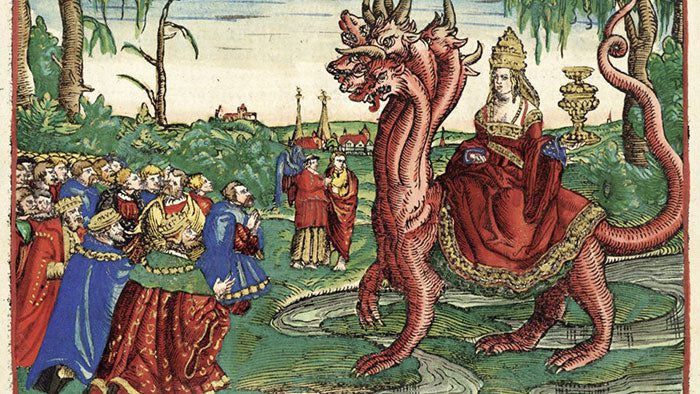
Gnosticism as a Metaphor for Consciousness: Meaning, Evolution, and Healing
Gnosticism is an ancient spiritual and philosophical worldview that offers a profound metaphor for the nature and dilemmas of human consciousness. While Gnosticism should not be taken as a literal philosophy or religion to adopt wholesale, it provides a powerful lens for exploring the ways we as conscious beings make meaning, how we evolved psychologically over time, and potential pathways for healing trauma by reconnecting with deeper layers of our psyche.
The Gnostic Worldview
The core tenet of Gnosticism is the idea that the material world we inhabit was created not by the ultimate, true God, but by a lesser, imperfect being – the Demiurge. This Demiurge is sometimes conceived of as malevolent, but more often as simply ignorant – it has fundamentally forgotten what it really is, a fragment of the divine Source.
In this cosmology, the human condition is one of being a divine spark of consciousness trapped in an imperfect material realm. We have forgotten our true nature and connection to the Source. This existential estrangement lies at the root of suffering.
Consciousness Estranged from Itself
This Gnostic worldview offers a compelling metaphor for the felt reality of embodied human consciousness. As self-aware beings, we feel an unshakable sense that we are more than just material bodies subject to worldly limitations and frailties. Our rich emotional and imaginative inner worlds feel infinitely expansive – and yet, we find ourselves inextricably embedded in a physical world with hard constraints and perilous vicissitudes.
Things like hunger, lack of money, illness, and death feel like alien impositions on our core conscious being. And yet we are stuck here in this realm, subject to its rules and dangers. A part of us, call it spirit or imagination, recoils at this state, feeling it should not or need not be so. And yet here we undeniably are, incarnate beings navigating both expansive interior landscapes and harsh exterior circumstances.
This divide between infinite-feeling consciousness and finite material existence maps well to the Gnostic schema. In Gnostic terms, our deepest Self has forgotten that it sprang from and still remains rooted in a unitive divine Source beyond the dualisms and oppositions of material reality.
The Evolution of Ego and Self
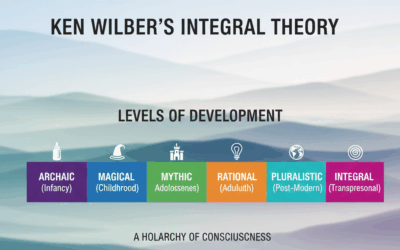
Jungian psychologists have connected this Gnostic cosmology to a psychological account of the evolution of human consciousness and the ego. As Edward Edinger explores in his book “Ego and Archetype“, the development of the human brain and ego can be seen as a sort of “fall” of consciousness from an original unitive state.
Over the course of evolution and individual psychological development, the human ego emerges, acquiring a separate sense of self, agency, and identity. On one level this is adaptive, allowing for self-reflection, complex thought, and autonomous functioning. However, it also creates a divide between the ego and the deeper emotional, intuitive, embodied levels of the psyche.
The ego realm of conscious, rational thought starts to see itself as separate from and superior to the messy, mythic, imagistic strata of the mind and body. Yet those strata remain a core part of us, generating powerful feelings, impulses, and intuitions. The ego, estranged from its own roots, experiences this as a gulf between reason and emotion, mind and body, self and world.
Neuroscientist Antonio Damasio’s account of the evolution of human consciousness dovetails with this perspective. He describes a hierarchy of “being”, “feeling”, and “knowing” that emerged over the course of brain evolution. The brainstem generates primordial feelings of being alive; the limbic system generates emotions; and the neocortex enables conscious thought and reasoning.
However, these levels remain deeply interconnected. We are not our thinking minds alone, but an intricate weave of pre-reflective sensations, primal emotions, and imaginative cognition. The task, both collectively and individually, is to compassionately acknowledge and reintegrate these “lower” strata, not repress or disown them.
Reconnecting to the Core
In this light, a central challenge and opportunity for healing and wholing lies in building bridges of understanding between the ego and the psyche’s emotional/intuitive depths – what Jung called the Self.
This connects to the importance of working with trauma, as traumatic experiences often create a fragmenting schism between “higher” and “lower” layers of the brain and self. Overwhelming adverse events can imprint themselves on the amygdala and nonverbal memory, yet defy the meaning-making capabilities of the rational mind. As a result, trauma survivors often face a disconnect between disturbing sensations and emotions that erupt from deep within, and a conscious ego that can’t fully feel, understand, or integrate them.
Healing trauma thus requires gradually and gently forging lines of empathetic communication between the ego and the wounded psyche, the verbal mind and the nonverbal, feeling self. With great care and compassion, we must revisit the sites of old wounds, not to relive them but to acknowledge the pain they’ve held and illuminate them with new understanding.
This is where the Gnostic myth offers inspiration – not a literal map, but an intuitive image of remembering and reintegrating the far-flung fragments of our being. Many mystics and visionaries like Simone Weil, Meister Eckhart, Martin Buber and others describe this as the path to reconnecting with an essential, irreducible, unitive sacredness at the core of existence.
It’s not an easy or straightforward path, but by tending mindfully to the painful schisms within and between us with openness, insight, and care, we may regain a sense of deep belonging in the world, to ourselves, and perhaps even to a numinous Source beyond name and form.
In this way, the Gnostic mythos has something valuable to offer the contemporary spiritual and psychological quest for meaning, integration, and the healing of personal and collective trauma. Not as an absolute creed, but as an invitation to the perennial human journey of evolving toward ever-greater wisdom and wholeness.









0 Comments