

The Goddesses in Every Woman
In the 1980s, feminist psychology and Jungian analysis converged in the work of Jean Shinoda Bolen. A psychiatrist and analyst, Bolen realized that the standard male-centric models of development did not fit the women she saw in her practice. She turned to Greek mythology, not just as stories, but as psychological blueprints.
Her book Goddesses in Everywoman (1984) revolutionized how women understood themselves. She argued that there is no single “feminine” nature. Instead, there are distinct archetypal patterns—Artemis the independent, Hera the wife, Demeter the mother, Aphrodite the lover. Bolen gave women permission to identify with archetypes that had been marginalized by patriarchy, validating the single woman, the career woman, and the mystic as equally “feminine” as the mother.
Biography & Timeline: Jean Shinoda Bolen
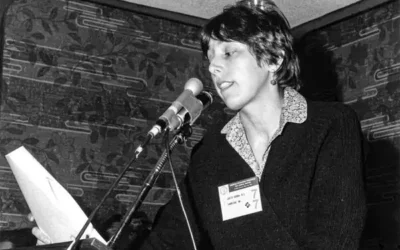
Born in Los Angeles to a Japanese-American family, Bolen faced the dual pressures of cultural assimilation and gender expectations. She studied medicine at the University of California, San Francisco, at a time when female doctors were rare. She later trained as a Jungian analyst.
Bolen is not just a clinician; she is an activist. She has been a major voice in the women’s movement and has advocated for a United Nations 5th World Conference on Women. Her work bridges the gap between the inner world of the psyche and the outer world of political action.
Key Milestones in the Life of Jean Shinoda Bolen
| Year | Event / Publication |
| 1936 | Born in Los Angeles, California. |
| 1979 | Publishes The Tao of Psychology, exploring synchronicity. |
| 1984 | Publishes Goddesses in Everywoman, a bestseller that defines her career. |
| 1989 | Publishes Gods in Everyman. |
| 1999 | Publishes The Millionth Circle, advocating for women’s circles as a tool for social change. |
Major Concepts: The Pantheon of the Psyche
The Seven Goddesses
Bolen categorized the Greek goddesses into three groups, each representing a different psychological drive:
- Virgin Goddesses (Artemis, Athena, Hestia): Independent, self-sufficient, and focused on their own goals rather than relationships. They represent the “one-in-herself” quality.
- Vulnerable Goddesses (Hera, Demeter, Persephone): Relationship-oriented. They suffer when their bonds are broken. They represent the traditional roles of wife, mother, and daughter.
- Alchemical Goddess (Aphrodite): The transformer. She creates change through love, beauty, and erotic attraction. She is neither virgin nor vulnerable but a unique category of her own.
The Millionth Circle
Bolen believes that the next stage of human evolution depends on the formation of “circles with a sacred center.” She argues that hierarchical structures (pyramids) are patriarchal and often oppressive. Circular structures (where everyone is equidistant from the center) are egalitarian and foster connection. This concept has inspired the modern women’s circle movement.
The Conceptualization of Trauma: The Abducted Woman
Bolen often uses the myth of Persephone to explain trauma. Persephone was a carefree maiden abducted by Hades into the underworld. This represents the experience of being “taken down” by trauma, depression, or abuse.
From Victim to Guide
The goal of therapy for the “Persephone woman” is not just to escape the underworld, but to become the Queen of it. By integrating her experience of darkness, she gains a depth and wisdom that the innocent maiden lacked. She becomes a guide for others—a Wounded Healer.
Legacy: Psychology as Activism
Jean Shinoda Bolen taught us that psychology is not just about fixing individuals; it is about healing the culture. She linked the suppression of the feminine archetypes to the destruction of the environment and the prevalence of war.
For the modern therapist, her work is a reminder to look for the “myth” the client is living. Is she an Artemis trapped in a Hera marriage? Is he a Hephaestus (introverted craftsman) trying to be a Zeus (executive)? Healing comes when we align our lives with our archetypal nature.
Bibliography
- Bolen, J. S. (1979). The Tao of Psychology: Synchronicity and the Self. Harper & Row.
- Bolen, J. S. (1984). Goddesses in Everywoman: A New Psychology of Women. Harper & Row.
- Bolen, J. S. (1989). Gods in Everyman: A New Psychology of Men’s Lives and Loves. Harper & Row.
- Bolen, J. S. (1994). Crossing to Avalon: A Woman’s Midlife Pilgrimage. HarperSanFrancisco.




















0 Comments