
The Department of Education Just Declared War on Your Therapist: Why the Reclassification of Social Work Degrees Threatens Mental Healthcare in Alabama
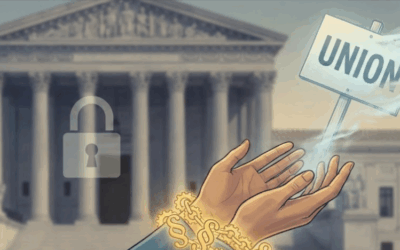
The U.S. Department of Education has quietly reclassified Master of Social Work and Doctor of Social Work degrees as non-professional degrees. This bureaucratic sleight of hand embedded within the One Big Beautiful Bill Act’s loan restructuring provisions might sound like an arcane policy adjustment, but it is not. This is an assault on the mental healthcare infrastructure that serves Alabama communities. If you care about affordable and accessible therapy then you should be furious. As the Clinical Director of Taproot Therapy Collective in Hoover, Alabama, and as a Licensed Independent Clinical Social Worker myself, I have watched the professionalization of therapy transform this field over forty years. What the DOE is proposing threatens to unravel decades of hard-won progress that made independent mental health practice viable, affordable, and accountable. To understand what is at stake, we need to understand what we stand to lose.
The Historical Context: How Professionalization Created Modern Private Practice
In the late 1970s and throughout the 1980s, something remarkable happened in American mental healthcare. States began recognizing social workers and professional counselors as independent mental health providers through licensure. Virginia passed the first regulatory act for professional counselors in 1975, which was revised in 1976 to establish actual licensure. The Association of Social Work Boards was created in 1979 and administered its first licensing exam in 1983. By the end of the 1980s, most states had adopted some form of professional social work licensure. This was not just bureaucratic paper-shuffling. Professional recognition fundamentally changed the economics and structure of mental healthcare delivery. Before licensure, mental health services were largely controlled by psychiatrists and psychologists working within large institutional settings such as hospitals, state facilities, and psychiatric conglomerates. These institutions maintained monopolistic control over mental healthcare which drove up costs and limited patient access to care.
Part of what protected workers and broke up all of the giant mental health conglomerates in the 1980s was that there was a legal precedence saying that social workers and therapists were professionals. As recognized professionals, we were generally not subject to predatory non-compete contracts. This legal standing prevents providers from being locked into huge firms where they have to sign long contracts, cannot leave, and cannot compete in the marketplace. The professional recognition of social workers and licensed professional counselors broke this monopoly. For the first time, master’s-level mental health providers could bill insurance companies directly without physician oversight, establish independent private practices, compete on quality and accessibility rather than institutional affiliation, and serve communities that large psychiatric facilities ignored. This transformation created the landscape of contemporary mental healthcare in Alabama and across the country. The Boomer generation of therapists who established private practices in the 1980s and 1990s exist because of professional recognition. The accessible community-based therapy practices serving Hoover, Homewood, Mountain Brook, and surrounding Birmingham suburbs exist because social workers and professional counselors achieved professional status. The mental health marketplace became genuinely competitive which drove costs down and access up. Patients gained choice, therapists gained autonomy, and communities gained local providers who understood their specific needs.
The Economics of Hospital Wages
This shift created a crucial economic lever that protects all social workers, even those who never enter private practice. If you are not a therapist and you are a social worker in a hospital or agency setting, this reclassification affects you directly because it is the ability of social workers to leave the hospital and earn higher wages in private practice that drives up wages in institutional settings. It is ironic that social workers are frequently accused of being Marxist or leftist by detractors, yet many in our own field seem to struggle with understanding basic supply and demand economics. I know multiple people who act like colleagues who leave hospital work for private practice have sold out. They fail to realize that the option to leave is the only leverage that helps front-line workers billing Medicaid get paid a living wage. If you can leave to make more money then employers must pay you more to stay. That is just basic economics. These critiques often come from social workers themselves who are trained to understand systems but fail to see how the private market protects their own wages. Now the Department of Education wants to reverse this progress.
What the DOE Actually Did
In November 2025, the Department of Education concluded negotiated rulemaking under the Reimagining and Improving Student Education committee. As part of implementing loan restructuring under the One Big Beautiful Bill Act, the DOE proposed a dramatically narrowed definition of a professional degree. Under this new definition, only students pursuing degrees in approximately eleven core professions can borrow up to $50,000 annually in federal student loans. These professional degrees include Medicine, Dentistry, Law, Pharmacy, Optometry, Veterinary medicine, Chiropractic, Podiatry, and Divinity or Theology. Conspicuously absent from this list are Master of Social Work, Doctor of Social Work, Master of Science in Nursing, Doctor of Nursing Practice, Master of Public Health, Licensed Professional Counselor programs, Master of Arts in Counseling, Physician Assistant programs, Occupational Therapy, Physical Therapy, Audiology, and Speech-Language Pathology.
Let that sink in. According to the U.S. Department of Education, theology and divinity degrees are professional education. Chiropractors are professionals. However, nurse practitioners, physician assistants, social workers, counselors, occupational therapists, physical therapists, and public health professionals are not considered professional. This classification is not just arbitrary as it is ideologically revealing. The federal government has decided that training to minister to souls is professional education while training to heal bodies and minds is not. Training to perform spinal adjustments is professional, but training to provide psychotherapy is not. This tells you everything you need to know about whose work this administration values. In other words, the Department of Education has declared that the degrees required to become a therapist, nurse practitioner, or most allied health professionals are not professional education. Graduate students pursuing these degrees will now be limited to borrowing $20,500 annually with a $100,000 aggregate cap which is less than half the professional degree limits. The DOE claims this is merely a technical correction returning to historical definitions. This is demonstrably false. The regulatory definition from 1965 did not definitively exclude these professions, and for decades these programs have been treated as professional education for federal aid purposes. What changed is not the professions. It is the political will to support them.
The Immediate Implications: Student Debt and Program Viability
The most obvious consequence is financial. Graduate programs in social work typically cost between $40,000 and $100,000 or more for a two-year MSW program at private universities, with public institutions ranging from $20,000 to $60,000. The DSW adds another three to five years and $60,000 to $100,000 in costs. Under previous federal loan limits, students could finance this education. Under the new caps, many simply will not be able to afford it. Some might argue this will force schools to lower tuitions which would make education more accessible. This is naive. Universities are not going to slash their budgets because students can no longer borrow enough to pay full tuition. MSW programs have significant operating costs including faculty salaries, field placement coordination, accreditation maintenance, and facilities. Schools will not and cannot reduce these costs substantially.
What will happen instead is that programs will simply become inaccessible to anyone who cannot pay out of pocket or secure substantial private funding. MSW programs already have significant numbers of students whose parents or grandparents fund their entire education. These students will continue attending while students from low and moderate-income backgrounds will be shut out. This creates a catastrophic equity problem. Social work is supposed to serve marginalized communities. If only wealthy students can afford MSW programs, the profession will be dominated by practitioners from privileged backgrounds who may not understand or reflect the populations they serve. The field is already struggling with this dynamic, and the DOE’s reclassification will make it exponentially worse. Fewer students will pursue social work education because they recognize they cannot afford the debt load with reduced borrowing capacity. Programs will struggle to maintain enrollment which could lead to program closures or consolidations. The existing mental health workforce shortage will catastrophically worsen, and the field will become whiter, wealthier, and more disconnected from the communities we serve. Alabama is already facing a mental health crisis. According to Mental Health America’s 2024 rankings, Alabama ranks 47th nationally for overall mental health with severe shortages of mental health providers in rural and underserved areas. We cannot afford to make it harder for people to become therapists.
The Five-Year Projection: A Coordinated Assault
Business strategists think in five-year projections. They identify objectives and phase them in gradually. The DOE’s reclassification should be understood as Phase One of a coordinated strategy to dismantle professional mental health infrastructure. Phase One is happening now. It attacks the education system by reclassifying degrees to make professional education financially inaccessible and reduce the pipeline of new professionals. Phase Two will likely occur in 18 to 24 months. This phase will attack licensure. If education is not professional then legislators will ask why licensure should be. They will introduce legislation questioning scope of practice, impose physician supervision requirements, and create pathways for any four-year degree to do social work as is already happening in West Virginia. Phase Three will occur in three to four years and will attack insurance reimbursement. If degrees and licenses are not professional then insurance companies can justify lower reimbursement rates for non-professional providers, cut panel positions, and impose additional oversight. Phase Four will arrive in four to five years and represents systemic collapse. With a reduced education pipeline, attacked licensure, and gutted insurance reimbursement, professional social work and counseling become economically nonviable. The field collapses into paraprofessional care with minimal training and poor outcomes. This is not paranoid speculation. This is how systemic change happens gradually through coordinated pressure on multiple fronts. The DOE’s reclassification is the opening move.
The Symbolic Violence: Legitimacy and Professional Standing
The financial implications are only the beginning. The reclassification carries profound symbolic weight that will reverberate through healthcare systems, insurance companies, licensure boards, and public perception. When the federal government declares that social work is not a professional degree, it signals to every other institution that social workers are not real professionals. This matters enormously for professional liability insurance which is priced based on perceived risk and professional standing. When I purchase my LICSW malpractice coverage, insurers consider the professional standards, training requirements, and legal standing of my license. If the federal government declassifies social work education as non-professional, insurance companies may increase premiums for social worker and counselor malpractice insurance, reduce coverage limits or exclude certain practices, reclassify us alongside paraprofessionals with lower training standards, or create more restrictive underwriting requirements.
I currently pay approximately $120 per month or $1440 annually for professional liability coverage with $1 million per occurrence and $3 million aggregate limits. Many states already require LCSWs, LMFTs, and LPCs to carry minimum coverage of $1 million per occurrence and $3 million aggregate. If insurers decide social workers are no longer professionals, these premiums could increase substantially. For solo practitioners and small group practices like Taproot Therapy Collective, even modest increases in insurance costs translate directly into higher fees for clients or reduced income for therapists. We operate on thin margins, and insurance rate increases of 20 to 30 percent would be financially devastating. Many health insurance companies refuse to give insurance do people who are not labeled as professionals because of the risk involved in the inability to underwrite it.
Insurance companies already make it needlessly difficult for mental health providers to obtain panel positions. The credentialing process for becoming an in-network provider is Byzantine, expensive, and time-consuming. Many insurance companies heavily preference psychiatrists and PhD psychologists over master’s-level providers. If social work degrees lose federal professional designation, insurance companies may deprioritize social workers and LPCs in network adequacy calculations, reduce reimbursement rates for non-professional providers, impose additional supervision or oversight requirements, eliminate or reduce panel positions for MSW and MA-level clinicians, and create tiered reimbursement structures that pay clinical psychologists significantly more than LCSWs and LPCs for identical services. This last point deserves emphasis. Clinical psychology programs like PhD and PsyD are still classified as professional degrees under the DOE’s new definition. This creates a two-tier system where psychologists are professionals but social workers and counselors are not despite providing nearly identical clinical services in most settings. Will insurance companies use this distinction to justify paying psychologists $120 per session while paying LCSWs $75 for the same work? Almost certainly. Will employers use it to justify hiring psychologists over social workers for clinical leadership positions? Probably. The federal classification provides cover for discrimination that already exists in practice. This would force more therapists into cash-only practice models, making therapy even less accessible for patients who depend on insurance coverage, and it would further stratify the mental health workforce by credential rather than competence.
State Licensure and Scope of Practice
Here is a bitter irony. In every state, social workers must be licensed to practice. We cannot legally call ourselves social workers without a license. We cannot see clients without a license. We must submit to ongoing regulation by state licensure boards which are boards explicitly named professional licensing boards. In Alabama, I maintain my licensure through the Alabama Board of Social Work Examiners which is a professional licensing board that regulates my professional practice. I complete continuing education requirements, pay annual renewal fees, and am subject to ethical standards, scope of practice regulations, and disciplinary proceedings if I violate professional standards. The state treats me as a professional. The law treats me as a professional. My licensing board calls itself a professional regulatory body. But the federal Department of Education has decided my degree is not professional education. This contradiction reveals the bad faith at the heart of this reclassification. If social work education is not professional then why do all 50 states require professional licensure? Why do we have professional ethics codes, professional malpractice insurance, professional continuing education, and professional regulatory boards?
While state licensure boards maintain independent authority over professional standards, federal classifications shape the regulatory environment. When the U.S. Department of Education declares social work degrees non-professional, state lawmakers and regulatory boards take notice. We could see legislative challenges to social workers’ independent practice authority, attempts to impose physician supervision requirements which would reverse 40 years of progress, restrictions on scope of practice particularly around diagnosis and treatment, and reduced state funding for social work education programs. Alabama’s licensure board for social workers has maintained relatively robust protections for independent practice, but those protections are always vulnerable to political pressure. If federal policy signals that social workers are not real professionals, state-level attacks will follow. This is already happening. In West Virginia, the Department of Health Services recently lowered requirements for Child Protective Services positions from licensed social workers to any four-year degree. When the federal government declares social work degrees non-professional, it gives cover to state agencies and employers to devalue professional social work credentials. Why pay for an MSW when the feds say it is not a professional degree anyway? This is the slippery slope. First comes federal loan reclassification, then state-level scope of practice attacks, then employer credential devaluation, and finally insurance reimbursement cuts. Each step reinforces the next until professional social work becomes functionally impossible.
Hospital and Healthcare System Credentialing
Hospitals, healthcare systems, and integrated care facilities rely heavily on federal classifications when determining which professionals can hold certain positions. The DOE’s reclassification could limit social workers’ eligibility for clinical leadership positions, restrict our ability to serve as independent providers in medical settings, reduce or eliminate our participation in integrated care teams, and limit our access to electronic health record systems and medical platforms. This matters particularly for medical social work, hospice care, hospital-based therapy, and integrated behavioral health which are all areas where social workers currently provide essential services.
Public Perception and Professional Credibility
Perhaps most insidiously, this reclassification undermines public confidence in mental health providers. When the federal government declares that your therapist’s education is not professional, patients internalize that message. We already fight constant battles for professional legitimacy. Patients frequently ask if we are real doctors. Insurance companies try to pay us less than real mental health providers. Employers question whether therapy with a social worker counts. Federal reclassification amplifies these doubts. It tells patients that their LICSW therapist is somehow less qualified, less trained, and less professional than lawyers, dentists, and chiropractors. This is objectively false and professionally insulting.
Title Protection and Professional Identity
Beyond public perception, there is a more insidious legal threat. If social work education is not professional, how long before state title protection laws are challenged? In states like New York, Alabama, and most others, you cannot legally use the title social worker without a license. These are title protection laws that reserve the professional designation for credentialed practitioners. The logic is straightforward in that social worker is a professional title that requires professional education and professional licensure. But if the federal government declares that social work education is not professional, the legal foundation for title protection weakens. Why should states protect a non-professional title? Why prevent anyone with a bachelor’s degree from calling themselves a social worker if the education is not professional anyway? This may sound paranoid, but we are already seeing it happen. West Virginia dropped its requirement that Child Protective Services workers hold social work degrees and now any four-year degree qualifies. If the federal government says social work is not a profession, states and employers will increasingly question why they should require professional credentials at all. Title protection laws exist to protect the public from unqualified practitioners claiming professional expertise. If those laws erode, we will see an explosion of inadequately trained people calling themselves social workers or therapists without proper education, supervision, or ethical oversight. This harms both practitioners and the vulnerable populations we serve.
Academic Program Funding and Institutional Support
Universities make resource allocation decisions based on program prestige, accreditation status, and federal classifications. Schools of social work are already under pressure from anti-DEI legislation targeting social justice content, budget cuts to liberal arts and social science programs, and enrollment challenges in graduate education. If MSW and DSW programs lose professional degree status, universities may reduce funding for social work programs, consolidate or eliminate MSW programs at smaller institutions, deprioritize faculty hiring and student support services, and question the value of maintaining CSWE accreditation. The Council on Social Work Education has expressed deep concern about these implications. CSWE accreditation is the gold standard for social work education. It ensures program quality, guarantees students meet competency standards, and is required for licensure eligibility in most states. If universities begin questioning the value of expensive CSWE-accredited programs because the federal government does not recognize them as professional, the entire educational infrastructure could collapse.
The Professionalization Paradox: How Professional Status Makes Therapy Worse
Here is where the analysis gets complicated and where I depart from most professional advocacy groups defending professional degree status. The truth is that deep professionalization of therapy has made mental healthcare worse in many ways. I am not arguing that therapists should not be well-trained, ethically regulated, or professionally competent. The licensure movement of the 1980s was necessary and beneficial, and professional standards protect patients and improve care quality. But there is a point where professionalization becomes pathological and we have crossed that line.
The professional arms race in mental health has created escalating barriers to practice that ultimately harm patients. Degree inflation increasingly requires clinical positions to have not just an MSW but a DSW or PhD which adds three to seven years of additional education and massive debt. We can learn from physical therapy’s cautionary tale where PT programs escalated from bachelor’s to master’s to doctorate-level entry requirements. Did this improve patient outcomes or increase PT salaries? No. Reimbursement rates have actually decreased year after year for the past eight years despite the increased educational requirements. More credentials do not equal better pay or better care. They just mean more debt and higher barriers to entry. The field has fragmented into countless sub-specialties, each requiring additional certifications, trainings, and credentials, all of which cost money. Most states require 20 to 40 hours of continuing education annually for license renewal. While some CE is valuable, much is expensive box-checking that adds no clinical value. Pre-licensed clinicians must complete 2,000 to 4,000 hours of supervised practice which often costs $80 to $150 per hour. This is a $4,000 to $12,000 expense before you can practice independently. Every one of these costs gets passed on to patients in the form of higher therapy fees.
The professional credentialing complex creates incentives that actively harm patient care. We prioritize academic credentials and test scores over clinical skill and therapeutic presence. I have worked with people with different licensers and the education does not make someone a better therapist. Therapy is about getting an education around something that you cannot teach, but you have to have the thing that cannot be taught in order to get the education. Without it, the education does not really do anything. Professional standards increasingly demand adherence to manualized evidence-based treatment protocols, but therapy is not widget manufacturing. The therapeutic relationship is the primary mechanism of change. The professionalization movement favors interventions that can be operationalized, measured, and credentialed, which systematically biases us toward cognitive-behavioral approaches and away from depth work, somatic approaches, and relational healing. Professional organizations exist to protect professional interests, not necessarily patient interests. They advocate for higher barriers to entry, more stringent credentialing, and expanded scope of practice, all of which benefit existing professionals at the expense of access and affordability. Professionalization requires bureaucracy. Licensure boards, ethics committees, professional organizations, and accrediting bodies all require staff, funding, and administrative overhead. These costs ultimately burden practitioners and patients. As professional status increases, so does legal liability. Therapists become increasingly defensive, focused on documentation, risk management, and legal protection rather than clinical care. The electronic health record has become more about covering your ass than facilitating healing.
The Mental Health Crisis and Cost Barrier
We are in the middle of a severe mental health crisis. Over 57.8 million American adults live with a mental illness according to 2021 National Institute of Mental Health data. Depression and anxiety rates have skyrocketed since 2020. Suicide rates continue climbing particularly among young people. Rural and underserved communities have virtually no access to mental health services. The average cost of therapy in Alabama ranges from $100 to $200 or more per session. Insurance reimbursement rates are often $60 to $90 per session which is why many therapists do not accept insurance. Out-of-pocket therapy at $150 per session for four sessions per month equals $600 per month or $7,200 annually. This is completely unaffordable for most people. The professionalization of therapy has made us expensive. We have priced ourselves out of accessibility.
The Private Practice Model Under Threat
Here is the bitter irony. The DOE’s reclassification threatens the private practice model that emerged from 1980s professional recognition, but that private practice model has itself become part of the problem. Independent practice allows therapist autonomy and patient choice, but it also creates structural problems. Solo practitioners and small group practices are economically inefficient. We do not benefit from economies of scale, shared administrative infrastructure, or collective bargaining power with insurance companies. The proliferation of private practices has created a nightmare for patients navigating insurance networks. Finding an in-network therapist who is accepting new clients is nearly impossible in many areas. With no institutional oversight, practice quality varies enormously. Some private practitioners are exceptional while others are dangerously incompetent. Licensure provides minimal quality assurance. Most therapists in private practice earn $40,000 to $70,000 annually which is not nearly enough to justify the educational investment and ongoing professional costs. Many supplement with second jobs or eventually leave the field. The private practice model that professionalization enabled is not sustainable at current cost structures and reimbursement rates. We need something different.
What This Means for Taproot Therapy Collective
As the Clinical Director of a private practice collective specializing in complex trauma treatment, I am acutely aware of how these policy changes will affect our work. If fewer students pursue MSW and counseling degrees due to reduced loan access, we will face even greater difficulty recruiting qualified clinicians. Any changes to professional liability insurance rates, credentialing requirements, or reimbursement policies directly impact our operational costs and clinical viability. We already educate patients about the difference between LICSWs, LPCs, psychologists, and psychiatrists. Federal reclassification complicates these conversations and undermines our professional credibility. If state licensure boards or insurance companies begin questioning the professional status of social work, we could face new restrictions on our scope of practice.
More broadly, this reclassification accelerates trends I have been tracking for years. We cannot continue operating on a model where individual clinicians bill insurance or cash-pay clients by the hour. The economics do not work. We need alternative funding models such as capitated contracts, community mental health funding, public health infrastructure, membership models, or sliding scales subsidized by higher-fee clients. Mental health cannot remain siloed from primary care, physical therapy, and broader wellness services. We need treatment models that address the whole person, not just discrete mental health problems. We must distinguish between necessary professional standards and credentialist gatekeeping that serves professional guilds rather than patients.
Many people told me I could not do this kind of therapy here before I opened Taproot. They told me that Birmingham was a cognitive behavioral therapy desert with faith-based counseling, a little DBT, and sometimes EMDR, but that was it. They said if I wanted to do this specific type of deep, integrative work, I needed to go to Denver, New York, California, or Texas. I did not want to go to those places. I wanted to start the first integrative medicine clinic of its type in Birmingham, Alabama. I wanted to build a collective that brought the best people together instead of exploiting labor. At Taproot, we have built our practice around brain-based integrative trauma treatment. We use somatic experiencing, lifespan integration, brainspotting, qEEG brain mapping, and neuromodulation alongside traditional talk therapy. We were the first people to do Brainspotting in this state when many providers acted like it was witchcraft. Now it is one of the fastest-growing therapy modalities in the world, and there are now 65 providers of Brainspotting just in my immediate area only four and a half years later. I was also the second person to do ETT in the state. We also sign releases of information and collaborate with myofascial release and physical therapy providers through a referral-based collaborative care model, even though we do not provide those physical interventions directly. This integrated approach requires significant training investment and it is expensive to provide. But it is also what actually works for severe, complex, treatment-resistant trauma. Pills and CBT are not enough. We need multidisciplinary approaches that address the neurobiology of trauma, not just cognitive symptoms. If professional reclassification makes it harder to recruit qualified clinicians, maintain professional credentials, or receive insurance reimbursement, we will have to make difficult choices about which services we can afford to offer.
The Treatment Crisis: Bandaids Instead of Solutions
Here is what most people do not understand about the DOE’s reclassification. This is not just about degrees and loans. This is an attack on innovative mental health treatment itself. Let me explain what happens when professional credentials are devalued and insurance reimbursement is restricted. The field regresses to the lowest common denominator. We end up with VA-style mental healthcare which means lots of cognitive behavioral therapy, lots of psychiatric medication, and almost nothing else. Let us be brutally honest about what that means. You get bandaids, not solutions. CBT can help you manage symptoms and medication can take the edge off. These are stabilization tools and they are valuable for that purpose. But for complex trauma, treatment-resistant depression, developmental trauma, and the kinds of severe psychological injuries that actually bring people to therapy, pills and talk therapy do not solve the problem. They help you cope with it.
Actual trauma resolution requires different approaches. The VA provides mental health services to millions of veterans, many with severe PTSD, traumatic brain injury, and complex trauma. VA care overwhelmingly looks like 12 to 16 sessions of manualized CBT or prolonged exposure therapy followed by a rotation of psychiatric medications when that does not work. SSRI after SSRI, benzodiazepines for anxiety, sleep medications for nightmares, and antipsychotics when things get really bad. These approaches help people manage symptoms. They can reduce distress. They can improve functioning. But they rarely resolve trauma. The trauma remains encoded in the nervous system. The body still holds the physiological patterns of threat and collapse. The subcortical brain structures still fire as if the trauma is happening now. What the VA largely does not provide is somatic therapy, body-based trauma treatment, neurofeedback, brainspotting, sensorimotor psychotherapy, polyvagal-informed approaches, neuromodulation, myofascial release integrated with psychotherapy, and qEEG brain mapping to guide treatment. These are the approaches that actually resolve trauma at the nervous system level. They are not just symptom management. They are trauma processing and integration.
Why do VA facilities not offer them? Because these approaches require extensive specialized training beyond basic graduate education, longer treatment timelines than 12-session protocols, higher reimbursement rates to justify the training investment, professional autonomy to make clinical decisions outside standardized manuals, and recognition that clinicians providing these services have advanced professional expertise. In other words, these approaches require exactly the kind of professional infrastructure that the DOE’s reclassification threatens to dismantle.
Why Advanced Therapists Cost More, And Why That Matters
People often ask me why therapy at Taproot costs more than therapy at some other practices. The answer is simple. We work faster and we get better results because we have advanced training that cost us significant time and money to obtain. We aim for trauma resolution, not just symptom management. Resolution-focused work requires specialized training that most graduate programs do not provide. A therapist who charges $200 per session and resolves your trauma in 30 sessions for a total of $6,000 is cheaper than a therapist who charges $100 per session and needs 100 sessions to maybe help you manage symptoms better for a total of $10,000 without ever actually resolving the underlying trauma. This is the economic reality that insurance companies and licensing boards do not want to acknowledge. Good trauma therapy costs less in the long run because it actually solves the problem.
Advanced training is not free. A basic EMDR certification costs $1,500 to $3,000 and requires 50 hours of training plus consultation. Somatic experiencing training is a three-year program costing $5,000 to $7,000. Brainspotting phases cost $1,000 to $2,000 each. Lifespan integration training is $1,500. qEEG certification runs $3,000 to $5,000. Sensorimotor psychotherapy is a multi-year commitment of $10,000 or more. Nobody forces therapists to get this training. You do not need EMDR or brainspotting to maintain your license. These are professional investments that clinicians make because they want to be better at what they do and serve their clients more effectively. But here is the economic reality. If you spend $20,000 to $40,000 over five years on advanced training, your fees need to reflect that investment. You cannot charge $90 per session which is the average insurance reimbursement rate and sustainably maintain a practice that requires continuous professional development. This is why advanced trauma therapists often do not take insurance. It is not greed. It is basic economics. Insurance companies want to pay us like we are providing basic supportive therapy while expecting us to resolve complex trauma that their in-network providers could not touch. When social work degrees are reclassified as non-professional, insurance companies get ammunition to argue that we do not deserve higher reimbursement rates.
The Continuing Education Trap: How Licensing Boards Make It Worse
And here is where I have to call out my own profession’s complicity in making this worse. Alabama, like many states, requires licensed social workers to complete continuing education hours for license renewal. This makes sense in principle. Ongoing education keeps practitioners current with new research and best practices. But Alabama’s Board of Social Work Examiners now mandates that half of your required CE hours must be in specific content areas like ethics, diagnosis differential trees for the DSM, and others. I have often wondered what the demographic for some of these changes is targeted at. If you are a therapist who is at risk for sleeping with a patient, does two hours of ethics being told not to do that increase your risk? Now four hours? Now we are up to six hours? Who in the sixth hour of Ethics was like “okay now I won’t do that?”
It seems like being more discriminating about who we let into school and who we educate would be a better way to keep the field clean and healthy. But there are a whole lot of people in social work programs who, once they get let into the program, they will not get put out. They may take four or six years because of disciplinary actions to graduate from a two-year program, but once the college lets them in they are not going to kick them out. That would mean they couldn’t get their money or that their graduation rates might hurt their ranking. That needs to change. If you know that the person that you are educating cannot do the job then do not let them get the license. That seems to be a much better solution than making the entire field sit through these classes that they do not really need that take away from skills that they could be learning. It is the same as a boss that does not want to confront the employee that is the problem so he sits down the whole office and lectures them about a problem that only one person has.
Here is what I used to be able to do. I could recommend that a therapist attend a specific cutting-edge trauma conference like a five-day intensive at the National Institute for the Clinical Application of Behavioral Medicine in New York or the annual Somatic Experiencing conference. They could attend the entire conference and get all their CE hours in one intensive professional development experience. This served as a combination of professional investment and a working vacation which allowed them to network with the best clinicians in the field and come home inspired and equipped with new approaches. Here is what they can do now. They can get maybe half their CEs at that conference and then spend the rest of the year clicking through mediocre online courses on suicide assessment and boundary violations which are content areas they already know cold after 30 years in the field because the board says they have to.
This is what over-professionalization looks like. Licensing boards micromanage practitioners’ educational choices, prioritizing bureaucratic compliance over actual clinical skill development, and making it harder for therapists to stay at the cutting edge of the field. So when I critique the DOE’s deprofessionalization of social work education, I need to simultaneously acknowledge that the social work licensing boards are culpable too. They have created credentialist barriers that do not improve care quality but do make it more expensive and bureaucratically burdensome to practice well. We need professional standards. We do not need professional gatekeeping that prevents clinicians from investing in the training that actually makes them better therapists.
The Neuroscience of Trauma: Why Somatic Work Matters
Trauma does not live in your thoughts. It lives in your body, in your nervous system, in the subcortical structures of your brain that regulate arousal, threat detection, and survival responses. The amygdala, hippocampus, brainstem, and autonomic nervous system are where trauma gets encoded. You cannot think your way out of a nervous system that is stuck in hyperarousal. You cannot use logic to override a brainstem that is convinced you are dying. You cannot cognitively reframe your way out of a dorsal vagal collapse state. Cognitive therapy helps, but only after you have regulated the nervous system enough to access cortical function in the first place. This is why CBT alone is a bandaid. It teaches you coping skills for managing a dysregulated nervous system but it does not resolve the dysregulation itself. The trauma remains encoded in the body. Your body still carries it. And under sufficient stress, all those coping skills evaporate because you are operating from brainstem survival responses, not prefrontal cortex executive function.
Actual trauma resolution requires working directly with the nervous system and the body. This is why Taproot Therapy Collective specializes in integrated, brain-based trauma treatment. Somatic experiencing teaches people to track bodily sensations and complete interrupted survival responses. Brainspotting uses eye positioning to access subcortical trauma processing. qEEG brain mapping shows us exactly where neural dysregulation is occurring. Neuromodulation directly retrains neural patterns. Myofascial release addresses trauma held in connective tissue. Lifespan integration uses timeline work and body-based bilateral stimulation. These are not fringe treatments. They are evidence-informed approaches grounded in neuroscience and decades of clinical research supported by institutions like the National Institute of Mental Health. But they are expensive to learn, require extensive supervised practice, and do not fit neatly into insurance company’s 12-session CBT boxes. When professional credentials are devalued and insurance reimbursement is slashed, these approaches disappear. Insurance companies say they will only pay for evidence-based treatment, by which they mean treatment they can standardize, manualize, and measure cheaply. Manualized CBT fits that definition. So does medication management. These are bandaid approaches that help people cope with symptoms. What insurance companies do not want to pay for is the messy, individualized, body-based work of actually resolving trauma. Because that takes longer, costs more per session, and cannot be reduced to a checklist. Somatic trauma therapy is solution-oriented work, not symptom management. And solutions are expensive.
This Is a Direct Attack on Trauma Survivors
If you are a trauma survivor, and statistically most people reading this have experienced significant trauma, the DOE’s reclassification is a direct attack on your ability to access treatment that actually resolves trauma rather than just managing symptoms. This is an attack on childhood trauma survivors who need actual nervous system healing, sexual assault survivors whose trauma is stored in their bodies, veterans with PTSD who need approaches that work with their nervous systems, adults with complex developmental trauma who need years of relational repair, and people with treatment-resistant depression who need trauma resolution. When the field of social work and counseling is deprofessionalized, when our credentials are devalued, when insurance reimbursement is cut, the first thing that disappears is innovative trauma treatment that actually resolves problems. What remains is the VA model which is bandaid care that helps you manage symptoms without addressing root causes.
Here is your CBT workbook to challenge your negative thoughts. Here is your SSRI to blunt your emotional responses. Here is your sleep medication for the nightmares. Here is your benzodiazepine for the panic attacks. Good luck getting through life. And when that does not work, people are told they are treatment-resistant. They are told they are not trying hard enough. They are told maybe they just need to accept that this is as good as it gets. This is a lie. What is actually happening is that the treatment system is offering bandaids when you need surgery. We have the knowledge, the techniques, and the trained professionals to treat complex trauma effectively, to actually resolve it, not just manage it. But we are systematically being prevented from doing that work because the economic and professional infrastructure required to support it is being dismantled.
The Environment Is Part of Healing
Here is another thing that gets lost when care is deprofessionalized which is the recognition that healing happens in context. Trauma does not just happen to individuals. It happens in families, communities, and social systems. A social worker’s training emphasizes the person-in-environment perspective. We understand that you cannot effectively treat someone’s depression without addressing their housing instability, their food insecurity, their toxic work environment, or their abusive relationship. This is why social work education includes training in community resource navigation, systems advocacy, environmental intervention, family systems work, and policy analysis. When social work is reclassified as non-professional, this holistic contextual understanding of mental health gets devalued. What replaces it is a medical model that treats mental illness as a brain disease requiring only individual psychological or pharmacological intervention. But trauma is fundamentally a rupture in connection to your body, to others, and to your environment. Healing requires restoring those connections. That requires a professional framework that sees the whole person in their whole context. VA-style care does not do that. Fifteen-minute medication management appointments do not do that. Manualized CBT protocols do not do that. You need trained professionals with the autonomy, time, and reimbursement structure to do holistic, contextual, body-based trauma work. The DOE’s reclassification makes that kind of care increasingly impossible to access.
An Attack on Lifelong Care Access
Mental health is not a one-time fix. People need access to quality therapeutic support across their lifespan. But if you cannot afford therapy, you cannot access this ongoing support. And if the therapists you need cannot afford to practice because their credentials have been devalued and their reimbursement rates slashed, they will not be there when you need them. This is generational warfare. It is an attack on your ability to heal from trauma now. It is an attack on your children’s ability to access quality mental health care in 20 years. It is an attack on the very idea that psychological healing is professional work deserving of investment and support. If this stands, a generation from now people will look back and ask why complex trauma treatment disappeared. And the answer will be because in 2025 the Department of Education declared that training people to do that work was not professional education. Because insurance companies used that reclassification to justify poverty-level reimbursement rates. Because licensing boards created bureaucratic barriers that prevented therapists from investing in advanced training. Because the entire professional infrastructure required to support trauma-resolution work was systematically dismantled.
The Deeper Political Context: Why This Is Happening Now
The DOE’s reclassification did not happen in a vacuum. It is part of a coordinated political project to reshape higher education and weaken progressive professional infrastructure. Over the past year, states have passed sweeping anti-DEI legislation dismantling diversity offices, banning content on race and gender, reshaping hiring processes, and chilling classroom speech. University administrators, fearing political retaliation, have quickly disciplined or terminated faculty when controversy arises. Social work, nursing, public health, and counseling sit at the center of DEI conversations. The American Nurses Association has explicitly condemned this reclassification. These fields are disproportionately staffed and attended by women, immigrants, and students of color. They are deeply connected to community-based work, critical pedagogy, and equity initiatives. They are focused on curricula addressing oppression, health disparities, and public health infrastructure. The DOE’s reclassification makes it easier for legislators and university boards to portray these programs as non-essential, low ROI, or ideologically driven, laying the groundwork for cuts, consolidations, or politicized restructuring. We must also name the xenophobia embedded in this moment. International students populate many care-focused graduate programs yet they face heightened scrutiny, visa threats, and public suspicion. Federal downgrading of programs that depend on international enrollment intensifies that precarity. This is not an isolated administrative update. It is one more step in a coordinated project to reshape higher education, weaken progressive academic centers, and discipline the care professions that form the backbone of our social safety net.
What We Can Do: Resistance and Reimagining
So what is the response? The Council on Social Work Education, American Association of Colleges of Nursing, and other professional organizations are mobilizing against the DOE’s reclassification. This advocacy is necessary. Professional organizations must loudly condemn this reclassification and name its implications for workforce development and community health. Allied health professions must present a united front. We need statutory language explicitly protecting care-based graduate programs in future regulatory processes. Even if federal classification changes, states can maintain robust professional standards and funding for social work education. We must center international students and explicitly name how xenophobia shapes these policy shifts.
If you are a licensed social worker who completed your education years ago and has paid off your loans, we need you to mentor and financially support students. If you have the capacity, consider subsidizing supervision costs for pre-licensed clinicians or offer sliding scale or pro bono clinical supervision. Advocate within your organization. Push back against any moves to devalue MSW credentials or replace social workers with less-trained staff. Call out the West Virginia model before it spreads to your state. Join and activate professional organizations like NASW and state clinical social work associations. Write letters to editors, testify at state legislative hearings, and speak at community forums. Use your credibility as an established professional to defend the field’s legitimacy. Create alternative pathways and support pipeline programs.
But we also need to think bigger than defensive advocacy. The crisis in mental health education and practice requires fundamental reimagining. We need alternative funding models for mental health education. We need better mechanisms for assessing and developing clinical skill that do not require massive debt. We need to embed training within community mental health infrastructure. We need to revalue care work. We need to rethink the private practice model to create hybrid models that preserve therapeutic autonomy while achieving administrative efficiency.
If you are a patient, therapist, or community member who cares about mental healthcare in Alabama, contact your representatives. Tell Congress and the DOE that mental health education deserves federal support and professional recognition. Support your therapist. Private practitioners are struggling. Pay your bills on time, show up for appointments, leave reviews, and refer friends. Question insurance company barriers. If your insurance company makes it hard to access mental health care, complain loudly and file grievances. Advocate for public mental health funding. Value care work. Social workers, nurses, teachers, and counselors are systematically underpaid and undervalued. This is a cultural problem that requires cultural change.
A Note to Students and Aspiring Social Workers
I know this feels crushing. You are trying to enter a helping profession, trying to improve yourself, serve your community, and do meaningful work. And at every turn, you are met with obstacles including escalating costs, reduced aid, professional devaluation, and political attacks on the very idea that care work matters. One student working as a physical therapy assistant while pursuing a BSW put it plainly when they said they feel like no matter how hard they try to improve themselves and the world they get knocked down again. This is true and it is deliberate. There are powerful interests that benefit from keeping care work devalued, underfunded, and inaccessible. The DOE’s reclassification is part of that project. But here is what I need you to understand. They are attacking us precisely because we matter. Social workers, nurses, counselors, and teachers are the people who show up in communities when no one else will. We are the infrastructure that keeps vulnerable people alive. We are the threat to systems that profit from suffering. If you can find a way to continue on this path then do it. We need you. Your communities need you. The work is hard and often thankless, but it is essential. And if the financial barriers are truly insurmountable, I understand. This system is designed to exclude you. That is not your failure. It is a structural injustice. Find other ways to serve. Community organizing, mutual aid, activism, and advocacy are all paths to making change. But do not let them convince you that care work does not matter. Do not internalize their message that helping professions are not real professions. You know better. The people you serve know better. And eventually, history will prove us right.
Professional Recognition Matters, And It Doesn’t
This is the paradox at the heart of the DOE’s reclassification. Professional recognition absolutely matters. The licensure movement of the 1980s broke up psychiatric monopolies, created independent practice opportunities, and improved mental healthcare access. Federal classification as professional degrees shapes insurance coverage, student aid, institutional funding, and public perception. Losing this status will have real and harmful consequences. And professionalization has gone too far. We have created credentialist barriers that drive up costs, limit access, and favor academic credentials over clinical competence. The mental health field has become expensive, elitist, and inefficient. We need to find ways to maintain quality and ethical standards while radically expanding access and affordability. Some will say they will always need us. This is true and insufficient. Yes, the work we do is essential. Yes, society cannot function without people doing this work. But that does not mean society will properly support, compensate, or credential the people doing it. History is full of essential workers who were systematically devalued, exploited, and denied professional recognition.
We cannot assume that because our work matters, our profession will be protected. Professional recognition must be fought for, defended, and sustained through collective action. The DOE’s reclassification proves that professional status is fragile and politically contingent. The DOE’s reclassification is wrong, but our response cannot be simple defensive advocacy for the status quo. We need to fight for professional recognition while simultaneously transforming the profession to better serve communities. At Taproot Therapy Collective, we are committed to both maintaining the highest clinical standards and professional competence while questioning credentialist gatekeeping and working toward more accessible, affordable, community-centered mental healthcare. This fight is just beginning. The DOE’s Notice of Proposed Rulemaking will provide opportunities for public comment in the coming weeks. Professional organizations are coordinating responses. State legislatures will debate related policies. But the deeper question remains regarding what kind of mental health system we want. One that serves professionals’ interests or patients’ needs? One that prioritizes credentials or healing? One that protects guild privileges or expands access? We cannot have it both ways. And the DOE’s reclassification, whatever its intent, forces us to confront this question directly.




















0 Comments