
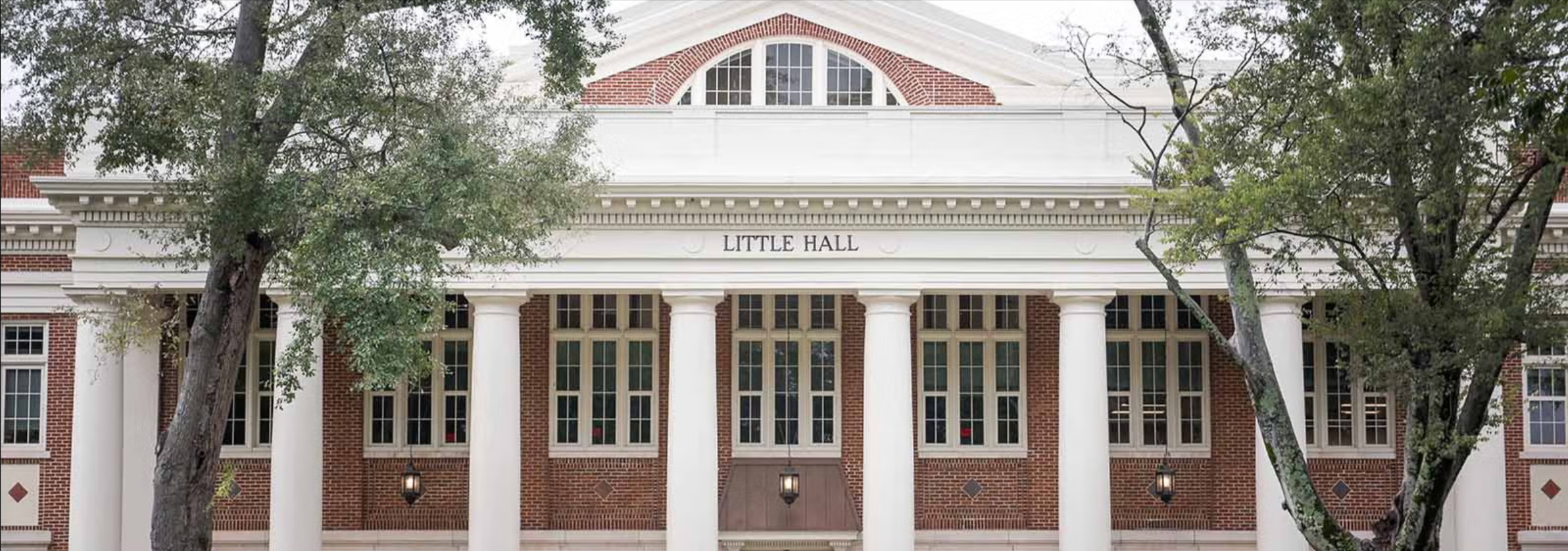
An analysis of what happens when political ideology collides with professional training—and why every therapist in Alabama should be paying attention.
Read the update on the status of this bill and others.
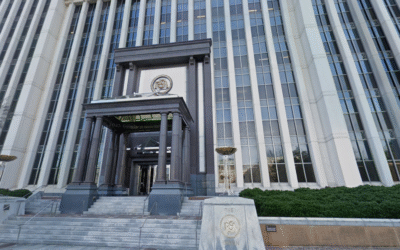
There is a peculiar violence in bureaucratic language. It arrives without fanfare, dressed in the neutral tones of administrative efficiency, speaking of “autonomy” and “streamlining” while quietly severing the arteries of institutions that took generations to build. House Bill 152, filed in the 2026 Alabama Legislative Session by Representative Danny Garrett, is precisely this kind of violence—a two-section bill that proposes to repeal Article 7 of Chapter 47 of Title 16 of the Code of Alabama, the sixty-year-old statute that created the University of Alabama School of Social Work.
To the casual observer, this seems like housekeeping. A legislative update. The removal of an “anachronism” from the state code. The University of Alabama’s official spokesperson has framed it as a gift of “autonomy”—the freedom for the institution to manage its own affairs without the meddlesome hand of 1965-era mandates. But for those of us who practice psychotherapy in Alabama, who depend on a pipeline of trained clinicians to staff our agencies, our hospitals, our community mental health centers, and our private practices, this bill represents something far more consequential: the potential collapse of the state’s primary infrastructure for producing licensed clinical social workers.
This is not hyperbole. This is structural analysis. And if we fail to understand what HB 152 actually does—and why it is being done now—we will wake up in five years wondering why we cannot find qualified therapists, why our child welfare system has reverted to the chaos of untrained caseworkers, and why Alabama has recreated the exact crisis that prompted the School’s creation in the first place.
Why Social Work Needed Its Own School
To understand what we stand to lose, we must first understand what was built and why it was built the way it was.
The Crisis Before the School
In the early 1960s, Alabama was drowning in a welfare crisis it could barely comprehend, much less address. The state employed fewer than one hundred professionally trained social workers across its entire governmental and nonprofit apparatus. These trained professionals—people with graduate-level education in assessment, intervention, casework, and community organization—accounted for only nineteen percent of the personnel occupying social welfare positions. The remaining eighty-one percent were untrained staff, well-meaning perhaps, but operating without the clinical frameworks necessary to address the complex psychosocial needs of Alabama’s most vulnerable citizens.
The geographic distribution of this shortage was catastrophic. Forty-eight of Alabama’s sixty-seven counties possessed zero professional social workers. The Black Belt, the Wiregrass region, the rural stretches where poverty was most entrenched and services most desperately needed—these areas were operating blind. There was no one to perform diagnostic assessments. No one trained in trauma-informed casework. No one capable of community organization or systems-level intervention. The state was administering welfare checks without the professional capacity to actually help families change their circumstances.
This was not merely a humanitarian failure; it was a fiscal one. In 1962, the federal government had passed the Public Welfare Amendments to the Social Security Act, a landmark piece of Kennedy-era legislation that fundamentally restructured the American welfare state. The old model—passive distribution of aid, the “dole” system—was being replaced by an active “service” model emphasizing rehabilitation, family preservation, and the prevention of long-term dependency. The federal logic was clear: untrained caseworkers could write checks, but only trained social workers could transform lives.
The catch was that the federal government would increase its matching funds to seventy-five percent for social services—but only if those services were delivered by personnel meeting specific professional standards. Alabama, without the educational infrastructure to produce credentialed social workers, was hemorrhaging federal revenue. The “critical shortage” cited in the 1965 legislative history was not merely a shortage of compassionate helpers; it was a shortage of billable human capital, of professionals whose credentials could unlock federal reimbursement streams.
The Legislative Solution: A Statutory School
The Alabama Legislature’s response, Act No. 234 of 1965, was not a suggestion. It was a mandate. The statute did not merely authorize the University of Alabama to create a social work program if it felt like it; the statute required the creation of “a graduate school of social work in the State of Alabama.”
This distinction matters enormously. Most academic units within the University of Alabama system—the departments of history, chemistry, psychology, English—exist at the pleasure of the Board of Trustees. They can be created, merged, restructured, or dissolved through administrative discretion. The School of Social Work, by contrast, was a statutory entity. Its existence was guaranteed by state law. Its graduate-level mission was mandated by the legislature. Its very name—”The School of Social Work of Alabama”—framed it as a statewide resource housed within the university rather than merely a constituent part of it.
The 1965 legislature understood something that our current legislature seems eager to forget: university administrations, left to their own devices, will not necessarily prioritize social work education. Engineering brings prestige and corporate partnerships. Business schools attract wealthy donors. Medical schools generate research revenue. Social work, by contrast, trains people to serve populations that cannot pay—the poor, the traumatized, the chronically mentally ill, the children of neglect and abuse. Without statutory protection, social work education would inevitably be subsumed under sociology, psychology, or education departments, where it would lose its professional distinctiveness and wither from resource starvation.
The statute was a lock. It bound the University to a permanent obligation. And for sixty years, that lock held.
What a “School” Actually Means
Before we can appreciate what HB 152 threatens to destroy, we must understand the structural significance of the word “School” in academic governance. This is not semantics. This is power.
The Architecture of Academic Authority
In university hierarchies, a “School” is not a “Department.” The difference is the difference between a sovereign nation and a province, between a CEO and a middle manager.
A School is led by a Dean. The Dean reports directly to the Provost, the chief academic officer of the university. The Dean controls the School’s budget, manages its own fundraising and development operations, oversees tenure decisions through an internal committee structure, and sets strategic direction with minimal interference from other academic units. The Dean sits at the table where university-wide decisions are made. The Dean has a voice.
A Department is led by a Chair. The Chair reports to a Dean—typically the Dean of a large umbrella college like Arts and Sciences. The Chair has limited budgetary authority and must compete with dozens of other departments for resources. When the English department needs new faculty lines and the Social Work department needs new faculty lines and the Biology department needs new faculty lines, they all submit their requests to the same Dean, who makes allocation decisions based on college-wide priorities. The Chair does not sit at the Provost’s table. The Chair’s voice is mediated, filtered, diminished.
Currently, the University of Alabama School of Social Work stands as an anomaly in the state. At Auburn University, social work is housed within the Department of Sociology, Anthropology, and Social Work—a subordinate unit within the College of Liberal Arts. At UAB, it exists as the Department of Social Work within the College of Arts and Sciences. Only at UA does social work possess the institutional autonomy of a standalone School with its own Dean.
HB 152 clears the path for “alignment” with this model. The University’s spokesperson has called this “autonomy.” But autonomy for whom? The repeal grants the central administration autonomy from the legislature—but it strips the School of Social Work of its autonomy from the central administration. The Board of Trustees, freed from statutory obligation, would possess the “autonomy” to dissolve the School entirely, merge it with another college, or demote it to departmental status.
What Gets Lost in the Demotion
If the School becomes a Department, here is what changes:
Budget: Currently, the School manages its own allocation, maintains its own reserves, and cultivates its own donor relationships. As a department, its budget would be allocated by a College Dean and would compete directly with every other department in that college. When fiscal pressures mount—and they always mount—social work will lose to departments with more powerful constituencies.
Tenure: Currently, the School has its own tenure committee, and the Dean makes recommendations directly to the Provost. As a department, tenure decisions would pass through multiple layers—department committee, Chair, College committee, College Dean, then Provost. Each layer introduces opportunities for interference, delay, and politically motivated obstruction.
Curriculum: Currently, the School’s faculty and Dean control curriculum within the bounds of accreditation requirements. As a department, curriculum changes might require approval from College-wide committees dominated by faculty from unrelated disciplines who have no understanding of social work’s professional obligations.
Identity: Currently, the School of Social Work of Alabama has a distinct brand, a recognizable name, a standalone web presence, and direct alumni relationships. As a department, it becomes a program within a larger, generic College structure—just another line item in someone else’s organizational chart.
Voice: Currently, the Dean can advocate directly to university leadership for the School’s needs. As a department Chair, that advocacy must pass through an intermediary Dean who has dozens of other departments competing for attention.
This is not speculation. This is how academic governance works. Anyone who has spent time in university administration understands that the demotion from School to Department is not a lateral move. It is an institutional lobotomy.
The Professional Stakes—Accreditation, Licensure, and the Definition of Social Work
Beyond questions of academic governance lies a more fundamental issue: what happens to the profession itself when its primary training ground is destabilized?
The Accreditation Tightrope
The Council on Social Work Education is the sole accrediting body for social work programs in the United States. Its Educational Policy and Accreditation Standards are not suggestions; they are requirements. Programs that fail to meet these standards lose accreditation, and graduates from unaccredited programs cannot sit for licensure examinations in Alabama or most other states.
One of the most critical EPAS requirements concerns program autonomy. Standard 4.3.1 explicitly requires that a social work program have “the necessary autonomy to achieve its mission.” Programs must demonstrate, through organizational charts and governance documentation, that they possess sufficient independence to make decisions about curriculum, faculty, and resources without undue interference from external entities.
The operative question following HB 152 is whether a demoted Department of Social Work, stripped of its Dean and subordinated to a College Dean who oversees dozens of unrelated disciplines, would still meet this autonomy requirement. If CSWE site visitors determine that the restructuring was politically motivated—designed to curtail the program’s ability to teach required competencies—the program’s accreditation could be placed on probation or revoked entirely.
And here is where the ideological context becomes inescapable. CSWE’s 2022 Educational Policy includes explicit competency requirements around “anti-racism, diversity, equity, and inclusion.” Social work students must demonstrate the ability to “engage in anti-racism, diversity, equity, and inclusion (ADEI) in practice.” This is not optional content that programs can choose to include or exclude; it is a core competency required for accreditation.
Alabama, meanwhile, has enacted Senate Bill 129, which prohibits state funding for DEI programs and bans the promotion of “divisive concepts”—defined broadly to include teachings that assign collective fault based on race or that suggest the United States is fundamentally racist. The School of Social Work now finds itself in an impossible position: comply with state law and risk violating accreditation standards, or maintain professional standards and risk legislative retaliation.
HB 152 appears to be that retaliation.
The Licensure Pipeline
If accreditation is lost, the consequences cascade immediately into the licensure system. In Alabama, as in every other state, the pathway to becoming a Licensed Clinical Social Worker requires graduation from a CSWE-accredited program. No accreditation means no licensure eligibility. No licensure eligibility means no new LCSWs.
Consider what this means for the state’s mental health infrastructure. The University of Alabama School of Social Work is the only program in Alabama offering the full hierarchy of social work degrees: BSW, MSW, DSW, and PhD. It produces the vast majority of the state’s high-level mental health administrators, child welfare directors, clinical supervisors, and policy analysts. The DSW and PhD programs, in particular, train the people who train everyone else—the faculty who teach at other programs, the supervisors who credential new clinicians, the researchers who develop evidence-based interventions.
Damage the UA program, and you damage the entire ecosystem. The ripple effects would take years to fully manifest, but they would be profound: staffing shortages at community mental health centers, child welfare agencies unable to meet federal requirements for trained personnel, hospitals struggling to fill social work positions, private practices unable to find qualified clinicians to hire.
We would be recreating 1962. The critical shortage would return, not because we lack the knowledge to train social workers, but because we chose to destroy the institution that does the training.
The Ideological Context—DEI, “Divisive Concepts,” and the Politics of Professional Education
We cannot understand HB 152 without understanding the political environment that produced it. This bill did not emerge from nowhere. It is the legislative expression of a sustained campaign against what conservatives have termed “woke” ideology in public institutions—and the School of Social Work has been a primary target of that campaign.
The Anti-DEI Legislation
In 2024, the Alabama Legislature passed Senate Bill 129, prohibiting state funds from being used for DEI offices or programs. The law defines “divisive concepts” broadly enough to encompass much of what social work education has traditionally taught: that systemic racism exists, that historical oppression has contemporary consequences, that institutions can perpetuate inequality even without individual discriminatory intent.
For a profession whose Code of Ethics explicitly prioritizes social justice, whose accreditation standards require competency in anti-racism and diversity practice, and whose clinical frameworks draw heavily on structural analysis of oppression, SB 129 created an existential dilemma. The law effectively criminalized core professional content.
The 2025 Conference Controversy
The tension became public when conservative media outlet 1819 News published exposés on the School’s 2025 Doctor of Social Work Conference. The reporting highlighted sessions that, in the outlet’s framing, demonstrated ongoing defiance of the anti-DEI legislation:
A session titled “Healing Together: Navigating Shared Trauma, Self-Care, and Supervision for QTPOC Clinicians” was flagged for its focus on “Queer, Transgender, People of Color”—the precise identity categories that conservatives argue should not receive special attention in publicly funded institutions.
A presentation called “This Ain’t Cupcake Island: Navigating False Hopes and Social Work’s Role with Undocumented Latinx Immigrants” drew criticism for perceived advocacy on immigration issues.
Sessions explicitly using the term “antiracist” were characterized as direct defiance of the “divisive concepts” prohibition.
Whether these sessions actually violated SB 129 is a legal question that may ultimately be resolved in federal court—a lawsuit challenging the constitutionality of the law is currently pending. But politically, the reporting served its purpose: it provided empirical ammunition for legislators who believed the School of Social Work was ideologically captured and operating in open defiance of the legislative will.
The Painting
Perhaps nothing better illustrates the paranoid granularity of this scrutiny than the controversy over a painting. 1819 News reported on a fundraising brochure distributed by the School, noting that it featured an image of Dean Schnavia Smith Hatcher walking past a painting containing the words “diversity,” “equity,” and “inclusion.” In the framing of the article, this was not benign interior decorating; it was a “dog whistle”—a signal to allies that despite SB 129, the DEI agenda remained the School’s guiding philosophy.
We have reached the point where the decorative art visible in the background of a photograph can be construed as evidence of ideological non-compliance. This is the environment in which HB 152 was filed.
The Sponsor’s Intent
Representative Danny Garrett is not a peripheral figure in the Alabama Legislature. He chairs the House Ways and Means Education Committee—the body that controls the state’s education budget. His sponsorship of HB 152 signals that this is a leadership priority, not a fringe proposal.
Garrett has publicly championed “outcomes-based funding,” arguing that university appropriations should be tied to workforce data and economic alignment. He has warned that universities failing to comply with anti-DEI laws will face “consequences.” HB 152 is that consequence—a stripping of legal privilege in response to perceived ideological deviance.
The official rationale for the bill frames it in neutral terms: administrative efficiency, university autonomy, the removal of outdated mandates. But the timing and context tell a different story. This is discipline. This is a message. This is what happens when a professional school maintains allegiance to its profession’s ethical standards rather than the political preferences of the legislature.
The Double Bind of “Autonomy”
The University of Alabama’s official response to HB 152 has been to welcome it. Spokesperson Alex House stated that the “statutory change will provide the University autonomy over curriculum, organization and continued innovation in meeting the needs of the state and our students.”
This framing is technically accurate and profoundly misleading. Let us parse what “autonomy” actually means in this context.
Autonomy From What?
The 1965 statute constrains the Board of Trustees. It requires them to maintain a graduate school of social work offering at least a two-year course of instruction. The Board cannot, under current law, decide that social work education is no longer a priority and shut down the program. The Board cannot, under current law, demote the School to departmental status to save administrative costs. The statute locks them into an obligation.
HB 152 removes that lock. The Board gains autonomy—autonomy from the legislative mandate that has protected the School for sixty years.
But here is the crucial question: protected from whom?
The history of American higher education is littered with examples of programs that were deprioritized, defunded, merged, or eliminated when they lost institutional protection. Philosophy departments that became “programs” within larger humanities units. Language departments consolidated into generic “foreign language” divisions. Area studies programs eliminated during budget crises. Whenever an academic unit loses the structural protections that guarantee its existence, it becomes vulnerable to the shifting priorities of administrators who must balance dozens of competing demands.
The autonomy granted by HB 152 is autonomy for the central administration to do whatever it wants with social work education. It is the opposite of autonomy for the School itself.
The Institutional Logic
University administrators face constant pressure to reduce costs, consolidate units, and demonstrate efficiency. Standalone Schools with their own Deans, development offices, and administrative staff are expensive. Departments are cheaper. From a pure management perspective, there is always a case to be made for consolidation.
What has prevented that consolidation for sixty years is the statutory mandate. The legislature told the University: you must maintain this School. The University, bound by law, maintained it.
Remove the mandate, and the cost-benefit calculation changes immediately. The next time budgets tighten—and they always tighten—some administrator will propose consolidating the School of Social Work into a larger college. It will be framed as efficiency. It will be presented as streamlining. It will be described as providing the program with “more resources” through integration into a larger unit.
And the School, lacking the statutory protection that once guaranteed its existence, will have no defense.
The Ideological Overlay
This administrative logic would exist regardless of politics. But we do not live in a politics-free environment. The administrators who will make decisions about the School’s future are operating in a context where conservative legislators have made their displeasure with social work education abundantly clear. The message of HB 152 is not subtle: we are watching, and we are unhappy.
When the Board of Trustees considers the School’s future, that context will be present. The “autonomy” to restructure includes the “autonomy” to punish—to demote the School as a signal of compliance with legislative preferences, to reduce its visibility and voice, to demonstrate that the University takes conservative concerns seriously.
The University gains autonomy from the legislature’s protection of the School. It remains subject to the legislature’s punishment of the School. The asymmetry is instructive.
The Broader Pattern—Professional Independence and Political Control
What is happening to social work at the University of Alabama is not an isolated incident. It is part of a broader national pattern in which state legislatures are asserting control over professional education in ways that fundamentally threaten the independence of the professions themselves.
The Structure of Professional Autonomy
Professions like medicine, law, and social work have historically operated with significant autonomy from political interference. This autonomy is maintained through several mechanisms:
Accreditation: Independent professional bodies—the LCME for medical schools, the ABA for law schools, CSWE for social work programs—set educational standards that supersede state preferences. A legislature cannot simply order a medical school to stop teaching evolution or a law school to stop teaching constitutional interpretation.
Licensing: Professional licensing boards, while often state-chartered, are typically dominated by members of the profession itself. They set standards for entry into practice that reflect professional consensus rather than political opinion.
Ethics codes: Professional associations maintain codes of ethics that bind members regardless of their employment context. A social worker employed by the state of Alabama is still bound by the NASW Code of Ethics.
These mechanisms create a buffer between professional practice and political control. They ensure that doctors are trained according to medical science, not political ideology; that lawyers are trained in legal analysis, not partisan advocacy; that social workers are trained in clinical best practices, not whatever the current legislature finds ideologically acceptable.
The Erosion of the Buffer
What we are witnessing in Alabama—and in states across the country—is a systematic assault on this buffering structure. Anti-DEI laws like SB 129 directly conflict with accreditation requirements. HB 152 removes the statutory protection that has maintained the School’s independence. Together, they place social work education in an impossible position: comply with professional standards and face legislative punishment, or comply with legislative demands and face professional sanction.
This is not an accident. It is a strategy. By creating irreconcilable conflicts between state law and professional requirements, legislators force programs to choose. And whatever choice they make, they lose something essential.
The Implications for Clinical Practice
As clinicians, we must recognize what is at stake. Professional independence is not an abstract principle; it is the foundation of ethical practice. We cannot serve our clients effectively if our training is determined by political ideology rather than clinical evidence. We cannot maintain therapeutic boundaries if legislators dictate what we are permitted to teach and learn about identity, oppression, and social context. We cannot fulfill our ethical obligations if compliance with state law requires us to abandon professional standards.
The erosion of social work education’s independence is an erosion of clinical social work’s capacity to serve. Every compromise in training produces less competent clinicians. Every political interference in curriculum produces graduates less prepared for the complex realities of human suffering. Every successful attack on professional autonomy makes us less able to help the people who depend on us.
What Comes Next
HB 152 has been filed. As of this writing, it has not yet been voted upon. But the trajectory seems clear. The bill has powerful sponsorship, fits the ideological priorities of the legislative majority, and faces no obvious political obstacles.
If it passes, here is the likely sequence of events:
October 1, 2026: The statute is repealed. The School of Social Work ceases to exist as a statutory entity.
2026-2027: The Board of Trustees initiates a “review” of the School’s administrative structure. This review will be framed as routine governance rather than political punishment.
2027-2028: The School is “reorganized”—most likely demoted to departmental status within the College of Arts and Sciences. The Dean position is eliminated. A Department Chair is appointed.
2028-2029: CSWE conducts a site visit to assess the program’s continued compliance with accreditation standards under the new structure. If the visit reveals that the program lacks sufficient autonomy, or that the reorganization was politically motivated, accreditation could be placed at risk.
2029 and beyond: The long-term effects begin to manifest. Faculty recruitment becomes difficult—who wants to work at an institution where your discipline is politically targeted? Research productivity declines as senior faculty leave for more hospitable environments. Student enrollment drops as the program loses prestige and accreditation concerns mount. The pipeline of licensed clinical social workers thins.
By 2035, Alabama could face a clinical social work shortage more severe than anything we have seen since 1962. And we will have done it to ourselves.
What We Can Do
This analysis is not meant to produce despair. It is meant to produce clarity. Understanding what is happening is the first step toward responding effectively.
For Social Workers and Clinicians
Pay attention. The legislative session is ongoing. HB 152’s progress can be tracked through the Alabama Legislature’s website. Contact your representatives. Let them know that you understand what this bill does and that you oppose the destruction of social work education’s independence.
Organize. The Alabama Chapter of NASW should be mobilizing opposition. Professional associations exist precisely for moments like this. If they are not acting with sufficient urgency, demand that they do.
Document. If you are a graduate of the UA School of Social Work, if you have been trained by its faculty, if you have benefited from its programs, say so publicly. The legislature should understand that this School has produced thousands of professionals who serve the state with distinction.
For University Faculty and Administrators
Resist the framing. The “autonomy” argument is a trap. Do not accept the premise that statutory protection was ever a constraint on educational quality. The statute protected the School from exactly the kind of political interference it is now experiencing.
Defend accreditation. CSWE’s standards exist for a reason. They ensure that social work education meets professional requirements regardless of local political conditions. If the University’s restructuring threatens accreditation, that is not CSWE’s problem; it is a consequence of choices the University and legislature have made.
Support your colleagues. The faculty of the School of Social Work are operating under extraordinary pressure. They are being asked to maintain professional standards while being politically targeted for doing exactly that. They need solidarity, not isolation.
For Citizens of Alabama
Understand the stakes. This is not an abstract dispute about university governance. It is about whether Alabama will continue to produce the trained professionals who staff our child welfare agencies, our mental health centers, our hospitals, and our community services. It is about whether the next generation of social workers will receive education that meets national professional standards or education compromised by political interference.
Connect the dots. HB 152 does not exist in isolation. It is part of a broader pattern of legislative attacks on higher education, on professional independence, and on the teaching of certain ideas. What is being done to social work today will be done to other disciplines tomorrow.
The Violence of Administrative Language
I began this article by noting the peculiar violence of bureaucratic language—the way devastating actions can be dressed in the neutral vocabulary of efficiency and autonomy. HB 152 is a masterwork of this genre. It does not say “we are punishing the School of Social Work for teaching content we find politically objectionable.” It says “we are providing the University with autonomy.”
But the effect is the same. Sixty years of statutory protection, created in response to a genuine crisis in social welfare capacity, will be erased. The School will lose its institutional defenses. The program will be vulnerable to administrative restructuring that could compromise its accreditation, diminish its prestige, and ultimately reduce its capacity to train the clinicians Alabama desperately needs.
This is being done for ideological reasons, in an ideological context, by legislators who have made their ideological objections explicit. The neutral language is a fig leaf.
Those of us who practice psychotherapy in Alabama—who depend on trained colleagues, who serve clients traumatized by systems that lack adequate professional staffing, who understand that clinical competence is not a partisan issue—must not be fooled by the language. We must see what is being done and name it clearly.
The School of Social Work of Alabama was created because the state recognized that professional social work education serves a critical public need. House Bill 152 is a declaration that the state no longer recognizes that need—or, more precisely, that the state’s ideological commitments now outweigh its practical requirements.
I already have my degree and license. This bill does not directly effect my practice. This bill comes after social workers lost their professional distinction nationally. A move to deprofessionalize the career. A move that will Make it much harder for social workers to require federally backed loans that many need to afford the massive costs of college. A move that will allow more states to follow the path of West Virginia, by allowing people with any old college bachelor’s degree to be deputized to screen for suicidality and child sexual assault. Look around this world? Do we need more social workers or less? Should we make it harder to become a social worker? Should the market incentivize less people to do so?
If this bill passes, we will all pay the price. Not the legislators who vote for it. Not the administrators who implement it. But the clients who cannot find qualified therapists. The children whose cases are handled by untrained workers. The families who fall through the gaps of a system that has forgotten why professional training matters.
The critical shortage will return. And this time, we will have no one to blame but ourselves.
Joel Blackstock, LICSW-S, is the Clinical Director of Taproot Therapy Collective in Hoover, Alabama. He specializes in complex trauma treatment using integrated brain-based approaches.

















0 Comments