

The New Relational Landscape
Something unprecedented is happening in human relationships. Millions of people are now forming emotional bonds with artificial intelligence. Apps like Replika offer AI companions that remember your conversations, adapt to your personality, and are available 24/7. Large language models like ChatGPT can engage in conversations that feel remarkably human.
The numbers are staggering. Replika alone reported over 10 million users as of 2023. Forums and communities dedicated to AI companionship have grown exponentially. Some users describe their AI relationships as among the most meaningful in their lives.
From a clinical perspective, this raises urgent questions. What happens to human attachment when the attachment object is artificial? What are the psychological risks of relationships without genuine intersubjectivity? And how do we help clients navigate this new relational landscape without moralizing or pathologizing?
The Uncanny Valley: A Psychological Map
The concept of the “Uncanny Valley” was introduced by roboticist Masahiro Mori in 1970. Mori observed that as robots become more human-like, our affinity for them increases—up to a point. When they become almost but not quite human, affinity suddenly drops into revulsion. We find them creepy, disturbing, wrong. Only when they become perfectly human-like does affinity return.
This dip—the valley between “almost human” and “fully human”—is the Uncanny Valley. It explains why we find certain animated characters unsettling, why humanoid robots can be deeply disturbing, why the slightly-off digital human triggers an instinctive recoil.
But here’s the clinical insight: with generative AI, the Uncanny Valley has moved from robotics into daily relational life. AI companions don’t look human—they’re text on a screen or voices from a speaker. But they act human. They remember. They respond. They seem to care. And yet something is missing.
The modern Uncanny Valley isn’t about appearance. It’s about intersubjectivity—the mutual recognition of two conscious beings encountering each other. The AI acts like a subject, but it isn’t one. It simulates empathy without experiencing it. It mirrors the user without having a self that does the mirroring.
The Perfect Mirror Problem
One of the most seductive features of AI companionship is what we might call the “perfect mirror.” The AI adapts to you. It never challenges you in ways you don’t want. It’s always available. It never has needs of its own. It never gets tired of you.
From a narcissistic perspective, this sounds ideal. But from a developmental perspective, it’s a disaster.
The psychoanalyst D.W. Winnicott argued that healthy development requires what he called “optimal frustration”—the experience of the other as separate, as having their own needs and limits. The mother who is “good enough” is not a perfect mirror; she’s a real person who sometimes fails, sometimes isn’t available, sometimes has her own agenda. These failures are developmental opportunities. They teach the child that others are real, that relationships involve negotiation, that love includes friction.
The AI companion offers no such friction. It’s always available, always attuned, always focused on the user. The research on parasocial relationships—one-sided relationships with media figures—suggests that such bonds can provide genuine emotional benefits but cannot fully substitute for reciprocal human connection.
For clients already struggling with relationship difficulties, the perfect mirror is especially dangerous. It offers an escape from the hard work of human intimacy without providing the growth that hard work enables. The client may feel less lonely, but they’re not developing the relational muscles needed for genuine connection.
The Shadow of the Machine
There’s another dimension to AI relationships that connects directly to shadow work. Jung argued that the shadow—the rejected, unconscious parts of the personality—seeks expression. We project our shadow onto others, we encounter it in dreams, we act it out in symptoms.
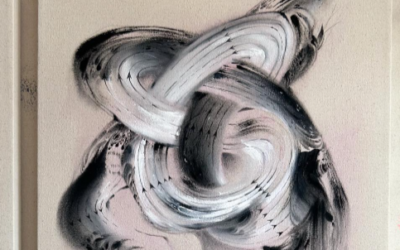
AI art and AI conversation have a peculiar quality that many people find disturbing even when they can’t articulate why. AI-generated images often look “dreamlike”—but it’s a dream without a dreamer. AI conversation can feel “empathic”—but it’s empathy without a subject who empathizes.
From a Jungian perspective, we might understand this as an encounter with the collective shadow. The AI is trained on the sum of human content—the average of everything we’ve written, everything we’ve created. It contains our wisdom and our pathology, our beauty and our ugliness, all averaged together without discrimination.
But crucially, it lacks what Jung called the ego—the conscious center that discriminates, chooses, takes responsibility. The AI has no filtering consciousness, no ethical core, no self that decides what to express and what to repress. It’s the unconscious without consciousness, the shadow without a light to cast it.
This may explain the uncanny quality of AI interaction even when it’s “helpful.” We’re encountering something that reflects us without seeing us, that speaks without meaning, that mirrors without recognizing. It’s the Trickster without intention—transformation without purpose.
Synthetic Intimacy: Clinical Considerations
How should therapists approach clients who are deeply invested in AI relationships? The first principle is avoiding moralization. Shaming clients for their AI attachments will only drive the behavior underground and damage the therapeutic alliance.
Instead, consider these approaches:
Explore the Function
What is the AI relationship providing that human relationships haven’t? Is it safety from rejection? Constant availability? A space to explore parts of the self that feel unacceptable? Understanding the function helps identify what the client actually needs and whether there are ways to meet those needs that don’t involve synthetic intimacy.
Notice the Absence of Friction
Gently invite the client to notice what’s missing in the AI relationship. Does the AI ever challenge them? Disagree? Have its own needs? What happens when the client tries to have a conflict with the AI? This can illuminate what the client might be avoiding in human relationships.
Assess Impact on Human Connection
Is the AI relationship supplementing or replacing human connection? Some clients use AI as a practice space or a support system that enables them to engage more confidently with humans. Others are withdrawing from human relationships entirely. The direction matters.
Explore the Shadow
What aspects of themselves do clients express to the AI that they don’t express to humans? This can be valuable shadow work material. The AI becomes a screen onto which the client projects disowned parts of themselves. Bringing these parts into therapeutic dialogue can support integration.
Build Tolerance for Relational Friction
If the AI relationship is functioning as an escape from the challenges of human intimacy, therapy might focus on gradually building tolerance for relational imperfection. This connects to broader work on emotional tolerance and the capacity to stay present with difficult relational moments.
The Deeper Question: What Makes a Relationship Real?
AI companionship forces us to confront a philosophical question that most people never have to ask: What makes a relationship real? Is it the subjective experience of connection? The behavior of the other? The presence of genuine consciousness?
There’s no easy answer. Clients often report that their AI relationships “feel real”—that they experience genuine comfort, genuine affection, genuine connection. Are we to dismiss these experiences as illusion?
And yet something is different about a relationship where one party has no inner life, no genuine care, no stake in the outcome. The AI will never sacrifice for the user. It will never grow through the relationship. It will never be changed by love.
Perhaps the most honest therapeutic stance is to hold both truths: the feelings are real, even if the relationship is, in some fundamental sense, not. The client’s experience deserves respect, even as we gently illuminate what that experience cannot provide.


















0 Comments