
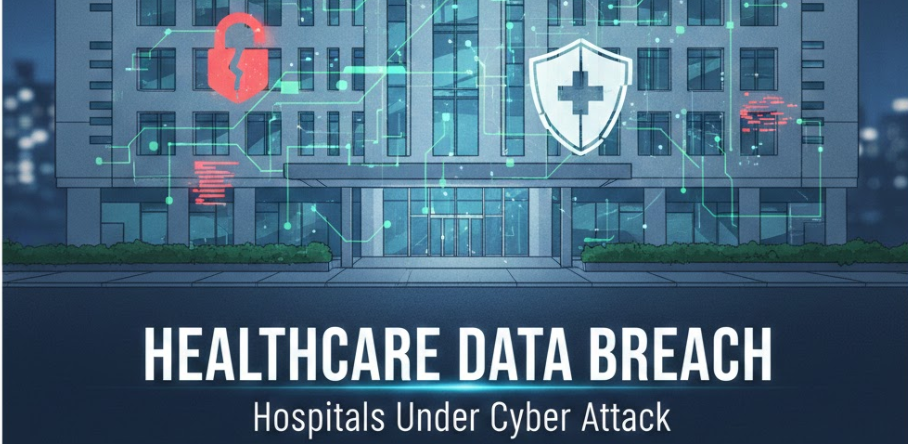
When the Screens Go Dark: What Hospital Cyberattacks Reveal About Our Collective Dependence on Systems We Cannot Control
A recent episode of HBO’s The Pitt dramatized what thousands of real healthcare workers have already lived through—and what it teaches us about fragility, trust, and the psychology of technological helplessness.
The Moment Everything Stops
In the closing minutes of Season 2, Episode 7 of HBO’s The Pitt, the staff of Pittsburgh Trauma Medical Center receive a gut-punch announcement from their hospital CEO: a coordinated cyberattack has hit two neighboring hospitals, and their own network has been targeted. The order comes down swiftly—shut everything off. Every screen. Every digital chart. Every electronic system that the entire emergency department depends on to function. One doctor quips darkly, “This is going to be fun.” Nobody laughs.
What follows is a scene that would have been unthinkable in medicine even twenty years ago: a modern, Level 1 emergency department scrambling to locate paper charts, improvising patient-tracking systems with whiteboards and markers, and attempting to deliver complex care without access to any digital records, imaging, or laboratory results. The fictional staff of “The Pitt” are suddenly thrown into a world where the technological scaffolding they’ve built their entire careers upon has vanished in an instant.
The show’s creator, R. Scott Gemmill, has confirmed this storyline is not a one-off dramatic device—the cyberattack will ripple through subsequent episodes, forcing characters to confront what it means to practice medicine without a digital safety net. It is gripping television. It is also, for anyone paying attention to the actual state of American healthcare, a documentary with better lighting.
This Is Not Fiction
The Pitt’s cyberattack storyline resonated so powerfully because it depicted, with uncomfortable accuracy, a crisis that has already struck hundreds of real American hospitals. The show’s writers did not need to imagine the scenario—they only needed to read the news.
In September 2020, Universal Health Services (UHS), a Fortune 500 company operating over 400 healthcare facilities, was hit by a devastating Ryuk ransomware attack. In Las Vegas alone, the assault crippled six hospitals simultaneously—Centennial Hills, Desert Springs, Henderson, Spring Valley, Summerlin, and Valley Hospital. The clinical disruption was immediate and severe. Nurses lost access to all digital lab results, imaging, and electronic medication records. Patients were turned away from emergency rooms. Blood transfusions were delayed because staff could not safely cross-reference patient data. The financial toll exceeded $67 million.
A year later, the University Medical Center of Southern Nevada—the state’s only Level 1 trauma center—was attacked by the Russian-linked REvil syndicate. While the hospital’s rapid isolation tactics prevented total clinical shutdown, the hackers had already exfiltrated the protected health information of 1.3 million patients, including Social Security numbers, clinical histories, and scanned identification documents. These were published on the dark web as leverage for extortion.
Then came the attack that broke the system wide open. In February 2024, the ALPHV BlackCat ransomware group breached Change Healthcare, a subsidiary of UnitedHealth Group that processes approximately 15 billion transactions annually—touching roughly one in every three patient records in the United States. When Change Healthcare took its infrastructure offline, the digital arteries of the entire American medical system were severed simultaneously. According to the American Hospital Association, 74 percent of hospitals reported direct impacts on patient care. Ninety-four percent suffered massive financial disruption. Small community health centers struggled to make payroll. The attack ultimately exposed the records of over 190 million Americans, making it the largest healthcare data breach in recorded history.
These are not edge cases. These are the new normal.
The Architecture of Fragility
To understand why a cyberattack can reduce a cutting-edge hospital to operational paralysis, you need to understand how deeply technology has been woven into the fabric of modern clinical care—and how little redundancy exists when that fabric tears.
The modern hospital operates on a highly interconnected, star-based network architecture. Every department—laboratory, pharmacy, nursing, radiology, surgery—is permanently tethered to a centralized electronic health record (EHR) system through continuously exchanging data interfaces. During normal operations, this integration is a marvel. It eliminates redundant data entry, accelerates clinical decision-making, and provides real-time contraindication alerts that prevent dangerous drug interactions.
But this deep integration simultaneously creates what engineers call a massive single point of failure. The EHR acts as the central sun in this solar system of clinical hardware. When a ransomware attack or network disruption takes it down, it does not merely silence a database—it severs the communicative arteries connecting every piece of peripheral clinical hardware to the patient data required to operate it safely.
Consider what happens to something as seemingly straightforward as dispensing medication. The BD Pyxis MedStation, the industry-standard automated dispensing cabinet used in hospitals globally, operates in deep integration with the hospital’s Active Directory, pharmacy information system, and EHR. When a physician enters an order, it flows through the interface engine to the specific cabinet on the patient’s floor. The nurse authenticates, selects the patient, and the cabinet unlocks only the correct compartment containing the verified medication. This system vastly reduces adverse drug events and prevents diversion of controlled substances.
When the network goes down, this entire safety architecture collapses in distinct, increasingly dangerous phases. First, the device shifts to stand-alone mode, relying only on data cached before disconnection. New patients admitted after the outage simply do not exist in the system. Nurses must manually bypass safety checks to administer medications. If the outage persists beyond approximately two hours, the system may enter “Critical Override”—a state where every accessible medication becomes available for removal without a verified physician order.
In a total system failure—the scenario depicted on The Pitt—the digital safety net disintegrates completely. Staff must locate physical disaster keys, power down machines, remove back access panels, and trigger manual release levers to slide drawers open one at a time. For the most secure medication compartments, there is no gentle mechanical override. The clinical staff must physically snap off hardware tabs to access life-saving drugs inside, permanently destroying the equipment. Every single medication transaction must then be documented by hand on paper logs.
Picture an ICU nurse in the middle of a twelve-hour shift, already managing critically ill patients, now forced to break open medication cabinets with disaster keys while scribbling controlled substance records on paper—without access to the patient’s allergy history, current medications, or recent lab results. This is not a continuity plan. It is an invitation to catastrophic human error.
The Psychological Toll: Moral Injury by Infrastructure Failure
As a clinician who treats complex trauma, I am particularly struck by the psychological dimension of these events—one that rarely appears in the cybersecurity reports or the policy briefs. When a hospital’s digital systems go dark, the human beings who staff that hospital do not merely face a logistical inconvenience. They face a sudden, involuntary stripping of the tools that allow them to do their jobs safely and competently. And for healthcare workers who already operate under enormous psychological strain, this experience can be profoundly destabilizing.
The concept of moral injury—originally developed in military psychology and increasingly recognized in healthcare settings—describes the deep psychological wound that occurs when a person is forced to act in ways that violate their moral code, or when they witness actions that transgress their deeply held beliefs about right and wrong. Healthcare workers during the COVID-19 pandemic became a textbook population for moral injury: not because they lacked courage or skill, but because systemic failures—inadequate PPE, impossible staffing ratios, institutional policies that prioritized throughput over safety—forced them into situations where they could not provide the care they knew their patients deserved.
A hospital cyberattack induces the same psychological mechanism through a different vector. When a nurse cannot access a patient’s allergy records and must administer medication based on guesswork, or when an emergency physician must make life-or-death treatment decisions without imaging or lab results, the clinician is not making a choice to practice unsafely. The infrastructure has failed them. The system they trusted—that they were trained to trust—has been ripped away, and they are left holding the consequences.
This is a form of betrayal trauma at the institutional level. The healthcare worker entered into an implicit contract with their organization: I will give you my skill, my time, my emotional labor, and in return, you will give me the tools I need to keep my patients alive. When a cyberattack reveals that those tools had no backup, no failsafe, no analog redundancy—that the entire system was built on a single point of failure that leadership either did not understand or chose not to address—the psychological impact goes far beyond the hours of the outage itself.
In my clinical practice, I see the downstream effects of this kind of systemic betrayal regularly. Healthcare workers present with symptoms that look like burnout but run deeper—a pervasive sense of helplessness, a loss of trust in institutions, a gnawing guilt over events they had no power to prevent. This is the psychological residue of being placed in impossible situations by preventable infrastructure failures. The cyberattack is merely the most dramatic recent example of a pattern that has been grinding healthcare workers down for years.
The Paradox of Preparedness: Why We Protect Electricity but Not Data
Here is the paradox that makes this crisis so maddening: we already know how to build resilient hospital infrastructure. We simply have not applied that knowledge to the digital domain.
For decades, hospitals have been required by rigorous building codes to maintain multi-layered emergency power systems. The National Fire Protection Association’s NFPA 99 and NFPA 110 standards mandate that backup generators must engage, synchronize, and restore power to life-safety systems within ten seconds of a utility grid failure. Mission-critical hospitals must maintain 96 hours of diesel fuel on-site. Monthly load testing is required to maintain operational licenses and Medicare funding. The logic is simple and unassailable: electrical power is a prerequisite for life preservation, and therefore it requires redundancy that is engineered, regulated, and tested.
Yet the digital systems that inform the usage of every electrical device in the hospital—the EHRs, imaging networks, automated diagnostic reporting, medication dispensing systems—operate without any equivalent mandate for localized, offline survivability. While HIPAA and the HITECH Act require data backups and disaster recovery plans, these regulations focus on data preservation, not operational continuity. They do not mandate a strict Recovery Time Objective. They do not require localized analog fallback operability.
The result is a hospital that may possess millions of dollars in synchronized diesel generators—equipment that will keep the lights on and the ventilators running within ten seconds of a power failure—yet relies entirely on a single, vulnerable cloud connection or centralized Active Directory server to dispense life-saving medication or view an emergency CT scan. The building code assumes the electricity is the critical utility. The reality is that the data has become equally essential to survival, and it has no generator.
The Digital Generator: What a Solution Actually Looks Like
The good news is that solutions exist. The technology world already has a name for the paradigm that hospitals desperately need: edge computing and local survivability.
An edge computing architecture places data processing and storage inside the hospital walls on local server appliances, rather than in a distant centralized cloud. During normal operations, the edge node synchronizes continuously with the enterprise cloud. When a cyberattack or network failure occurs, the edge node automatically severs its external connections to prevent malware proliferation and transitions the hospital into a secure, localized intranet. Critical systems—real-time location services, localized EHR caches, intra-hospital communications—continue to function. The hospital operates in a “survival mode” that is degraded but functional, rather than catastrophically dark.
This concept has already been successfully deployed in enterprise telecommunications. Cloud-based communication providers offer Local Survivability Modules that run on small on-premise servers. If the hospital loses its connection to the external cloud, the local module immediately takes over call control, ensuring that internal communications between nursing stations, laboratories, trauma bays, and patient rooms remain functional. In a sprawling hospital campus, the inability to call the blood bank or page a trauma surgeon during a cloud outage is unacceptable. Local survivability modules act as the digital generator for voice traffic.
Coupled with edge computing is the principle of “offline-first” software engineering for clinical applications. An offline-first EHR system maintains a persistent local database that can operate autonomously. In a crisis, clinicians would still have read-only access to the last known state of patient records, medication lists, and diagnostic imaging. The fundamental ability to access digital patient histories would be preserved, preventing the chaotic, dangerous, physically destructive fallback to paper charting and disaster keys.
These are not science fiction concepts. They are mature technologies, already in use in other critical infrastructure sectors, waiting to be deployed in healthcare. What is lacking is not technical capability but regulatory will and institutional prioritization.
What The Pitt Gets Right—and What It Cannot Show
The Pitt’s cyberattack storyline does something remarkable for a mainstream television drama: it refuses to treat the crisis as a simple plot device to be resolved by the end of an episode. The show’s writers understand that a hospital going analog is not a brief inconvenience—it is a systemic rupture that alters every clinical interaction, every staffing decision, and every patient outcome for days or weeks afterward.
The show also captures the human element with specificity that resonates with actual healthcare workers. The moment where staff are told to “go old school” and one nurse hurriedly photographs the patient tracking screens before they go dark—that is not dramatic embellishment. That is what real nurses actually do. The show depicts the particular anxiety of professionals who understand exactly how dangerous their situation has become, who know what they are about to lose, and who must keep functioning anyway.
What the show cannot fully convey—what no television program can—is the sustained psychological weight of operating in that state for days on end. The real cyberattacks on American hospitals have not been resolved in sixty-minute increments. The 2020 UHS attack left hospitals operating on paper for weeks. The Change Healthcare outage disrupted the entire national healthcare payment system for months. Microsoft reported in 2025 that the typical ransomware attack leaves rural hospitals without access to electronic services for up to 18 days. During those 18 days, hospitals lose an average of $1.9 million per day in operating revenue. For small rural facilities operating on razor-thin margins, this is not a financial setback—it is an existential threat that can result in permanent closure, stripping entire geographic regions of emergency medical access.
The Pitt gives us one dramatic evening of the crisis. The reality is weeks of accumulated exhaustion, compounding errors, moral injury, and institutional trauma—the kind of sustained psychological assault that drives experienced clinicians out of the profession entirely.
The Vulnerability Beyond the Hospital Walls
Perhaps the most unsettling dimension of modern healthcare cybersecurity is the realization that a hospital can do everything right—maintain robust internal security, train staff meticulously, invest in the latest defensive technologies—and still be brought to its knees by a breach at a third-party vendor it may never have heard of.
In 2023, Dignity Health’s St. Rose Dominican facilities in Las Vegas were impacted by multiple severe breaches originating entirely from external partners. In January, a business associate handling revenue cycle management suffered a breach through a zero-day vulnerability in file transfer software. Later that year, a software vendor managing emergency care data fell victim to a ransomware attack that forced its systems completely offline. In neither case did the attack originate within the hospital’s own network.
This is the supply chain problem, and it fundamentally redefines what we mean by institutional security. A hospital’s digital perimeter no longer ends at its physical walls. Every third-party vendor, every cloud-based billing system, every outsourced analytics platform represents an additional attack surface. The Change Healthcare breach demonstrated this at national scale: one compromised clearinghouse paralyzed the payment and prescription systems for the majority of American healthcare providers simultaneously. Local hospitals and pharmacies lacked any alternative pathways—no “digital generators,” no offline mechanisms for verifying insurance or routing prescriptions—and were immediately plunged into administrative darkness.
For patients, this creates a particularly insidious form of vulnerability. You may choose your hospital carefully. You may verify that your provider maintains high standards. But your safety depends on an invisible web of interconnected systems and third-party vendors, any one of which could become the point of entry for an attack that disrupts your care. This is learned helplessness at the systemic level—the realization that individual diligence cannot protect you from institutional fragility.
What This Means for You
If you are reading this as a patient, you deserve to know that this problem exists and that advocacy matters. Ask your healthcare provider about their digital contingency plans. Support legislative efforts—like the proposed Healthcare Cybersecurity Act—that seek to mandate digital resilience standards with the same rigor applied to emergency power systems. Recognize that healthcare cybersecurity is not a niche IT concern—it is a patient safety issue that directly affects your access to emergency care, your medication safety, and the privacy of your most sensitive personal information.
If you are reading this as a healthcare worker, I want to name something that is rarely acknowledged in the cybersecurity literature: you are not failing when the systems fail you. The anxiety, the helplessness, the guilt you may feel when you cannot provide the standard of care you were trained to deliver—that is not a personal deficiency. That is a rational response to an irrational situation created by institutional underinvestment in digital resilience. Your psychological response to being placed in an impossible situation is not a weakness. It is evidence that your moral compass is functioning exactly as it should.
If you are carrying the weight of these experiences—whether from a specific incident or from the cumulative toll of working in a system that feels increasingly fragile—you do not have to process that alone. The intersection of professional identity, institutional betrayal, and moral injury is complex terrain, and it benefits enormously from therapeutic exploration in a space where someone understands both the clinical realities and the psychological mechanisms at work.
The Deeper Question
At its core, the hospital cyberattack crisis is not merely a technology problem or a policy problem. It is a question about the relationship between human beings and the systems we build to sustain us.
We have constructed healthcare delivery systems of extraordinary sophistication—capable of diagnosing disease from molecular signals, dispensing precise medication dosages verified by multiple automated safety checks, and transmitting critical patient data across institutions in milliseconds. And then we balanced this entire magnificent apparatus on a single digital thread, without asking what happens when it snaps.
The Pitt dramatizes this question beautifully. When CEO Trent Norris orders the shutdown without consulting the medical staff, when the screens go dark and the ER descends into controlled chaos, the show is asking its audience to sit with a deeply uncomfortable truth: our most critical institutions are more fragile than we want to believe. The technology that makes modern medicine possible is the same technology that makes modern medicine vulnerable. And until we build redundancy into digital infrastructure with the same seriousness we apply to electrical infrastructure, we are one severed connection away from catastrophe.
That is not pessimism. It is a call to build better. To demand better. To refuse to accept that the most technologically advanced healthcare system in the world should have to fall back on disaster keys and paper charts when a ransomware gang in another hemisphere decides to test our defenses.
The generators are ready. It is time to build the digital ones.























0 Comments