
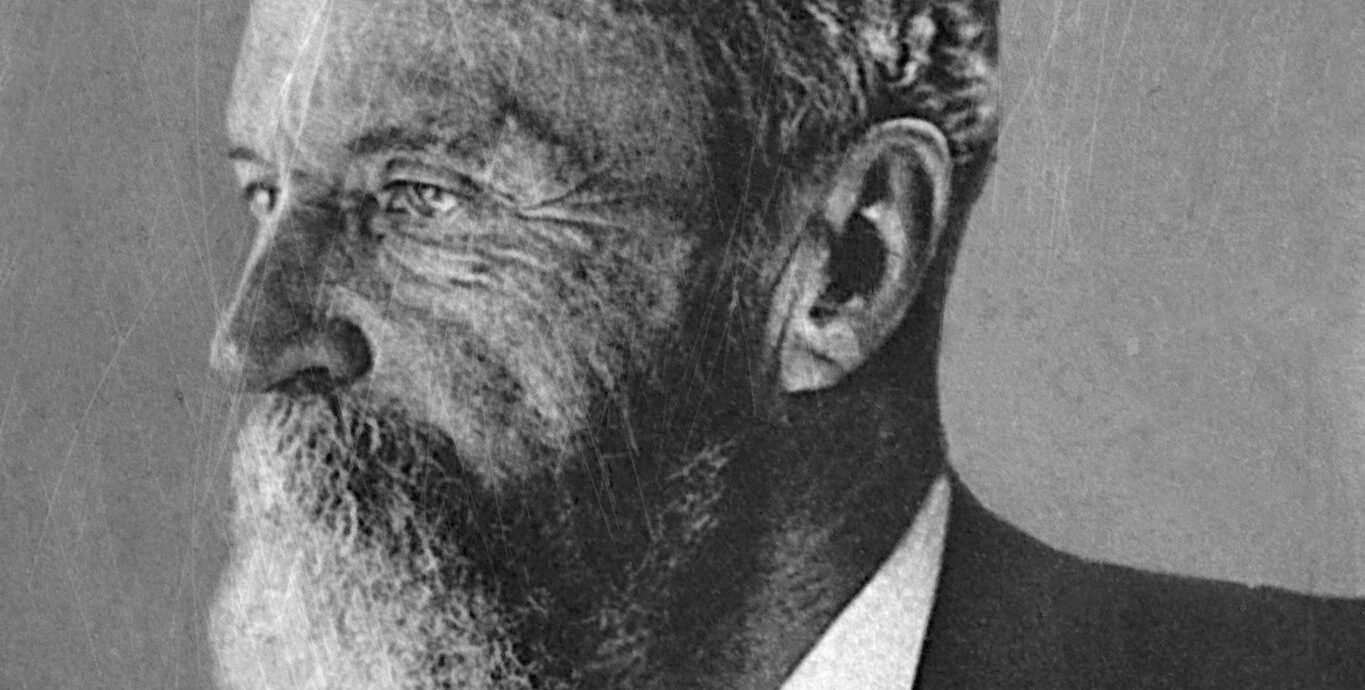
The Genesis of American Psychology
The intellectual history of the West is often charted by its great systematizers, those who build cathedrals of thought in which every stone is placed with geometric precision. William James was not such a builder. He was an explorer who preferred the open air of the frontier to the enclosed safety of the fortress. In the landscape of American psychology, he stands not merely as a founder but as a persistent, animating spirit whose relevance has only deepened with the passage of time. To understand the trajectory of mental health treatment in the twenty-first century—from the acceptance-based protocols of the “third wave” of cognitive behavioral therapy to the trauma-informed care of the body—one must return to the fertile, chaotic ground of Cambridge, Massachusetts, in the late nineteenth century.
It was here that James, a man trained in the hard sciences of anatomy and physiology yet possessed of the soul of an artist and the skepticism of a philosopher, orchestrated a quiet revolution. He wrested the study of the mind away from the abstract metaphysics of the past and the rigid, atomistic laboratory methods of Europe, grounding it instead in the rich, messy, and undeniable reality of human experience. This report offers an exhaustive examination of James’s contributions, tracing the early institutional fissures that defined the field, his radical re-imagining of consciousness, and the direct lineage connecting his pragmatic philosophy to modern clinical interventions like Acceptance and Commitment Therapy (ACT), Dialectical Behavior Therapy (DBT), and the recovery models for addiction.
The story of James is also the story of a battle for the soul of psychology. It is a narrative of splits and divergences—between the Structuralists who sought to freeze the mind in order to dissect it and the Functionalists who sought to watch it in motion; between the Boston School of Psychotherapy which embraced the dissociated subconscious and the Viennese School which pathologized the repressed unconscious. By revisiting these early divides, we gain a nuanced understanding of the tools we use today. We discover that the “newest” insights in therapy often have a lineage stretching back to James’s lecture hall at Harvard, where he taught us that the mind is not a thing to be defined, but a process to be lived.1
The Institutional Splits: Structuralism versus Functionalism
The birth of psychology as a distinct discipline is frequently dated to 1879, the year Wilhelm Wundt established the first laboratory for experimental psychology at the University of Leipzig. This German tradition, which came to be known as Structuralism, exerted a powerful gravitational pull on the academic world. Wundt and his most ardent disciple, Edward B. Titchener, championed a view of the mind that was analogous to chemistry. Just as a chemist breaks down a compound into its constituent elements, the Structuralist sought to break down conscious experience into its fundamental building blocks—sensations, images, and affections.1
The method employed was introspection, but not the casual reflection of the armchair philosopher. This was a rigid, highly trained form of internal observation. Subjects in Wundt’s lab were taught to report their experiences without “stimulus error,” meaning they were to describe the raw sensory data (the redness, the brightness, the spatial extent) rather than the object itself (an apple). The goal was to create a periodic table of the mind, a universal map of human consciousness. While this approach brought a veneer of scientific rigor to the study of the psyche, it suffered from a fatal flaw in the eyes of the emerging American school. By stopping the stream of thought to analyze it, the Structuralists killed the very thing they sought to study. They were left with a handful of static elements that bore little resemblance to the dynamic, flowing reality of mental life.3
The Functionalist Revolt
William James led the counter-movement, which came to be known as Functionalism. While James respected the experimental method—indeed, he established a demonstration laboratory at Harvard in 1875, four years before Wundt’s official founding—he found the microscopic analysis of mental elements to be tedious and largely irrelevant to the actual conduct of life. Influenced profoundly by Charles Darwin’s theory of evolution, James argued that if consciousness exists, it must serve a purpose. It must have survival value. The question, therefore, was not “what is the mind made of?” but “what is the mind for?”.3
Functionalism was not a tight-knit “school” with a dogma, but rather an orientation toward the utility of mental processes. James posited that the function of consciousness is to enable the organism to adapt to a complex and changing environment. Habits, instincts, and emotions were not static structures but tools of survival. This shift in perspective was monumental. It opened the gates of psychology to include the study of individual differences, animal behavior, developmental psychology, and abnormal mental states—areas that Structuralism had largely ignored because they could not be subjected to controlled introspection.
The split between these two institutes was more than methodological; it was philosophical. The Structuralists were searching for universal laws of the “generalized adult mind,” essentially ignoring the variability of human experience. James, by contrast, was a pluralist. He delighted in the “wild facts” and the eccentricities of human nature. He argued that a psychology that could not account for the religious mystic, the hallucinations of the fevered, or the practical problem-solving of the schoolchild was an impoverished science. This insistence on the breadth of experience laid the foundation for the applied psychology that dominates the American landscape today.6
The “Boston School” and the Divergence from Vienna
While the Structuralist-Functionalist debate played out in universities, another critical split was occurring in the nascent field of psychotherapy. In the late 19th and early 20th centuries, Boston was a hub of psychological innovation that rivaled Vienna. This group, often referred to as the “Boston School of Psychotherapy” or the “School of Abnormal Psychology,” included James, the neurologist James Jackson Putnam, the psychologist Morton Prince, and James’s student Boris Sidis.7
The Boston School pioneered the study of dissociation and the subconscious. Unlike Sigmund Freud, whose psychoanalytic theory viewed the unconscious as a cauldron of repressed sexual and aggressive drives, the Boston group viewed the subconscious as a parallel stream of mental activity. They were fascinated by the phenomenon of multiple personality (now Dissociative Identity Disorder), viewing it as evidence that the self was not a unitary monarchy but potentially a confederation of psychic states.
James was the intellectual godfather of this movement. His theory of the “hidden self” suggested that under certain conditions, such as trauma or hypnosis, the stream of consciousness could split, creating “parasitic” or secondary selves that operated independently of the main personality. Boris Sidis utilized this framework to develop the “hypnoidal state,” a therapeutic technique that accessed these dissociated memories not through free association, but through a state of relaxed, expanded awareness. Morton Prince’s famous case of “Miss Beauchamp,” detailed in his book The Dissociation of a Personality, provided empirical support for this pluralistic view of the mind.9
The divergence between the Boston School and the Freudian School came to a head at the 1909 Clark University Conference, organized by G. Stanley Hall. This event is famous for bringing Freud and Carl Jung to America, but it also represented a collision of worldviews. James met Freud and was reportedly impressed by his intellect but deeply skeptical of his dogmatism. James famously described Freud’s dream symbolism as a “dangerous method” if applied too rigidly. The Boston School’s approach was more empirical, more optimistic, and less sexually deterministic than Psychoanalysis. However, the rise of Psychoanalysis and later Behaviorism eclipsed the Boston School’s contributions. For decades, their insights into trauma and dissociation lay dormant, only to be rediscovered in the late 20th century by trauma researchers who found that James and his colleagues had anticipated the mechanisms of PTSD and dissociative disorders long before they were formally recognized.12
The Architecture of Consciousness
At the center of James’s psychological project was the attempt to describe the immediate experience of being alive. In his magnum opus, The Principles of Psychology (1890), he launched a devastating critique of the “Associationist” view of the mind, which held that thoughts were distinct “ideas” linked together like beads on a string. James argued that this was a falsification of reality. When we look within, we do not see discrete atoms of thought. We see a continuous flow.15
The Stream of Thought
James introduced the metaphor of the “Stream of Consciousness” to capture this fluidity. He observed that consciousness is never the same twice. Even if we think of the same object—say, the concept of “freedom”—at two different times, the thought is different because the brain and the self that thinks it have changed in the interim. The water has flowed on. This insight challenged the search for static mental elements and shifted the focus to the process of thinking.3
A crucial component of the stream is the distinction between “substantive” and “transitive” states. Substantive states are the resting places of the mind, the moments when we are focused on a specific image or idea (like a bird perching on a branch). Transitive states are the moments of flight, the connections between the resting places. James argued that traditional psychology had focused exclusively on the substantive parts and ignored the transitive ones. He insisted that we have specific feelings of relation—we have a “feeling of and,” a “feeling of if,” and a “feeling of but” just as surely as we have a “feeling of blue” or “feeling of cold.” To ignore these relational feelings is to miss the glue that holds our reality together. It is in the transitive flights that the sense of continuity and meaning resides.16
The Fringe and the Halo
Surrounding the clear focus of attention is what James called the “fringe” or “halo” of consciousness. This is the vague, indistinct awareness of context and relation that accompanies every thought. When we try to recall a forgotten name, we are in a state of “active gap.” We do not just have a blank mind; we have a specific, tormenting sense of the missing name’s rhythm, its initial letter, its relationship to other names. This “tip-of-the-tongue” experience is a manifestation of the fringe.
The fringe is not merely a nuisance; it is functional. It guides our thinking. It is the “feeling of tendency” that lets us know we are on the right track before we have formulated the words. James argued that much of our intelligence lies in this ability to sense the direction of a thought before it is fully formed. This concept anticipates modern research into implicit cognition and intuition, suggesting that the “unconscious” is not just a basement of repressed drives, but a vibrant field of potentiality that surrounds our conscious awareness.9
The Empirical Self and the Pure Ego
James provided a sophisticated taxonomy of the self, dividing it into the “Me” (the object of knowledge) and the “I” (the subject that knows). The “Me,” or the Empirical Self, is everything that a person can call their own. James famously stated that a man’s self is the sum total of all that he can call his, not only his body and his psychic powers, but his clothes and his house, his wife and children, his ancestors and friends, his reputation and works, his lands and horses, and yacht and bank-account.3
He further subdivided the Empirical Self into three constituents:
-
The Material Self: The body and external possessions. James noted that we identify with our clothes and our homes to such a degree that their violation feels like a violation of our very person.
-
The Social Self: The recognition we get from others. James observed that “a man has as many social selves as there are individuals who recognize him and carry an image of him in their mind.” We show a different side of ourselves to our children than we do to our employers. This anticipates the modern sociological concept of code-switching and the fragmented identity of the digital age.
-
The Spiritual Self: The inner, subjective being, the active element of consciousness that welcomes or rejects thoughts.
Contrasted with these is the “Pure Ego” or the “I.” This is the thinker of the thought. James struggled with this concept. He wished to avoid the metaphysical “soul” of religious dogma, yet he recognized the psychological necessity of a unifying principle. He eventually concluded that the “passing thought” itself is the thinker. The present thought appropriates the past thoughts, claiming them as “mine,” thus creating the continuity of personal identity without the need for a transcendent substance. This “no-self” view remarkably parallels Buddhist philosophy and anticipates the “self-as-context” found in modern behavioral therapies.7
Radical Empiricism and the Pragmatic Method
To fully grasp the clinical relevance of James, one must understand the philosophical bedrock upon which his psychology rested. This is the dual foundation of Pragmatism and Radical Empiricism.
Pragmatism, for James, was a method for settling metaphysical disputes that might otherwise be interminable. He asked: “What is the cash-value of this idea in terms of practical experience?” If two theories lead to the exact same practical consequence, then they are effectively the same theory. Truth, in the Jamesian view, is not a static property inherent in an idea; truth is something that happens to an idea. An idea becomes true, is made true by events. Its validity is measured by its power to guide us through the “booming, buzzing confusion” of the world.3
Radical Empiricism was James’s attempt to save empiricism from its own defects. Classical empiricism (like that of Hume) tended to break experience into disconnected sensory atoms. James argued that “relations” are just as much a part of direct experience as the things they relate. We experience “connectedness” directly. We do not just see “cat” and “mat”; we see “cat-on-mat.” This meant that the universe is not a collection of lonely, isolated facts, but a continuous web of relations. For the clinician, this is vital because it validates the patient’s subjective sense of connection (or disconnection) as a primary reality, not a secondary interpretation.22
This philosophical stance leads directly to Functional Contextualism, the philosophy of science that underpins modern Acceptance and Commitment Therapy (ACT). Steven Hayes, the originator of ACT, explicitly cites Jamesian pragmatism as a root. In this view, no thought or feeling is “true” or “false” in an absolute sense; it is only “workable” or “unworkable” in the context of the person’s valued life directions. The therapist does not argue with the content of the client’s cognition (e.g., “Is it true that you are a failure?”) but rather looks at its function (e.g., “When you buy into that thought, does it help you live the life you want?”).24
Table 1: Comparative Analysis of Early Psychological Models
| Feature | Structuralism (Wundt/Titchener) | Functionalism (James) | Psychoanalysis (Freud) | Boston School (James/Prince/Sidis) |
| Primary Goal | Analyze structure of mind into elements. | Understand function of mind in adaptation. | Uncover repressed unconscious drives. | Explore dissociation and subconscious states. |
| Method | Trained Introspection. | Pragmatism, Comparative Method. | Free Association, Dream Analysis. | Hypnosis, Suggestion, Synthesis. |
| View of Mind | Static, chemical compound metaphor. | Dynamic, “Stream” metaphor. | Conflict model (Id/Ego/Superego). | Pluralistic, potentially dissociated. |
| View of Trauma | Largely ignored. | Viewed as habit/nervous system shock. | Sexual repression/fantasy. | Dissociation of consciousness. |
| Modern Legacy | Experimental Psychology. | CBT, ACT, Evolutionary Psychology. | Psychodynamic Therapy. | Trauma Therapy, Dissociation Studies. |
The Clinical Lineage: From James to the “Third Wave”
The ripples of James’s work are felt distinctly in the most effective therapeutic modalities of the current era. He serves as the bridge between the behavioral, the cognitive, and the spiritual.
Acceptance and Commitment Therapy (ACT)
The resonance between James and ACT is unmistakable. James’s “Pure Ego”—the “I” that observes the “Me”—is conceptually identical to the ACT process of “Self-as-Context” or the “Observer Self.” In ACT, clients are taught to access a part of themselves that is distinct from their thoughts and feelings, a safe harbor from which the storm of the mind can be watched without judgment. This is the Jamesian “sanctuary within the citadel.”
Furthermore, James’s stance on “Willingness” anticipates the “Acceptance” in ACT. James wrote about the “crisis of self-surrender” in The Varieties of Religious Experience, noting that in dire straits, the act of giving up the struggle to control often leads to a breakthrough. He argued that “to be willing to have it so” is the first step in overcoming any misfortune. This mirrors the ACT concept of “creative hopelessness,” where the client gives up the futile agenda of emotional control and opens up to the reality of their experience.24
Dialectical Behavior Therapy (DBT)
Dialectical Behavior Therapy, developed by Marsha Linehan, relies heavily on the synthesis of opposites—acceptance and change. This dialectical worldview is deeply Jamesian. James spent his career trying to reconcile the “tough-minded” empiricists with the “tender-minded” idealists. His concept of the “Wise Mind” in DBT—the integration of Emotion Mind and Reasonable Mind—can be traced to James’s insistence that rationality and sentiment are not enemies. In “The Sentiment of Rationality,” James argued that a purely logical philosophy that ignores the emotional demands of the thinker will always fail. We think with our whole bodies and our whole lives.
DBT also utilizes the “As If” principle, which James articulated in his “Gospel of Relaxation” and “The Will to Believe.” The DBT skill of “Opposite Action” asks the client to identify an emotion that is unjustified or ineffective and then act in a manner opposite to it (e.g., engaging with people when fear urges withdrawal). James famously wrote: “Action seems to follow feeling, but really action and feeling go together; and by regulating the action, which is under the more direct control of the will, we can indirectly regulate the feeling”.27
Cognitive Behavioral Therapy (CBT) and REBT
Albert Ellis, the founder of Rational Emotive Behavior Therapy (REBT), and Aaron Beck, the founder of Cognitive Therapy, both drew upon the Stoic tradition. However, James was the American conduit for this philosophy. James’s assertion that “the greatest discovery of my generation is that a human being can alter his life by altering his attitudes” is the credo of the cognitive revolution. He understood that our “over-beliefs”—our interpretative frames—shape our physiological and emotional reality.
However, James differs from pure CBT in his emphasis on the body. The James-Lange theory of emotion (that we are afraid because we tremble, not that we tremble because we are afraid) adds a crucial somatic layer. It suggests that cognitive change alone is often insufficient; one must change the physical “attitude” or carriage of the body to effect emotional change. This insight is increasingly relevant as CBT evolves to include more somatic and experiential components.31
Addiction and the Spiritual Solution
One of the most profound direct lineages of James’s work is found in the rooms of Alcoholics Anonymous. Bill Wilson, the co-founder of AA, was in the depths of hopeless alcoholism when he was given a copy of The Varieties of Religious Experience. In James’s accounts of “conversion,” Wilson found a scientific validation for the experience he had undergone at Towns Hospital. James described how the “collapse” of the ego—the utter defeat of the personal will—was often the necessary precursor to a spiritual awakening. He normalized the mystical experience, stripping it of sectarian dogma and presenting it as a psychological reality that could reorder the personality.
Wilson incorporated James’s pragmatic view of God into the 12 Steps. It did not matter what God was in an ontological sense; what mattered was the effect of the belief on the alcoholic’s behavior. If believing in a “Power greater than oneself” kept a man sober, then that belief was true in the pragmatic sense. The “educational variety” of spiritual experience that Wilson describes in the Big Book—the slow, gradual change in outlook—is also drawn directly from James’s distinction between sudden and gradual conversions.34
Practical Psychology: Tools for Self-Help
William James believed that philosophy should bake bread; it should be useful for the common person. His writings contain practical methodologies that function as early, robust self-help protocols.
The Science of Habit Formation
In his lectures Talks to Teachers, James provides a masterclass in neuroplasticity and habit formation. He defines habit as the “enormous flywheel of society,” the conservative agent that keeps us on track. He understood that the nervous system is “plastic”—it can be reshaped by action. To change a habit is to physically restructure the brain. He offered four specific maxims for this process:
-
Launch with Strong Initiative: When seeking to acquire a new habit, one must accumulate all possible circumstances which shall reinforce the right motives. Make a public pledge, control the physical environment, and “envelop your resolution with every aid.” The goal is to give the new behavior such momentum that it overcomes the inertia of the old neural pathways.
-
Never Suffer an Exception: In the critical early stages, continuity is king. James warns that a single slip undoes more than many successes can build. It is like dropping a ball of string one is carefully winding; a single drop unravels yards of work. One must be rigid until the habit is “securely rooted.”
-
Seize the First Opportunity to Act: A resolution that is not acted upon is a danger to the soul. James argues that every time a fine glow of feeling evaporates without bearing practical fruit, it is worse than a chance lost; it works so as to positively hinder future resolutions. The brain learns to disconnect feeling from action. If you feel the urge to do good, you must do it immediately, even in a small way.
-
Keep the Faculty of Effort Alive: James advises us to do something every day for no other reason than that it is difficult. This “gratuitous exercise” is like paying insurance premiums on one’s character. It strengthens the will so that when a true crisis arises, the machinery of effort is oiled and ready to function.37
The Gospel of Relaxation
In his essay “The Gospel of Relaxation,” James addresses the epidemic of anxiety and “over-tension” in American life. He observes that many people live in a state of chronic contraction, their brows furrowed and their muscles clamped, believing this tension helps them perform. James argues the opposite: this tension drains energy and creates “inner friction.”
Based on the James-Lange theory, he prescribes a physical intervention for mental anxiety. He urges the voluntary relaxation of the muscles, the smoothing of the brow, and the quieting of the voice. “Action seems to follow feeling, but really action and feeling go together,” he writes. By regulating the action (the muscle tension), which is under the will’s control, we can indirectly regulate the feeling (anxiety), which is not. This anticipates modern Progressive Muscle Relaxation (PMR) and biofeedback techniques used in anxiety disorders today.40
Attention Training
James famously declared that “the faculty of voluntarily bringing back a wandering attention, over and over again, is the very root of judgment, character, and will.” He lamented that “it is easier to define this ideal than to give practical directions for bringing it about.”
However, modern research suggests James was describing Mindfulness. His description of the wandering mind and the act of bringing it back is the exact mechanism of focused attention meditation. While James did not have access to the mindfulness protocols of the East in their current secularized form, his analysis of attention serves as the theoretical validation for their use in improving cognitive control and emotional regulation. He recognized that attention is a limited resource and that our experience of reality is determined entirely by what we choose to attend to.42
The “Will to Believe” and Depression
James’s “Will to Believe” doctrine is often misunderstood as wishful thinking. In the context of mental health, it is a survival strategy. James argued that there are certain truths that cannot become true unless we go halfway to meet them. A man on a mountain ledge who must jump a crevasse to survive must believe he can make the jump in order to summon the muscular energy to do so. Doubt, in that moment, ensures a fall.
For the depressed individual, the belief that “life is worth living” is not a fact that can be found in the world; it is a fact that must be created by the individual’s action. James’s own recovery from suicidal depression began with his decision to “believe in his own will.” This empowers the client to act as if change is possible, thereby creating the conditions that make change possible.44
Influences and Legacy
James was a conduit for a vast array of influences. From his godfather, Ralph Waldo Emerson, he absorbed the Transcendentalist respect for the individual soul. From the French philosopher Charles Renouvier, he derived the logical defense of free will that saved his sanity. From his scientific training, he took a commitment to empiricism that refused to ignore the physical body. He was also a psychical researcher, serving as president of the Society for Psychical Research, and he refused to dismiss the phenomena of mediums and telepathy, arguing that “wild facts” often hold the key to expanding scientific paradigms.20
His legacy is everywhere. He taught G. Stanley Hall, the founder of the APA. He influenced Edward Thorndike, the behaviorist. He mentored Gertrude Stein, whose literary “stream of consciousness” was directly inspired by James’s psychology. He profoundly influenced Abraham Maslow, whose concept of “self-actualization” owes a debt to James’s “Energies of Men.” Even the modern interest in psychedelics and consciousness expansion can trace a lineage to James’s experiments with nitrous oxide, where he realized that normal waking consciousness is but one special type of consciousness, whilst all about it, parted from it by the filmiest of screens, there lie potential forms of consciousness entirely different.34
Timeline of William James’s Life and Works
| Year | Event | Significance |
| 1842 | Born Jan 11, NYC. | Eldest of five, brother to novelist Henry James. |
| 1861 | Enters Harvard Scientific School. | Shifts focus from art to chemistry and anatomy. |
| 1865 | Amazon Expedition. | Travels with Louis Agassiz; contracts smallpox; realizes he is not a field naturalist. |
| 1869 | M.D. from Harvard. | Never practices medicine; suffers health collapse. |
| 1870 | “Renouvier Diary Entry.” | Resolves suicidal depression by choosing to believe in Free Will. |
| 1875 | Teaches 1st Psychology Course. | Establishes first US experimental psychology lab at Harvard. |
| 1878 | Marries Alice Gibbens. | Begins 12-year writing process of Principles. |
| 1890 | The Principles of Psychology. | Publishes magnum opus; defines the field. |
| 1892 | Psychology: Briefer Course. | The “Jimmy,” a condensed textbook version. |
| 1894 | APA President. | First of two terms (second in 1904). |
| 1897 | The Will to Believe. | Essays on popular philosophy and faith. |
| 1899 | Talks to Teachers. | Lectures on pedagogy and habit formation. |
| 1902 | Varieties of Religious Experience. | Gifford Lectures; founds psychology of religion. |
| 1907 | Pragmatism. | Defines the pragmatic method of truth. |
| 1909 | A Pluralistic Universe. | Attacks monism; meets Freud and Jung at Clark University. |
| 1910 | Dies Aug 26, Chocorua, NH. | Legacy cemented as “Father of American Psychology.” |
| 1912 | Essays in Radical Empiricism. | Posthumous collection on pure experience metaphysics. |
Annotated Bibliography of Major Works
| Title | Year | Description |
| The Principles of Psychology | 1890 | The foundational text. encyclopedic scope covering brain physiology, habit, stream of consciousness, the self, emotion, and will. Literary and scientific. |
| The Will to Believe | 1897 | A defense of the right to adopt a believing attitude in religious and moral matters when logical evidence is insufficient. Contains the “As If” principle. |
| Talks to Teachers on Psychology | 1899 | Practical applications of psychology to education. Includes the “Gospel of Relaxation” and maxims on habit formation. Essential for self-help. |
| The Varieties of Religious Experience | 1902 | A psychological study of individual religious experiences (mysticism, conversion, saintliness). Treating them as natural phenomena with functional value. |
| Pragmatism | 1907 | Defines truth as “what works” or the “cash-value” of an idea. The philosophical basis for functional contextualism and ACT. |
| The Meaning of Truth | 1909 | A sequel to Pragmatism, clarifying his position against critics who accused him of relativism. |
| A Pluralistic Universe | 1909 | James’s metaphysical vision of a universe that is not a closed unity but a connected web of distinct experiences. |
| Essays in Radical Empiricism | 1912 | Posthumous essays arguing that “relations” are part of direct experience. The philosophical groundwork for the phenomenological approach. |
William James occupies a unique space in the history of ideas. He is the bridge between the nineteenth and twenty-first centuries, between the laboratory and the clinic, and between the scientific skeptic and the religious mystic. His rejection of the artificial divisions of Structuralism in favor of the fluid reality of Functionalism set American psychology on a path of practical application that continues to this day.
For the modern individual, James offers a psychology of hope and agency. He does not deny the darkness of the human condition—he lived through it himself—but he offers tools to navigate it. He teaches us that our habits are the stuff of our destiny, that our attention is the root of our reality, and that our will, though limited, is the lever by which we can move the world. In the fragmented landscape of modern mental health, where biology often competes with psychology and spirituality is frequently sidelined, James reminds us of the “more.” He reminds us that the mind is a stream, not a machine, and that the ultimate test of any therapy, philosophy, or belief is simply this: Does it help us live?


















0 Comments