Who was Owen Barfield?

by | Apr 21, 2025 | 0 comments

 Prophet of the Evolution of Consciousness
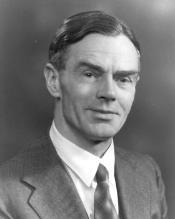
Owen Barfield (1898-1997) was a British philosopher, poet, and critic whose groundbreaking work focused on the evolution of human consciousness and its relationship to language and imagination. A close friend of C.S. Lewis and J.R.R. Tolkien, Barfield was a core member of the Inklings literary group and widely recognized as one of the twentieth century’s most original thinkers.

Born in London, Barfield studied at Oxford, where he first met C.S. Lewis in 1919. Their intellectual friendship, spanning more than 40 years, profoundly influenced both men’s thought and writing. Barfield’s ideas about the evolution of consciousness and the centrality of imagination helped shape Lewis’s conception of “Mere Christianity” and his approach to apologetics.

Barfield’s first major work, Poetic Diction: A Study in Meaning, published in 1928, argued that language and human consciousness co-evolve, and that the study of semantic history can reveal the changing structure of human thought and perception. For Barfield, the imagination was not merely a faculty of individual minds, but a participation in the creative power of the universe itself.

In works like Saving the Appearances: A Study in Idolatry and Worlds Apart, Barfield developed his theory of the evolution of consciousness, tracing the movement from an original “participatory” consciousness, in which subject and object were not sharply distinguished, to the modern “onlooker” consciousness, characterized by a sharp dualism between self and world. This evolution, he argued, was reflected in the history of language and literature, with earlier forms of consciousness preserved in mythology, poetry, and esoteric traditions.

Barfield’s thought was deeply influenced by the work of Rudolf Steiner, the Austrian philosopher and founder of Anthroposophy. From Steiner, Barfield took the idea of the evolution of consciousness and the centrality of imagination in human cognition. He saw the imaginative participation in the world as a key to overcoming the alienation and disenchantment of modern life.

Barfield’s work has had a wide-ranging influence, from the fields of literary criticism and history of ideas to anthropology, ecology, and religious studies. His critique of scientific materialism and his vision of a participatory, imaginative engagement with the world anticipated many of the themes of the ecological and postmodern movements.

In the field of literary studies, Barfield is recognized as a pioneering theorist of the imagination and a significant influence on the Inklings and their conception of mythopoetic literature. His ideas about the evolution of consciousness have also found resonance in the fields of depth psychology and archetypal studies, where they have been compared to the work of Carl Jung and Joseph Campbell.

Today, Barfield is increasingly recognized as a visionary thinker whose ideas continue to challenge and inspire. His conception of the evolution of consciousness, his critique of the modern “idolatry” of materialism, and his vision of a renewed participation in the “sacramental” imaginationsacramental imagination” point towards a more integrated, enchanted, and meaningful understanding of our place in the cosmos.

Key works on Owen Barfield’s life and thought include:

As a philosopher of the imagination and prophet of the evolution of consciousness, Owen Barfield’s legacy continues to grow. His vision of a reenchanted world, in which human beings participate creatively in the life of the cosmos, remains a powerful inspiration for all those seeking a more integral and transformative understanding of the human condition.
Explore the Other Articles by Categories on Our Blog 

Hardy Micronutrition is clinically proven to IMPROVE FOCUS and reduce the effects of autism, anxiety, ADHD, and depression in adults and children without drugsWatch Interview With HardyVisit GetHardy.com and use offer code TAPROOT for 15% off

Somatic Reset Techniques You Can do At Home

Somatic Reset Techniques You Can do At Home

Written by the clinical team at Taproot Therapy Collective, a Birmingham psychotherapy practice specializing in somatic and trauma-focused modalities. Our clinicians are trained in body-based approaches including Brainspotting, EMDR, and somatic trauma resolution....

Why We Recommend Hardy Nutritionals: A Clinical Perspective on the Research That Changed How We Think About Treatment Resistance

Why We Recommend Hardy Nutritionals: A Clinical Perspective on the Research That Changed How We Think About Treatment Resistance

Why Taproot Therapy Collective recommends Hardy Nutritionals Daily Essential Nutrients for treatment-resistant mood disorders, ADHD, and emotional dysregulation. Discovered not through advertising but through patients whose bipolar disorder and other conditions finally responded. Over 40 peer-reviewed studies support the NutraTek chelation technology. Use code TAPROOT at gethardy.com for 15% off for life.

The Second Brain Revolution: How Gut Science Is Rewriting Psychiatric Medicine

The Second Brain Revolution: How Gut Science Is Rewriting Psychiatric Medicine

This 2025 strategic report details the shift from theoretical gut-brain models to clinical applications, analyzing the indole-SK2 channel mechanism in anxiety and the efficacy of oral FMT capsules for refractory depression. It evaluates the diagnostic potential of the gut mycobiome and profiles the pharmaceutical pipelines of key industry players like Kallyope and Bloom Science.

The Metabolic Mind: A 2025 Clinical Update on Nutritional Psychiatry

The Metabolic Mind: A 2025 Clinical Update on Nutritional Psychiatry

A 2025 clinical update on nutritional psychiatry for psychotherapists. Explore the latest research on psychobiotics, vitamin D, magnesium, zinc, omega-3s, amino acid therapies, and herbal interventions—including new safety warnings on ashwagandha and evidence that saffron matches SSRI efficacy for mild depression.

Who Is Victor Lamme?

Who Is Victor Lamme?

The Neuroscientist Who Found Consciousness in the Feedback Loops of the Brain When you look at a face, what happens in your brain? The answer turns out to be surprisingly complex. First, visual information streams forward from your eyes through your visual cortex,...

Bill O’Hanlon: The Therapist Who Asked “How Do People Get Happy?”

Bill O’Hanlon: The Therapist Who Asked “How Do People Get Happy?”

Bill O’Hanlon, MS, LMFT, studied with Milton Erickson as his only work/study student (serving as Erickson’s gardener) before co-founding Solution-Oriented/Possibility Therapy in the 1980s. Author of nearly 40 books including the Oprah-featured “Do One Thing Different” and foundational “In Search of Solutions” with Michele Weiner-Davis, O’Hanlon delivered over 3,700 presentations worldwide teaching his collaborative, non-pathologizing approach asking “How do people get happy?” rather than “What’s wrong?” He retired from clinical practice in 2020 to pursue professional songwriting from Santa Fe, New Mexico.

Diane Poole Heller: From Trauma Survivor to Pioneer of Attachment Healing

Diane Poole Heller: From Trauma Survivor to Pioneer of Attachment Healing

Diane Poole Heller, PhD, transformed her own 1988 traumatic car accident into a pioneering career developing DARe (Dynamic Attachment Re-patterning experience), a somatic approach integrating attachment theory and trauma resolution now taught worldwide. After 25 years as Senior Faculty for Peter Levine’s Somatic Experiencing Institute, she created Trauma Solutions and authored The Power of Attachment, teaching that regardless of childhood history, people can develop Secure Attachment Skills through attuned relationships, body-based interventions, and recognizing we’re all biologically hardwired for connection and healing.

Laurence Heller: The Clinical Psychologist Who Mapped How Developmental Trauma Distorts Identity

Laurence Heller: The Clinical Psychologist Who Mapped How Developmental Trauma Distorts Identity

Laurence Heller, PhD, spent over 40 years in private practice recognizing that developmental trauma creates not just nervous system dysregulation but fundamental identity distortions—pervasive shame, self-judgment, and disconnection from authentic self. He developed the NeuroAffective Relational Model (NARM), now taught worldwide, mapping five adaptive survival styles arising from disrupted developmental needs (Connection, Attunement, Trust, Autonomy, Love-Sexuality) and providing framework for healing through disidentification from survival-based identities while working simultaneously with psychology and physiology within attuned therapeutic relationships.

Bruce Perry: From Branch Davidian Waco to “What Happened to You?” – Three Decades Translating Neuroscience into Healing for Maltreated Children

Bruce Perry: From Branch Davidian Waco to “What Happened to You?” – Three Decades Translating Neuroscience into Healing for Maltreated Children

Bruce Perry developed the Neurosequential Model after treating children who survived the 1993 Branch Davidian siege in Waco. His three decades translating neuroscience into practical trauma treatment culminated in the #1 bestseller What Happened to You? with Oprah Winfrey. Perry’s fundamental insight: childhood behavior reflects developmental adaptation to environment rather than defect requiring correction, revolutionizing how thousands of professionals understand trauma.

Judith Herman: The Psychiatrist Who Named Complex Trauma and Challenged a Field’s Convenient Amnesia

Judith Herman: The Psychiatrist Who Named Complex Trauma and Challenged a Field’s Convenient Amnesia

Judith Herman, Harvard psychiatrist, transformed trauma treatment by distinguishing complex PTSD from single-incident trauma and articulating the three-stage recovery model emphasizing safety, remembrance, and reconnection. Her 1992 Trauma and Recovery challenged psychiatry’s “convenient amnesia” about sexual violence, while 2023’s Truth and Repair reimagines justice as healing rather than punishment, asking what survivors actually need: acknowledgment, validation, and community witness rather than retribution.

Gabor Maté: From Budapest Ghetto to Voice of Compassion in Addiction’s Darkest Corners

Gabor Maté: From Budapest Ghetto to Voice of Compassion in Addiction’s Darkest Corners

Gabor Maté, Holocaust survivor turned physician, spent twelve years treating severe addictions in Vancouver’s poorest neighborhood, asking “why the pain?” rather than “why the addiction?” His revolutionary recognition that addiction serves to escape unbearable emotions rooted in childhood trauma, detailed in bestseller In the Realm of Hungry Ghosts, transformed understanding of substance abuse from moral failing to developmental injury.

David Grand: From EMDR Trainer to Brainspotting Pioneer Through a Champion Skater’s Frozen Gaze

David Grand: From EMDR Trainer to Brainspotting Pioneer Through a Champion Skater’s Frozen Gaze

David Grand discovered brainspotting in 2003 when a figure skater’s eye wobble revealed where trauma was stored in her brain. By maintaining fixed eye position on that “brainspot” rather than using bilateral movement, processing accelerated dramatically. His development of this approach, now used by 13,000+ therapists worldwide, demonstrates how careful clinical observation combined with willingness to deviate from protocol can produce genuine therapeutic innovation for treating trauma, the yips, and performance blocks.

Richard Schwartz: From Failed Bulimia Study to Discovering the Internal Family System

Richard Schwartz: From Failed Bulimia Study to Discovering the Internal Family System

Richard Schwartz discovered Internal Family Systems in 1982 when bulimic clients described distinct “parts” battling inside them, leading him to recognize the mind’s natural multiplicity. His development of IFS therapy, which helps Self lead an internal family of managers protecting against exiled pain and firefighters dousing emotional flames, has revolutionized how millions understand their inner conflicts. From failed outcome study to global therapeutic movement, Schwartz demonstrated that beneath protective parts, everyone possesses undamaged Self capable of healing.

Francine Shapiro: From Cancer Diagnosis to Revolutionary Trauma Treatment Through Eye Movements

Francine Shapiro: From Cancer Diagnosis to Revolutionary Trauma Treatment Through Eye Movements

Francine Shapiro discovered EMDR during a walk in 1987 when she noticed eye movements reduced disturbing thoughts. Her development of Eye Movement Desensitization and Reprocessing revolutionized trauma treatment, creating the first therapy to demonstrate rapid resolution of PTSD through bilateral stimulation activating the brain’s adaptive information processing system. Now recommended by WHO and DOD, EMDR has helped millions worldwide process traumatic memories that talking therapy couldn’t reach.

Janina Fisher: Revolutionizing Trauma Treatment Through Structural Dissociation and Parts Work

Janina Fisher: Revolutionizing Trauma Treatment Through Structural Dissociation and Parts Work

Janina Fisher revolutionized complex trauma treatment by integrating structural dissociation theory with parts work and somatic interventions. Discover her Trauma-Informed Stabilization Treatment (TIST) approach showing how recognizing fragmented selves as protective adaptations rather than pathology transforms healing for clients with treatment-resistant symptoms including self-harm, addiction, and chronic suicidality.

0 Comments

Submit a Comment

Your email address will not be published. Required fields are marked *