Aeschylus The Persians: A Depth Psychological Perspective

by | Aug 11, 2024 | 0 comments

What Happens in The Persians?
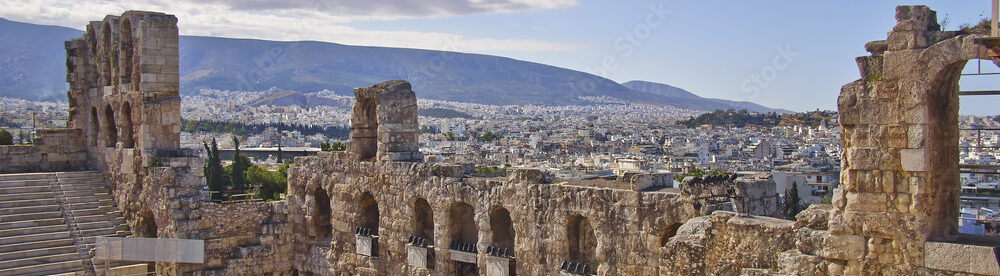
The Persians, a tragedy by Aeschylus, is a unique and profound exploration of war, hubris, and the nature of power. As the only extant Greek tragedy that deals with contemporary events (the Persian Wars), it offers a fascinating window into the Greek psyche and its confrontation with the “other.” By examining this play through the lens of depth psychology, we can uncover deep insights into the collective unconscious, the shadow of power, and the consequences of overreach.

I. Summary of The Persians

The Persians takes place in Susa, the Persian capital, and deals with the aftermath of the Battle of Salamis, where the Greeks defeated the Persians. The play begins with the chorus of Persian elders anxiously awaiting news of the battle. The queen mother, Atossa, joins them and shares her ominous dreams.

A messenger arrives, bringing news of the devastating Persian defeat. The ghost of Darius, the former Persian king, is summoned and he attributes the defeat to the hubris of his son, Xerxes. The play ends with Xerxes returning in despair, lamenting the loss of his army and his own folly.

II. Archetypal Figures in The Persians

Xerxes: The Hubristic King Xerxes embodies the archetype of the Hubristic King. His overreach and pride lead to the downfall of his army and empire. He represents the danger of unchecked power and the consequences of failing to respect the limits of human authority.

Darius: The Wise Old King Darius, in contrast to Xerxes, represents the archetype of the Wise Old King. Even from beyond the grave, he offers insight and perspective on the folly of his son’s actions. He represents the wisdom and restraint that comes from experience and an understanding of the limits of power.

The Chorus: The Collective The chorus of Persian elders represents the collective psyche of the Persian people. Their fears, hopes, and grief reflect the emotional landscape of a nation confronting the devastating consequences of their leader’s actions.

III. Hubris and Downfall

The central theme of The Persians is the danger of hubris – the pride that leads to overreach and downfall. Xerxes’s attempt to conquer Greece is portrayed as an act of overweening ambition, a failure to respect the limits of human power. His defeat is not just a military setback, but a cosmic correction, a reassertion of the balance that hubris threatens to upset.

IV. The Confrontation with the Other

As a play about a Persian defeat written for a Greek audience, The Persians offers a unique perspective on the confrontation with the “other.” It humanizes the Persians, portraying their suffering and grief, even as it celebrates the Greek victory. This suggests a capacity for empathy and understanding, even in the context of war and conflict.

V. The Nature of Power

The play offers a profound reflection on the nature of power. Through the contrast of Xerxes and Darius, it suggests that true power is not a matter of military might or territorial expansion, but of wisdom, restraint, and respect for limits. It warns of the dangers of unchecked power and the inevitable consequences of overreach.

VI. Psychological and Societal Implications

The Collective Unconscious The Persians taps into the collective unconscious – the shared emotional and psychological landscape that underlies a society. The fears, hopes, and griefs of the Persian elders reflect the deeper psychic currents that run through a nation, especially in times of crisis and upheaval.

The Shadow of Power Xerxes’s character illustrates the shadow side of power – the part of the psyche that is prone to hubris, overreach, and the abuse of authority. The play warns of the dangers of this shadow, both for the individual ruler and for the society that suffers the consequences of their actions.

The Necessity of Limits The Persians powerfully asserts the necessity of limits, both in the exercise of power and in the ambitions of individuals and nations. It suggests that true wisdom and stability come from respecting these limits, from recognizing the boundaries of human authority and action.

Conclusion

The Persians is a profound exploration of war, power, and the human condition. Through its archetypal figures and powerful themes, it illuminates the deep, often unconscious forces that shape the destinies of individuals and nations. It serves as a warning against the dangers of unchecked power and a celebration of the wisdom that comes from recognizing limits. Ultimately, it offers a vision of a world in which even the most bitter of conflicts cannot erase the shared humanity that underlies our differences.

Read About Other Classical Greek Plays and Their Influence on Depth Psychology

Classical Literature 

The Oresteia

The Ajax

The Women of Trachis

The Elektra

The Philocetes

The Persians

The Medea

The Hippolytus

The Bacchae

Iphigenia in Aulis
Iphigenia in Tauris

Alcestis

Hippolytus

Oedipus Rex

Oedipus at Colonus

Antigone

Seven Against Thebes

The  Suppliants

Prometheus Bound

Helen

Greek Tragedies Influence on Jung

The Psychology of the Peloponesian War

Explore the Other Articles by Categories on Our Blog 

What the Ancient Mysteries Knew About Healing Trauma

What the Ancient Mysteries Knew About Healing Trauma

The Eleusinian, Mithraic, and Dionysian mysteries weren’t religious observances. They were orchestrated psychodramas designed to shatter the ego and rebuild the self. Modern trauma therapy has inadvertently reconstructed their methods.

Holy Wood: The Intersection of Forestry and Mythology

Holy Wood: The Intersection of Forestry and Mythology

Holy wood is the meeting point of botany and myth: the specific trees that cultures made sacred, such as the oak, ash, fig, olive, cedar and willow, and the reasons rooted in how each tree actually grows. Each species was chosen for what people could see it do, and...

The Sacred Gaze: Eyes as Windows to the Divine in Ancient Art

The Sacred Gaze: Eyes as Windows to the Divine in Ancient Art

The sacred gaze is the way ancient art used eyes to connect people with the divine. Many Paleolithic figurines have no faces at all, while Mesopotamian votive statues stare with huge inlaid eyes, Egyptian art turned the healed Eye of Horus into an amulet, and Greek...

The Psychology of the Dragon Archetype

The Psychology of the Dragon Archetype

The dragon archetype is the recurring image of a vast, dangerous creature that guards a treasure, a threshold or a source of life. In Jungian psychology it stands for the overwhelming energies of the unconscious: the Shadow, the pull back toward the mother, raw...

Unraveling the Mystery of the Roman Dodecahedra:

Unraveling the Mystery of the Roman Dodecahedra:

Roman dodecahedra are small hollow bronze objects with twelve pentagonal faces, a round hole in each face and a knob at each corner, made mostly in Gaul between the 2nd and 4th centuries CE. About 130 are known and no ancient text explains them. One reading links them...

The Dictionary of Norse Mythology for Jungian Psychology

The Dictionary of Norse Mythology for Jungian Psychology

Encyclopedia of Norse Myth for Depth Psychology and Comparative Religion Norse mythology, the pre-Christian religious beliefs and legends of the Scandinavian peoples, offers a rich tapestry of gods, goddesses, heroes, and cosmic events that continue to captivate the...

The Hero’s Journey from Gilgamesh to Greek Tragedy:

The Hero’s Journey from Gilgamesh to Greek Tragedy:

Evolving Mythologies and Depth Psychology The hero's journey is one of the most enduring archetypes in world mythology, a narrative pattern that has shaped stories across cultures and centuries. At its core, the hero's journey is a psychological one—a symbolic...

Glossary of Blog Articles

Glossary of Blog Articles

Our blog is designed as a resource for those seeking to deepen their understanding of the human psyche and its expression through culture, therapy, and history. Below, you'll find an overview of the diverse topics we cover and an invitation to explore the categories...

How to Use Mythology as a Therapist

How to Use Mythology as a Therapist

Using mythology in therapy works when the story answers something the client has already brought: a dream image, a phrase they keep repeating, a pattern they cannot explain. Set beside that material, an old myth gives private suffering a shared shape and a little...

Plato’s Atlantis: Misinformation or Metaphor?

Plato’s Atlantis: Misinformation or Metaphor?

What did Plato say about Atlantis: In Plato's Republic, Socrates and his interlocutors set out to answer a profound question: What is justice? In the course of this inquiry, they imagine an ideal city-state, a utopia ruled by philosopher kings. On the surface, the...

The Trickster Archetype in Homer’s Odyssey: A Jungian Analysis

The Trickster Archetype in Homer’s Odyssey: A Jungian Analysis

What are the Archetypes of the Odyssey? Odysseus as Trickster, Achilles as Warrior, Menelaus as King Homer's two epic poems, The Iliad and The Odyssey, present different archetypes of male heroes engaged in a cosmic battle that transcends the mortal realm. The Iliad...

The Epic of Gilgamesh: A Depth Psychological Reading

The Epic of Gilgamesh: A Depth Psychological Reading

The Epic of Gilgamesh is a Mesopotamian poem about Gilgamesh, king of Uruk, his friendship with the wild man Enkidu, Enkidu's death and Gilgamesh's failed search for immortality. Read through depth psychology, it maps how an inflated ego meets its shadow, loves,...

The Pantheon: Myths are Public Dreams, Dreams are Private Myths

The Pantheon: Myths are Public Dreams, Dreams are Private Myths

"Myths are public dreams, dreams are private myths" condenses an idea from the mythologist Joseph Campbell: a culture's myths and a person's dreams are made of the same symbolic material. A pantheon is a society dreaming aloud about power, love, death and order, and a...

Hindu Mythology: As Parts of Self

Hindu Mythology: As Parts of Self

Hindu mythology can be read as a map of the parts of the self. Its many gods and goddesses, Brahma, Vishnu, Shiva, Saraswati, Lakshmi, Durga and others, are understood within the tradition as faces of one ultimate reality, Brahman. Psychologically, that pattern...

Egyptian Mythology: Gods, Dynasties, and the Eternal Empire

Egyptian Mythology: Gods, Dynasties, and the Eternal Empire

Egyptian mythology is the body of stories, hymns and funerary texts through which ancient Egypt explained the gods, the Nile, kingship and death across roughly three thousand years of dynasties. Its central concern was permanence: keeping cosmic order, called ma'at,...

Norse Mythology and the Self

Norse Mythology and the Self

Norse mythology and the self is the reading of the Norse gods, from Odin and Thor to Loki and Hel, as images of forces inside one person. In Jungian psychology these figures are archetypes: recurring patterns of feeling and behaviour. Because the Norse gods face fate,...

The Innocent Archetype: Exploring Purity and Victimhood

The Innocent Archetype: Exploring Purity and Victimhood

The Innocent archetype is the part of the psyche that trusts, hopes and expects the world to be good. Carol S. Pearson made it the first of the twelve archetypes in her 1991 model of personal growth. Psychologically it carries both our capacity for faith and optimism...

A History of the Witch Archetype, In Preperation for Haloween

A History of the Witch Archetype, In Preperation for Haloween

What Does the Witch Represent in Psychology? As the nights grow longer and Halloween draws near, our thoughts turn to the spooky, the mystical, and the uncanny. This is the time of year when we confront the shadows - both literal and psychological. One of the most...

0 Comments

Submit a Comment

Your email address will not be published. Required fields are marked *